How to Choose Goalkeeper Gloves Size (The Right Fit Guide)
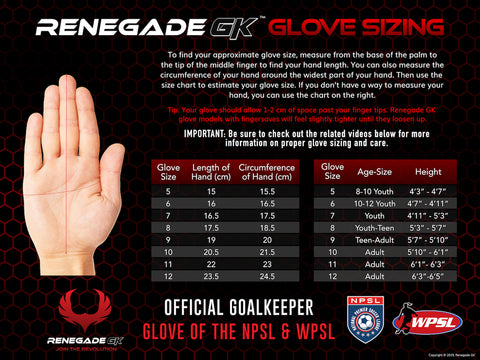
To choose goalkeeper gloves size, measure the length of your dominant hand from the wrist crease to the middle fingertip. Match that measurement to the specific size chart for the brand and model you want. Then adjust the size based on the glove’s cut: order exact size for Negative Cut, consider sizing up once for Roll Finger or Flat Cut, and go up half a size if the model includes Finger-Save spines.
Most keepers get this wrong because they assume size is universal. A size 9 in one brand is not a size 9 in another. Worse, they buy based on a vague feeling or their jersey number, then struggle with seams that burst or latex that wears in the wrong spot after three training sessions.
This guide walks through the measurement, the charts, and the three adjustments that matter, cut, protection, and latex type. You’ll know how a glove should feel when it’s right, what to do if you’re between sizes, and why your match gloves and training gloves might need different fits.
Key Takeaways
- Measure hand length, not width. The width method printed on some gloves is for cut selection, not size determination. From your wrist crease to your middle fingertip is the only reliable number.
- Brand size charts are law. A Reusch size 8 and an Adidas size 8 can fit differently. Never guess based on a previous pair from a different manufacturer.
- Glove cut dictates your size adjustment. Negative Cut gloves fit tight to the finger, order your exact measured size. Roll Finger and Flat Cut gloves have more internal material, you often need to go up one size from your chart measurement.
- Finger-save spines make gloves feel smaller. The internal plastic supports reduce interior space. If you normally wear a 9 without spines, a 9 with spines will feel restrictive. Consider a half-size up.
- The perfect fit has a quarter-inch gap. Your fingertips should not press against the end of the glove’s latex. That empty space is where the ball makes contact, preserving the grip surface and preventing premature wear at the seams.
The Two Ways to Measure Your Hand (And Which One to Trust)
You have two options: hand length or hand circumference. The circumference method measures around your palm, excluding the thumb. Some older charts and a few brands still use it. Ignore it.
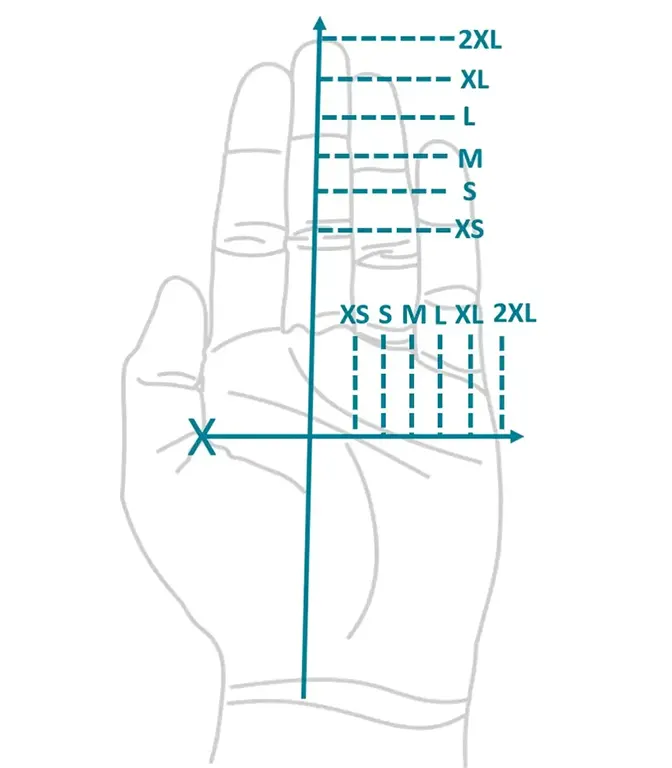
Hand length is the only measurement that correlates directly with glove size across manufacturers. The process is simple but requires precision.
Place a rigid ruler or a flexible tailor’s tape at the first pronounced crease on the inside of your wrist. This isn’t where your hand meets your arm, it’s the first clear fold line when you bend your hand back. Stretch your fingers flat and measure straight to the very tip of your middle finger. Do not curve the tape over your knuckles. Record the number in inches or centimeters.
Common mistake: Measuring from the base of the palm, this adds half an inch and puts you in a glove that’s too long. The latex will bunch at the fingertips, and you’ll catch the ball on the fabric cuff, not the grip surface.
Do this for both hands. Your dominant hand, the one you throw with, is usually slightly larger. Use that measurement for sizing. A difference of a quarter-inch is normal. A half-inch difference means you should consider separate sizes for left and right gloves, a practice some pros follow.
TL;DR: Measure your throwing hand from the wrist crease to the middle fingertip. That number, in inches, is your baseline for every size chart.
How to Read a Brand Size Chart (This Is Non-Negotiable)
Goalkeeper glove sizing is not like shoe sizing. There is no ISO standard. A Reusch size 9 corresponds to a hand length of about 7.5 inches. An Uhlsport size 9 might start at 7.7 inches. An Adidas size 9 could be different still.
Your first step after measuring is to find the official size chart for the specific glove model you intend to buy. This chart is usually on the product page of the brand’s website or the retailer’s site. Do not use a generic “goalkeeper glove size chart” you find on a blog. It will be wrong.
The chart will list hand lengths (in inches and/or cm) and their corresponding glove sizes for that brand. Some also include age ranges for youth sizes. Match your measurement to the listed length range. If you measure 7.5 inches and the chart says “7.5 in = Size 9”, that’s your starting point.
| Brand | Hand Length (in) | Glove Size | Notes |
|---|---|---|---|
| Reusch | 7.5 | 9 | Fits true to length; Negative Cut models feel snug. |
| Adidas | 7.7 | 9 | Often runs slightly longer in the finger. |
| Uhlsport | 7.5–7.7 | 9 | Roll Finger cuts require +1 size from chart. |
What if your measurement falls between two sizes? The universal advice is to size up. A glove that’s slightly too large is manageable. A glove that’s too small will restrict blood flow, strain seams on every catch, and make your fingers ache within twenty minutes. The extra quarter-inch in a larger size is where the ball impact happens, sparing your fingertips from constant pressure.
I ordered a pair of Reusch Attrakt Freegel models using an old Adidas chart measurement. The gloves arrived a full size too small. I forced them on for a training session, and the seam at the base of the thumb tore after three hard dives. The latex was fine, but the construction failed at the stress point. I now keep a bookmark folder of brand charts for Reusch, Adidas, and Uhlsport.
How Glove Cut Changes Your Size
The cut, how the panels of latex are stitched together, changes the internal volume of the glove. This is the second adjustment you must make after the chart.
A Negative Cut glove has seams stitched on the inside of the fingers. The latex wraps tightly around each digit like a second skin. This cut offers the most direct ball feel and is preferred by many professional keepers. For a Negative Cut, you order the exact size indicated by your hand length on the brand’s chart. There is no extra room built in.
A Roll Finger or Flat Cut glove has seams on the outside or back of the fingers. These cuts use more material, creating a slightly roomier internal fit. They are often more durable and forgiving. If your chart measurement points to a size 9, you will likely need a size 10 in a Roll Finger model for the same comfortable fit.
The reason is physical. The rolled seam adds millimeters of material inside the finger channel. If you don’t account for it, your fingertips press against the end, eliminating that critical quarter-inch gap. You lose the protective air pocket and grind the latex tip against the ground on every low save.
| Cut Type | Seam Placement | Internal Volume | Sizing Rule |
|---|---|---|---|
| Negative Cut | Inside of fingers | Minimal, tight fit | Order exact chart size. |
| Roll Finger | Back of fingers | Increased, roomier fit | Order one size up from chart. |
| Flat Palm | Variable | Standard fit | Order one size up from chart. |
This is where understanding glove palm types becomes practical. The cut determines feel, but the palm’s latex composition determines grip and durability. You’re choosing both at once.
The Finger-Save Spine Adjustment
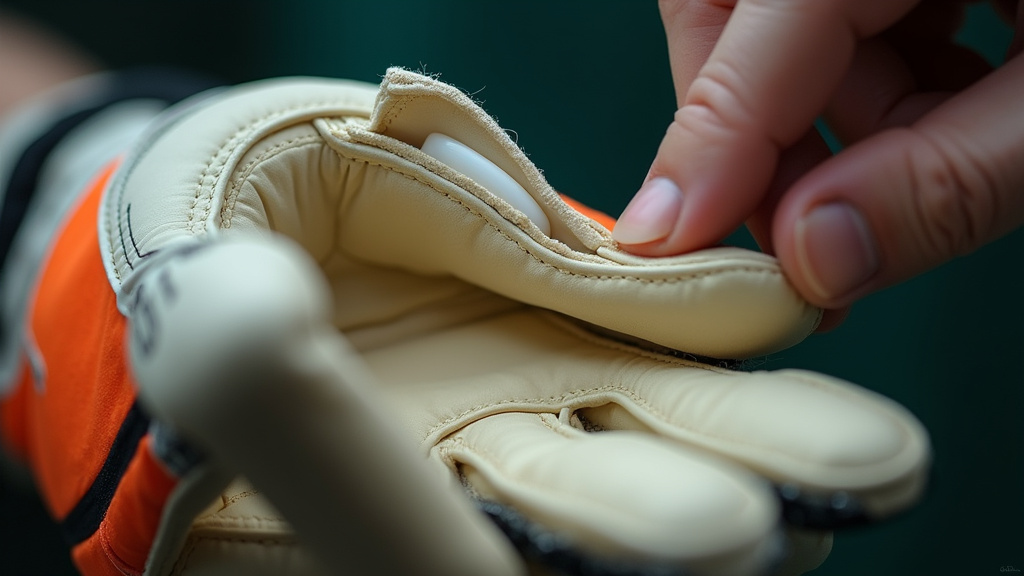
Many gloves, especially models designed for match play, include removable or fixed plastic spines along the back of the fingers. These Finger-Save systems are meant to hyperextend and prevent jamming or breaking.
These spines take up space. A glove with spines will feel tighter than the same model without them. The plastic sits between the backing fabric and your finger, reducing the interior room.
If you are a solid size 9 in a Negative Cut glove without spines, that same glove with spines will feel restrictive. Your fingertips will be closer to the end. For gloves with integrated finger protection, consider going up half a size. If the brand doesn’t do half sizes (most don’t), round up to the next full size. The slight extra length compensates for the internal volume lost to the supports.
Common mistake: Ignoring spines because they’re “removable.” Even if you take them out, the internal pockets they sit in are still there, using fabric and padding that slightly reduces space. The fit is still tighter than a pure soft-finger glove.
This is a key part of selecting top glove models for match day. The best grip latex is often paired with finger protection. Your size choice must accommodate that.
The “Goldilocks” Fit Test – What Right Actually Feels Like
You have your measurement, you’ve consulted the chart, and you’ve adjusted for cut and spines. How do you know the glove is correct before you step on the pitch?
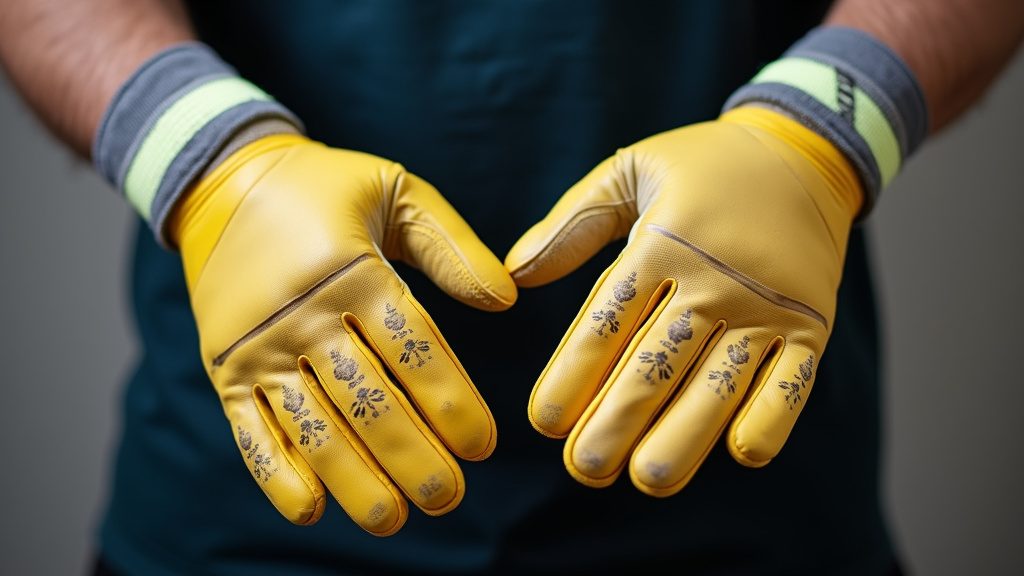
First, put the glove on your dominant hand. Don’t force it. If you have to fight to get your fingers into the channels, it’s too small. The latex at the openings should stretch slightly, but the seams shouldn’t whiten from tension.
Once on, make a fist and then extend your fingers fully. You should feel a gentle hug through the palm and backhand. No pinching. No pressure points across your knuckles.
Now, look at the fingertips. Press gently against the tip of the glove with your other hand. You should feel a small gap, about a quarter of an inch, or the width of your fingernail, between the end of your finger and the end of the latex. This is non-negotiable.
If your fingertips press directly against the latex tip, the glove is too small. Impact from the ball will transmit straight into your fingers, and the wear pattern will be at the very end, shredding the latex quickly. If you have more than half an inch of gap, the glove is too large. The ball will contact the glove farther down the finger, on a less responsive part of the latex, and the loose material will flap, reducing control.
The palm should be snug but not compressive. You should be able to wiggle your fingers slightly side-to-side at the base. If you can’t move them at all, the fit is too tight and will impede circulation during a long session.
This proper fit is the foundation for breaking in new gloves effectively. A glove that’s the wrong size will never break in correctly; it will just deteriorate.
Special Cases: Youth Sizing, Match vs. Training, and Half-Sizes
Youth goalkeepers are not just small adults. Their gloves are proportionally narrower in the palm and shorter in the finger. Do not simply buy an adult small. Use youth-specific size charts, which are usually based on age ranges (U8, U10, U12) correlated to hand length. When in doubt, bring the young keeper to a store that allows trying on. A glove that’s too wide will rotate on their hand during a save, defeating its purpose.
Elite keepers often maintain two pairs: pristine match gloves and durable training gloves. Your match gloves should be at the snugger end of the perfect fit spectrum, the exact chart size for your chosen cut. This maximizes tactile feel and control for 90 minutes.
Your training gloves can be the next half or full size up. The extra room accommodates swelling during intense sessions, provides more comfort for repetitive drills, and can extend the life of your expensive match latex. This is a strategic part of preserving glove durability across a season.
True half-sizes are rare in goalkeeper gloves. Some brands, like Reusch in their high-end lines, offer them. If you have access to a half-size and are squarely between two full sizes, it’s the ideal solution. Otherwise, remember the rule: round up.
Tools and Tricks for Buying Online (When You Can’t Try On)
Most of us buy gloves online. This adds risk, but you can mitigate it with a few tactics.
First, know your baseline measurement in inches and centimeters. Keep a note on your phone.
Second, only buy from retailers with a clear and fair return or exchange policy for sizing. Many specialized soccer retailers offer this. It’s worth paying a slight premium for that safety net.
Third, if you’re trying a new brand, order two adjacent sizes (e.g., 9 and 10). Try both at home, with the tags on, following the fit test above. Return the one that doesn’t work. This costs nothing if the policy is good and gives you absolute certainty.
Finally, use community knowledge. Goalkeeper forums and review videos often contain specific fit advice like “this model runs large” or “order down for this cut.” This real-world feedback supplements the dry chart data.
Your glove size is as fundamental as your selecting shin guards size. It’s not something you guess. The right fit protects your hands, unlocks performance, and makes your gear last. Measure once, buy right.
Frequently Asked Questions
What if my hand length measurement is exactly between two sizes on the chart?
Always round up to the larger size. A slightly roomier glove is functional and safe. A glove that’s too small is unusable and will damage quickly from stressed seams. The extra space will be in the fingertips, where the ball impact occurs, not in the palm.
Do goalkeeper gloves stretch out over time?
Modern latex and synthetic backing materials stretch very little. A glove might mold to your hand’s shape with wear, a process you can guide through proper breaking in new gloves techniques. But it will not gain a full size in length or width. Do not buy a tight glove expecting it to stretch to fit.
How does the type of latex affect sizing?
Latex type (soft, medium, hard) does not change the physical dimensions of the glove. However, a softer, tackier latex will conform more to your hand, potentially feeling more snug than a stiffer, harder latex in the same size. This is a feel difference, not a size difference. Stick to your size determined by length and cut.
I wear a size 10 in Reusch. What size should I get in Adidas?
There is no direct conversion. You must measure your hand and check the Adidas size chart for the specific model you want. Do not assume the number translates. A Reusch 10 could be an Adidas 9 or a 10, depending on the cut and year of the model. The chart is your only reliable guide.
Should I size differently for wet weather gloves?
No. The sizing principles remain the same. Wet weather or “all-weather” gloves often have a more textured, water-channeling latex and a more sealed backing, but the internal dimensions are designed to the same size chart. Use your standard measurement and adjustments.
The Bottom Line
Forget the number you wore last season. Start fresh with a ruler and the first crease on your wrist. That measurement, applied to your target brand’s specific chart, is your only objective truth. Then layer on the reality of cut and finger spines, negative for exact, roll finger for plus one, spines for a half-step up.
The right fit isn’t tight. It’s secure. Your fingertips float in a quarter-inch of space, the palm hugs without squeezing, and the seams lie flat without tension. This is what preserves the expensive glove construction and lets you catch cleanly for months. Get this wrong, and you’re buying new gloves by October. Get it right, and the only thing you’ll feel is the ball sticking to your hands.

I come from the “soccer heart” of Germany, the Ruhrpott. I have played, trained and followed soccer all my life and am a big fan of FC Schalke 04. I also enjoy following international soccer extensively.