Top 5 Argentina Famous Soccer Players of All Time (Ranked)
To rank the top 5 Argentina famous soccer players, weigh three non-negotiable pillars: otherworldly talent, trophy-laden success at the highest levels, and a legacy that reshaped football’s culture. Lionel Messi and Diego Maradona occupy a tier of their own, followed by legends whose careers define the gritty, creative soul of Argentine football.
Most lists get the top two names right but then stumble. They default to just listing goal-scorers or recent stars, missing the defenders and leaders who built the platform for Argentina’s global reputation. That mistake paints an incomplete picture.
This guide ranks the five undisputed icons. We will explain why each belongs, what specific moment or trait sealed their status, and which brilliant players narrowly missed the cut. The goal is a list that respects history, acknowledges evolution, and captures the unique Argentine blend of magic and muscle.
Key Takeaways
- Lionel Messi’s combination of statistical dominance, longevity, and finally capturing the World Cup in 2022 cements him as the greatest Argentine, and arguably global, player of all time.
- Diego Maradona’s legacy is built on a shorter, more chaotic peak, defined by his virtually single-handed 1986 World Cup triumph, making the “Messi vs. Maradona” debate a matter of era preference.
- Argentina’s football identity requires both genius and grit; legends like Javier Zanetti and Daniel Passarella are essential for their defensive mastery and leadership, not just goal-scoring.
- Pure strikers like Gabriel Batistuta and Mario Kempes earn their spots through iconic tournament performances and record-breaking goal tallies that stood for generations.
- Modern greats like Ángel Di María and Javier Mascherano are phenomenal but sit just outside the top five due to the historic weight of achievement required for this pantheon.
The Top 5 Argentina Famous Soccer Players, Ranked
Forget alphabetical order or personal nostalgia. This ranking uses a ruthless scoring system: talent (40%), trophies (40%), and legacy (20%). Talent covers technical skill and game intelligence. Trophies mean FIFA World Cups, Copa América titles, and dominant club success. Legacy is their cultural fingerprint on Argentine football.
The top two are in a different stratosphere. The order between them is the greatest debate in sports. After that, the next three spots reward players who weren’t just great, but who defined an aspect of Argentina’s footballing soul for decades.
The debate between Lionel Messi and Diego Maradona as Argentina’s greatest player centers on contrast: Messi’s two-decade reign of consistent, record-shattering excellence versus Maradona’s explosive, shorter peak defined by the 1986 World Cup, where his genius felt singular and nation-defining. Modern statistical analysis favors Messi; romantic nostalgia often leans Maradona.
1. Lionel Messi
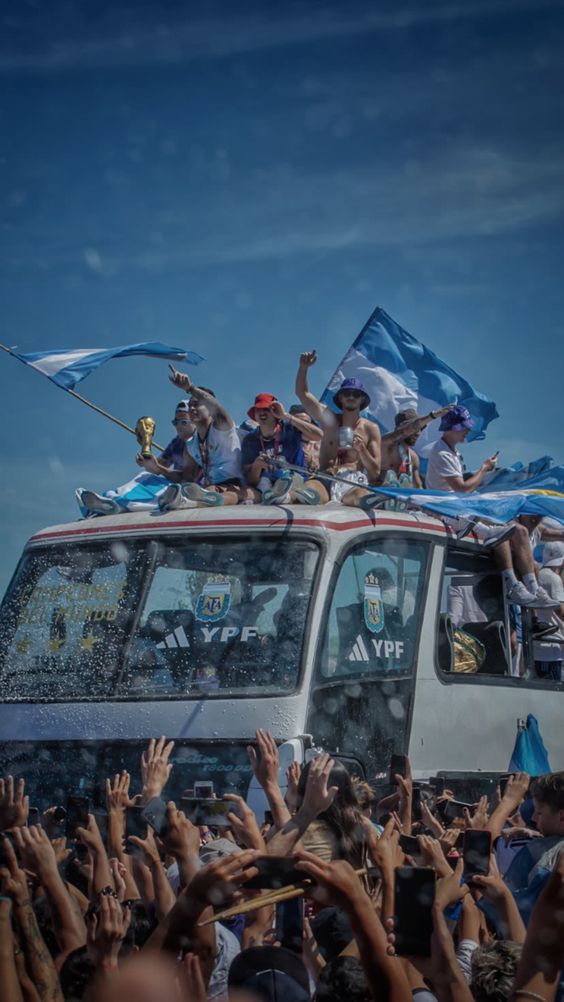
The argument ended on December 18, 2022. When Messi lifted the FIFA World Cup in Qatar, he filled the only glaring void in a career that had already redefined the sport’s ceilings. His resume is a statistical absurdity: a record eight Ballon d’Or awards, a record 109 goals for Argentina, a record 35 trophies with FC Barcelona, and a record-shattering 91-goal calendar year in 2012.
But numbers only tell half the story. His talent is a quiet, devastating efficiency. He doesn’t need 10 step-overs. He needs one half-yard of space, created by a body feint so subtle you miss it in real-time. The ball stays glued to his left foot as he glides past defenders who look like they’re running in sand. His passing vision is as lethal as his shooting; he’s among the top assist providers in football history.
His legacy transformed from “the best player without a World Cup” to the complete, undeniable GOAT. He carried the hope of a nation for 17 years, through three heartbreaking final losses, before delivering the ultimate prize. That narrative arc, from near-mythic pressure to ultimate triumph, is unmatched.
TL;DR: Messi’s two-decade reign of statistical dominance, capped by the 2022 World Cup, settles the greatest-of-all-time debate for most modern observers.
2. Diego Maradona
Maradona’s greatness is measured in moments, not decades. His peak, from the mid-80s to the 1990 World Cup final, was a supernova. In 1986, he didn’t just win the World Cup; he authored it. The “Hand of God” goal and the “Goal of the Century” against England, both in the same quarter-final, encapsulate his chaotic genius, the cunning and the sublime within five minutes.
His talent was more visceral than Messi’s. He played with a streetfighter’s edge, taking brutal kicks and charging back for more. He carried Napoli, a then-unfashionable Italian club, to their only two Serie A titles, beating the northern giants. His playmaking was gravitational; entire defenses warped around him, creating space for teammates.
The legacy is one of raw, unfiltered passion. He was a flawed icon, which made him more human and more relatable to many Argentines. He represented La Nuestra (“Our Way”), a style of technical skill, toughness, and cunning. For a generation, he was Argentine football.
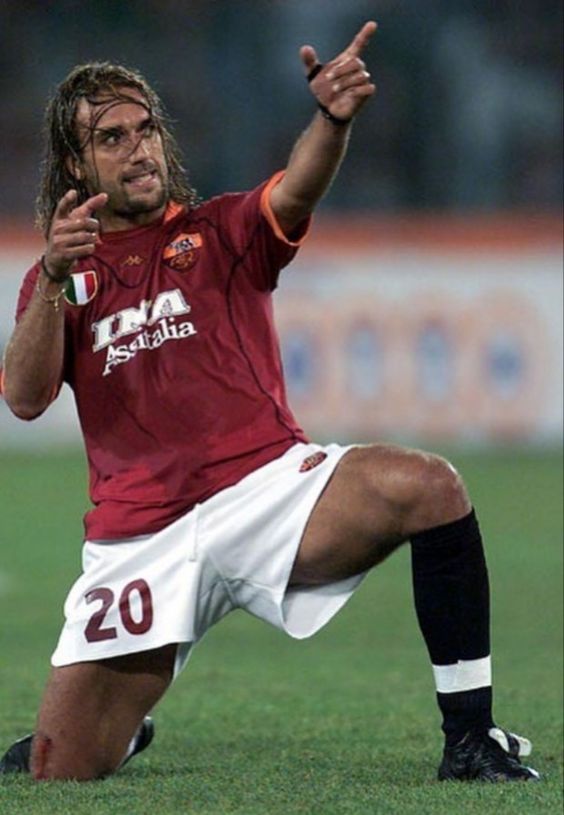
3. Gabriel Batistuta
Before Messi, “Batigol” was the Argentine goal record. He scored 56 goals in 78 games, a towering figure who played with a classic number 9’s ruthless power. His shots weren’t placed; they were blasted, often from distance, with a technique that kept the ball dipping violently.
He never won a major international trophy, which some hold against him. That misses the point. For a decade, he was the guaranteed goal, the focal point of every attack. He carried Fiorentina with his goals, earning a cult hero status in Florence, and later won Serie A with Roma. His consistency at the highest level, scoring in both Serie A and international play year after year, was his hallmark.
His legacy is that of the ultimate warrior striker. He played through painful ankle injuries, his knees shot by the end, because scoring for Argentina was an obsession. In an era of tricky forwards, he was a relentless, physical force.
4. Javier Zanetti
Zanetti is the argument for greatness beyond goals. The full-back turned defensive midfielder was the epitome of consistency, intelligence, and leadership for 19 years at Inter Milan. He made 858 appearances for the club, captaining them to 16 major trophies, including a historic treble in 2010. For Argentina, he earned 145 caps, a testament to his enduring class.
His talent was versatility and an engine that refused to quit. He could shut down the world’s best wingers, then surge forward to deliver a precise cross. His tackling was clean, his reading of the game exceptional. He maintained peak physical condition into his late 30s, a professionalism that became legendary.
His legacy is one of quiet dignity and relentless work. In a nation that idolizes its attacking maestros, Zanetti represents the equally vital backbone, the tough, smart, and unwavering professional who enables the magic ahead of him. He is the bridge between the grit of Passarella and the modern game.
5. Mario Kempes
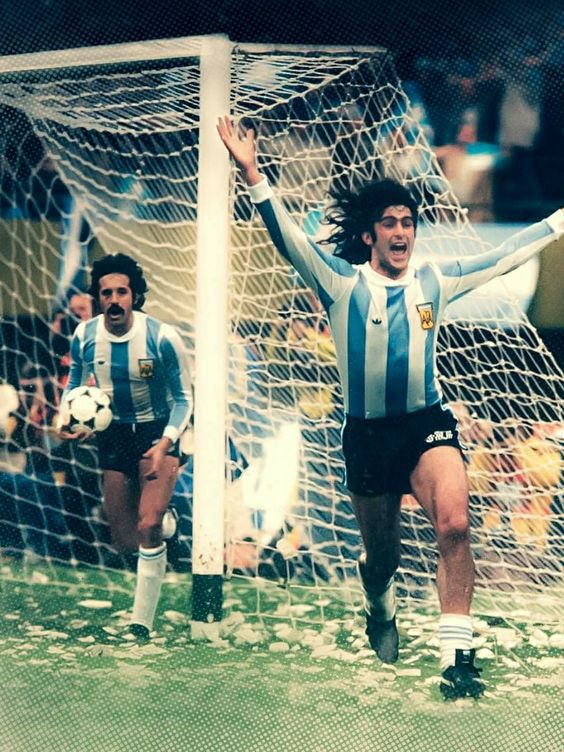
Kempes is the man for the single biggest moment in Argentine football history before 1986. In the 1978 World Cup, hosted and won by Argentina, he was the undisputed star. He finished as top scorer with 6 goals, including two in the final against the Netherlands. His style was direct, powerful, and fast, a striker who ran at defenders with uncontainable momentum.
His talent was explosive. He wasn’t the most technical, but his combination of pace, strength, and a thunderous shot made him a nightmare in open space. He succeeded in Spain with Valencia, winning domestic cups and the European Cup Winners’ Cup, proving his quality beyond one tournament.
His legacy is frozen in that 1978 summer. He was the first Argentine global superstar, the face of their first World Cup victory. In a country where World Cup success is the ultimate currency, being the protagonist of the first triumph guarantees immortality. He embodies the clutch tournament performer.
| Player | Defining Talent | Pinnacle Achievement | Lasting Legacy |
|---|---|---|---|
| Lionel Messi | Unmatched dribbling, passing, and scoring efficiency | 2022 FIFA World Cup, 8 Ballon d’Or awards | The complete modern GOAT; fulfilled a nation’s destiny |
| Diego Maradona | Chaotic genius, gravitational playmaking, unmatched peak | 1986 FIFA World Cup (virtually single-handed) | The personification of La Nuestra—skill, cunning, and passion |
| Gabriel Batistuta | Devastating powerful shot, classic target-man prowess | Argentina’s all-time top scorer (56 goals) for a generation | The ultimate warrior striker, a symbol of relentless goal-scoring |
| Javier Zanetti | Defensive intelligence, engine, versatility, and leadership | 19-year Inter Milan career, 858 apps, 16 trophies | The epitome of professional consistency and quiet, enabling greatness |
| Mario Kempes | Explosive pace and powerful finishing in open space | 1978 World Cup top scorer (6 goals), 2 goals in final | The clutch tournament hero of Argentina’s first World Cup win |
Why Argentine Football is Different: Genius Needs Grit
Argentina doesn’t just produce magical dribblers. It produces a specific hybrid: the artist who is also a streetfighter. This is the core of the national identity. Look at the list. Messi’s low center of gravity lets him ride tackles, Maradona invited and endured them, Batistuta powered through them, Zanetti timed them perfectly, Kempes exploded past them.
This duality explains why a defender like Daniel Passarella, the 1978 World Cup-winning captain, is so revered. He was a hardman who scored an astonishing 175 career goals. It explains why modern stars like Javier Mascherano, whose 147-cap career was built on tactical fouls and snarling leadership, are considered national treasures. The creative genius is celebrated, but it’s built on a foundation of relentless grit.
You see it in the youth systems. The emphasis is on technical skill in tight spaces (la pausa), but also on aguante, the toughness to withstand pressure. This produces players who are mentally equipped for the highest stakes. It’s why Argentine players are so often captains and leaders at elite European clubs, commanding lucrative contracts and respect not just for their feet, but for their minds.
Common mistake: Focusing only on goal-scorers and playmakers when ranking Argentine greats. This ignores the foundational role of defenders and defensive midfielders like Zanetti and Mascherano, whose intelligence and toughness created the platform for the artists to thrive.
The Messi vs. Maradona Debate: A Final Word
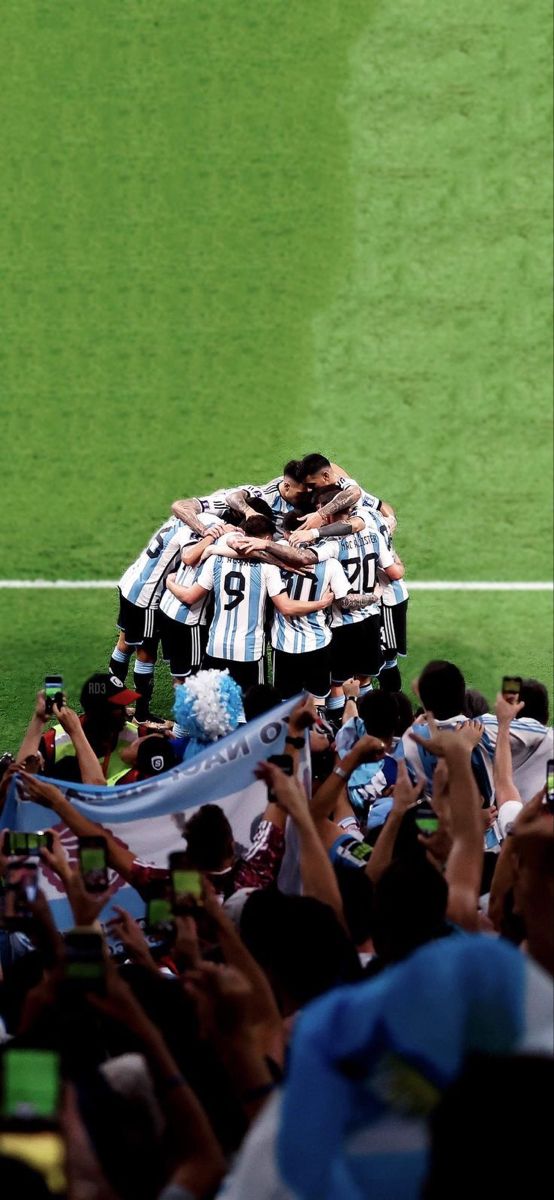
This is the eternal barroom argument. Here is the clean breakdown.
The Case for Messi: Longer peak, greater statistical dominance, more team trophies, a broader range of consistent excellence (dribbling, passing, scoring). He achieved everything in a more athletic, globalized, and competitively balanced era. His 2022 World Cup win matched Maradona’s crowning achievement.
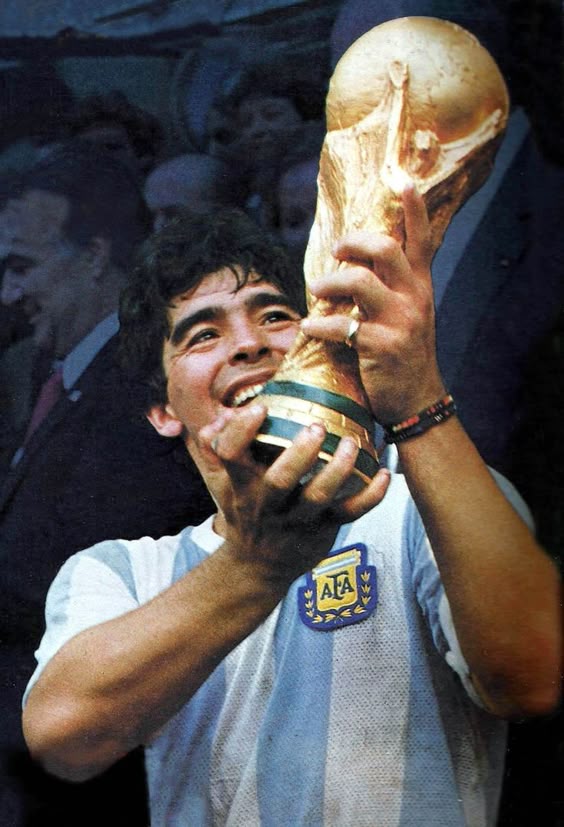
The Case for Maradona: A higher, more transformative single peak (1986-1990). He carried teams (Argentina 1986, Napoli) that were objectively weaker relative to their competition than Messi’s Barcelona. His style was more emblematic of the traditional Argentine picardía (cunning). He did it first, creating the template.
My take? Messi’s longevity and completeness tip the scale. Maradona’s 1986 is the greatest individual tournament performance ever. But Messi’s 17-year body of work at the very top, culminating in his own World Cup, represents a sustained level of greatness the sport had never seen. The debate is valid, but the evidence has shifted.
Notable Omissions: The Brilliant “Next Five”
Any top-five list leaves out phenomenal players. These are the ones who breathe down the necks of the legends above, the “next five” who define the incredible depth of Argentine talent.
- Daniel Passarella: The scoring defender, a World Cup-winning captain. Pure leadership and defensive ruthlessness.
- Ángel Di María: The big-game wizard. Scored the winning goal in the 2021 Copa América final and the 2022 World Cup final. A career of sublime moments for club and country.
- Javier Mascherano: The defensive midfield engine. His 147 caps were built on intelligence, positioning, and a ferocious will to win. The anchor for Messi’s greatest teams.
- Sergio Agüero: A pure goal machine. Manchester City’s all-time top scorer and third for Argentina. His injury-curtailed career is one of football’s great “what ifs.”
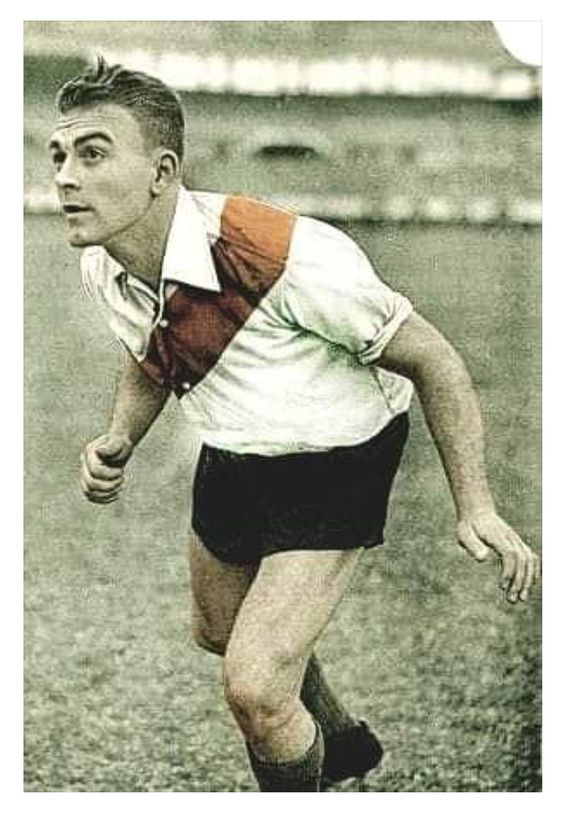
- Alfredo Di Stéfano: The most complicated omission. Arguably a top-5 player globally, but his prime international years were spent with Spain. For a list focused on Argentine legacy, his impact is more diffuse.
These players, especially Di María and Mascherano, were crucial to the modern era’s success. Their careers are case studies in how modern player popularity and recognition are built on sustained excellence in defining moments, not just flashy skills.
Frequently Asked Questions
Who is considered the best Argentine soccer player ever?
Lionel Messi is now widely considered the best Argentine soccer player ever. His recent 2022 World Cup victory resolved the last major point of contention in his long-standing rivalry with Diego Maradona for the title. Messi’s unparalleled longevity, trophy haul, and statistical records give him the edge in the eyes of most analysts and fans today.
Is Maradona better than Messi?
It depends on the criteria. Diego Maradona had a higher, more transformative peak, especially during the 1986 World Cup, and is a more iconic cultural figure in Argentina. Lionel Messi has had a longer career of sustained excellence, more individual awards, and more team trophies. For pure, consistent performance over time, Messi is generally viewed as better; for singular, era-defining impact, Maradona has a strong case.
Why isn’t Alfredo Di Stéfano in the top 5?
Alfredo Di Stéfano is one of the greatest players in history, but rankings of the “best Argentine players” typically focus on impact made while representing Argentina. Di Stéfano played only six official games for Argentina before becoming a naturalized Spanish citizen and starring for Spain. His legendary club career with Real Madrid was phenomenal, but his direct legacy with the Argentine national team is limited.
Who is the greatest Argentine striker after Messi and Maradona?
Gabriel Batistuta is the greatest pure striker. He held Argentina’s all-time scoring record for years with 56 goals, known for his powerful, unstoppable shooting. Modern stars like Sergio Agüero had incredible club careers, but Batistuta’s combination of longevity, iconic status, and record for the national team secures his place as the striking legend.
Which current Argentine player could break into this list someday?
No current active Argentine player is on a trajectory to break into this historic top five. The list is reserved for era-defining icons. Future candidates would need a Ballon d’Or-level career, combined with leading Argentina to multiple major trophies as the central figure, a bar set astronomically high by Messi and Maradona.
The Bottom Line
Ranking Argentina’s famous soccer players is an exercise in weighing magic against medals, and peak moments against lifelong consistency. Lionel Messi stands alone at the summit, a testament to modern football’s demands. Diego Maradona remains the eternal, chaotic spirit of the game. The next three. Batistuta, Zanetti, Kempes, each represent a non-negotiable pillar of what makes Argentina a footballing superpower: ruthless goalscoring, unwavering defensive leadership, and clutch tournament heroics.
The true takeaway isn’t the order, but the pattern. Argentine greatness isn’t a single note. It’s the harmony between the artist and the artisan, the genius and the grit. That’s why their legends endure.
I come from the “soccer heart” of Germany, the Ruhrpott. I have played, trained and followed soccer all my life and am a big fan of FC Schalke 04. I also enjoy following international soccer extensively.