The Bayern Munich vs Borussia Dortmund Rivalry Explained
The Bayern Munich vs Borussia Dortmund rivalry is a modern clash for Bundesliga supremacy, fueled by a cultural divide and transfer feuds. Known as Der Klassiker, its intensity stems from Dortmund’s rise in the 1990s, transforming it from a routine fixture into a title-deciding spectacle.
The Bayern Munich vs Borussia Dortmund rivalry, known as Der Klassiker, is a modern footballing clash defined by a stark cultural divide, relentless competition for Bundesliga supremacy, and a recurring transfer-market feud that fuels intense fan passion. This fixture pits Bavaria’s corporate juggernaut against the Ruhr Valley’s blue-collar titan, creating matches that often decide the German title.
Most articles get the origin wrong. They try to paint this as some ancient, blood-feud derby like the Revierderby. It isn’t. The modern heat started in the 90s, when Dortmund got rich enough to actually challenge Bayern’s throne. Before that, it was just another game on the calendar.
This guide cuts through the marketing gloss. We’ll look at the real history, the tactical war, the money, and why a match that averages four goals still leaves one fanbase feeling hollow most seasons.
Key Takeaways
- Der Klassiker is a modern rivalry. Its current intensity stems from the 1990s onward, not from deep historical roots. It’s a title-race conflict, not a local derby.
- Bayern’s dominance is statistical fact. In 114 Bundesliga meetings, Bayern have won 56 times to Dortmund’s 26. This imbalance is the central, frustrating reality for BVB supporters.
- The “player drain” is a core grievance. Bayern’s acquisitions of stars like Robert Lewandowski, Mario Götze, and Mats Hummels directly from Dortmund created lasting bitterness and a perception of economic bullying.
- It’s a clash of footballing philosophies. Bayern’s controlled, high-possession “Mia san Mia” approach contrasts with Dortmund’s high-energy, vertical counter-pressing under coaches like Jürgen Klopp and Edin Terzić.
- The global audience is massive. With over 6 million live spectators in the last decade and broadcast in hundreds of territories, this famous German rivalry is Germany’s prime football export.
The Historical Head-to-Head: A Story of Dominance and Drama
Forget the notion of a balanced, back-and-forth feud. The history of this famous German rivalry is a tale of one club’s sustained supremacy punctuated by the other’s fierce, sporadic rebellions. The raw numbers don’t lie. Across all competitions, Bayern Munich have won 69 of 139 meetings. Borussia Dortmund have won 33. In the Bundesliga, the disparity is even starker: 56 Bayern wins to 26 for Dortmund.
The rivalry’s modern chapter began in the mid-1990s. Before then, encounters were notable but not epoch-defining. Dortmund’s back-to-back Bundesliga titles in 1995 and 1996, followed by their 1997 UEFA Champions League triumph, announced them as a legitimate power. They were no longer just another team; they were the challenger. This era birthed the Bundesliga’s premier fixture as we know it.
A 2025 Bundesliga.com statistical deep dive notes that the last nine Der Klassiker meetings have averaged four goals per game. The highest-scoring edition remains Bayern’s 11-1 victory in 1971, a result that still echoes in the record books.
The 2010s cemented the dynamic. Under Jürgen Klopp, Dortmund won two more league titles (2011, 2012) and reached a Champions League final. Their style was the antithesis of Bayern’s: frenetic, emotional, and built on collective pressing. Bayern responded by not only reasserting domestic control but by systematically acquiring Dortmund’s crown jewels. This transfer strategy turned sporting competition into something more personal for fans.
TL;DR: The head-to-head record shows clear Bayern dominance, but Dortmund’s periods of success (mid-90s, early 2010s) are what injected the modern, high-stakes venom into the fixture.
| Era | Defining Characteristic | Key Transfer Spark |
|---|---|---|
| Pre-1990s | Sporadic, non-defining fixtures | Minimal direct movement |
| Mid-1990s | Dortmund emerges as true rival | — |
| Early 2010s | Klopp’s Dortmund vs. Heynckes’/Guardiola’s Bayern; peak tactical clash | Mario Götze (2013) |
| Mid-2010s onward | Bayern’s sustained dominance; Dortmund as consistent challenger | Robert Lewandowski (2014), Mats Hummels (2016) |
The Cultural Chasm: Bavaria vs. The Ruhr
The pitch is where the score is settled, but the rivalry is rooted in a deeper German cultural divide. This isn’t just about football. It’s about identity.
Bayern Munich, from affluent Munich in Bavaria, operates with a corporate, efficient “Mia san Mia” (We are who we are) confidence. Their Wikipedia entry on FC Bayern Munich details a record of 35 national titles and 27 consecutive profitable years. They are the establishment, well-funded, globally marketed, and expecting to win. Their home, the Allianz Arena, is a modern, sponsored marvel.
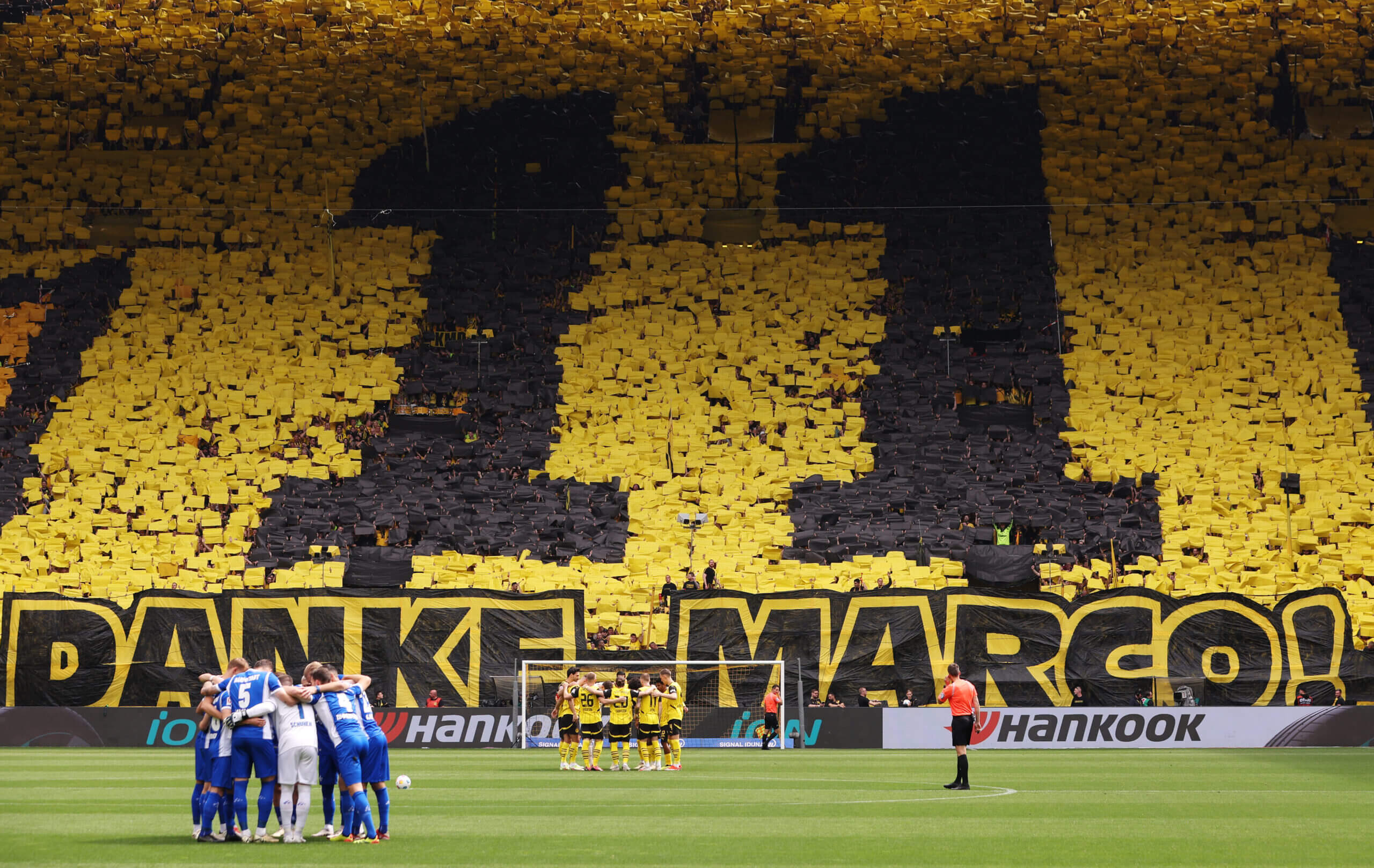
Borussia Dortmund, from the industrial Ruhr region, embodies “Echte Liebe” (Real Love). The club is member-owned, with over 150,000 members, and its identity is tied to the working-class history of the area. The Signal Iduna Park (Westfalenstadion) is a cauldron of emotion, featuring Europe’s largest standing terrace, the Südtribüne. The atmosphere here isn’t manufactured; it’s raw, generated by a tifo creation process that produces stunning visual displays and relentless collective singing.
This clash of identities fuels the passion. Bayern fans see Dortmund’s ethos as sentimental. Dortmund fans view Bayern’s success as cold, commercial, and bought rather than built. When Bayern wins, it’s business as usual. When Dortmund wins, it’s a victory for the underdog, for the region, for a different idea of what a football club should be. This fundamental difference in global fan cultures is why the rivalry resonates beyond mere league points.
The On-Field War: Shock and Awe vs. Vertical Thunder
Tactically, Der Klassiker is a collision of two distinct, high-octane German football philosophies. The clash rarely disappoints because both teams commit to attacking football, albeit from different starting points.
Bayern’s approach, historically, is one of controlled dominance. They impose their “Mia san Mia” philosophy through high possession, a suffocating high defensive line, and relentless pressure to overload opponents. The goal is psychological and physical submission. As a 2023 Goal.com analysis framed it, it’s a “shock and awe” doctrine aimed at scoring multiple goals and crushing the opponent’s will. The risk is a defensive line so high it can be exposed by pace, a “reckless” trait critics have noted.
Dortmund’s most potent weapon against this has been verticality. Under Klopp and his successors, their game is built on explosive transitions. They absorb pressure, win the ball through aggressive counter-pressing (gegenpressing), and attack at lightning speed with direct passes into space. It’s football as a thunderstorm, sudden, chaotic, and overwhelming.
The modern iterations see both styles evolving. Bayern under coaches like Thomas Tuchel or Vincent Kompany may vary the approach, while Dortmund under Edin Terzić blends that vertical threat with more structured possession phases. But the core contrast remains: Bayern’s methodical siege versus Dortmund’s rapid-strike rebellion. This difference is why matches swing wildly and why the team that controls the game’s tempo usually wins.
Common mistake: Assuming Bayern’s possession automatically leads to victory against Dortmund. Dortmund’s entire tactical history is designed to punish possession without penetration. If Bayern’s final pass is off, Dortmund’s counters can be lethal within three passes.
The Off-Field Friction: Money, Muscle, and the “Bayern-Dortmund Pipeline”

The most bitter pill for Dortmund fans to swallow isn’t just losing on the pitch. It’s watching their best players, often the architects of their greatest triumphs, cross the divide to strengthen the enemy. This “pipeline” from Signal Iduna Park to the Allianz Arena is a unique and defining facet of the Bayern-Dortmund clash.
The list is a roll call of Dortmund icons:
* Mario Götze (2013): The young superstar whose release clause was activated months after Dortmund’s 2013 Champions League final run. The timing felt like a targeted strike.
* Robert Lewandowski (2014): The world-class striker who left on a free transfer after scoring 103 goals for BVB. He then became Bayern’s all-time leading foreign scorer.
* Mats Hummels (2016): The defensive captain and leader, a symbol of the Klopp era, who chose to return to his former club Bayern.
Each transfer amplified the narrative of Bayern using its superior financial muscle, backed by decades of profitability, to neuter its closest competitor. It’s seen not as smart business, but as predation. This economic disparity, where Bayern’s revenue consistently dwarfs Dortmund’s, creates a permanent undercurrent of resentment. It makes Dortmund’s triumphs feel even more heroic and Bayern’s victories feel, to some, inevitable.
This financial dynamic is a key differentiator from more traditional, local derbies based purely on geography. The friction isn’t just about pride; it’s about power and the perceived integrity of the competition.
Der Klassiker’s Place in the Global Game

So where does the German Klassiker stand among the world’s great football rivalries? It’s not El Clásico (Barcelona vs. Real Madrid) with its deep political history. It’s not the Superclásico (Boca vs. River Plate) with its raw, neighborhood fury. Its strength lies in its modern, pure-sporting narrative and its role as the flagship of the Bundesliga.
The Bundesliga’s global broadcast strategy has successfully packaged Der Klassiker as a must-watch event. The numbers prove it works:
* Every match for the past decade has been a capacity crowd.
* Over 6 million spectators have attended the games in Munich and Dortmund over that period.
* It commands a global TV audience in the hundreds of millions.
The rivalry is also notably clean for its intensity. Bundesliga data shows Der Klassiker averages 3.7 yellow cards and 0.1 red cards per game, on par with the league average. The fight is on the pitch, not in the stands, a distinction important for understanding the distinction in fan culture between organized supporter groups and other, more violent elements sometimes associated with the game.
Its global appeal is that of a perfect sporting contest: the definitive champion versus its most credible challenger, playing a fast, attacking style of football. For new fans exploring soccer derbies, it’s the most accessible entry point into German football’s soul.
Frequently Asked Questions
When did the Bayern Munich vs Dortmund rivalry become so intense?
The modern rivalry, dubbed Der Klassiker, truly ignited in the 1990s. Borussia Dortmund’s rise as a consistent domestic and European force, winning Bundesliga titles in 1995, 1996, and the Champions League in 1997, posed the first serious, sustained challenge to Bayern’s dominance in decades. This competitive tension for the top spot created the high-stakes foundation we see today.
Why do Dortmund fans hate Bayern Munich so much?
The animosity stems from three layered grievances. First, Bayern’s overwhelming historical dominance (56 Bundesliga wins to Dortmund’s 26). Second, the repeated transfers of Dortmund’s key players (Götze, Lewandowski, Hummels) to Bayern, which feels like economic predation. Third, the cultural clash between Bayern’s corporate, Bavarian identity and Dortmund’s working-class, Ruhr-region “Echte Liebe” ethos.
What does “Der Klassiker” mean?
“Der Klassiker” translates directly to “The Classic.” It’s the marketing name adopted by the Bundesliga and broadcasters in the 21st century to brand the fixture for a global audience. Some traditionalists dislike the term as an artificial construct, preferring to simply call it “Bayern gegen Dortmund” (Bayern against Dortmund). It has nonetheless become the universally recognized label for the clash.
Has Dortmund ever beaten Bayern in a major final?
Yes, and those victories are particularly cherished. The most famous is the 2012 DFB-Pokal (German Cup) final, where a Jurgen Klopp-led Dortmund thrashed Bayern 5-2 in Berlin. This completed Dortmund’s first-ever domestic double and marked the peak of their power over Bayern at the time. They also beat Bayern in the 2021 DFL-Supercup.
Which players have played for both Bayern Munich and Borussia Dortmund?
Several high-profile players have crossed the divide, almost exclusively moving from Dortmund to Bayern. Key names include striker Robert Lewandowski, midfielder Mario Götze, defender Mats Hummels, and goalkeeper Alexander Frei. Each transfer significantly heightened the rivalry’s tension.
The Bottom Line
The Bayern Munich vs Borussia Dortmund rivalry is the engine of the modern Bundesliga. It’s not a derby of proximity, but a championship duel amplified by cultural opposition and financial inequality. Bayern’s “Mia san Mia” confidence will always be the benchmark, while Dortmund’s “Echte Liebe” passion provides the necessary, furious resistance.
For the neutral, it guarantees a spectacle, a match that has averaged four goals in recent years and often decides the destination of the Meisterschale. For the fans, it’s deeper. It’s about identity, pride, and the relentless hope that this time, the narrative might finally change. That tension, between established order and passionate revolt, is what makes Der Klassiker genuinely classic.

I come from the “soccer heart” of Germany, the Ruhrpott. I have played, trained and followed soccer all my life and am a big fan of FC Schalke 04. I also enjoy following international soccer extensively.