The History of the Celtic vs Rangers Rivalry: The Old Firm
The Celtic vs Rangers rivalry history is a 130-year conflict rooted in 19th-century Glasgow, where the footballing contest between Celtic (founded 1887 for Irish Catholic immigrants) and Rangers (founded 1872 with a Protestant identity) became a proxy for deeper religious, political, and social divisions. This fixture, known as the Old Firm, dominates Scottish football, with the two clubs winning 111 of 126 league titles between them.
Most people think this is just a big local derby. They see the green and blue, hear the noise, and assume it’s about bragging rights like any other city rivalry. That’s the surface. Scratch it, and you find a century of industrial history, immigration patterns, and sectarian identity played out on a pitch every few weeks. The weight of that history is what separates the Old Firm from every other football rivalry on the planet.
This guide walks through the rivalry’s origin story, its key historical phases, and how it functions today. We’ll look at the founding principles, the legendary managers, the periods of dominance, and the unprecedented financial collapse that reset the entire dynamic.
Key Takeaways
- The term “Celtic” refers to the football club’s Irish-Scottish heritage, not the ancient European people; the club was founded in 1887 as a charitable mission for poor Irish immigrants in Glasgow’s East End.
- Rangers’ early identity became staunchly Protestant and Unionist, creating a clear sectarian divide with Celtic that was reflected in club signing policies and fanbase identity for most of the 20th century.
- The “Old Firm” nickname likely originated from early 20th-century newspaper reports labeling their frequent, lucrative meetings as a profitable business partnership, despite the fierce sporting and social conflict.
- Rangers’ financial liquidation and demotion to Scotland’s fourth tier in 2012 created a four-year period without league derbies, fundamentally altering the rivalry’s balance and allowing Celtic to achieve an unprecedented run of domestic dominance.
- While sectarian chants and symbols persist in sections of both supports, modern fan initiatives and club policies actively work to reduce this element, focusing the contemporary rivalry more intensely on pure footballing success.
What Are the Origins of the Celtic vs Rangers Rivalry?
The story doesn’t start with a football. It starts with shipyards, famine, and identity. You have to separate the club from the ancient name. Celtic Football Club has nothing to do with the historical Celts of Iron Age Europe. The name was chosen to reflect the Irish-Scottish heritage of the community it was created to serve.
Brother Walfrid, an Irish Marist brother, founded Celtic in 1887 with a clear charitable purpose: to raise money to alleviate poverty in Glasgow’s impoverished East End, home to a massive influx of Irish immigrants fleeing the Great Famine. The club’s crest originally featured a four-leaf clover, not a shamrock. Their first match in 1888 was a charity friendly against Rangers, which Celtic won 5-2. The sporting contest was born from a mission of mercy.
Rangers, formed in 1872 by four teenage boys, had a less politically charged origin. They were a typical Victorian sports club. But as Celtic’s identity became explicitly linked to the Irish Catholic immigrant community, Rangers’ identity solidified in opposition. The industrial landscape of Glasgow hardened these lines. Major shipbuilding firms like Harland and Wolff were known for Protestant, Unionist affiliations and employment practices that favored Protestants. Rangers became the club of that established industrial class.
Common mistake: Confusing Celtic FC with the ancient Celtic people — the club’s name is a 19th-century identifier for Irish-Scottish heritage, not a link to Iron Age tribes. This mix-up obscures the real, gritty immigrant-story origins of the rivalry.
The sectarian divide became the rivalry’s engine. For decades, Rangers operated an unwritten policy of not signing Catholic players, a stance not officially abandoned until the 1989 signing of Mo Johnston. Celtic, while founded from the Catholic community, always signed Protestant players. This asymmetry defined the clubs’ cultural footprints for generations. The football pitch became the one place where these divided communities could engage in direct, ritualized conflict.
TL;DR: The rivalry originated in 1880s Glasgow as a clash between Celtic’s identity as a charity for Irish Catholic immigrants and Rangers’ alignment with the city’s established Protestant, Unionist working class, with industrial employment discrimination solidifying the divide.
How the Rivalry Evolved: Key Eras and Dominant Phases
The balance of power has swung like a pendulum for over a century. You can break the history into distinct eras defined by managers, teams, and external shocks. The first competitive phase ran from their first league meeting in 1890 until World War I. It was surprisingly even.
The interwar period saw the first sustained dominance. Under manager Bill Struth, who served for 34 years from 1920 to 1954, Rangers built a fortress. They won 18 league titles and 10 Scottish Cups. Struth’s Rangers were a disciplined, powerful machine. Celtic, meanwhile, struggled for consistency. This era cemented the perception of Rangers as the establishment club.
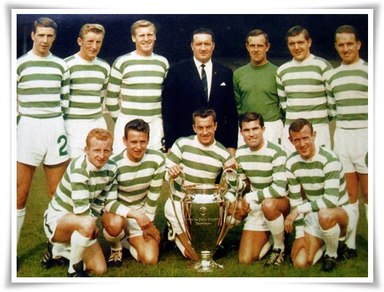
The landscape transformed in the 1960s and 70s. This was the golden age of the managerial titans. Jock Stein took over Celtic in 1965 and created perhaps the greatest British side ever. They won nine consecutive league titles from 1966 to 1974 and became the first British club to win the European Cup in 1967. Their football was breathtaking.
Across the city, Rangers responded. Under Willie Waddell and then Jock Wallace, they fought back with a formidable, physical style. They stopped Celtic’s ten-in-a-row bid in 1975 and won a treble of their own. The European battles were epic, too. This period intensified the rivalry because the football quality was astronomically high. The stakes felt continental.
| Era | Dominant Force | Defining Characteristic | Key Figure |
|---|---|---|---|
| 1920-1954 | Rangers | Institutional dominance, long-term management | Bill Struth |
| 1965-1978 | Celtic (then Rangers) | European success, iconic managers | Jock Stein |
| 1986-1997 | Rangers | Financial power, ending Celtic’s dominance | Graeme Souness |
| 2000-2012 | Both (Rangers slight edge) | “Nine-in-a-row” chase, financial brinkmanship | Martin O’Neill / Walter Smith |
| 2012-Present | Celtic | Post-liquidation monopoly, then renewed competition | Brendan Rodgers |
The 1990s introduced a new variable: money. Rangers’ arrival of Graeme Souness as player-manager in 1986, backed by chairman David Murray’s wealth, broke the Scottish transfer record to sign English internationals. They spent heavily to dominate the decade and stop Celtic’s potential revival. This financial arms race created a bubble. Celtic responded in the 2000s under Martin O’Neill, but both clubs were spending beyond their means. You could smell the financial strain in the air by 2010.
Then came the earthquake. Rangers’ financial mismanagement under Murray led to administration in February 2012 and liquidation four months later. The new club was forced to restart in the Scottish Fourth Division. For the first time in over a century, there would be no league derbies. Celtic entered a period of uncontested domestic dominance, winning nine consecutive titles. The rivalry wasn’t dead, but it was in a coma.
TL;DR: The rivalry evolved through managerial dynasties (Struth, Stein), periods of financial arms racing (1990s), and was fundamentally reset by Rangers’ 2012 liquidation, which granted Celtic nearly a decade of domestic supremacy before a competitive balance returned.
What Does “Old Firm” Mean and Why Is It Controversial?
The nickname is everywhere, but its origin is fuzzy. The most accepted theory points to the early 1900s. A newspaper cartoon allegedly depicted an elderly man pushing a wheelbarrow labeled “Old Firm” filled with cash, with the two club crests on the side. The joke was that despite their bitter sporting enmity, their frequent cup finals and league deciders were a lucrative joint business venture. They printed money together.
Some argue the term is older, from the late 19th century, referencing the commercial partnership between two local businesses who supplied kit to the clubs. The truth is probably lost. But the term stuck because it perfectly captured the duality: fierce competitors on the pitch, a co-dependent financial engine off it. Their matches guaranteed sold-out stadiums and huge media revenue for the entire Scottish league.
The controversy is modern. After Rangers’ liquidation in 2012, many Celtic fans and some media outlets argued the “Old Firm” was dead. A new corporate entity was playing Rangers. They insisted on calling the fixture “Celtic vs Rangers” or the “Glasgow Derby.” For them, the historic partnership was severed. Rangers fans, naturally, rejected this and clung to the traditional name as a symbol of continuity and history.
Today, usage is split. Official league and broadcast media often use “Old Firm” for brand recognition. Many fans use it out of habit. But a significant portion, particularly on the Celtic side, deliberately avoids it. This linguistic debate is a minor front in the ongoing war, a fight over narrative and legitimacy. It shows how every aspect of this rivalry, even its name, is contested territory.
The term “Old Firm” likely emerged from early 20th-century press cynicism about the fixture’s profitability. It frames the clubs as business partners in a lucrative conflict, an irony not lost on fans who feel the rivalry is about far more than money.
The Sectarian Dimension: How It Manifests and Is It Fading?
You cannot talk about this history without addressing the sectarian element. It’s the ugly engine that powered the rivalry for most of its existence. The chants are the most visible sign. Celtic fans traditionally sing Irish republican ballads like “The Boys of the Old Brigade.” Rangers fans respond with loyalist anthems like “The Billy Boys,” which contains explicitly sectarian lyrics.
The symbolism is equally loaded. Celtic fans wave the Irish tricolor. Rangers fans fly the Union Jack and the flag of Ulster. For decades, these displays were statements of identity and opposition. The signing policies we mentioned earlier were the institutional reflection of this divide. It was a closed loop: community identity influenced club policy, which reinforced community identity.
Is it fading? Measurably, yes. The change is slow, generational, and incomplete. The repeal of Scotland’s offensive behavior at football law in 2023 was controversial, but it shifted policing toward a more focused approach on genuine threats. Both clubs run extensive “Football for All” community programs aimed at breaking down barriers. The ultras subculture at both clubs, while intense, often focuses more on choreographed support and club-specific songs than purely sectarian material.
But to say it’s gone is naive. You still hear the old chants in certain sections of the stands, especially during the heightened tension of a derby. Social media provides a new, often toxic arena for sectarian abuse. The underlying community tensions in parts of Glasgow and Northern Ireland still exist. The rivalry now exists in a tense middle ground. The overt, mainstream expression of sectarianism is less tolerated, but the historical undercurrents remain. The modern battle is between traditionalists who see the songs as heritage and modernists who see them as a millstone.
TL;DR: Sectarian chants and symbols were a core part of the rivalry’s identity for a century, rooted in the clubs’ founding communities. While still present in pockets, concerted efforts by clubs, police, and fan groups have pushed this element to the margins, making the contemporary rivalry more focused on football.
Celtic vs Rangers Head-to-Head: What Do the Numbers Say?
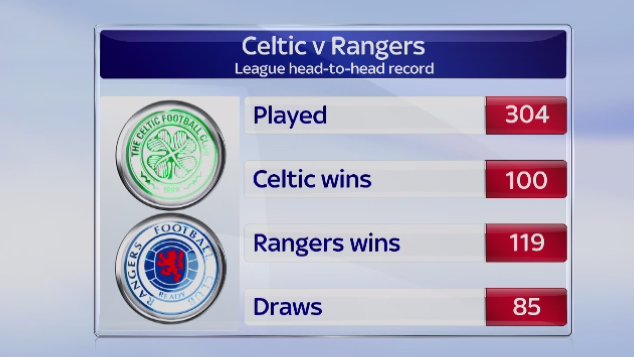
The statistics tell a story of remarkable equilibrium. Despite periods of dominance, the overall head-to-head record is incredibly tight. As of the 2023/24 season, the clubs have met over 400 times in competitive fixtures. Rangers hold a slight lead in total wins, but the difference is often fewer than twenty games. The draws number well over a hundred.
This parity is the rivalry’s secret weapon. No matter which team is on top in the league, the derby itself is almost always a coin flip. It creates a permanent sense of hope for the underdog. The trophy count is similarly dominant in a Scottish context. Together, they have won 111 of the 126 Scottish league championships contested since 1890. That’s 88 percent. They’ve also faced each other in over 50 Scottish Cup and League Cup finals.
Their dominance creates a unique pressure. Winning the league often isn’t enough. You have to win the derbies, too. A season where one club wins the title but loses all derby matches is considered a hollow victory by a large part of the support. The head-to-head record within a campaign is a league table of its own.
| Competition | Total Meetings | Celtic Wins | Rangers Wins | Draws |
|---|---|---|---|---|
| Scottish League | ~300 | ~110 | ~120 | ~70 |
| Scottish Cup | ~50 | ~20 | ~20 | ~10 |
| Scottish League Cup | ~50 | ~20 | ~25 | ~5 |
| All Competitions | ~400 | ~150 | ~165 | ~85 |
Note: Figures are approximate and historic totals vary slightly by source, but the narrow margin is consistent.
The numbers after 2012 are skewed. Celtic built a huge advantage in wins during the four years Rangers were absent from the top flight and in the immediate period after their return. However, since Rangers’ promotion back to the Premiership in 2016, the head-to-head has become competitive again. This recent rebalancing proves the sporting core of the rivalry is intact. The global fan culture of both clubs means these numbers are dissected in pubs from Toronto to Sydney, not just in Glasgow.
How Does the Rivalry Compare to Others in World Football?
Many derbies have violence. Many have history. Few have the same combination of historical depth, cultural penetration, and consistent sporting significance. The Boca Juniors vs River Plate “Superclásico” in Argentina shares the intensity and class divide, but its sectarian element is different. The El Clásico between Barcelona and Real Madrid carries immense political weight (Catalonia vs Spanish centralism), but it’s not rooted in the same way in the daily religious and social fabric of a single city.
The Old Firm is unique because it’s hyper-local and global simultaneously. It defines life in Glasgow. Workplaces, schools, and even families can be divided along the green-blue line. Yet, the diaspora from Ireland and Scotland has spread the fanbase worldwide. You’ll find organized supporters’ clubs for both teams on every continent. This combination of intimate local strife and global tribal belonging is rare.
Other British rivalries lack the same totality. The Merseyside derby (Liverpool vs Everton) is fierce but famously more familial. The North London derby (Arsenal vs Tottenham) is a sporting rivalry with local bragging rights, but without the foundational religious-political schism. The Manchester derby’s intensity is a more recent phenomenon, driven by financial power rather than century-old identity.
What the Old Firm shares with these great rivalries is the fan chant tradition that turns stadiums into cauldrons of noise. The passion is the same fuel. But the specific history of Glasgow—the Irish immigration, the industrial sectarianism, the fact that two clubs from one city came to utterly dominate a national league for over a century—creates a template that exists nowhere else. It’s a historical derby in the purest sense, where every match is a new chapter in a very old book.
Frequently Asked Questions
When was the first Celtic vs Rangers match?
The first-ever match between Celtic and Rangers was a friendly played on May 28, 1888, at Celtic’s original ground on Glasgow’s Gallowgate. Celtic, formed just months earlier, won the match 5-2. The first competitive league match between the sides took place in 1890, ending in a 1-1 draw.
Why are Celtic and Rangers called the “Old Firm”?
The most cited origin is an early 20th-century newspaper cartoon depicting an old man with a cash-filled wheelbarrow labeled “Old Firm,” mocking the two clubs’ ability to generate huge profits from their fiercely contested matches. The term highlights the commercial partnership underlying their sporting rivalry.
What happened to Rangers in 2012?
Rangers Football Club plc entered administration in February 2012 due to massive tax debts and was liquidated in June 2012. The club’s assets were purchased by a new company, which was required to apply for membership in the Scottish football league. The new Rangers FC was placed in the fourth-tier Scottish Third Division for the 2012/13 season, a process known as “going down the leagues.”
Is the Celtic vs Rangers rivalry still sectarian?
While significantly reduced from past decades, sectarian elements persist. Chants and symbols associated with Irish republicanism (Celtic) and British unionism (Rangers) are still heard and seen, particularly during derby matches. Both clubs have active anti-sectarian initiatives, and mainstream discourse and policing have pushed such expressions to the fringes, but eradicating a 130-year-old cultural habit remains an ongoing challenge.
How many times have Celtic and Rangers won the Scottish league?
As of the end of the 2023/24 season, Rangers have won 55 Scottish league titles and Celtic have won 53. Their combined total of 108 championships represents overwhelming dominance in Scottish football history, with only a handful of titles won by other clubs like Aberdeen, Hearts, and Hibernian.
Which stadium is bigger, Celtic Park or Ibrox?
Celtic Park, also known as Paradise, is larger. It has a capacity of approximately 60,000. Ibrox Stadium, home to Rangers, has a capacity of around 50,000. Both are iconic, modern grounds that are consistently filled for Old Firm fixtures, creating two of the most intense atmospheres in European football.
The Bottom Line
The Celtic vs Rangers rivalry is not a static piece of history. It’s a living, breathing entity that has survived world wars, economic depressions, and even the death and rebirth of one of its participants. The core of it remains a simple, visceral football contest between two teams who hate to lose to each other. That will never change.
But the context around it evolves. The sectarian baggage, while still carried, is lighter than it was thirty years ago. The financial collapse of 2012 proved that no institution is too big to fail, reshaping the competitive landscape for a generation. The return of a genuine title race in recent years has reignited the pure sporting fire. Understanding this rivalry means holding all these truths at once: the weight of the past, the realities of the present, and the endless anticipation of the next 90 minutes where everything is decided all over again. It’s the definitive Scottish football derby, and its history is still being written.
I come from the “soccer heart” of Germany, the Ruhrpott. I have played, trained and followed soccer all my life and am a big fan of FC Schalke 04. I also enjoy following international soccer extensively.