Champions League Group Stage vs Knockout Format Differences
The Champions League group stage (now league phase) and knockout format are two distinct tournament structures within the same competition. The old group stage placed 32 teams into eight groups of four for a round-robin, with the top two advancing. The knockout format is a pure single-elimination bracket from the round of 16 onward. Since 2024, a new 36-team single-league phase has replaced the traditional group stage, feeding into an expanded knockout phase that includes play-offs for teams ranked 9th to 24th.
Most fans think the knockout stage starts in February. That’s outdated. The new format creates a knockout scenario for almost half the field as early as January, and the line between “group stage” safety and sudden death is now blurred.
This guide breaks down the old system, the new reality, and the brutal, beautiful mechanics of knockout football. You’ll see how qualification works, why every match in the league phase suddenly matters more, and what makes a two-legged tie the ultimate test.
Key Takeaways
- The traditional Champions League group stage with eight groups of four is gone, replaced from the 2024/25 season by a 36-team single league phase.
- In the new format, the knockout phase now starts with a play-off round for teams ranked 9th to 24th, adding an extra elimination round before the round of 16.
- Knockout matches are two-legged ties (home and away) decided by aggregate score, with extra time and penalty shootouts as tiebreakers, a format designed for maximum drama and zero margin for error.
- The league phase uses a Swiss-style draw where each team faces eight different opponents, increasing match variety but making each result critical for final placement.
- Teams finishing 25th or lower in the league phase are completely eliminated from European football, with no fallback to the Europa League.
The New League Phase vs The Old Group Stage
For decades, the Champions League group stage meant 32 clubs drawn into eight groups of four. Each team played six matches, home and away against the other three. The top two advanced; third place dropped to the Europa League. It was predictable, often leading to dead rubbers once qualification was secured.
The 2024 reform scrapped it entirely.
The new UEFA Champions League league phase, detailed on the official Wikipedia page on the 2025-26 league phase, is a 36-team single standings table. Each team plays eight matches, four home, four away, against eight different opponents drawn from four seeding pots. There are no traditional groups.
The mechanics are more complex. A computer-assisted draw pairs teams while respecting association protection rules. You might face giants from Pot 1 and Pot 4, but never a club from your own country. Every point feeds into one massive table.
| Aspect | Old Group Stage (Pre-2024) | New League Phase (2024+) |
|---|---|---|
| Team Count | 32 | 36 |
| Structure | 8 groups of 4 teams | 1 league of 36 teams |
| Matches per Team | 6 (round-robin within group) | 8 (vs. 8 different opponents) |
| Advancement | Top 2 from each group (16 teams) to Round of 16 | Top 8 to Round of 16; Teams 9-24 to Play-offs |
| Elimination | 3rd to Europa League; 4th out | 25th-36th completely out of Europe |
The pressure is different. In the old groups, beating the weakest team twice was often enough. Now, with eight one-off matches against varied opposition, there are no easy six-point hauls. A single bad night against a Pot 4 side can tank your ranking and force you into the treacherous play-offs.
TL;DR: The old group stage is dead. The new 36-team league phase is a single table where every match is a unique fixture, making consistent performance more critical than ever for a direct top-eight finish.
How the Knockout Phase Actually Works Now
The knockout phase is the tournament’s ruthless heart. It’s where dreams are validated or shattered in 180 minutes, or less. The format is simple: lose, and you’re out. The path to get there, however, changed with the new league phase.
Finishing in the top eight of the league phase is the golden ticket. It grants automatic passage to the round of 16, letting you skip the new preliminary knockout round. This is the prize everyone chases.
Common mistake: Assuming the knockout stage starts with 16 teams. Under the new format, it starts with 32. Teams ranked 9th to 16th in the league phase are seeded in a two-legged play-off against teams ranked 17th to 24th. The eight winners advance to join the top eight in the round of 16.
This creates a brutal January reckoning. A club that finishes 9th faces a seeded but dangerous opponent just to reach the last 16. There is no safety net.
- The Play-Offs (Knockout Round 1): This is the new gateway. Two-legged ties, home and away. The team with the better league phase ranking hosts the second leg, a small but real advantage. Win here, and you’re in the official round of 16 draw.
- The Round of 16: The traditional starting point. The eight play-off winners join the top eight from the league phase. The draw has no country protection, so domestic rivals can meet early. The aggregate score across two legs decides who advances.
- Quarter-finals & Semi-finals: The bracket narrows. These remain two-legged ties, maintaining the home-and-away balance that tests a team’s adaptability.
- The Final: One match on a neutral ground. No second chances. Ties after 90 minutes go to extra time, then penalties. It’s the purest form of single-elimination tournament pressure in sports.
The entire knockout phase, from the play-offs to the final, is a masterclass in tension. The shift from the marathon league phase is jarring. One defensive lapse away from home can haunt you for the entire second leg.
Why the Two-Legged Tie is the Ultimate Test
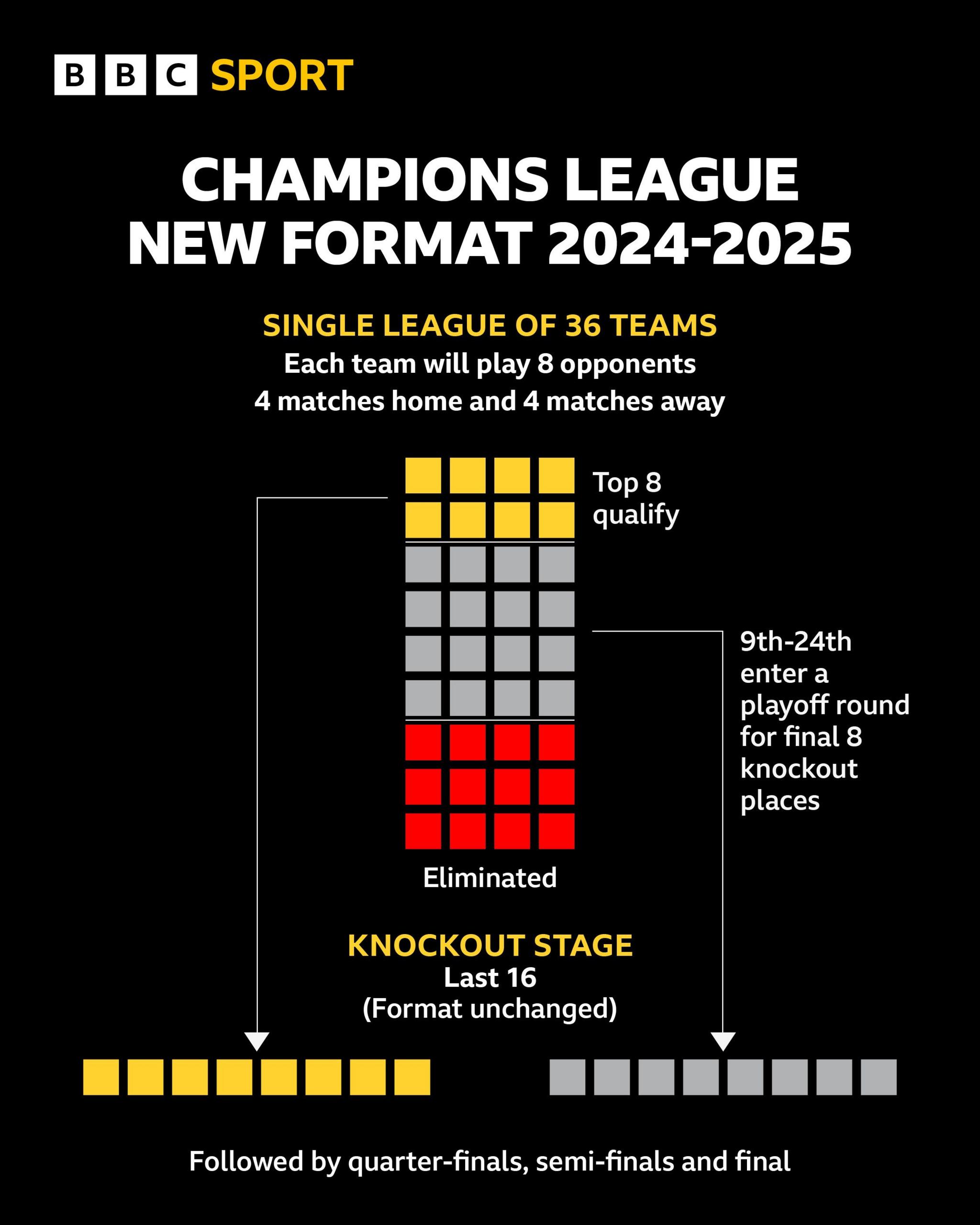
A two-legged knockout tie is not just two matches. It’s a 180-minute chess match with a halftime break that lasts a week. The first leg sets the terms; the second leg is where narratives implode or legends are born.
The core mechanism is the aggregate score. You add the goals from both matches together. The team with more goals wins. Simple. This system creates distinct strategic phases that a one-off final can’t replicate.
- The First Leg (Setting the Table): Playing at home first is a double-edged sword. The priority is avoiding a deficit. Conceding a cheap away goal, even though the away goals rule is abolished, still gives your opponent a tangible advantage to defend at home. The ideal first-leg result is a win with a clean sheet. A 0-0 draw is acceptable; a 2-1 win is riskier than it looks.
- The Second Leg (Execution): This is where tactics get torn up. The team with the aggregate lead can play to protect it, inviting pressure. The chasing team must attack, which opens space for deadly counter-attacks. The momentum can swing with a single goal.
I watched Schalke in the 2011 semi-final against Manchester United. We won the first leg 2-0 at home, a dream result. At Old Trafford, they scored four. The aggregate went from 2-0 to 2-4 in what felt like minutes. A two-legged tie is never over. Ever.
The abolition of the away goals rule in 2021 changed the calculus. Before, an away goal counted as a tiebreaker, encouraging attacking play on the road. Now, if the aggregate is level after 180 minutes, the tie goes straight to extra time and then penalties. This removes a layer of gimmicky tension and places the burden squarely on scoring more goals, period.
TL;DR: The two-legged tie tests tactical flexibility, mental resilience, and squad depth over two weeks. Protecting a lead away or overturning a deficit at home defines European legacies.
League Phase Strategy vs Knockout Mentality
The skills needed to top the league phase are not the same ones that win knockout ties. Confusing them is how talented teams get humiliated.
The league phase is a test of consistency and squad rotation. With eight unique opponents, you face a wider range of tactics and qualities. You can afford a single off-night, maybe two, if you win your other matches. The goal is points accumulation, not perfection. It rewards deep squads and managers who can adapt weekly.
The knockout phase demands perfection in short, intense bursts.
- Risk Management: In the league phase, going for a win in the 89th minute is usually worth the risk of conceding on the counter. Three points are vital. In a knockout second leg, that same gamble could send you out of the competition on aggregate. The cost of failure is absolute.
- Player Management: A slight knock might keep a star player out of a league phase match to ensure fitness for a domestic weekend fixture. That same player gets a painkilling injection to start a Champions League quarter-final. The stakes are incomparable.
- Psychological Pressure: The league phase has a points buffer. The knockout phase is a cliff edge. You see it in players’ faces during walkouts and in every missed chance. The fear of elimination changes decision-making at every level.
This dichotomy is why some teams are “group stage specialists” that falter in February. They excel at the steady grind but crack under the sudden-death spotlight. The new format, with its league-phase play-off, intentionally blurs this line earlier, forcing teams to switch mentality mid-stream.
Comparing Other Tournament Formats
The Champions League’s hybrid format, a league phase feeding a knockout stage, isn’t unique. Placing it alongside other major tournaments highlights its specific design choices and trade-offs.
The FIFA World Cup uses a pure group stage (soon to be 16 groups of three in 2026) followed by a knockout bracket. Its group stage is shorter and more volatile, with only three matches. The margin for error is zero, creating instant drama but sometimes eliminating strong teams early due to a single bad game. The World Cup’s knockout stage is a straightforward single-elimination bracket, mirroring the Champions League from the round of 16 onward.
England’s FA Cup is the purest expression of knockout football. It’s a single-elimination tournament from the first round, with replays mostly removed. This format is legendary for “giant-killing” upsets, where a lower-league side beats a Premier League giant on one magical day. There’s no league phase to balance results over time, it’s 90 minutes of do-or-die.
| Tournament | Preliminary Stage | Knockout Stage | Key Differentiator |
|---|---|---|---|
| UEFA Champions League | 36-team league phase (8 matches) | Two-legged ties from play-offs to semis; one-match final | Balance. The league phase ensures quality advances; two-legged ties reduce fluke results. |
| FIFA World Cup | Group stage (3 matches per team) | Single-match knockout from round of 32 | Volatility. Short group stage leads to shock exits; knockout matches are one-off dramas. |
| FA Cup | None (knockout from entry) | Single-match knockout all the way | Romance. The ultimate upset-friendly format, where any team can have its day. |
The Champions League format, especially now, tries to have it both ways. The league phase guarantees top clubs more high-revenue games and a safety net against one bad night. The knockout phase delivers the uncompromising drama fans crave. It’s a commercial and sporting compromise that defines modern elite European football.
Frequently Asked Questions
What is the main difference between the group stage and knockout stage?
The group stage (now league phase) is a round-robin or league format where teams accumulate points over several matches to determine ranking. The knockout stage is single-elimination; you lose one tie, and you’re out of the competition. The former tests consistency, the latter tests peak performance under pressure.
How does the new Champions League format work?
Thirty-six teams enter a single league phase, each playing eight matches. The top eight advance directly to the round of 16. Teams ranked 9th to 24th enter a two-legged knockout play-off. The eight play-off winners join the top eight in the round of 16. Teams 25th to 36th are eliminated.
Why did UEFA change the Champions League format?
UEFA changed the format to increase the number of matches between top teams, boost broadcasting and commercial revenue, and attempt to create more meaningful games throughout the league phase by having every position in the table matter for knockout qualification.
What happens if a knockout match is tied after two legs?
If the aggregate score is tied after the second leg, the match goes to 30 minutes of extra time. If still tied, a penalty shootout decides the winner. The away goals rule no longer applies as a tiebreaker.
Can teams from the same country play each other in the knockout stage?
Yes. While the league phase draw prevents matches between teams from the same association, all protection is removed for the knockout phase draw. This means you can have all-English or all-Spanish clashes in the round of 16 or any subsequent round.
The Bottom Line
Understanding the Champions League means understanding two different games. The league phase is a strategic marathon where depth and planning pay off. The knockout phase is a tactical knife-fight where nerve and moment decide everything. The new format, with its expanded league and earlier play-offs, deliberately merges these two worlds.
For a club, the goal is clear: finish in the top eight of the league phase to skip the playoff gauntlet. For a fan, the appeal is timeless: the league phase offers weekly prestige, but the knockout nights deliver the stories you remember forever. That tension, between the steady climb and the sudden fall, is what makes this competition.
I come from the “soccer heart” of Germany, the Ruhrpott. I have played, trained and followed soccer all my life and am a big fan of FC Schalke 04. I also enjoy following international soccer extensively.