Premier League Relegation Rules Explained: The -26 Battle
Premier League relegation sends the three lowest-finishing clubs down to the EFL Championship, replaced by three promoted teams from that division. The exact cutoff is determined by final league position, with goal difference and goals scored breaking any ties on points.
Most fans fixate on the magic number of 40 points for safety. That’s a myth. The real battle is a psychological war against the teams directly around you, and the points needed change every season based on how badly everyone else is failing. You’re not just fighting to win points; you’re fighting to finish above three other specific clubs.
This guide breaks down the official rules, the current 2025-26 survival scrap, the brutal financial consequences, and the history that proves nothing is ever guaranteed.
Key Takeaways
- Relegation cuts club revenue by roughly two-thirds, but parachute payments (55%, 45%, then 20% of TV money over three years) soften the immediate financial blow.
- The 40-point safety rule is unreliable. Since 2015-16, 36 points has been enough to survive every season, but the 2025-26 fight requires more.
- Goal difference is the primary tie-breaker for teams level on points, followed by goals scored. Head-to-head records are only consulted if the first two are identical.
- The Championship playoff final at Wembley Stadium is the single most valuable football match in the world, with promotion worth an estimated £200 million.
- Relegation often triggers a managerial change, a player exodus, and a complete strategic reset that can take years to recover from.
The Three-Step Relegation Process
The system is simple in principle but agonizing in practice. The Premier League’s 20 clubs play a 38-match season in a double round-robin format. Every point matters, but the ones you drop in August count exactly the same as those you lose in May.
The Premier League’s official rules state that final league position is determined first by total points, then by goal difference, then by total goals scored. If two clubs remain tied after these criteria, the team with the better head-to-head record over their two league meetings finishes higher.
The bottom three places, 18th, 19th, and 20th, are the relegation zone. Finishing there means automatic demotion to the EFL Championship, the second tier of the English football pyramid. There is no reprieve, no playoff, and no appeal based on historical prestige. The table is the final judge.
TL;DR: Finish 18th or lower and you’re down. Goal difference is your first lifeline if you’re level on points with a rival.
How Ties Are Really Broken
You’ll hear pundits talk about “goal difference” constantly. It’s not just a statistic; it’s a season-long bank account. Every goal you concede is a withdrawal, and every goal you score is a deposit. In a tight scrap, a 1-0 win is more valuable than a 4-3 win because it improves your balance sheet.
The sequence is absolute:
1. Points
2. Goal Difference (GD)
3. Goals Scored (GF)
4. Head-to-Head Record
5. Away Goals in Head-to-Head
6. Playoff Match (theoretical, never used)
Head-to-head is rarely the decider. In the 20-team era, a tie has never progressed past the third criterion (goals scored) to decide relegation. The drama usually lives and dies with GD.
| Tie-Breaker | What It Measures | Example Scenario |
|---|---|---|
| Goal Difference | Net goals (For – Against) over 38 games. | Club A and B finish on 38 points. Club A has a GD of -10, Club B has -12. Club A survives. |
| Goals Scored | Total attacking output for the season. | Clubs finish level on points AND identical goal difference. The club that scored more goals stays up. |
| Head-to-Head | Points from the two league matches between the tied clubs. | Used only if the above are equal. The club with more points from their two meetings finishes higher. |
The system is designed to reward attacking play. Sitting back for a 0-0 draw might earn a point, but it does nothing for your goals-scored column. That can haunt you in May.
What Happens to a Relegated Club? (The Financial Earthquake)
The on-pitch demotion is just the start. The real pain is financial. Premier League central distributions. TV money, commercial revenue, are a tidal wave of cash. Relegation turns that into a trickle overnight.
Broadcast income alone can drop by over £100 million. Sponsorship deals have relegation clauses that slash payments by 50% or more. Matchday revenue falls as season-ticket renewals drop. The immediate financial impact of relegation is a reduction of about two-thirds of a club’s total revenue.
Common mistake: Assuming a relegated club is doomed to financial ruin, the Premier League’s parachute payment system exists specifically to prevent this, providing staggered financial support over three seasons to help clubs adjust.
The lifeline is the parachute payment. It’s not charity; it’s a structured soft landing.
– Year 1: 55% of the equal share of broadcast revenue a Premier League club would receive.
– Year 2: 45%.
– Year 3: 20% (only if the club was in the Premier League for more than one season before relegation).
This system is controversial. Rivals in the Championship argue it gives relegated clubs an unfair financial advantage, allowing them to keep higher wage bills and bounce back faster. They have a point. It creates a “yo-yo” club phenomenon.
The human cost is immediate. Non-playing staff are often made redundant. The squad undergoes a fire sale, as players have relegation release clauses or simply want top-flight football. The manager usually pays the price. The entire club enters a state of shock that requires a total reset. You can read more about the long-term post-relegation challenges clubs face in our dedicated analysis.
How Many Points Guarantee Safety? (The 40-Point Myth)
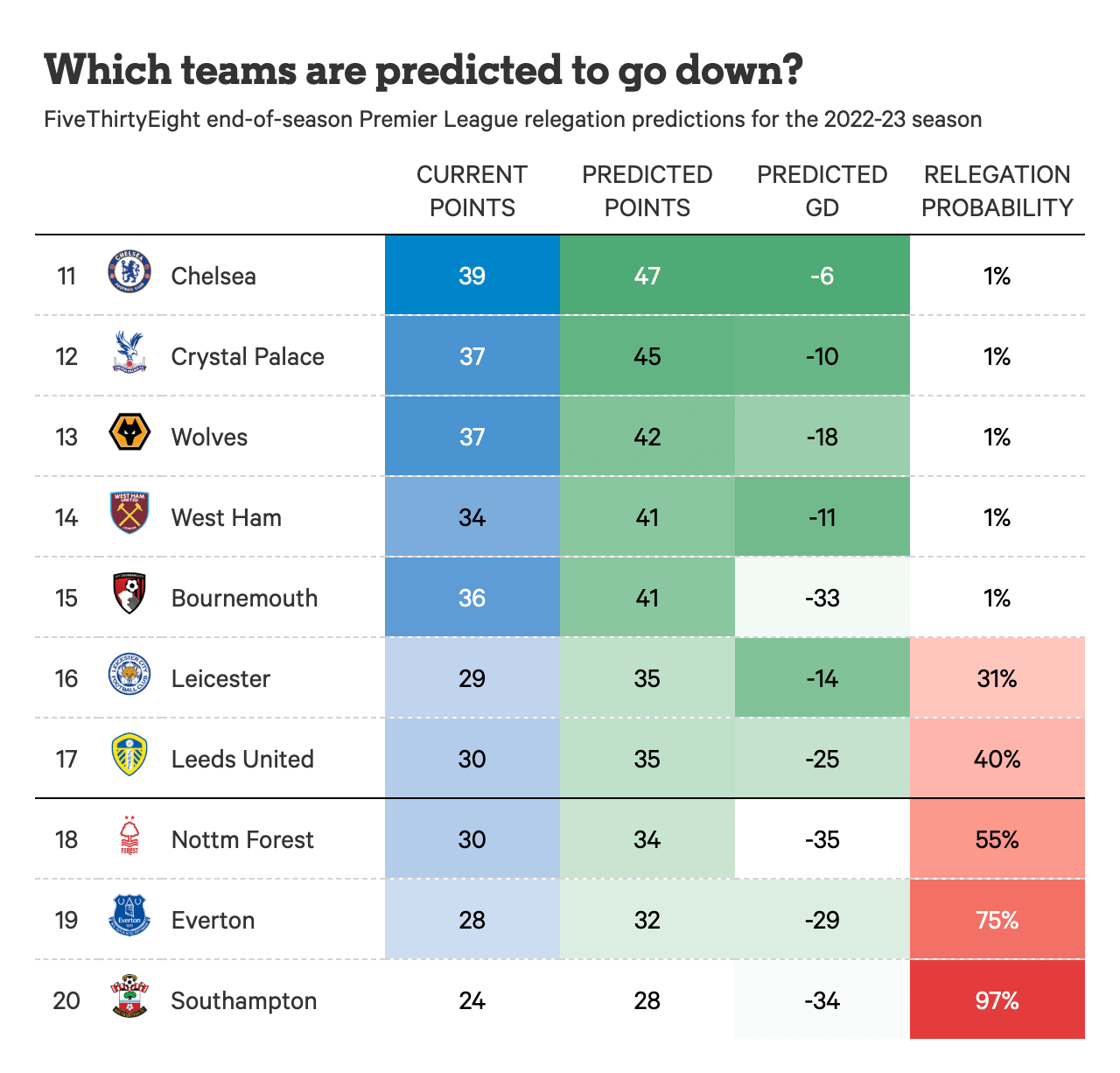
Forget 40 points. That number is a comforting fairytale. The actual survival threshold is dictated by the collective failure of the bottom six clubs each season.
Since the Premier League reduced to 20 teams, the average points for the 17th-placed club (the last safe spot) is 35.5. Since the 2015-16 season, 36 points has been enough to survive every single time. In 2023-24, Everton stayed up with 36 points, eight clear of the drop.
But past performance is no guarantee. This season, 2025-26, is proving much tighter. As of the final weeks, West Ham United are on 36 points and are still in grave danger. The threshold is higher because the clubs at the very bottom have been more competitive, picking up points that historically would have been lost.
The record belongs to West Ham. In the 2002-03 season, they were relegated with 42 points, the highest total for a demoted club in the 20-team era. That’s the brutal flip side: you can have a relatively good season and still go down if others have great ones.
| Season | Points for 17th Place (Safety) | Points for 18th Place (Relegated) | Notable Survivor |
|---|---|---|---|
| 2023-24 | 36 | 28 | Everton |
| 2022-23 | 36 | 31 | Leicester City |
| 2021-22 | 36 | 35 | Burnley (survived on final day) |
| 2020-21 | 39 | 35 | Brighton & Hove Albion |
| 2019-20 | 35 | 34 | Aston Villa |
The lesson is clear. Don’t chase a mythical points total. Chase the teams directly above you. Your target is 17th place, whatever that number turns out to be.
The 2025-26 Relegation Battle: Who’s Going Down?
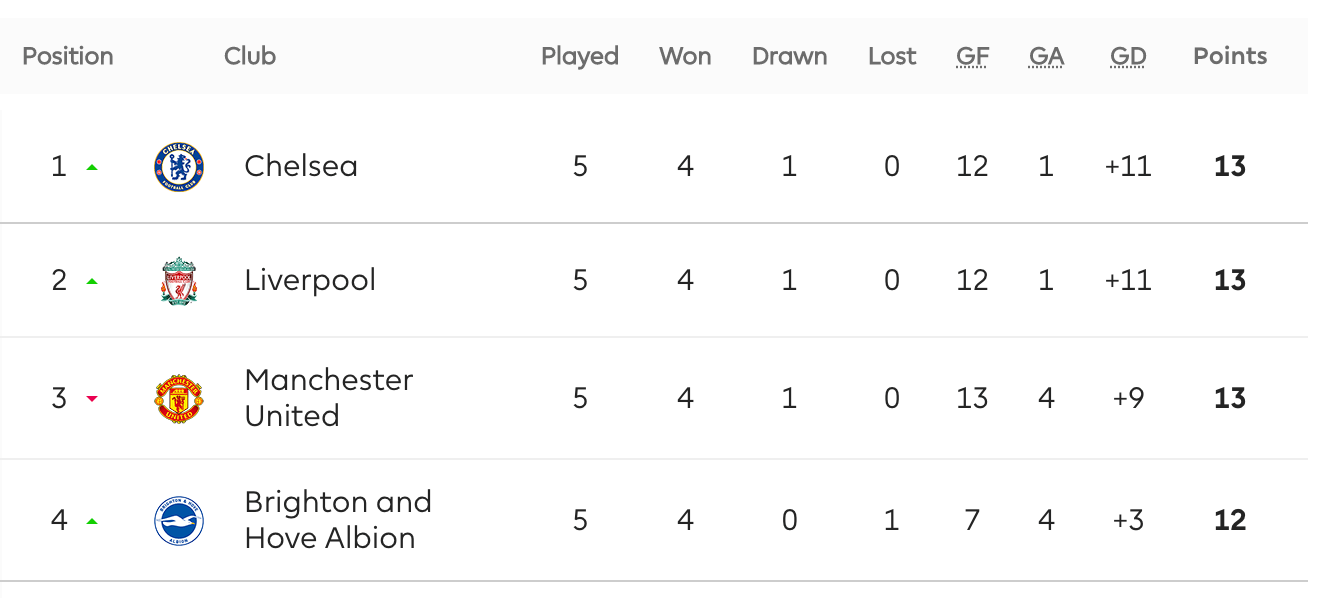
Two clubs have already had their fate sealed: Wolverhampton Wanderers and Burnley. Their relegation is confirmed. The final drama surrounds the 18th spot.
Data analysts like Opta run “supercomputer” simulations thousands of times to predict probabilities. For the final spot, their model heavily favors West Ham United (around a 75% chance), with Tottenham Hotspur at roughly 22% and Nottingham Forest a distant 2-3%.
Why is West Ham the favorite for the drop? Their run-in includes brutal fixtures against direct rivals and top-six sides. They also have the psychological burden of a fanbase expecting a comfortable mid-table finish. The pressure in those final home games at the London Stadium will be suffocating.
Tottenham’s situation is complicated by their involvement in European competition. Thursday night matches in the Europa League or Conference League drain squad energy and complicate weekend preparation. A team fighting relegation cannot afford that distraction. It’s a unique pressure that most survival guides don’t cover.
I’ve watched clubs in the Ruhrpott get sucked into this vortex. The manager starts rotating, the players look leggy in the 70th minute of a Saturday league game, and the points slip away. By the time they prioritize the league, it’s often too late.
Nottingham Forest, while not out of the woods, have a slightly more favorable fixture list and have shown gritty resilience at home. Their survival likely depends on taking points from their remaining matches at the City Ground.
TL;DR: Wolves and Burnley are down. The final spot is a three-club fight where fixture difficulty, psychological pressure, and European distractions will be the deciding factors.
Promotion: How Do Clubs Come Back Up?

Relegation is a one-way door. The return journey is a brutal, 46-game marathon in the Championship. The Premier League promotion system is a mirror of the drop: three clubs come up.
The process is straightforward but high-stakes:
1. Automatic Promotion: The clubs that finish 1st and 2nd in the Championship table earn direct promotion. No playoffs, no fuss.
2. The Playoffs: Clubs finishing 3rd, 4th, 5th, and 6th enter a knockout tournament. It’s a brutal test of nerve.
– Semi-finals: 3rd vs 6th and 4th vs 5th, played over two legs (home and away). The winner is decided by aggregate score rules.
– The Final: A single match at Wembley Stadium. It’s the most lucrative one-off game in global sport, with promotion valued at over £200 million in future revenue.
The playoff system is famously cruel. The team that finishes 3rd, often comfortably ahead of 6th, has no advantage beyond playing the second leg at home. Over two tense matches, anything can happen. The final at Wembley is a pure pressure cooker.
This system creates a fascinating dynamic. A club relegated from the Premier League with parachute payments is immediately a favorite for promotion, but they face 23 other desperate clubs, each with their own dream. The physicality and frequency of Championship matches is a shock to relegated squads used to a more technical, spaced-out Premier League calendar.
Frequently Asked Questions
What is the highest points total for a relegated Premier League team?
West Ham United hold this unfortunate record, relegated with 42 points in the 2002-03 season. It demonstrates that survival is relative to the performance of every other club in the league.
Do parachute payments make it easier for relegated clubs to return?
Yes, significantly. The payments allow clubs to retain a higher wage bill and squad quality than their Championship rivals, creating a competitive imbalance. This is why clubs like Burnley and Fulham have often bounced back immediately.
Has a team ever been relegated on the final day after being safe at halftime?
While not exactly that scenario, the 1993-94 season saw Sheffield United relegated after Everton scored a last-minute winner to secure their own survival. The phrase “It’s the hope that kills you” was coined for such moments.
How does Premier League relegation compare to other top European leagues?
Most major European leagues, like La Liga and Serie A, also relegate three teams. Germany’s Bundesliga relegates two automatically, with a third facing a playoff. The system is a fundamental part of most global league structures, unlike the closed model of Major League Soccer.
What happens if a team refuses to be relegated?
There is no mechanism for refusal. Relegation is a binding condition of membership in the football league system. A club’s place in the league pyramid for the following season is determined solely by its final position.
Before You Go
Relegation is the ultimate accountability in football. It’s a system that creates endless drama, from August to May, and ensures every match has meaning. The financial rules, the parachute payments, and the playoff drama are all parts of a complex ecosystem designed to maintain competitive balance and narrative tension.
The 2025-26 season is a perfect example. The battle isn’t about reaching an abstract points target. It’s about outlasting three specific rivals under immense pressure, where a single goal’s difference or a distracting Thursday night in Europe can define a club’s future for years. Watch the final weeks closely. The real story isn’t who wins the league; it’s who survives.

I come from the “soccer heart” of Germany, the Ruhrpott. I have played, trained and followed soccer all my life and am a big fan of FC Schalke 04. I also enjoy following international soccer extensively.