Understanding Aggregate Score in Soccer & Two-Legged Ties
An aggregate score in soccer is the combined total of goals scored by two teams over two matches, known as a two-legged tie. The team with the higher total after both games wins the tie. This system is used in knockout competitions like the UEFA Champions League to decide which team advances.
Most people get this wrong because they focus on who won each individual match. That doesn’t matter. What matters is the final tally after 180 minutes of football. A team can lose the second leg and still advance if their aggregate score is higher.
This guide breaks down exactly how the aggregate score works, where you’ll see it, and what happens when the totals are dead even. We’ll cover the old away goals rule and why it’s gone, plus walk through real examples from Europe’s biggest stages.
Key Takeaways
- The aggregate score is only used in two-legged knockout ties, not in league play or single-match cup games.
- UEFA abolished the away goals rule in 2021. Tied aggregate scores now go straight to extra time and penalties.
- You’ll see “Agg” on scoreboards and match reports as the standard abbreviation for the cumulative total.
- The system is designed for fairness, giving each team one home match to balance travel and crowd advantage.
- Famous comebacks, like Barcelona’s 6-1 win over PSG after a 4-0 first-leg loss, are only possible because of the aggregate score format.
What is an Aggregate Score in Soccer?
An aggregate score is the sum of goals from two matches between the same two teams. It’s the final accounting for a home-and-away series. This isn’t about who won on the night. It’s about who scored more across the entire battle.
The format exists almost exclusively in knockout rounds of cup competitions. Think of the UEFA Champions League quarter-finals or the EFL Cup semi-finals. The goal is simple: over 180 minutes of football, which team found the net more often? The team that did advances. The other goes home. This creates a unique strategic layer. A 2-0 win in the first leg is strong, but not safe. A 1-0 loss away from home can be a brilliant result.
The aggregate score is the total number of goals a team scores across two legs of a knockout tie. It serves as the primary decider for which team progresses to the next round of a tournament, ensuring a balanced contest with one home game for each side.
You’ll spot the abbreviation “Agg” next to the scores on TV graphics or in newspaper tables. It’s the quick reference for the running total. This system turns two separate matches into one extended contest. The tension builds across weeks. A first-leg blowout can become a second-leg thriller. I remember watching Schalke in the 2011 Champions League round of 16. We drew 1-1 at Valencia in the first leg. That away goal felt massive at the time under the old rules. The entire second-leg strategy revolved around protecting that slim advantage. We advanced 4-2 on aggregate after a 3-1 win at home. The stadium noise when the third goal went in was pure relief. That’s the aggregate drama.
TL;DR: An aggregate score adds up goals from two matches to find a winner, used in knockout ties to ensure each team gets a home game.
How is an Aggregate Score Calculated? The Simple Math
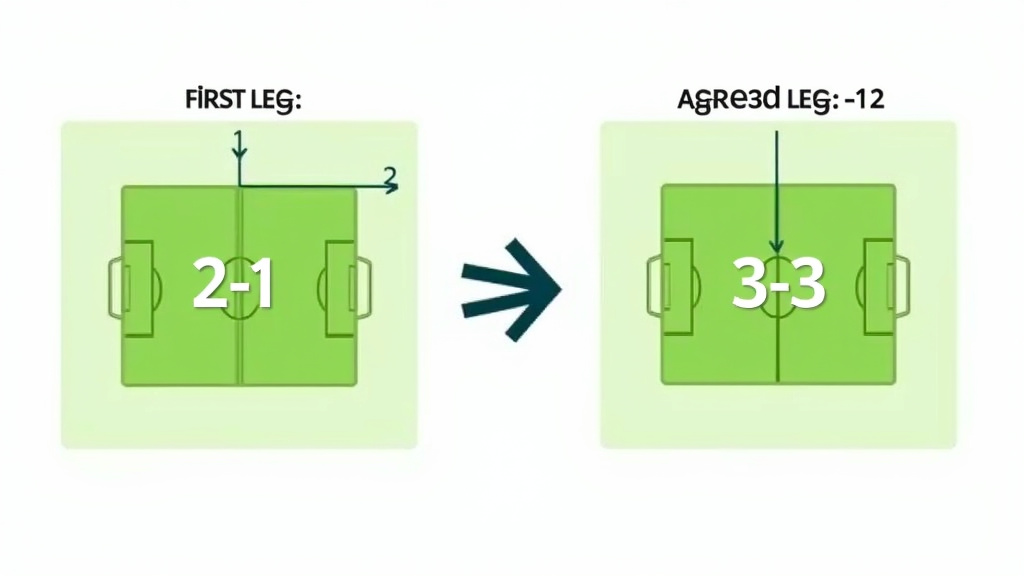
You add. That’s it. Take Team A’s goals from the first leg and add them to Team A’s goals from the second leg. Do the same for Team B. Compare the two totals.
The calculation is straightforward, but the scenarios it creates are not. A team can lose the second match and still win the tie. A team can win both matches but still be eliminated if they don’t score enough. Let’s break it down with a table.
| First Leg Result | Second Leg Result | Aggregate Score | Who Advances? |
|---|---|---|---|
| Team A 2 – 1 Team B | Team A 1 – 2 Team B | Team A 3 – 3 Team B | Tie → Extra Time |
| Team A 0 – 3 Team B | Team A 4 – 0 Team B | Team A 4 – 3 Team B | Team A |
| Team A 1 – 0 Team B | Team A 0 – 2 Team B | Team A 1 – 2 Team B | Team B |
Look at the second row. Team A got hammered 3-0 at home. Most fans would leave the stadium thinking the tie was over. But a 4-0 away win in the second leg flips the script completely. The 4-3 aggregate win for Team A is one of the great comebacks. Barcelona’s Remontada against PSG followed this exact pattern. The math is simple. The emotional whiplash is not.
The official Cambridge Dictionary definition of aggregate score calls it “the total score of a number of matches played.” That’s the textbook answer. On the pitch, it’s the score that hangs over every minute of the second leg.
Common mistake: Thinking a 1-0 home win guarantees advancement — a 2-1 away loss in the second leg sends you out on a 2-2 aggregate, forcing extra time where anything can happen.
Where is the Aggregate Score Used? Major Competitions
You won’t see this in the Premier League or La Liga. League titles are decided by points over 38 games, not goal totals over two. The aggregate score is a cup specialist. Its home is the knockout phase.
The biggest stage is the UEFA Champions League. Every round from the round of 16 through the semi-finals is a two-legged affair. The same goes for its sister competition, the UEFA Europa League. These European tournaments are built on this home-and-away principle. It’s why the draw for the next round is such an event. Getting the second leg at home is seen as a slight psychological edge.
Domestically, the format pops up too. In England, the semi-finals of the EFL Cup (Carabao Cup) are two-legged. The FA Cup format historically used replays for ties, but its later rounds are now single games. Other leagues, like Spain’s Copa del Rey, have used two-legged ties in earlier rounds. In the United States, the MLS playoff format has often featured two-legged conference semifinals and finals, making the aggregate score calculation critical for advancing.
The constant is the knockout pressure. These aren’t group stage matches where a draw is okay. Every goal changes the aggregate math. A late consolation goal in a 2-0 loss might seem meaningless, but it cuts the deficit in half. That one goal changes the entire tactical approach for the second leg.
TL;DR: Look for aggregate scores in the knockout rounds of the Champions League, Europa League, EFL Cup semis, and many MLS playoff series.
What Happens if the Aggregate Score is Tied?
This is where it gets interesting. The match isn’t over. Since 2021, the procedure in UEFA competitions is clean: extra time, then penalties.
First, the teams play 30 minutes of extra time—two periods of 15 minutes. If the score is still tied on aggregate after 120 total minutes (90 + 30), the tie moves to a penalty shootout. This is a straight duel, with no further weight given to away goals or any other secondary rule. The shootout winner advances.
If the aggregate score is level after the second leg, the match proceeds directly to 30 minutes of extra time. Should the tie remain, a penalty shootout determines the winner. This has been the uniform UEFA procedure since the removal of the away goals tiebreaker.
The old rule, the away goals rule, was a different beast. It was a tiebreaker before extra time even started. If teams were tied on aggregate, the team that scored more goals in the away leg would advance. This rule was designed to encourage attacking football away from home. It also prevented an excessive number of matches going to extra time, which is taxing on players.
I have a conflicted history with that rule. In 1997, my club Schalke won the UEFA Cup. Our semi-final against Tenerife was decided on away goals after a 2-2 aggregate draw. We celebrated. But I’ve also seen it feel cruel. A 0-0 draw at home followed by a 1-1 draw away sends the visiting team through. The home fans feel robbed. The abolition of away goals by UEFA in 2021 addressed that perceived injustice. Now, every tied aggregate gets the same treatment: more football.
The shift means the extra time rules are now triggered far more often. Teams can no longer park the bus in a second away leg protecting a 0-0 draw to win on the old rule. They have to play for a win to avoid the lottery of penalties. It’s a purer contest.
The Away Goals Rule: History and Why It’s Gone
For decades, the away goals rule was the first tiebreaker. It was a hallmark of European football. The logic was sound on paper: reward the team that was more adventurous on the road. It also served as a practical tool to avoid extra time and penalties, especially important in an era with tighter schedules.
But the football world changed. Travel became easier. Pitch quality standardized. The statistical advantage of playing at home diminished. UEFA’s analysis found the home advantage had shrunk from 1.9 goals per match in the 1970s to just 1.14 goals in the 2010s. The rule was starting to distort tactics in the wrong way. The team playing the second leg at home became afraid to concede, because a single away goal for the opponent was a double blow.
Common mistake: Assuming the away goals rule is still active — it was abolished for all UEFA competitions starting with the 2021-22 season. Many other confederations and domestic leagues have followed suit.
The final nail was a feeling of unfairness. A team could win 2-1 at home and lose 1-0 away, resulting in a 2-2 aggregate. Under the old rule, the team that lost the second leg 1-0 would advance because they scored an away goal. The team that won the second leg 1-0 would be eliminated. That felt backwards to many. The away goals rule had outlived its purpose.
Now, in the post-away goals era, a 2-2 aggregate from those results means extra time. The contest is extended on the pitch, not decided by a mathematical quirk. It’s a better spectacle. The tension of extra time in a packed Champions League stadium is unmatched. The rule change brought that drama back to the forefront.
Famous Examples and Strategic Implications
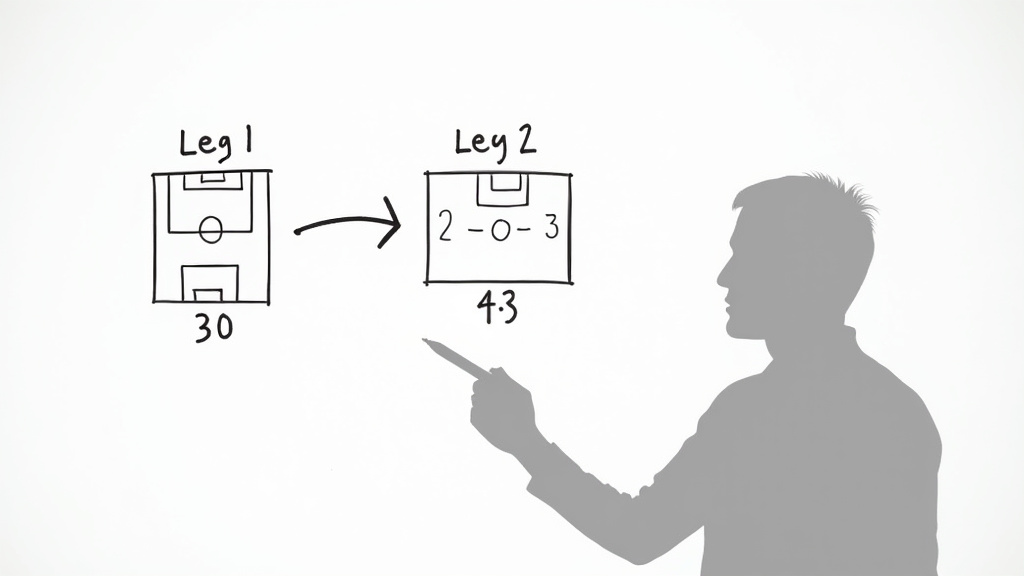
The aggregate score creates legendary stories. It’s the mechanism for the most unforgettable comebacks and heartbreaks.
- Liverpool vs. Barcelona, 2019 Champions League Semi-Final: Barcelona won the first leg 3-0 at home. The tie looked finished. At Anfield, Liverpool won 4-0, advancing 4-3 on aggregate. The aggregate format gave them a lifeline, and the Anfield crowd turned it into a historical reality.
- Tottenham vs. Ajax, 2019 Champions League Semi-Final: Ajax won the first leg 1-0 at home and led 2-0 in the second leg in London. With an aggregate lead of 3-0, they were cruising. Tottenham scored three second-half goals, the last in the 96th minute, to win on away goals (3-3 aggregate). This was one of the last great acts of the old rule.
- Roma vs. Barcelona, 2018 Champions League Quarter-Final: After a 4-1 first-leg loss, Roma won 3-0 at home to advance on away goals (4-4 aggregate). The Stadio Olimpico was a cauldron. Every goal changed the complex “what-if” math of the tie.
Strategically, the aggregate score forces managers to think in two-act plays. The first leg is about setting a foundation. Do you push for a big home win, or is a scrappy draw with an away goal good enough? The second leg is a reactive puzzle. Do you protect a lead or chase a deficit?
This is where the real management happens. Substitutions, formations, and risk-taking are all calculated against the aggregate total. Protecting a 1-0 aggregate lead away from home is a torturous 90 minutes. Chasing a 2-0 deficit requires relentless attack but leaves you exposed to the counter-attack that kills the tie for good. The two-legged tie rules create this unique chess match.
TL;DR: The aggregate score is the reason for soccer’s greatest comebacks; it forces managers to plan across 180 minutes, not just 90.
Aggregate Scores vs. Other Tournament Formats
It’s useful to see what the aggregate score is not. This clarifies its specific role.
| Format | How a Winner is Decided | Example Competition |
|---|---|---|
| Two-Legged Aggregate | Higher total goals across two matches. | Champions League knockout |
| Single Knockout | Winner after 90 mins (or extra time/pens). | FA Cup Final |
| League | Most points accumulated over a full season. | Premier League |
| Group Stage | Points, then goal difference, within a mini-league. | World Cup groups |
The single knockout match, like the FA Cup final, is pure, sudden death. There’s no second chance. The league is a marathon, valuing consistency over months. The Champions League group stage vs knockout format shows the transition from one to the other. The group stage uses points and goal difference. The knockout stage switches to the aggregate score.
The aggregate system sits in the middle. It’s not as fleeting as a single game, nor as prolonged as a league. It’s a mini-series. This is why it’s so popular for high-stakes two-legged playoff series. It balances the chance for a comeback with the need for a decisive result. It also generates twice the ticket revenue and TV rights value, which matters to organizing bodies. Understanding this helps you see why the UEFA Champions League sticks with it. It’s the perfect blend of drama and commercial sense.
Frequently Asked Questions
What does “Agg” mean on a soccer scoreboard?
“Agg” is the universal abbreviation for “aggregate score.” It shows the running total of goals from both legs of a two-legged tie right next to the live score of the current match. It’s the number that ultimately matters.
Can an aggregate score be used in a league?
No. League standings are determined by points (3 for a win, 1 for a draw). Goal difference (goals scored minus goals conceded) is used as a tiebreaker if teams are level on points. The aggregate score is strictly for knockout ties where the same two teams play twice.
Do away goals still count double in any competitions?
Following UEFA’s 2021 decision, most major competitions have scrapped the rule. However, it’s always worth checking the specific regulations of a tournament. Some domestic cup competitions or tournaments in other confederations might still retain it, but they are increasingly rare.
What happens if a two-legged tie is still tied after extra time?
The match proceeds to a penalty shootout. This is now the final and only tiebreaker after a level aggregate score in UEFA competitions. The shootout follows the standard format of five kicks per team, then sudden death.
Why is the second leg at home considered an advantage?
The team playing the second leg at home has the final 90 minutes in front of their own fans. If the aggregate is tight, they know exactly what result they need. They can also benefit from any extra time being played in their stadium, with familiar pitch conditions and crowd support.
Before You Go
The aggregate score turns two matches into one story. It’s the reason a 4-0 defeat isn’t the end, and a 1-0 win isn’t a guarantee. It’s a system built for fairness and drama, giving each team a home game to balance the scales.
Remember, it’s all about the total. Ignore who “won” each leg. Add the goals. That final number is what sends a team to the next round or ends their season. With the away goals rule now history, every tied aggregate means more football—30 minutes of extra time and the constant threat of penalties. This is the clean, high-stakes arithmetic that defines the knockout stages of the world’s best club competitions. Next time you see “Agg” on the screen, you’ll know the real game being played.

I come from the “soccer heart” of Germany, the Ruhrpott. I have played, trained and followed soccer all my life and am a big fan of FC Schalke 04. I also enjoy following international soccer extensively.