Hard Rock Stadium World Cup Matches: Full Schedule & Teams
Hard Rock Stadium will host seven FIFA World Cup 2026 matches: four group stage games, one Round of 32 match, one quarter-final, and the tournament’s bronze final. The action runs from June 15 to July 18, 2026, with confirmed group stage teams including Brazil, Portugal, Uruguay, and Scotland.
Hard Rock Stadium will host seven FIFA World Cup 2026 matches: four group stage games, one Round of 32 match, one quarter-final, and the tournament’s bronze final. The action runs from June 15 to July 18, 2026, with confirmed group stage teams including Brazil, Portugal, Uruguay, and Scotland.
Most guides list the dates and move on. They miss the two things that actually matter: the specific, high-stakes group stage clashes already set for this venue, and the single, non-negotiable step you must take right now to even have a shot at tickets. The official schedule calls it “Miami Stadium,” but everyone here knows it as Hard Rock. This guide walks you through every match, how to get in, and what to expect on the ground in Miami Gardens.
Key Takeaways
- Hard Rock Stadium (“Miami Stadium”) hosts seven World Cup 2026 matches across four weeks, from the group stage through the bronze medal match.
- Four massive group stage games are already confirmed, featuring heavyweights like Brazil, Portugal, Uruguay, and Scotland in high-stakes opening rounds.
- Securing tickets requires a FIFA ID, register for free on FIFA.com now, before any sales window opens.
- The stadium’s World Cup configuration seats 65,326 fans, creating an intense atmosphere but demanding early transit planning.
- Miami’s role extends beyond the stadium; expect fan festivals and viewing parties across the city, especially in Downtown and South Beach.
The Seven Matches: A Week-by-Week Breakdown
Forget a simple list. The fixture schedule at Hard Rock Stadium tells a story of rising stakes. It starts with group drama, narrows to single-elimination tension, and finishes with one last match for glory. The first whistle blows on June 15, 2026, and the final one sounds on July 18.
The stadium will operate under a 65,326-seat configuration for the World Cup, per the official FIFA host city agreement. This setup prioritizes sightlines over maximum NFL capacity, turning the bowl into a focused, loud cauldron for every game.
TL;DR: Mark your calendar for four group games in late June, then three knockout matches in July, culminating with the third-place playoff.
Confirmed Group Stage Fixtures & Teams
The group stage in Miami isn’t a random draw. It’s a curated slate of must-watch matches from three specific groups. The tension starts early.
Sunday, June 15, 2026: Group H kicks off with Saudi Arabia versus Uruguay. This is a classic clash of styles. Uruguay’s gritty, defensive tradition meets Saudi Arabia’s rapid, counter-attacking play. The afternoon South Florida heat will be a factor.
Thursday, June 19, 2026: Group H continues with Cape Verde taking on Uruguay. For Cape Verde, this is a monumental opportunity on the biggest stage. For Uruguay, it’s a must-win to control their destiny.
Wednesday, June 24, 2026: The focus shifts to Group C. Brazil makes its Miami debut against Scotland. This is a nightmare opener for Scotland, facing the five-time champions in tropical conditions. Brazil’s fluid attack against Scotland’s organized defense will test every aspect of modern soccer tactics and strategy.
Saturday, June 27, 2026: Group K concludes its Miami segment with Portugal versus Colombia. This is arguably the group stage’s premier fixture at the venue. The technical brilliance of Portugal’s squad against Colombia’s physical, direct style promises fireworks. It’s a game that could decide the group winner.
| Date | Stage | Matchup | Group | Key Narrative |
|---|---|---|---|---|
| Sun, Jun 15, 2026 | Group Stage | Saudi Arabia vs Uruguay | H | Style clash in opening heat |
| Thu, Jun 19, 2026 | Group Stage | Cape Verde vs Uruguay | H | Uruguay’s must-win control game |
| Wed, Jun 24, 2026 | Group Stage | Brazil vs Scotland | C | David vs. Goliath in Miami |
| Sat, Jun 27, 2026 | Group Stage | Portugal vs Colombia | K | Potential group-deciding thriller |
Knockout Stage: Single Elimination in Miami
After the group stage, the margin for error disappears. Hard Rock Stadium hosts three knockout matches, each with higher stakes than the last.
Friday, July 3, 2026: The Round of 32. This match features the runner-up from Group G against the runner-up from Group H. The teams are unknown, but the equation is simple: win or go home. The atmosphere shifts from hopeful to desperate.
Saturday, July 11, 2026: The Quarter-Finals. By this stage, only eight teams remain in the entire tournament. The Miami quarter-final will match the winner of the July 3rd game against the winner of a match from the West region. This is where legends are made and hearts are broken. The intensity is physical, mental, and tactical.
Saturday, July 18, 2026: The Bronze Final. The third-place match. It’s often dismissed, but for the players, it’s one last chance at World Cup glory and a medal. The two semifinal losers face off. It’s a game played with a strange mix of pride and exhaustion, and it frequently produces open, goal-filled drama.
Common mistake: Assuming the bronze final is a glorified friendly, the two teams have just suffered the most devastating loss of their careers days prior, and the match is played with a raw, aggressive edge that often leads to red cards and spectacular goals.
How to Get Tickets for Hard Rock Stadium World Cup Matches
This is the most important section. You can know every fixture, but without the right approach, you won’t get in. The official process is straightforward but rigid.
Step 1: Get Your FIFA ID. This is non-negotiable. Go to FIFA.com and register for a free FIFA ID. Do it today. Every ticket sale phase, from random draw ballots to first-come-first-served, requires this account. No ID, no purchase. I’ve seen fans miss the first ballot window because they waited, and then faced inflated resale prices.
Step 2: Monitor the FIFA Ticket Portal. All primary sales happen there. FIFA will announce sales phases: likely a random draw ballot first, followed by general sales. Set alerts. Have your payment method ready.
Step 3: Understand the resale risk. Third-party sites like StubHub will have listings. FIFA does not authenticate tickets from these platforms. You might pay triple face value for a ticket that gets rejected at the gate. The safe bet is always the official portal.
Step 4: Target less popular matches. Everyone wants Brazil vs. Scotland or the quarter-final. Your odds improve dramatically if you apply for tickets to the Round of 32 match or the earlier group stage games. Cape Verde vs. Uruguay, for instance, will have more availability.
Stadium Specifics: What Makes Hard Rock Stadium Unique
Photo: Unknown authorUnknown author / Wikimedia Commons / Public domain
FIFA lists it as “Miami Stadium,” but on the ground, it’s Hard Rock Stadium. This isn’t a naming rights quirk, it’s a signal. FIFA controls the branding for the tournament, but the experience is pure South Florida.
.jpg)
The 65,326-seat configuration is intimate for a World Cup. Compare that to the 80,000+ capacity of MetLife Stadium in New Jersey. Here, every seat feels close to the soccer pitch markings. The sun can be brutal for afternoon kickoffs. The west stands get the worst of it. If you’re buying tickets for a June day game, aim for the east side or upper shaded sections.
The stadium is no stranger to big events. It hosts the Miami Dolphins, the University of Miami Hurricanes, the Formula 1 Miami Grand Prix, and the Miami Open tennis. The operations team knows how to move large crowds. But a World Cup crowd is different. It’s not 65,000 home fans; it’s 65,000 people from across the globe, many not speaking English, all navigating the same parking lots and transit hubs. Plan for extra time.
I arrived three hours before kickoff for a Dolphins game and sailed in. For a major concert, two hours was fine. For an event of this scale, with enhanced security and international visitors, you need a four-hour buffer. The lots open early. Get there, tailgate, soak it in.
Miami as a Host City: Beyond the Stadium
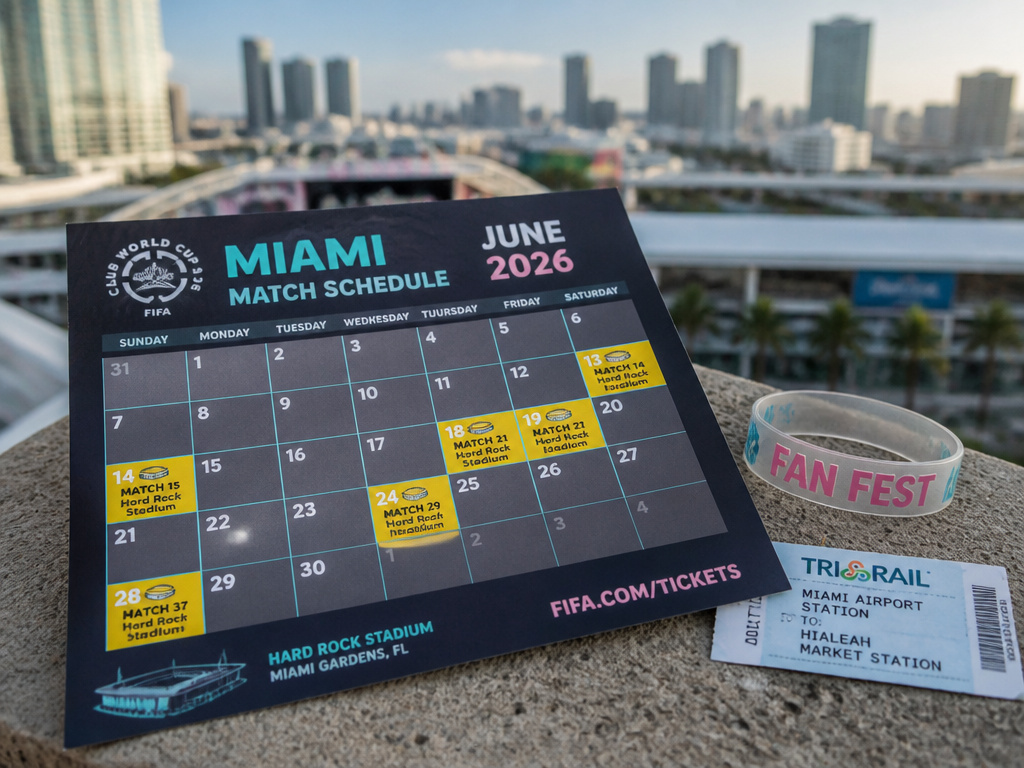
Miami isn’t just a venue; it’s a character in the tournament. The city’s energy will bleed into the event. FIFA will set up official Fan Fest sites, likely in Bayfront Park or at the Miami Beach Convention Center. These are free, family-friendly zones with giant screens, food, and entertainment.**
Accommodation is your next big hurdle. Miami Gardens hotels will book up instantly. Look further out: North Miami Beach, Hollywood, Fort Lauderdale. The Tri-Rail commuter train connects downtown Miami, Fort Lauderdale, and West Palm Beach, with a stop at the Miami Airport Station, from which shuttle buses to the stadium will run. Renting a car seems logical, but event-day traffic and parking costs (expect $75-$150) make transit the smarter play.
The cultural mix is perfect for a World Cup. You’ll hear Portuguese, Spanish, English, and a dozen other languages on the streets. The food scene, from Little Havana to Wynwood, becomes an extension of the tournament. It’s a month-long festival.
Travel and Logistics for Attending
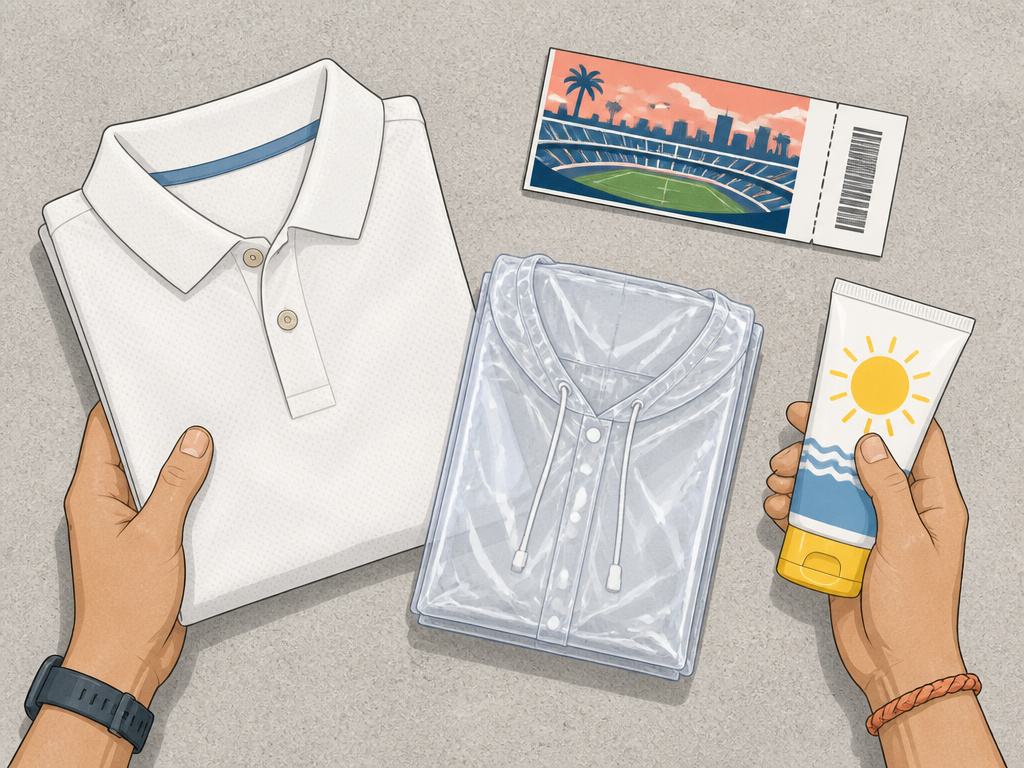
Your match ticket is just the start. The real test is logistics. Miami in June and July is hot and humid, with frequent afternoon thunderstorms. Pack accordingly: breathable clothing, a rain poncho, and sunscreen are as essential as your ticket.
Getting There: Public transport is your friend. The Tri-Rail to the Miami Airport Station, followed by a dedicated stadium shuttle, is the most reliable route. Ride-share drop-offs will be in designated zones a significant walk from the gates. If you drive, pre-purchase parking through the stadium’s official partner when it’s announced, likely months in advance.
Stadium Entry: Security will be FIFA-level rigorous. Review the prohibited items list on the stadium website well in advance. Clear bags are a near-certainty. Expect airport-style screening. This isn’t a regular NFL Sunday.
What to Do Between Games: Miami sprawls. Use the Metromover (free) in downtown, the Brightline train to get to Fort Lauderdale or West Palm Beach quickly, or ride-shares. Don’t try to do South Beach, a match in Miami Gardens, and Wynwood all in one day. You’ll spend it in traffic. Pick a base and explore locally.
The Bigger Picture: 2026 Tournament Context
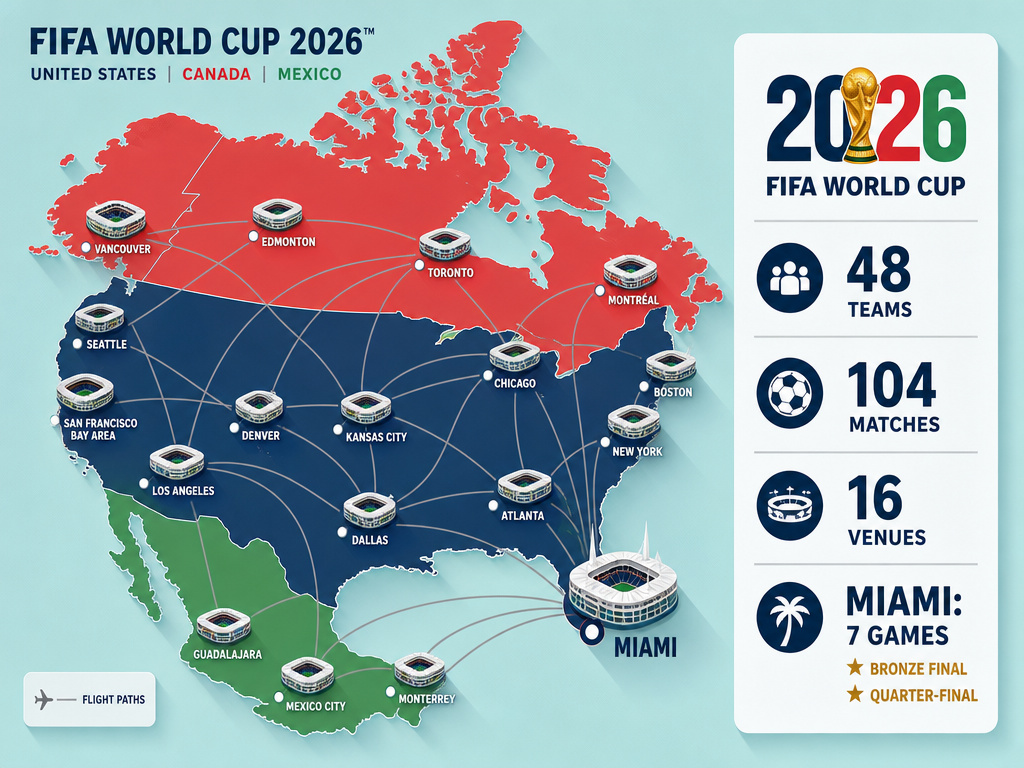
Hard Rock Stadium is one of 16 venues across the USA, Canada, and Mexico. The 2026 edition is the first 48-team World Cup, meaning 104 total matches. Miami’s seven games represent a significant chunk, including critical knockout rounds.
The inclusion of a quarter-final and the bronze final underscores FIFA’s confidence in the South Florida market and the stadium’s operational capability. It also means the world’s eyes will be on Miami for the entire final week of the tournament. The pressure on local organizers is immense, but so is the payoff. The economic impact for the region will be measured in the hundreds of millions.
For the players, the conditions present a unique challenge. The heat and humidity favor teams with deep squads and soccer player fitness regimens built for endurance. Nations that can rotate players and manage energy will have an advantage. We could see surprising results here because of it.
Frequently Asked Questions
What is the capacity of Hard Rock Stadium for the World Cup?
The stadium will be configured to seat 65,326 fans for the 2026 World Cup matches. This is slightly reduced from its full NFL capacity to optimize sightlines for soccer.
Why does FIFA call it “Miami Stadium” instead of Hard Rock Stadium?
FIFA has strict tournament branding guidelines. For the World Cup, all venues are typically referred to by their city name (e.g., “Miami Stadium,” “Los Angeles Stadium,” “Dallas Stadium”) to maintain a consistent, neutral presentation. Locally, everyone will still call it Hard Rock Stadium.
Can I buy World Cup tickets at the stadium box office on the day?
Extremely unlikely. FIFA events are almost entirely digital ticketing. Any last-minute ticket releases would be through the official FIFA Ticket Portal online, not at a physical box office. Never count on buying a ticket at the gate.
What time will the matches kick off?
Exact kickoff times are still to be announced by FIFA. Based on the 2026 schedule structure and Miami’s time zone (Eastern Daylight Time), expect a mix of afternoon (1 PM, 4 PM local) and evening (7 PM, 8 PM local) start times.
Is Hard Rock Stadium hosting any other World Cup events?
Yes. The stadium was also a host venue for the 2025 FIFA Club World Cup, which served as a major operational test run for the 2026 tournament.
Which teams are most likely to play in the Miami quarter-final?
It’s impossible to predict, but the quarter-final will feature the winner of the July 3rd Round of 32 match in Miami against the winner of a West region Round of 32 match. It could involve any of the global powerhouses that survive the early rounds.
Before You Go
Hard Rock Stadium’s seven-match slate is a gift to football fans in North America. You’re getting a perfect cross-section of the tournament: underdog stories, titanic group clashes, and the knife-edge pressure of knockout football. The process starts now. Secure your FIFA ID, decide which matches are your priority, and prepare for the Miami heat. This isn’t just about watching games; it’s about being inside a stadium that will witness the moment a team’s dream either advances or dies. That’s the World Cup. And in 2026, a significant piece of that drama unfolds in Miami Gardens.

I come from the “soccer heart” of Germany, the Ruhrpott. I have played, trained and followed soccer all my life and am a big fan of FC Schalke 04. I also enjoy following international soccer extensively.