MLS Season Games Explained: How Many Matches Are Played?
Each Major League Soccer team plays 34 regular season games every year, split into 17 home and 17 away matches. The schedule is built around a two-conference system, and a team that wins the MLS Cup can play up to 41 total games when you factor in the playoffs.
Most fans from Europe look at that 34-game total and think it’s light. They’re used to 38-game seasons in the Premier League or Bundesliga. The confusion starts there, but it doesn’t end there. The real complexity isn’t the number itself, it’s the unbalanced schedule, the playoff gauntlet, and the three other tournaments MLS teams juggle.
This guide breaks down the 34-game slate, explains the playoff math that can add seven more, and shows you why the MLS calendar is a unique beast in the global soccer landscape.
Key Takeaways
- The 34-game regular season is not balanced; teams play 28 games within their conference and only 6 against the other conference.
- A team can play a maximum of 41 games: 34 in the regular season and 7 in the playoffs (Wild Card + three-round series + two single-elimination matches).
- The schedule is built this way because a fully balanced 58-game season for 30 teams is logistically impossible alongside other competitions.
- The playoff format is a hybrid, starting with a best-of-three series in Round One before shifting to single-elimination, designed to maximize revenue and drama.
- Future expansion beyond 30 teams will force another schedule redesign, likely reducing cross-conference games further.
The Core Answer: 34 Regular Season Games
Every MLS club’s calendar is anchored by 34 matches. This number is a league mandate, not a suggestion. It results in 17 home dates for ticket revenue and 17 road trips.
The schedule is locked in by the league office before the season kicks off in late February. You can mark your calendar for Decision Day, the final simultaneous matchday of the regular season, which now typically falls in early November. This fixed structure provides consistency for fans and broadcasters like Apple TV, which holds the global streaming rights.
The 2026 MLS regular season comprises 510 total matches (30 teams × 34 games ÷ 2). It kicks off on February 21 and concludes with Decision Day on November 7, spanning nearly nine months. All matches are available on Apple TV, with select games on FOX and FS1 in the United States.
TL;DR: The league schedule guarantees 34 games per team, creating 510 total league matches each season.
How the Regular Season Schedule is Built
The 34-game puzzle is solved with a conference-based, unbalanced format. This is the single biggest point of confusion for international fans. MLS does not use a single-table, double-round-robin format.
The league splits 30 teams into the Eastern Conference and Western Conference. As of the 2026 season, each conference has 15 teams. The schedule is built from the inside out.
First, a team plays every other club in its own conference twice, once at home and once away. With 14 other teams in-conference, that’s 28 games locked in. These home-and-away series fuel regional rivalries like the Hudson River Derby (New York Red Bulls vs. NYCFC) or the Cascadia Cup (Portland vs. Seattle vs. Vancouver).
The remaining 6 games come from inter-conference play. Each team is assigned six different opponents from the opposite conference for a single match, rotating these matchups yearly. You will not play every team in the other conference.
| Schedule Component | Number of Games | How It’s Determined | Why It Matters |
|---|---|---|---|
| In-Conference (Home & Away) | 28 | Play each of the 14 other teams in your conference twice. | Decides conference standings and most playoff berths. |
| Cross-Conference (Single Game) | 6 | League assigns 6 specific opponents from the other conference each year. | Creates national TV matchups and varies the schedule annually. |
| Total Regular Season | 34 | Sum of the above. | Fixed number for competitive balance and broadcast planning. |
This approach is a practical necessity. A fully balanced schedule where every team plays each other twice would require 58 games (29 opponents × 2). That’s a non-starter. The physical toll, combined with summer tournaments like Leagues Cup, makes 34 the operational ceiling.
Common mistake: Assuming MLS uses a balanced schedule like Europe’s top leagues, the 28-game conference slate means your team’s path to the playoffs is directly tied to beating the same 14 rivals year after year.
The MLS Playoff Path (Adding Up to 7 More Games)
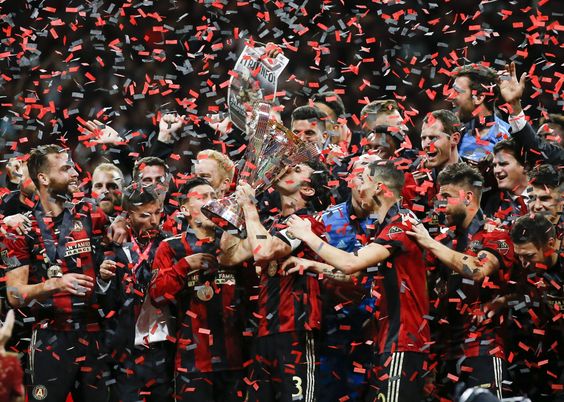
The regular season decides who gets a shot at the MLS Cup. The playoff structure is its own distinct season, and the number of games a team plays varies wildly.
Qualification is straightforward: the top seven teams in each conference’s final table earn an automatic berth into the Round One best-of-three series. The eighth- and ninth-place teams enter a single-elimination Wild Card match. The two Wild Card winners fill out the eight-team bracket for each conference.
Here’s where the game count climbs. The current MLS playoff format is a strategic mix of series and knockout.
1. Wild Card (1 game): Win or go home.
2. Round One (up to 3 games): A best-of-three series. No draws. If tied after 90 minutes, it goes straight to penalties. The first team to two wins advances.
3. Conference Semifinals (1 game): Single elimination.
4. Conference Finals (1 game): Single elimination.
5. MLS Cup (1 game): Single elimination.
A team that starts in the Wild Card and goes all the way to the championship could play 1 (Wild Card) + 3 (Round One) + 1 + 1 + 1 = 7 playoff games. Add that to the 34 regular-season games, and the maximum total is 41.
| Playoff Stage | Format | Possible Games for a Team | Advancement Condition |
|---|---|---|---|
| Wild Card | Single Elimination | 1 | Win the match. |
| Round One | Best-of-Three Series | 2 or 3 | Win two matches in the series. |
| Conference Semifinals | Single Elimination | 1 | Win the match. |
| Conference Finals | Single Elimination | 1 | Win the match. |
| MLS Cup Final | Single Elimination | 1 | Win the match. |
| Total Possible Playoff Games | 7 |
The best-of-three series in Round One is a distinctly North American twist, borrowed from leagues like the NBA and MLB. It’s a revenue driver, guaranteeing at least one home playoff game for more teams and fans, and it tests depth over a short series. The switch back to single-elimination for the later rounds injects the classic, win-or-die pressure of tournament soccer.
TL;DR: The playoffs are a gauntlet where game totals aren’t equal. A champion might play 41 total games, while a first-round loser could finish with just 35.
How Other Competitions Stretch the Calendar

The 34-game MLS slate is just one part of the story. To understand a team’s true workload, you must factor in three other competitions that stretch the calendar and test squad depth.
- Leagues Cup: This summer tournament pits all MLS and Liga MX (Mexico) teams against each other in a World Cup-style group and knockout stage. It pauses the MLS regular season for about a month. A team that goes deep can play 5 or 6 extra games in July.
- U.S. Open Cup (or Canadian Championship): The historic domestic cup competition. MLS teams enter in later rounds, but a run to the final adds up to 5 games. It’s a priority for some clubs, a nuisance for others managing fixture congestion.
- Concacaf Champions Cup: The region’s premier club competition. Qualifying via MLS Cup or the Supporter’s Shield means a springtime slate of two-legged knockout ties against the best clubs from North and Central America. A deep run adds up to 8 high-intensity matches.
I’ve seen strong MLS teams buckle under this load. A club fighting on all four fronts, league, Leagues Cup, domestic cup, and continental play, can easily surpass 50 competitive games in a year. That’s when the 34-game MLS season structure starts to feel brutally long. Coaches must rotate squads, and the league’s single-entity roster rules make building that depth a constant financial puzzle.
I remember watching the 2022 Portland Timbers. They had a solid MLS campaign but got hammered by fixture congestion after a deep Concacaf run. By August, their starters were gassed, they slumped in the league, and barely scraped into the playoffs. They were out in the first round. Three competitions broke them.
A Brief History: How We Got to 34 Games

The 34-game standard wasn’t always the rule. The league’s schedule has stretched and reformed alongside its expansion.
In 1996, the inaugural season had 10 teams playing 32 games each. As the league added teams, the schedule ballooned. By 2010, with 16 teams, clubs were playing 30 games. The jump to 34 happened in 2011 when the league reached 18 teams and settled on a balanced, home-and-away format against every opponent.
That balanced model broke when expansion accelerated. Adding teams meant adding more games to maintain a full round-robin. The league hit an inflection point. Continuing on that path would have meant a 40+ game regular season by 2020.
The switch to the current unbalanced, conference-heavy 34-game model was a deliberate compromise. It capped the regular season length, made room for the lucrative Leagues Cup, and acknowledged the physical limits of players. Every future expansion team, like the recently added San Diego FC, is slotted into this existing framework, which slightly tweaks the cross-conference matchups each year.
How MLS Compares to Other Major Leagues

Place the MLS schedule next to other top leagues, and its unique American soccer format comes into sharp focus.
The English Premier League, Bundesliga, and Serie A all use a double round-robin in a single table. That’s 38 games. It’s pure, simple, and the champion is the team with the most points after everyone plays everyone twice. There are no playoffs.
MLS uses its conference system and playoffs to crown a champion. The Supporter’s Shield goes to the team with the best regular-season record, but the ultimate prize, the MLS Cup, goes to the playoff winner. This creates two parallel races: the marathon of the 34-game season and the sprint of the postseason.
This hybrid model serves the North American sports market, where playoffs are an ingrained expectation for determining a champion. It also accommodates a geographically massive country. A fully balanced schedule would mean excessive cross-country travel, increasing costs and player fatigue. The conference model localizes most of the travel.
TL;DR: MLS prioritizes a manageable 34-game season and a dramatic playoff over a longer, purely balanced schedule, reflecting its North American sports culture and geography.
The Future: Will the Number of Games Change?

The short answer is yes, it will change again. The driving force is expansion. MLS has plans to reach 32 teams. Adding more clubs without extending the season means further diluting the schedule.
The most likely change is a reduction in cross-conference games. We might see a future where the 34 games are composed of 30 in-conference matches (playing each conference foe twice) and only 4 cross-conference games. This would make the conferences feel even more like separate leagues that only meet in the MLS Cup final.
Another pressure point is the international calendar. As MLS continues to attract higher-profile players, the clash between the summer-heavy MLS schedule and the traditional European summer break becomes more noticeable. Don’t expect a shift to a fall-to-spring “European” schedule soon, winter weather in many MLS cities makes that impractical, but the league may continue to tweak start and end dates.
The 34-game regular season is stable for now. But in a league that has changed its format every decade, it’s not a permanent fixture. The math of expansion will force the next evolution.
Frequently Asked Questions
Why doesn’t MLS have 38 games like the Premier League?
MLS has 30 teams spread across a continent. A 38-game schedule where every team plays each other twice would be impossible (it would require 58 games). The 34-game model is a compromise that limits travel, accommodates other tournaments like Leagues Cup, and fits the calendar.
Do all MLS teams play the same opponents?
No. The schedule is unbalanced. All teams play each opponent in their own conference twice (28 games). The remaining 6 games are against a rotating set of opponents from the other conference, so no two teams have identical schedules.
How many games do you need to win the MLS Cup?
You need to win the final, of course. But to lift the cup, a team must win at least two

I come from the “soccer heart” of Germany, the Ruhrpott. I have played, trained and followed soccer all my life and am a big fan of FC Schalke 04. I also enjoy following international soccer extensively.