How to Wear Soccer Shin Guards Properly: A 6-Step Guide
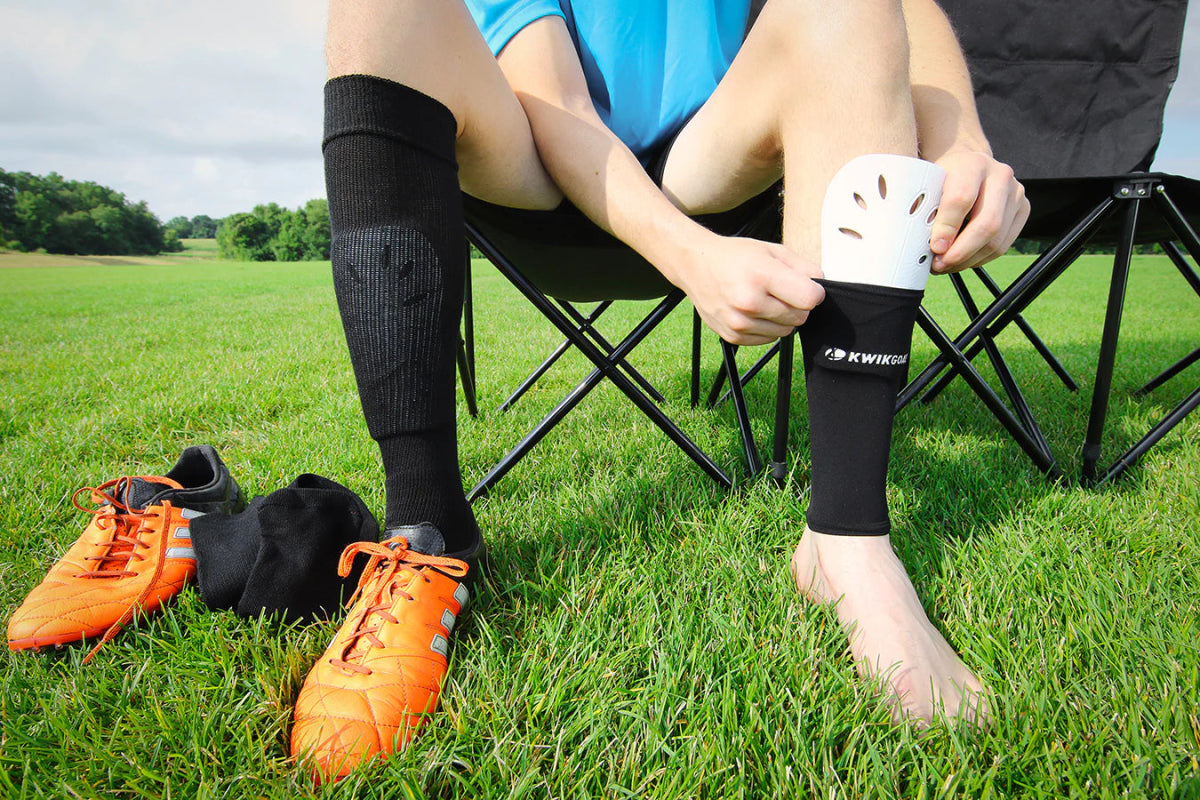
To wear soccer shin guards properly, center the guard on your shin bone, secure it with straps or a sleeve, and pull your socks completely over it. The top should sit about two inches below your kneecap, and the bottom should be an inch above your ankle bone.
To wear soccer shin guards properly, you must center the guard on your shin bone, secure it with straps or a sleeve, and then pull your soccer socks over it completely. The top edge sits about 2 inches from your kneecap, and the bottom edge stays at least 1 inch above your ankle bone. Guards marked L or R go on the correct leg, with the higher side usually on the outside.
Most people get this wrong by placing the guard too high or too low, or by trying to wear it over their socks. A guard that slides during a match is useless, and one that digs into your ankle bone will leave you limping after twenty minutes.
This guide walks through the six steps that actually work, explains why ankle guards annoy most adult players, and shows you how to test your fit before you ever step on the pitch.
Key Takeaways
- Shin guards always go under your soccer socks. Wearing them over the sock violates safety rules and lets them slide.
- Measure from your ankle bone to 1 inch below your kneecap to find your size. A size chart is useless without this number.
- Ankle guards are standard for youth leagues, but most competitive adults prefer slip-in guards with compression sleeves for better mobility.
- The guard must be centered on your shin bone. If it’s off-center, a tackle will strike the unprotected tibia.
- Secure the guard firmly with straps, a sleeve, or tape before pulling socks over it. A loose guard moves on the first sprint.
- Test the fit with dynamic movement, running, jumping, cutting, before putting on your cleats. Static standing tells you nothing.
The One Rule Nobody Breaks (And Why)
Soccer socks go over shin guards, not under them. This is a written rule in every organized league from youth rec to professional tiers. A referee can, and will, order a player off the pitch to fix it, because exposed plastic edges can cut another player during a slide tackle.
The rule exists for two reasons. First, the sock holds the guard in place. A guard worn over a sock has nothing locking it down, it slides on the first hard run. Second, the hard plastic shell of a shin guard has sharp corners. If another player slides into your leg, those exposed edges can slice their skin. The sock acts as a buffer.
I played a cup match where our left back had his guard over his sock for the first half. The referee didn’t notice until a tackle left a gash on the opponent’s calf. The ref stopped play, pointed at the back’s leg, and sent him to the sideline. We conceded while he was fixing it.
TL;DR: Socks over guards, always. It’s a safety rule, not a style choice.
The 6-Step Process (and the One Step Nobody Skips)
Follow this sequence every time. Skipping step three is the most common error, and it leaves the guard floating.
Step 1: Find your size. Use a flexible tape measure. Start at the bony bump on the inside of your ankle, run it up your shin, and stop 1 inch below the bottom of your kneecap. That number is your true length. Match it to the brand’s size chart, not your height. A Nike Guard 4 size chart says a 12-inch measurement fits their Medium. Adidas’s equivalent might be a Small.
Step 2: Identify left and right. Many guards are marked L and R. If they’re not marked, look at the shape. The side with more curve or a higher edge usually fits the outside of your leg. That extra height protects against outside tackles.
Step 3: Position the guard on your shin. This is the step people skip. They slap the guard on and pull the sock up. The guard ends up too high or angled.
Center the guard on your shin bone. The top edge should sit about 2 inches from your kneecap. The bottom edge must be at least 1 inch above your ankle bone. If the guard touches your ankle bone, it will dig in when you flex your foot.
Step 4: Secure the guard. If your guard has Velcro straps, wrap them snugly. Don’t crank them so tight your calf muscle bulges around them, that cuts off circulation. If you’re using a slip-in guard, slide a compression sleeve over it now. The sleeve should fit tight enough that you feel pressure, but not so tight it restricts knee flexion.
Step 5: Pull socks over the guards. Pull your long soccer socks up and over the shin guards. Ensure the socks cover the entire guard, with no plastic peeking out at the top or bottom. If your socks are loose or short, they won’t hold the guard. That’s why proper shin guard fit starts with the right sock length.
Step 6: Test the fit before cleats. Do not put your cleats on yet. Run a few steps, jump, and make a sharp cutting motion. The guard should not slide downward, pinch your knee, or limit your ankle’s range. If it moves, re-secure it. Once it’s stable, put your cleats on and tie them.
Common mistake: Putting cleats on before testing guard fit, the laces lock your ankle into a position that hides guard slippage. You’ll feel the guard shift on your first sprint, and by halftime it’s rubbing against your ankle bone.
Shin Guard Styles: Slip-In vs. Ankle Guard
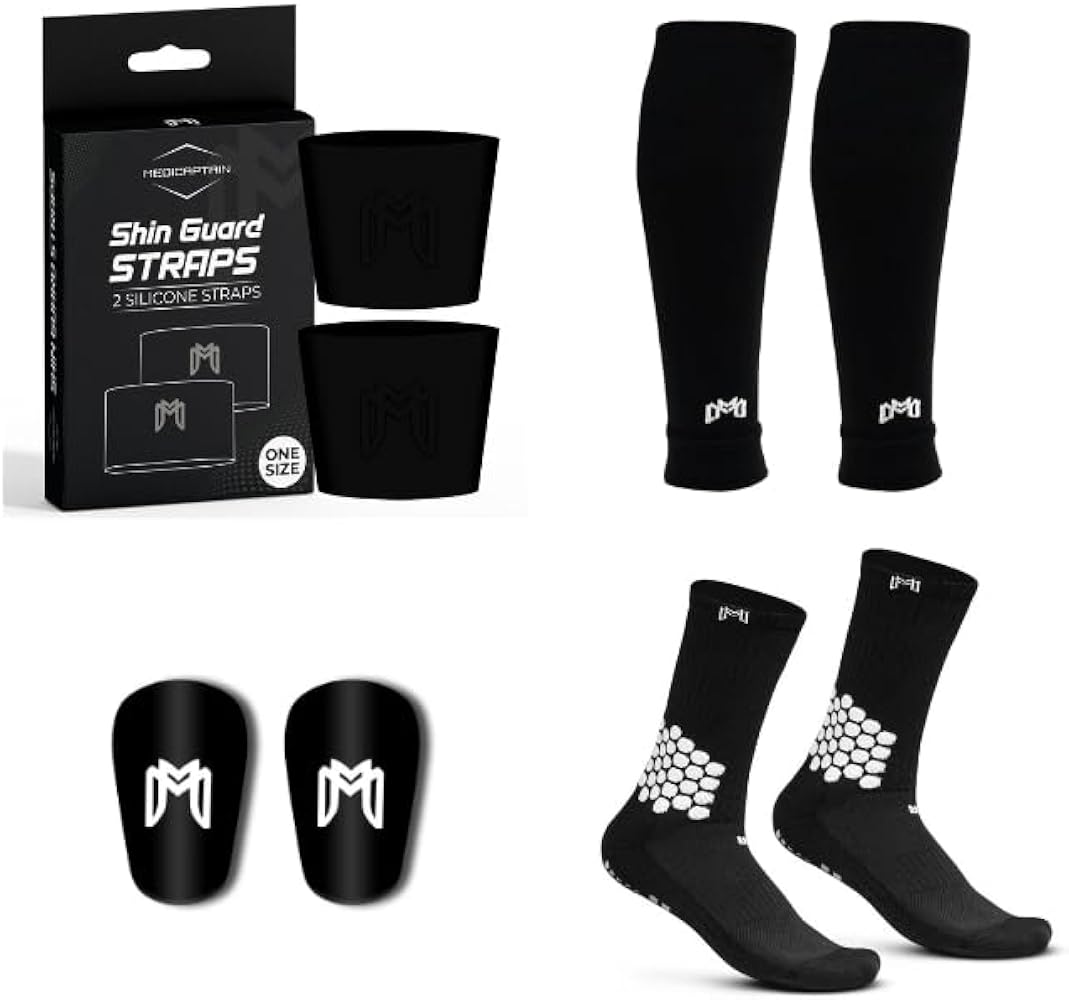
The two main shin guard designs serve different players. Your age, league, and position decide which one you should pick.
| Guard Type | Best For | Why It Works | Risk If You Choose Wrong |
|---|---|---|---|
| Slip-in (with sleeve) | Intermediate to elite adult players | Lightweight, maximizes ankle mobility for quick turns and acceleration. | Less ankle protection; a mistimed tackle to the ankle can bruise the bone. |
| Ankle guard (with strap) | Youth leagues, beginner adults | Wraps the ankle with hard plastic discs; meets ASTM F1677 for full coverage. | Restricts ankle flexion, causing pressure points during long matches. |
| Shin sock (integrated) | Players who prioritize convenience | Guard is built into the sock; no separate piece to secure. | Protection is often thinner; the sock wears out faster than the guard. |
Slip-in guards, like the Storelli Exo-Shield or Nike Mercurial Lite, slide into a compression sleeve. They weigh almost nothing. I switched to them after my first season as a senior player. The ankle guard I’d worn since youth football started feeling like a shackle during ninety-minute matches. The strap would press on a nerve above my ankle, and by the second half my foot would go numb on long passes.
Ankle guards are the default for youth leagues because they meet the full coverage requirement of the ASTM F1677 standard. They’re safer for kids who don’t have the muscle control to avoid awkward tackles. But most adult players ditch them as soon as they can. The plastic stirrup that wraps under the foot limits the ankle’s range of motion, you can’t point your toe as sharply for a sprint start.
Shin socks are a niche choice. The guard is sewn into the sock fabric. They’re convenient, but the protection layer is usually a thin EVA foam pad. I wouldn’t trust them in a competitive match against aggressive opponents.
TL;DR: Use ankle guards if you’re under 16 or in a recreational league. Use slip-in guards with a compression sleeve if you’re an adult playing competitively.
Securing Your Shin Guards: Straps, Sleeves, and Tape
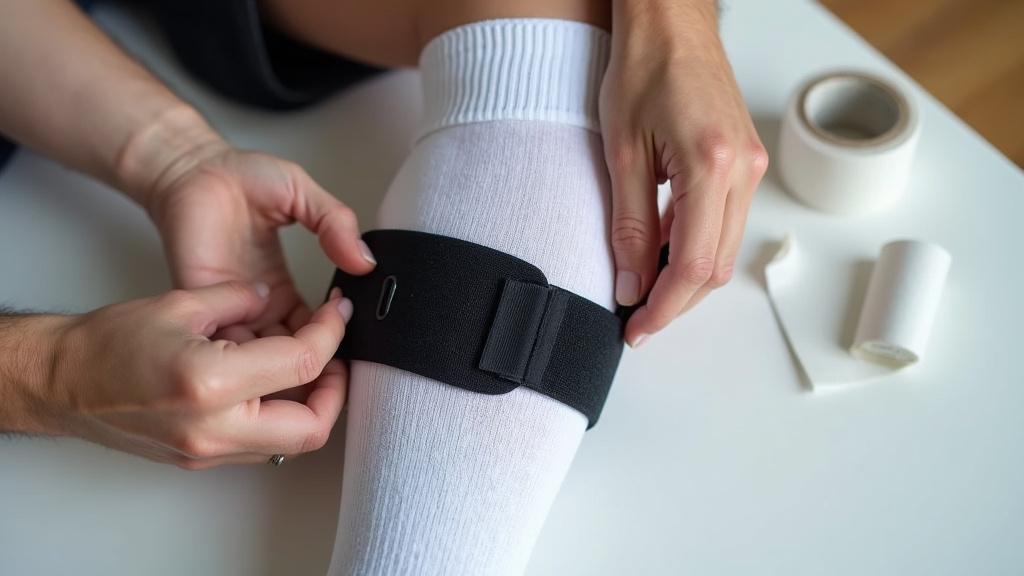
A guard that isn’t locked down will slide. You have three main options, and each has a failure point.
Velcro straps are the most common. They come attached to most ankle guards and some slip-in models. Wrap them snug, but not tight enough to leave a deep imprint on your skin after you take them off. If the strap is so tight your calf muscle swells around it, you’re cutting off blood flow. That leads to cramping by the second half.
Compression sleeves are elastic tubes that you slide over the slip-in guard. They apply even pressure around your calf. A good sleeve, like the Storelli Compression Sleeve or a Nike Pro sleeve, uses a tight weave that doesn’t stretch out over time. The sleeve must cover the entire guard, from top to bottom. If it’s too short, the guard will peek out and violate the sock-over-guard rule.
Athletic tape is the old-school fix. Wrap a strip of tape around the top and bottom of the guard, over the sock. This works, but it tears the sock fabric over time. It also adds a sticky residue that attracts dirt. I use tape only when a strap breaks mid-match or when playing in rain that loosens a sleeve.
I once used a generic sleeve that stretched after two washes. The guard would rotate during play, exposing the side of my shin. A tackle from a midfielder left a bruise that lasted a week. Now I only buy sleeves with a reinforced polyester blend, they hold shape for a full season.
Here’s how the three methods compare for securing shin guards during a match.
| Method | Hold Strength | Best Use Case | Failure Mode |
|---|---|---|---|
| Velcro strap | Moderate | Ankle guards, dry conditions | Strap adhesive wears out after 30+ uses; loses grip in wet weather. |
| Compression sleeve | High | Slip-in guards, all conditions | Sleeve material stretches over time if it’s a cheap knit. |
| Athletic tape | Very high (short-term) | Emergency fix, wet matches | Tears sock fabric; residue builds up and attracts grime. |
TL;DR: Use a compression sleeve for slip-in guards. Use Velcro straps for ankle guards. Keep athletic tape in your bag for emergencies.
Why Placement Matters More Than the Brand
A Nike Guard 4 placed wrong protects less than a generic polypropylene guard placed right. The tibia is a straight bone. A centered guard covers its full width. An off-center guard leaves a strip of bone exposed.
When you receive a tackle, the force spreads across the guard’s surface. If the guard is centered, the impact disperses. If the guard is tilted, the force concentrates on one edge, that edge can crack, or the impact can bruise the uncovered bone.
The guard must also be high enough to protect the area just below the knee. A common foul is a knee-high challenge. If your guard sits too low, that strike lands on unprotected flesh.
Common mistake: Placing the guard too low to “feel lighter”, the bottom edge rests on the ankle bone. Every time you flex your foot to run, the plastic rubs against the bone. After twenty minutes, you’ll have a raw spot that stings for days.
Measure the distance. Two inches from the kneecap. One inch above the ankle bone. Use your fingers as a gauge if you don’t have a ruler handy.
What Adults Do Wrong (And What Youth Players Need)
Adult players make two errors. They wear ankle guards because they’re familiar, and they skip the compression sleeve because it feels tight at first.
Ankle guards restrict the ankle’s plantar flexion, the motion you use to push off during a sprint. The plastic stirrup under your foot limits how far you can point your toe. Over a ninety-minute match, that limitation adds up. Your acceleration feels sluggish, and your changes of direction lose snap. Most competitive adult leagues allow slip-in guards, and that’s what you should use.
The compression sleeve feels restrictive when you first put it on. Your calf feels compressed. That’s normal. The sleeve needs to be tight to hold the guard. After five minutes of warm-up, your muscle adapts and the feeling fades. If you skip the sleeve because of that initial tightness, the guard will slide.
Youth players need ankle guards. Their bones are softer, and their tackling control is less developed. The ankle guard’s extra coverage protects the malleolus, the bony bump on the side of the ankle, from direct impact. It also satisfies the ASTM F1677 standard for full coverage, which many youth leagues require.
Youth players also need a correct shin guard size that accounts for growth. Measuring every season is mandatory. A guard that fit last year may be too short this year.
TL;DR: Adults should use slip-in guards with sleeves. Youth players should use ankle guards that meet ASTM F1677.
Materials, Care, and When to Replace Them
Shin guards are made from three common materials. Each has a lifespan and a cleaning method.
Polypropylene is the standard for most ankle guards. It’s a hard plastic shell backed with foam. It’s impact-resistant and cheap. Clean it with warm water and mild soap after every match. The foam backing degrades after about two seasons of regular use, it compresses and loses its cushioning.
EVA foam is lighter and more flexible. It’s often used in slip-in guards. It molds slightly to your shin over time. Clean it with a damp cloth, soaking EVA foam can warp it. EVA foam lasts about three seasons before it starts to crack at the edges.
Carbon fiber is used in high-end slip-in guards like the Adidas Predator Edge. It’s extremely light and stiff. You clean it with a dry cloth to avoid water marks. Carbon fiber doesn’t degrade from impact, but the foam backing still wears out in four or five seasons.
Wash your guards after every match. Sweat and bacteria build up inside the sleeve or strap area. If you don’t clean them, you’ll get a rash that looks like small red dots on your shin. It stings when you put the guard on again.
Inspect your guards at the start of each season. Look for cracks in the plastic shell, compression lines in the foam that don’t rebound, and frayed straps. If you see any of those, replace them. A cracked shell can split under impact, and compressed foam won’t absorb shock.
Cleaning shin guards is straightforward. Use warm water and mild soap for plastic guards. Use a damp cloth for foam guards. Let them air dry completely before storing them. Never put them in a dryer, the heat warps plastic and melts adhesive on straps.
The Gear That Makes It Work
Your shin guards are one part of a system. The other parts are your socks and your cleats.
Socks must be long enough to cover the guard entirely. They must also be snug. Loose socks won’t hold the guard in place. Some players wear a thin soccer sock under the guard to prevent skin irritation, then a long outer sock over it. That works, but it adds bulk. I prefer a single long sock with a tight weave, like the Nike Strike or Adidas Traxion.
Cleats affect guard fit indirectly. If you tie your cleats too tight, they lock your ankle in a position that can push the guard upward. Tie them snug, but not so tight that you can’t flex your ankle freely. Test the guard fit before tying the cleats, as I mentioned earlier.
Compression sleeves are not just for holding guards. They also provide mild muscle support. If you use a sleeve, make sure it’s the right size. A sleeve that’s too large will bunch up; a sleeve that’s too small will cut off circulation. Most brands offer size charts based on calf circumference.
Some players pair shin guards with compression shorts for lower-body muscle support. That’s a separate gear choice, but it doesn’t interfere with guard placement.
TL;DR: Use long, snug socks. Tie cleats after testing guard fit. Match sleeve size to your calf measurement.
Frequently Asked Questions
Do shin guards go over or under socks?
Shin guards always go under socks. The sock must cover the guard completely. This is a safety rule in all organized leagues to prevent the guard’s hard edges from cutting another player during a tackle.
How tight should shin guard straps be?
Straps should be snug enough that the guard doesn’t slide when you run, but not so tight that they leave a deep imprint on your skin or cut off circulation. If your calf muscle bulges around the strap, it’s too tight.
Can I wear ankle guards as an adult?
Yes, ankle guards are legal for adults. But most adult competitive players prefer slip-in guards because ankle guards restrict ankle mobility and can cause pressure points during long matches.
How do I know if my shin guards are too small?
If the top edge is closer than 1 inch to your kneecap, or the bottom edge touches your ankle bone, the guard is too small. It will pinch your knee or rub against your ankle bone when you run.
What’s the best way to keep shin guards from sliding?
Use a compression sleeve for slip-in guards. For ankle guards, ensure the Velcro straps are fresh and wrap snugly. Athletic tape over the sock is a temporary fix for wet conditions or broken straps.
How often should I replace my shin guards?
Inspect them each season. Replace them if you see cracks in the plastic shell, if the foam backing is compressed and doesn’t rebound, or if the straps are frayed. Polypropylene guards last about two seasons, EVA foam about three.
Before You Go
Centering the guard on your shin bone is the non-negotiable first step. Two inches from the kneecap, one inch above the ankle bone. Secure it with a sleeve or straps, then pull socks over it completely.
Test the fit with movement before tying your cleats. If the guard slides, re-secure it. Ankle guards are for youth players; slip-in guards are for adults who need ankle mobility.
Wash the guards after every match to prevent skin rash. Replace them when the foam compresses or the plastic cracks. Your tibia doesn’t have muscle padding, a well-placed guard is the only thing between that bone and a studs-up tackle.

I come from the “soccer heart” of Germany, the Ruhrpott. I have played, trained and followed soccer all my life and am a big fan of FC Schalke 04. I also enjoy following international soccer extensively.