Maradona’s Hand of God Incident Explained: Facts & Legacy
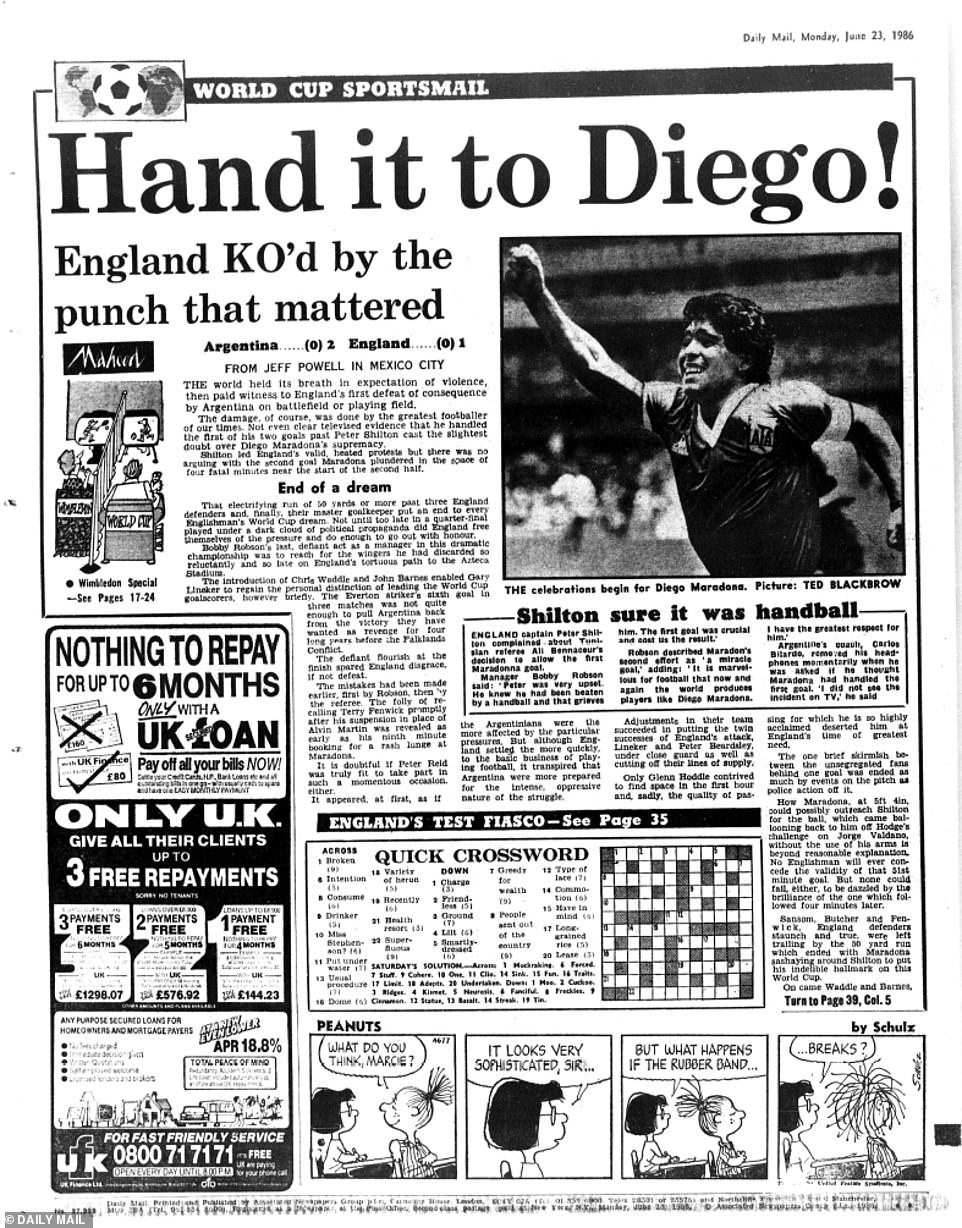
The Maradona “Hand of God” incident was a deliberate handball goal in the 1986 World Cup quarter-final. It was not seen by officials and stood, giving Argentina a lead against England. Maradona later named it, mixing football infamy with political symbolism from the recent Falklands War.
The Maradona “Hand of God” incident was a deliberate handball goal scored by Diego Maradona for Argentina against England in the 1986 FIFA World Cup quarter-final. It happened because neither the referee nor linesman saw the infraction, and Maradona later framed it as symbolic revenge for the Falklands War, coining its iconic name. The goal remains a defining moment of controversy, genius, and political symbolism in football history.
People get this wrong by seeing it as a simple act of cheating. They miss the layers. The geopolitical tension, the rules of the game in 1986, and the four-minute window that contained both the most infamous and the most celebrated goals in World Cup history. That duality is the real story.
This guide breaks down exactly what happened on the pitch, why the officials missed it, and how a single punch of a ball became a permanent piece of global culture. We’ll look at the facts, the quotes, the context, and the undeniable legacy.
Key Takeaways
- The goal was a clear, intentional handball by Maradona in the 51st minute of the 1986 World Cup quarter-final, unseen by referee Ali Bin Nasser and linesman Bogdan Dotchev.
- Maradona’s famous “Hand of God” quote was a mischievous, immediate deflection, not an admission; he fully admitted to the handball nearly 20 years later.
- The match occurred four years after the Falklands War, and Maradona explicitly stated the goal was “symbolic revenge” for Argentina, elevating it beyond sport.
- Just four minutes after the “Hand of God,” Maradona scored the “Goal of the Century,” a legitimate solo effort that encapsulates his genius and the match’s “half-angel, half-devil” theme.
- The incident would be instantly disallowed today by VAR, but the 1986 officiating was hampered by restrictive FIFA rules that prevented linesmen from consulting with the referee.
What Happened in the 1986 Argentina vs England Match?
The stage was the Estadio Azteca in Mexico City on June 22, 1986. The World Cup quarter-final pitted Argentina against England, a fixture already heavy with the recent memory of the Falklands War. The first half was tense, goalless, and physical. Then, six minutes into the second half, the moment unfolded.
Maradona passed the ball towards Jorge Valdano in England’s half. English midfielder Steve Hodge, attempting an interception, sliced his clearance. It looped high and backwards towards his own penalty area. Argentina’s Jorge Valdano was in an offside position, but the ball came off an opponent, negating the offside call.
The play unfolded in under five seconds: Hodge’s miscue, Maradona’s arcing run, and the aerial challenge with the 6-foot-1 goalkeeper Peter Shilton. Maradona, at 5-foot-5, leapt with his left arm raised. His fist connected with the ball, punching it past Shilton and into the net.
English players erupted in protest. Shilton and defender Terry Butcher charged the referee, pointing to their hands. The Tunisian referee, Ali Bin Nasser, had his view partially obstructed. He looked to his linesman, Bulgarian official Bogdan Dotchev, who kept his flag down. After a brief moment of confusion, the goal was awarded. Argentina led 1-0.
TL;DR: Maradona punched the ball into the net after a poor English clearance, and the officials missed the handball, allowing the goal to stand amidst furious protests.
Why Was the Goal Allowed to Stand?
The simple answer is that the officials did not see the handball. The complex answer involves the limitations of officiating in 1986 and a critical communication breakdown.
Referee Ali Bin Nasser was not perfectly positioned. He stated afterward that he was waiting for his linesman to signal a foul. The linesman, Bogdan Dotchev, later admitted he saw something suspicious but was not certain it was a handball. More crucially, FIFA’s protocol at the time did not allow assistant referees to initiate conversations with the referee about decisions. Dotchev felt his hands were tied by the rules.
| Official | Role | What They Saw | Constraint |
|---|---|---|---|
| Ali Bin Nasser | Referee | Obstructed view, saw a goal-scoring challenge | Relied on linesman’s signal, which never came |
| Bogdan Dotchev | Linesman | Suspicious action, not 100% certain | FIFA rules prevented him from consulting the referee |
This procedural failure is the key difference between then and now. A modern Video Assistant Referee (VAR) review would have overturned the goal in seconds. The entire controversy hinges on a technological and procedural gap that no longer exists. England manager Bobby Robson summed up the disbelief: “How a referee and a linesman can miss that at a World Cup… I will never know.” It’s a sentiment that defines one of football’s most debated historical rulings.
The “Goal of the Century” and the Duality of Genius
The narrative could have ended with a tainted 1-0 win. It didn’t. Four minutes after the “Hand of God,” Maradona produced a moment of such pure, unassailable brilliance that it forever changed how the match is remembered.
Receiving the ball inside his own half near the right touchline, Maradona turned and began a slaloming run. He beat Peter Beardsley, Peter Reid, Terry Butcher (twice), and Terry Fenwick before coolly dribbling around Peter Shilton to slot the ball home. It was a solo goal against one of the world’s best defenses, a display of balance, speed, and audacity that left the stadium in awe.
This goal was later voted by fans as FIFA’s “Goal of the Century.” Its proximity to the “Hand of God” created the perfect story: the cheat and the genius, housed in the same man within four minutes. This duality is why the incident is more than a refereeing error. It cemented Maradona’s legacy as a flawed deity—”half-angel, half-devil,” as UEFA’s retrospective perfectly described him. The match itself became a capsule of his entire career: controversy and sublime talent inextricably linked. You can’t discuss one iconic football moment without the other.
The Falklands War Context and “Symbolic Revenge”
To view the “Hand of God” solely through a sporting lens is to miss its profound national significance in Argentina. The match was played just four years after the 1982 Falklands War (Guerra de las Malvinas), a 74-day conflict where Argentina was defeated by the United Kingdom.
For Argentines, the match was not just a football game. It was a chance for symbolic retribution on a global stage. Maradona, never shy about his political feelings, leaned into this completely. Years later, he was unequivocal: “It was symbolic revenge for the Malvinas… We were watching the English as if we were watching the people who had stolen from us.”
This framing transformed the goal from a sneaky handball into an act of patriotic rebellion. It tapped into a concept some Argentines call viveza criolla—a kind of native cunning or cleverness to gain an advantage against a more powerful opponent. Whether you see it as gamesmanship or cheating, understanding this context is non-negotiable. It explains the goal’s enduring celebration in Argentina and its deep-seated resentment in England. It’s a stark reminder of how sport, especially in the World Cup, can become a proxy for historical and political wounds. This level of national symbolism is rare, even among other controversial World Cup goals.
What Did Maradona Actually Say About the Goal?
Maradona’s words gave the incident its immortal name and fueled decades of debate. In the chaotic mixed zone after the match, confronted by reporters, he delivered the iconic line: “It was a little with the head of Maradona and a little with the hand of God.”
This was not a confession. It was a witty, evasive, and brilliantly cynical soundbite. He was playing with the media, offering a theological shrug that acknowledged the controversy without admitting guilt. For years, he maintained this ambiguous stance, a smirk never far from his face when asked about it.
The full admission came much later. On his Argentine television show in 2005, he finally stated plainly, “I hit it with my hand.” He reiterated this in the 2019 documentary Diego Maradona, again connecting it to the Falklands. By then, the myth was cemented. The delayed truth changed little for the English players. Goalkeeper Peter Shilton, who had the best view of the handball, rejected the apology as far too little, far too late. The quote’s journey from deflection to admission is a story in itself, mirroring Maradona’s complex relationship with his own legend.
The Lasting Legacy and Cultural Impact

The “Hand of God” transcended sport the moment the phrase was uttered. It entered the global lexicon as a shorthand for getting away with something brazen through a mix of audacity and luck. Its legacy is multifaceted.
- Phrasebook Entry: “Hand of God” is universally understood, used in contexts far beyond football.
- Economic Artifact: The actual ball from the match was sold at auction in November 2022 for $2.4 million, a price tag that speaks to the moment’s priceless cultural capital.
- Defining Duality: It forever binds Maradona’s genius to his rebellious, rule-bending nature. You cannot teach his soccer tactics without acknowledging the unpredictable, often chaotic, individualism he embodied.
- Officiating Catalyst: It remains the ultimate case study for why football adopted goal-line technology and VAR. It is the ghost that haunts every discussion about fair play and technological aid.
The incident also sits uncomfortably within football’s moral code. It glorifies a clear violation, yet it is inseparable from one of the game’s greatest-ever performances. It forces a conversation about the “spirit of the game” versus the win-at-all-costs mentality seen in other controversial tactics. This unresolved tension is why, nearly four decades later, it is still debated in pubs, classrooms, and documentaries. It’s more than a goal; it’s a philosophical puzzle wrapped in a historical event.
Frequently Asked Questions
Was Maradona offside for the “Hand of God” goal?
No. While Argentine striker Jorge Valdano was in an offside position, the ball that Maradona handled came directly from England’s Steve Hodge. A player cannot be offside from a pass made by an opponent, so the offside rule was not a factor.
Would VAR have disallowed the goal today?
Absolutely. A Video Assistant Referee review would have taken less than 30 seconds to identify the clear and intentional handball. The goal would have been chalked off, and Maradona likely would have received a yellow card. The entire controversy is a product of its pre-technology era.
What was England’s reaction after the game?
Immediate fury and lasting bitterness. Players like Peter Shilton and Terry Butcher were incensed. Manager Bobby Robson was diplomatically furious. The sense of injustice was profound, only slightly tempered by admiration for Maradona’s second goal. Gary Lineker, who scored a late consolation for England, later said, “The first goal was an absolute disgrace, the second was the work of a genius.”
How is the “Hand of God” viewed in Argentina versus England?
The chasm could not be wider. In Argentina, it is celebrated as a cunning, almost heroic act of revenge and a key step toward winning the World Cup. It is part of Maradona’s god-like status. In England, it is the textbook example of “they cheated us.” It is remembered with a mix of anger and resigned acceptance of Maradona’s brilliance elsewhere in the match.
Did any good come from the incident for football?
Indirectly, yes. While not the sole reason, it became a powerful anecdote in the long argument for implementing video technology to correct clear and obvious errors. It highlighted the human limitations of referees in real-time and the immense stakes of World Cup knockout matches, like this famous quarter-final match.
The Bottom Line
Maradona’s “Hand of God” is not a relic. It’s a living story. It’s a lesson in how a single moment can refract through the lenses of sport, politics, history, and culture to become something infinitely larger. The facts are clear: he punched it in, the officials missed it, and he later called it divine intervention and national revenge.
To understand it, you must hold two conflicting truths at once. It was a blatant violation of the rules, a cheat. It was also a catalyst for one of the sport’s most iconic narratives, born from a specific historical wound and culminating in a display of unparalleled genius minutes later. This complexity is why it will never be forgotten. It’s the ultimate football paradox, and its explanation is never just about the hand. It’s about the man, the moment, and the millions who watched a legend write his own conflicted mythology in real time. For more on the players who shape such moments, explore the careers of other famous Argentine players.

I come from the “soccer heart” of Germany, the Ruhrpott. I have played, trained and followed soccer all my life and am a big fan of FC Schalke 04. I also enjoy following international soccer extensively.