Soccer Offside Rule Explained Simply Using Helpful Diagrams
To understand the offside rule, you need to separate two concepts: being in an offside position, and committing an offside offence. A player is in an offside position if they are in the opponents’ half and closer to the goal line than both the ball and the second-last defender when a teammate plays the ball. It only becomes an offence if they then become actively involved in the play.
Most people think offside is just about being behind the last defender. That’s the first mistake. The real confusion starts with the three specific ways a player in that position can actually break the rule, and the five scenarios where they can’t break it even if they look miles off.
This guide breaks down the offside rule with clear, diagram-like explanations. We’ll cover the precise moment the call is made, what “active involvement” really means, how VAR changes everything, and why this rule exists in the first place.
Key Takeaways
- Offside is judged the instant a teammate plays the ball, not when the player receives it. Freeze that frame.
- Hands and arms do not count for determining offside position. The line is drawn at the bottom of the armpit.
- An offside offence requires active involvement: touching the ball, blocking a defender’s line of sight, or playing a rebound from the post or a defender.
- You cannot be offside directly from a goal kick, corner kick, or throw-in. You also cannot be offside in your own half.
- The assistant referee’s flag signals an offside position. The referee’s whistle signals the confirmed offence after assessing active involvement.
What Is the Exact Definition of Offside?
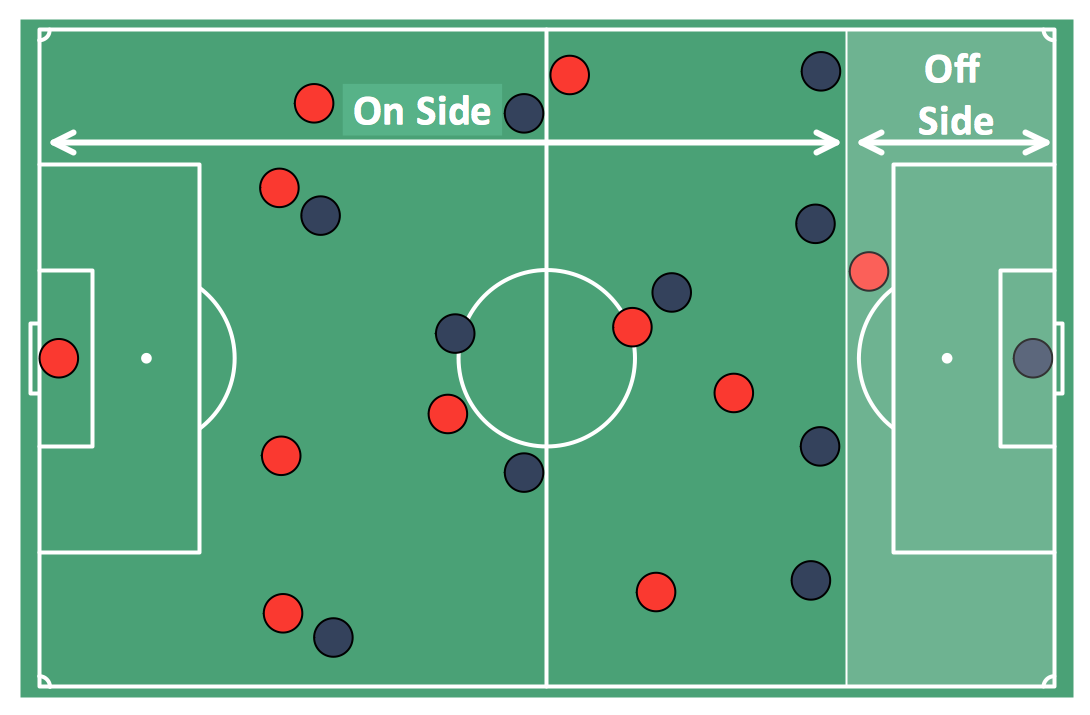
The official wording from the International Football Association Board (IFAB) is precise for a reason. Law 11 states that a player is in an offside position if three conditions are met simultaneously. First, any part of their head, body, or feet must be in the opponents’ half of the field. The halfway line itself does not count as the opponents’ half. Second, they must be closer to the opponents’ goal line than the ball. Third, they must be closer to the goal line than the second-last opponent.
A player is in an offside position if any part of the head, body or feet is in the opponents’ half (excluding the halfway line) and closer to the opponents’ goal line than both the ball and the second-last opponent. The hands and arms of all players, including the goalkeepers, are not considered.
The “second-last opponent” is the key. Most of the time, this is the last outfield defender, with the goalkeeper being the last opponent. If the goalkeeper has come out, it could be any two defenders. If a defender is level with the attacker, the attacker is onside. Level means any part of the body that can legally score a goal is even. This nuance is why marginal offside calls, now measured in millimeters by VAR, cause so much debate. The total number of players on the field is irrelevant to this specific calculation; it’s always about the position of the second-last defender.
TL;DR: Offside position = in the opponents’ half + ahead of the ball + ahead of the second-last defender when the pass is made.
The Crucial Split: Position vs. Offence
This is the part that changes everything. Being in an offside position is not a crime. It is a potential crime waiting to happen. The offence only occurs if the player in that position becomes “involved in active play”. You can stand in an offside position all day and the referee will not blow the whistle. The moment you touch the ball or affect an opponent, the whistle goes.
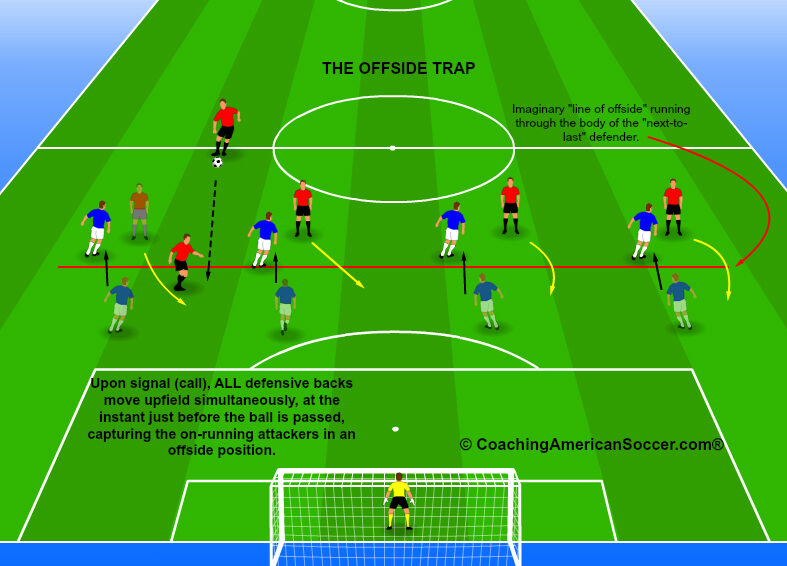
Think of it like a defensive line holding a high line. Their entire strategy is to push attackers into an offside position, knowing that as long as those attackers don’t get involved, it’s legal. This is the core of the offside trap strategy. The split-second timing required for both the defenders to step up and the attacker to stay still is what makes it a high-risk, high-reward tactic. The assistant referee must watch two things at once: the defensive line and the moment of the pass. It’s why they get it wrong sometimes, even at the highest level.
Common mistake: Assuming any player in an offside position when the ball is played is automatically offside, the player must then become actively involved for the offence to occur.
The 3 Ways to Commit an Offside Offence
The IFAB defines three specific actions that transform a passive offside position into an active offside offence. These are not suggestions; they are the criteria match officials use to make the call.
1. Interfering with Play
This is the most straightforward. The player in the offside position plays or touches the ball after it has been passed or touched by a teammate. If you receive the pass, you’re offside. It doesn’t matter if you were stationary or made a run from an onside position earlier; the snapshot at the pass moment is what counts.
2. Interfering with an Opponent
This is where the controversy lives. A player can be flagged for offside without ever touching the ball. The law says a player interferes with an opponent by preventing them from playing or being able to play the ball. This includes blocking the goalkeeper’s line of sight, challenging an opponent for the ball, or making a movement that clearly impacts an opponent’s ability to play the ball.
A classic example is standing in front of the goalkeeper during a free kick. Even if you don’t touch the ball, you’re impairing the keeper’s vision and movement. That’s offside interference. The referee’s opinion here is final, which is why you’ll see managers screaming on the touchline about “passive offside” when a goal is allowed.
3. Gaining an Advantage
This clause covers rebounds and deflections. A player is offside if they play the ball after it has rebounded or been deflected off the goalpost, crossbar, match official, or an opponent. The idea is that the player gained an advantage from being in that offside position. However, there is a critical exception: if a defender makes a deliberate play at the ball (like a clear pass or a controlled clearance that goes astray), it can negate the offside. A simple deflection does not count as a deliberate play.
| Offence Type | What It Looks Like | VAR Review Likelihood |
|---|---|---|
| Interfering with Play | Receiving a direct pass from a teammate while offside. | High — clear camera angle on pass and touch. |
| Interfering with an Opponent | Blocking goalkeeper’s view on a shot. | Very High — subjective, needs multiple angles to assess impact. |
| Gaining an Advantage | Scoring a rebound after a shot hits the post. | High — easy to see origin of the ball and player’s position. |
When Offside Is NOT Called: The 5 Exceptions

You can be standing three yards behind the last defender and it will still be perfectly legal. The laws carve out specific scenarios where the offside rule is switched off. Knowing these exceptions to offside is as important as knowing the rule itself.
- In Your Own Half: If any part of your body that can play the ball is in your own half when the pass is made, you cannot be offside. The halfway line is part of your own half.
- From a Goal Kick: This restarts play. You can stand next to the opposing goalkeeper when the goal kick is taken and receive the ball directly.
- From a Throw-In: The offside rule does not apply. This is why long throw-ins into the box are a potent weapon.
- From a Corner Kick: Similar to a throw-in, players can position themselves anywhere after the corner is taken.
- Level with the Second-Last Opponent: If you are even with the second-last defender (or the last two opponents), you are onside. This is the “benefit of the doubt” principle, though with semi-automated offside, “level” is now a millimeter-precise measurement.
A player cannot be offside from a corner kick, even if they are standing directly in front of the goalkeeper when the ball is kicked. This exception makes set-piece planning around the six-yard box a critical part of the game objective.
How Officials Make the Call: From Assistant to VAR
For decades, the call belonged solely to the assistant referee (linesman). Their job is incredibly difficult: watch the second-last defender, watch the passer’s foot, watch the potential receiver, and make a judgment in real time, all while running at full speed. Human error was accepted as part of the game.
The introduction of the Video Assistant Referee (VAR) changed that contract. Now, for any potential offside leading directly to a goal, a penalty, or a red card, the VAR can review the footage. They use broadcast cameras, often with a 50-frame-per-second rate, to find the exact frame where the passer makes contact with the ball. They then draw virtual lines from the second-last defender and the attacker to determine position.
Semi-automated offside technology, used in the Champions League and World Cup, takes this further. Specialized cameras track 29 data points on each player 50 times per second. A sensor in the ball detects the exact point of contact. A 3D animation is created, and an offside alert is sent to the VAR room within seconds. This is why you now see thick, colorful lines on TV broadcasts, they are visualizations of this automated calculation.
The official soccer offside law as published by IFAB is the foundation for all these technological aids. The tech doesn’t change the rule; it just applies it with surgical precision that a human eye can’t match. This has led to goals being disallowed for armpits and shirt sleeves, a level of scrutiny the rule was never designed for.
The Future: The “Wenger Rule” and Attacker-Friendly Changes
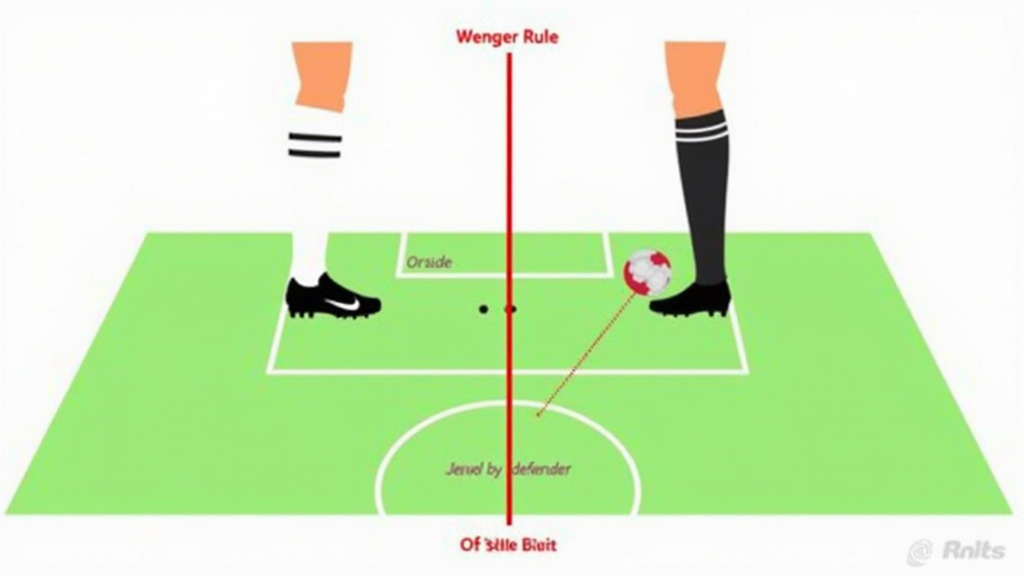
The current precision has a cost. It often disallows goals where the attacking advantage is negligible, sucking joy from the game. Arsène Wenger, as FIFA’s Chief of Global Football Development, has championed a trial of a major change: the so-called “Wenger Rule.”
Under this proposal, a player would only be offside if their entire body is ahead of the defender. If any part of the attacker’s body that can score a goal is level with or behind the defender, they are onside. This shifts the benefit decisively to the attacker and would likely lead to more goals and more high defensive lines being punished. Leagues like the Italian Serie A and the Dutch Eredivisie have been testing it. It represents the biggest potential shift in the modern offside rule in decades.
Common mistake: Believing VAR eliminates controversy, it only changes the debate from “was he off?” to “did they draw the line from the right pixel?”, and it cannot judge “interfering with an opponent” with the same binary certainty.
Why Does This Rule Even Exist?
Without an offside rule, soccer would look completely different. The game would devolve into “kick and rush” tactics, with attackers permanently camped next to the opposing goalkeeper waiting for long balls. There would be no need for midfield build-up, tactical spacing, or the defensive coordination of a high line. The rule forces teams to construct attacks creatively and rewards coordinated movement between the lines.
It also created one of soccer’s great tactical battles: the offside trap. A well-drilled defense moving in unison to catch attackers offside is a thing of beauty. When it fails, it’s a catastrophe, leaving a clear path to goal. This risk-reward dynamic is fundamental to the sport’s drama. Understanding this rule is essential to appreciating the chess match happening beyond just the basic offside rule.
Frequently Asked Questions
Can you be offside from a goalkeeper’s throw or kick?
Yes. A goalkeeper is considered a teammate when they distribute the ball with their hands or feet. The standard offside rules apply. The only exception is a goal kick, which is a specific restart where offside does not apply.
What happens if a player in an offside position doesn’t touch the ball but distracts the defender?
This is a judgment call for “interfering with an opponent.” If the referee believes the attacker’s presence caused the defender to react or hesitate, an offside offence can be called. Simply being in the defender’s peripheral vision usually isn’t enough; there has to be a clear impact.
Why is the offside line sometimes drawn from the attacker’s arm?
It shouldn’t be. The laws are clear: hands and arms do not count. A proper VAR review should draw the line from the attacker’s shoulder (bottom of the armpit) or their torso/feet, whichever is closer to the goal. If you see a line from a sleeve, it’s a graphical error or misapplication.
Can you be offside on a penalty kick?
No, not directly. During a penalty kick, offside cannot be committed by the attacking team. However, if the penalty is saved or hits the post and rebounds, normal offside rules apply to any subsequent play from the rebound.
How does stoppage time affect offside calls?
It doesn’t. The stoppage time period is simply an extension of the second half. All the laws of the game, including offside, apply exactly the same way. The pressure might be higher, but the rulebook doesn’t change. The match can indeed end during stoppage time on an offside call if that’s the last action.
Before You Go
Forget the idea that offside is just about a striker and a defender. It’s a dynamic rule that shapes the entire geometry of the field. The core is simple: be behind the ball and the second-last defender when your teammate passes. The complexity comes from the three types of interference and the millimetre-perfect technology now judging it.
Watch a game now and try to freeze the frame in your mind at the moment of every through pass. Look for the second-last defender, not the last one. You’ll start to see the game officials see it, not as a continuous flow, but as a series of snapshots where position is everything. That shift in perspective turns confusion into clarity.

I come from the “soccer heart” of Germany, the Ruhrpott. I have played, trained and followed soccer all my life and am a big fan of FC Schalke 04. I also enjoy following international soccer extensively.