Match Ball vs Training Ball: Soccer Performance Differences
The performance difference between a soccer match ball and training ball is defined by construction. Match balls use thermally-bonded panels and a precise bladder for consistent flight, touch, and water resistance. Training balls use stitched panels and a basic bladder for durability, resulting in a heavier, less predictable feel and trajectory.
The difference between a soccer match ball and a training ball is a matter of design philosophy: match balls are precision instruments engineered for consistent flight and optimal touch during official games, while training balls are durable workhorses built to withstand repetitive use on various surfaces. This distinction dictates everything from the materials and construction to the feel and flight path.
Most players and clubs get this wrong by using the cheaper, tougher ball for everything. They save money upfront but sacrifice the specific skills that only a true match ball can develop. The wrong ball teaches your feet the wrong expectations.
This guide breaks down the differences in materials, construction, feel, and performance. You will learn why a Bundesliga club orders hundreds of training balls but only a few dozen match-spec balls, and how choosing the right one impacts first touch, passing accuracy, and even set-piece execution.
Key Takeaways
- Match balls use soft Polyurethane (PU) casings and latex bladders for a responsive touch, while training balls use durable PVC/TPU and butyl bladders for longevity.
- The highest standard, FIFA Quality Pro certification, involves passing seven rigorous tests including shape retention after 2,000+ strikes, a standard only match balls meet.
- Aerodynamically, modern match balls like the Adidas Trionda are engineered for a predictable “drag crisis” at specific speeds (around 27 mph), making free kicks and crosses consistent.
- Clubs buy training balls in bulk for cost-efficiency and durability, reserving match balls for games and final tactical sessions to preserve their precise performance characteristics.
- Using a training ball for match preparation can dull a player’s touch and mis-calibrate their passing weight, as the ball responds differently off the foot.
The Core Difference: Design Philosophy & Feel
A match ball is a surgical tool. A training ball is a hammer. This is not about quality tiers, but engineered purpose. The design intent filters into every physical attribute.
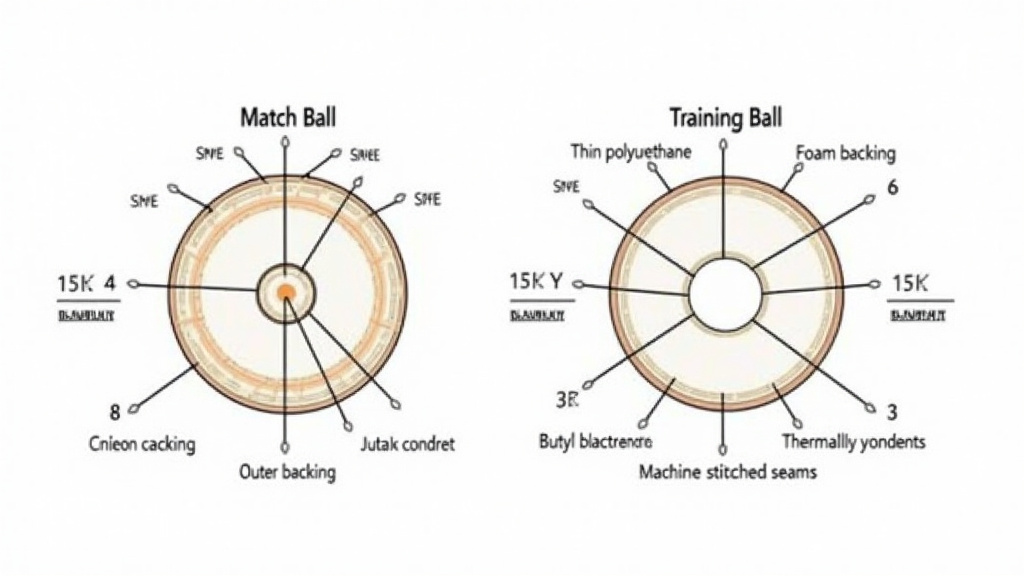
Match balls prioritize a clean, immediate connection. The outer casing feels almost velvety. This comes from premium Polyurethane (PU) and multi-layer foam backing that cushions the foot’s impact, allowing for finer control over spin and pace. The difference is tactile. Strike a match ball cleanly and the energy transfer is efficient, the sound is a muted thud. A training ball feels firmer, almost wooden. The impact is louder, a sharper crack, and the ball rockets off the foot with less feedback.
The surface texture of a high-end match ball, like the thermally bonded Adidas Trionda, includes intentionally deep seams and embossed graphics. These aren’t just for show; they create controlled surface roughness to ensure stable, predictable flight in varied weather conditions, a detail absent from most training models.
This feel dictates skill development. Young players training exclusively with hard PVC balls often develop a heavy first touch. They learn to stop the ball by muscling it, not cushioning it. Switching to a match ball before a game then feels alien, passes run away, shots sail over. The reverse is also true. Using only soft match balls on rough concrete or artificial turf destroys them in weeks.
TL;DR: Match balls feel soft and responsive for control; training balls feel firm and durable for repetition. Your choice trains your touch.
Materials & Construction: What They’re Made Of
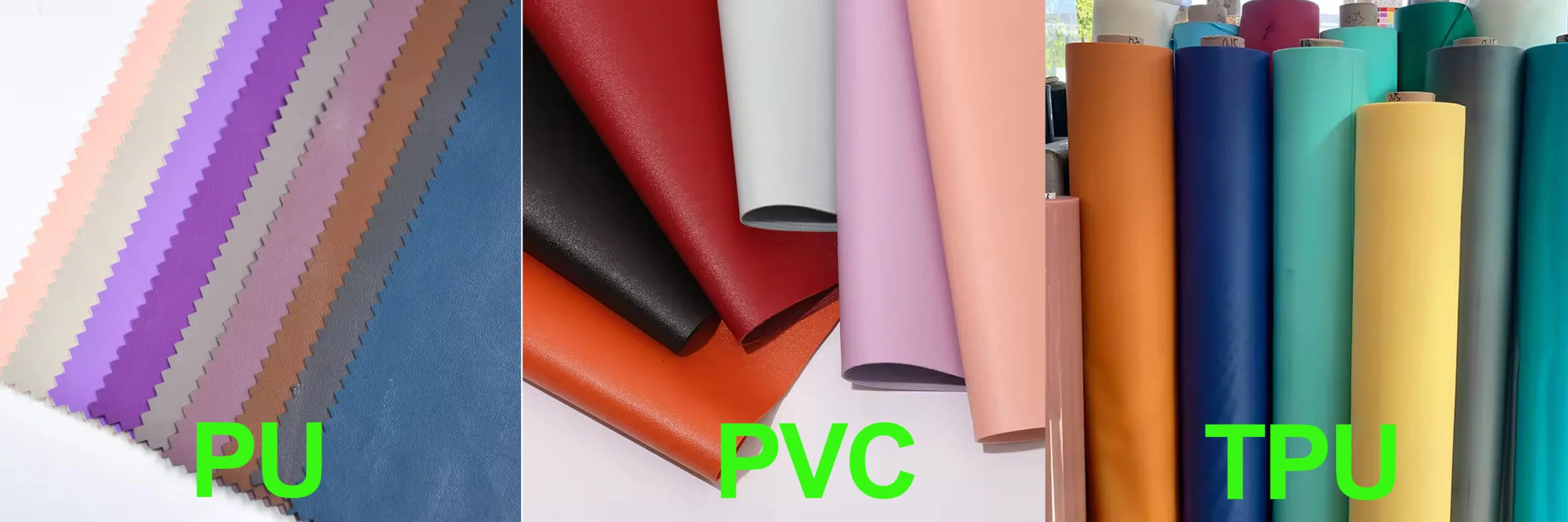
The split starts at the molecular level. The materials chosen define the ball’s lifespan, performance, and cost.
| Component | Match Ball | Training Ball |
|---|---|---|
| Outer Casing | Polyurethane (PU). Soft, supple, high tear strength. Often has foam backing for cushioning. | PVC (Polyvinyl Chloride) or TPU (Thermoplastic Polyurethane). Tough, abrasion-resistant, less flexible. |
| Construction | Thermally bonded (panels fused with heat/adhesive) or hand-stitched. Seamless surface for true flight. | Machine-stitched or lower-grade hand-stitching. Seams are more pronounced. |
| Bladder | Latex. Offers a livelier, more responsive bounce and softer feel. Loses air faster (24-48 hrs). | Butyl. Holds air for weeks or months. Provides a harder, more consistent bounce. |
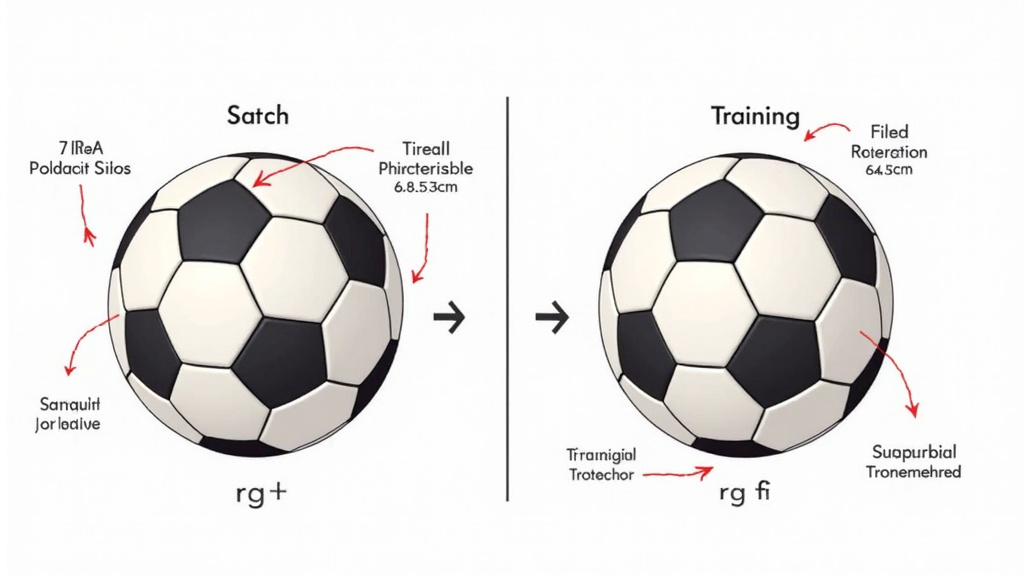
| Panel Count | Often 32 panels for near-perfect sphericity, or advanced designs like the 4-panel Adidas Trionda. | Can be 18, 26, or 32 panels. Fewer panels can mean a more rigid structure. |
Thermal bonding is the gold standard for match soccer ball construction. It eliminates stitching, creating a perfectly smooth surface that interacts cleanly with the air. This is why all top-tier Adidas match balls and Nike match balls use it. Hand-stitching, found on some match balls and better training balls, uses a polyester thread and can still produce an excellent sphere. Machine-stitching is fast and cheap, leaving a raised seam that can create unpredictable knuckle effects when the ball spins.
The bladder is the engine. A latex bladder is like a high-performance sports car engine, responsive and energetic, but high-maintenance. A butyl bladder is a diesel truck engine, reliable and long-lasting, but lacking that snap. Most recreational players never consider the bladder, but it’s the reason your club’s training bag has a pump in it. The latex balls need topping up every other session.
Common mistake: Using a match ball with a latex bladder on hard, dry ground, the internal pressure spikes on impact, straining the seams and accelerating wear. You’ll see panel separation within a month of daily use.
Performance in the Air: Aerodynamics and Flight
How a ball moves through the air separates a £30 ball from a £150 ball. The science is called aerodynamics, and match ball engineers obsess over it.
Every ball has a “drag crisis”, a specific speed where airflow around it transitions from smooth (laminar) to turbulent. This transition causes a sudden dip or swerve. A poorly designed ball has a dramatic, unpredictable drag crisis. A well-designed match ball has a gentle, predictable one at a speed relevant to the game. Wind tunnel tests on the 2026 World Cup ball, the Adidas Trionda, show its drag crisis occurs at about 27 mph (43 kph). That’s the speed of a driven cross or a firm pass. The ball’s behavior is consistent in that zone. Older, infamous balls like the 2010 Jabulani had a crisis at nearly 60 mph, right in shooting range, leading to wild, unpredictable movement.
Training balls are not engineered with this precision. Their drag crisis is not a controlled variable. Hit a long diagonal with a training ball and it might suddenly duck or sail based on its panel shape and seam height. This inconsistency is fine for repetitive passing drills at short range. It’s a problem when you’re practicing 40-yard switches or free-kick placement.
Common mistake: Practicing set pieces with a training ball, the flight path won’t replicate match conditions, making your practice misleading. The ball that curls perfectly in training might not dip in the game.
Modern match balls also incorporate technology for officiating. As detailed in the adidas World Cup match ball announcement, the Trionda contains a 500Hz IMU sensor embedded in its casing to provide precise data to VAR systems. This level of integrated technology is never found in training balls.
TL;DR: Match balls fly true because their aerodynamics are scientifically calibrated. Training balls have variable, less predictable flight paths, especially over distance.
FIFA Standards & Certifications: The Official Stamp
The labels “FIFA Quality Pro” and “FIFA Quality” are not marketing. They are the results of a brutal certification process that few balls survive. This is the definitive line between a true match ball and everything else.
To earn the FIFA Quality Pro stamp, the standard for all top professional competitions, a ball must pass seven rigorous tests:
1. Circumference: Between 68.5 and 69.5 cm.
2. Sphericity: Maximum 2% deviation from a perfect sphere.
3. Weight: Between 420 and 445 grams.
4. Water Absorption: Gaining less than 10% weight after 250 cycles in a water tank.
5. Rebound: Must bounce between 135 and 155 cm when dropped from 2 meters.
6. Pressure Loss: Maximum loss of 20% over 72 hours.
7. Shape & Size Retention: Must remain within all above tolerances after being shot 2,000 times by a machine from 2 meters.
That last test is the killer. It simulates a ball’s life in a single intense match. Most training balls would deform or go out of round after a few hundred strikes. The FIFA Quality standard is slightly less strict, often applied to high-level amateur match balls and the very best training ball recommendations.
The certification matters because it guarantees consistency. Every FIFA Quality Pro ball of the same model performs identically. A player in Munich and a player in Montreal can strike the same model ball and expect the same response. This is non-negotiable for fair competition. Training balls have wider manufacturing tolerances. You can buy two of the same model and one might feel slightly heavier or bounce higher than the other. For drill work, it’s irrelevant. For taking a penalty in a cup final, it’s everything.
These standards also govern official ball sizes and official air pressure. A size 5 match ball must be inflated to between 8.5 and 15.6 PSI (0.6-1.1 bar), with most professionals preferring the higher end for a firmer, faster play.
Cost, Durability, and Club Logic
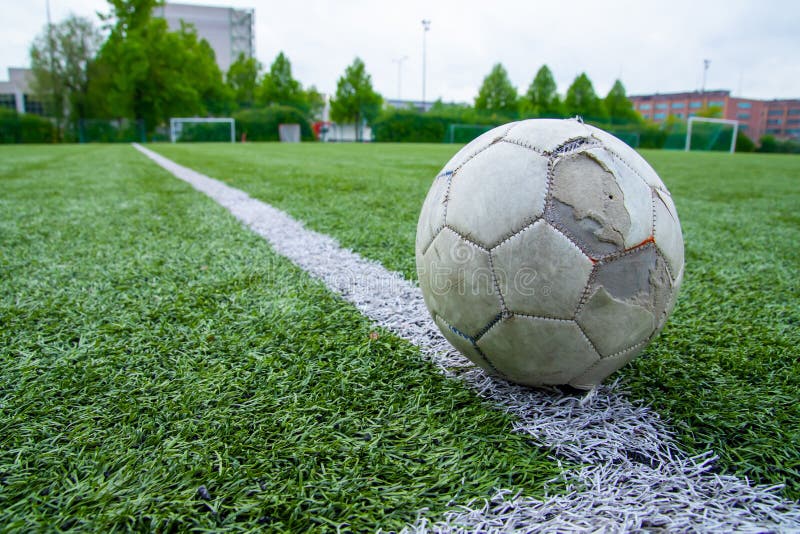
Why does a club own 200 training balls but only 30 match balls? The answer is a cold calculus of cost, wear, and purpose.
A top-tier FIFA Quality Pro match ball costs between €120 and €170. The Adidas Trionda retails for €160. It is a precision object. Using it on abrasive artificial turf, concrete, or in muddy conditions will scuff the delicate PU casing, flatten the embossed texture, and degrade its aerodynamic properties within a handful of sessions. It becomes a €160 training ball.
A good quality training ball costs €20-€50. It is built with a tough TPU or PVC casing that laughs at gravel and asphalt. Its butyl bladder doesn’t need constant inflation. A club can buy five to eight durable training balls for the price of one match ball. They can be used for every drill, every day, by every age group, and last a full season or longer. When they’re worn, they’re cheap to replace.
Therefore, the professional protocol is simple: Training balls are for the grind, fitness drills, technical circuits, small-sided games on rough pitches. Match balls are reserved for the final day-before-match tactical session and the game itself. This preserves their perfect characteristics for when they absolutely matter. This logic trickles down. Serious amateur clubs and academies follow a scaled-down version, investing in a few certified match balls for games and a bag of durable ones for practice.
This is also why the feel of a traditional leather football is gone from modern training. Leather was high-maintenance and performed terribly when wet. Modern synthetic training balls are consistent and weatherproof, even if they lack that classic feel.
TL;DR: Clubs buy many cheap, durable balls for practice and few expensive, delicate balls for games. It’s the only financially sane way to operate.
Choosing the Right Ball for Your Needs
Your choice isn’t about buying the “best” ball. It’s about matching the ball to the job. Ask these three questions.
What is the primary surface?
- Natural Grass / Quality Artificial Turf: You can use match balls here. The surface is forgiving enough.
- Hard Ground, Asphalt, Caged Pitches, Poor Artificial Turf: This is training ball territory. The surface will destroy a match ball’s casing. Look for balls labeled “Turf” or “Street.”
- Indoor Sports Hall: You need a specialized indoor football ball with a felted or rubberized cover for grip and reduced bounce.
What is the primary use?
- Official Matches & Competitive Leagues: You need a FIFA Quality Pro or FIFA Quality ball. There is no substitute. This is what the referee will check.
- Team Training Sessions: Buy a bulk set of durable, consistent training balls. Look for ones with good ball pressure standards retention.
- Individual Skill Work: If you’re working on touch, passing, and shooting, consider one good match ball. You are calibrating your feel to the game standard. Protect it and use it on grass.
What’s your budget?
- Limited: Invest in one good match ball for games and a couple of mid-range training balls for practice. Never use your match ball for everyday training.
- Team/Club Budget: Prioritize a large set of identical training balls for squad harmony, plus a smaller match ball set for games. Consistency across your training equipment is key.
Remember, the ball material layers dictate care. A match ball with a latex bladder needs a pump and a pressure gauge. Make proper ball inflation part of your pre-session routine.
Frequently Asked Questions
Can I use a training ball in an official match?
No. League rules almost always stipulate the ball must meet a specific standard, usually FIFA Quality Pro or FIFA Quality. The referee will inspect the ball before kick-off. A training ball lacks the required certification and consistent performance, giving an unfair advantage to neither side.
Why does my new match ball feel so light and fast?
You’re feeling the combination of a soft PU casing, latex bladder, and perfect sphericity. The energy from your foot is transferred more efficiently into forward momentum, not absorbed by a stiff casing. It takes a session or two to adjust your passing weight.
Do professional players use match balls in training?
Only sparingly. In the final 24-48 hours before a match, teams will use the exact match ball model to adjust their touch and set-piece timing. The vast majority of their training volume is done with durable, club-issue training balls that match the weight and size, but not the premium feel, of the match ball.
How long should a good training ball last?
quality training ball used on grass 3-4 times a week should last a full season (9-10 months). On abrasive artificial turf or concrete, expect 4-6 months before the casing shows significant wear or the shape degrades. A match ball used under the same harsh conditions might last a month.
Is a more expensive training ball worth it?
Often, yes. A €50 training ball will typically have better stitching, a more consistent bladder, and truer shape retention than a €20 ball. It will behave more predictably over its lifespan, making your practice more valuable. For teams, this consistency across a set of balls is worth the extra investment.
The Bottom Line
The match ball versus training ball debate isn’t about good and bad. It’s about purpose. One is a scalpel, the other is a hammer. Using a training ball for match preparation dulls your touch. Using a match ball on concrete burns money.
Invest in a single, certified match ball for games and serious skill work. Protect it. Then, buy a set of durable, consistent training balls for the daily grind. This split reflects how every professional club in the world operates. It’s the most effective way to develop true match-day skills while managing cost and equipment wear. Your first touch, and your wallet, will thank you.

I come from the “soccer heart” of Germany, the Ruhrpott. I have played, trained and followed soccer all my life and am a big fan of FC Schalke 04. I also enjoy following international soccer extensively.