Mbappe vs Haaland at World Cup : The Real Comparison
To compare Kylian Mbappé and Erling Haaland for the 2026 World Cup, you match three things: their current club form, their defined role within their national team’s system, and the realistic ceiling of that team in the tournament. Mbappé operates in a star-studded French machine built for deep runs; Haaland carries the hopes of a Norwegian underdog side returning to the big stage after decades.
Most discussions get this wrong. They just stack up total goals and declare a winner. That misses the entire point. A striker’s World Cup isn’t played in a vacuum. It’s dictated by the eleven men around him, the coach’s system, and the quality of the opposition they face in the knockout stages.
This breaks down the real comparison. We’ll look at the hard numbers from their recent seasons, explain why their teams use them so differently, and translate the betting odds into a clear picture of what to actually expect in North America.
Key Takeaways
- Mbappé’s France is built for tournament football with elite creativity (Griezmann, Dembélé) and a rock-solid midfield, giving him more consistent service against top defenses.
- Haaland must be hyper-efficient for Norway; he will see fewer touches and chances than at Manchester City, making each shot in the group stage critical.
- The Golden Boot race favors Mbappé because France is likely to play more games (deep run) and face weaker opponents in the group stage, padding his tally.
- Norway’s tournament success hinges almost entirely on Haaland converting the 2-3 half-chances Martin Odegaard creates per game. A single off-day could mean elimination.
- Ignore the “head-to-head” narrative; they won’t directly defend each other. The real battle is Mbappé vs the world’s best right-backs and Haaland vs the world’s best center-backs.
The Statistical Head-to-Head (2024-2026 Form)
Forget career totals. What matters is the form they’re bringing to the summer of 2026. The data from their most recent full club seasons and World Cup qualifying paints two distinct pictures of elite production.
Kylian Mbappé’s 2025-2026 La Liga campaign for Real Madrid saw 24 goals and 5 assists from 30 appearances, averaging 0.86 goals per 90 minutes. He took 138 total shots with 44.9% accuracy. Erling Haaland, in his 2026 World Cup qualifying campaign for Norway, scored 16 goals in 8 matches, topping the global qualifying charts and averaging a goal every 45 minutes of play for his national team.
Mbappé’s numbers at Real Madrid show a player who has evolved. His 86.8% pass completion rate is a career-high, indicating better link-up play in a possession-dominant side. He’s not just a finisher; he’s a hub. The 2.33 key passes per game mean he’s creating for others as much as he’s looking for his own shot. His game is now about sustained pressure.
Haaland’s qualifying stats are monstrous, but they come with context. Sixteen goals in eight games is absurd. It also came against a mix of European minnows and mid-tier teams. The concern isn’t the volume, it’s the translation. In a tournament where Norway will sit deep against giants like France or England, he might only get 15 touches a game. Two of those need to be shots on target.
| Metric | Kylian Mbappé (2025/26 La Liga) | Erling Haaland (WCQ 2026) | What It Means for 2026 |
|---|---|---|---|
| Goals per 90 | 0.86 | 2.00 (qualifying) | Haaland’s rate is unsustainable vs elite teams; Mbappé’s is proven in top leagues. |
| Shooting Accuracy | 44.9% | Data N/A | Mbappé’s efficiency is high, but he takes more speculative efforts from range. |
| Key Passes per 90 | 2.33 | Lower (system role) | Mbappé is a dual threat; Haaland’s job is to be the end point, not the creator. |
| Team Context | Real Madrid (possession) | Norway (counter-attack) | Mbappé is accustomed to high-possession tournament games; Haaland is not. |
Haaland’s last 15 international appearances show 8 goals and 4 assists. That’s a strong return, but it’s not the otherworldly pace of his qualifying run. It hints at what happens when Norway plays better opposition: the supply line constricts.
TL;DR: Mbappé brings balanced, high-level club form into a team that plays the same way. Haaland brings historic qualifying form into a team that will have to play completely differently at the finals.
Playing Styles: The Creator vs The Finisher
Their job descriptions are written in different languages. Mbappé is a sentence with clauses and conjunctions. Haaland is a punctuation mark, an exclamation point.
Mbappé’s game is built on sequences. He starts wide left, isolates a fullback, and uses his explosive pace, which keeps him in any conversation about the world’s fastest footballers, to beat them on the outside or cut inside onto his right foot. His first touch is often a setup for the second, which is a pass or a shot. For France, he has the luxury of Antoine Griezmann playing the final through-ball, allowing him to focus on timing his run and finishing. He can also drop deeper, collect the ball, and drive at a retreating defense, which is a nightmare in transition.
Common mistake: Thinking Haaland is just a tall target man. His movement in the box is a series of short, violent feints. He doesn’t just out-jump people; he loses them with a two-yard shuffle that gives him a half-yard of space. That’s where the goal happens.
Haaland’s style is about economy. At Manchester City, he perfected the art of doing very little until the moment he does everything. For Norway, his role is even more focused. He will spend large portions of games marked by two center-backs, making decoy runs to create space for Martin Odegaard. His physical duel with defenders is constant and exhausting for both parties. When the chance comes, it’s usually one-touch: a cross from the wing, a cut-back from Odegaard, a rebound. His 85.4% penalty conversion rate is a safety net, but Norway won’t get many penalties against deep-lying defenses.
The difference shows up in their highlight reels. Mbappé’s are longer, involving dribbles past multiple players. Haaland’s are bursts: a turn, a shot, a goal. This stylistic gap defines their 2026 football season potential. Mbappé can influence a game that’s not going his way by creating something from nothing. If Haaland isn’t getting service, he becomes a spectator.
Team Context: France’s Machine vs Norway’s One-Man Show
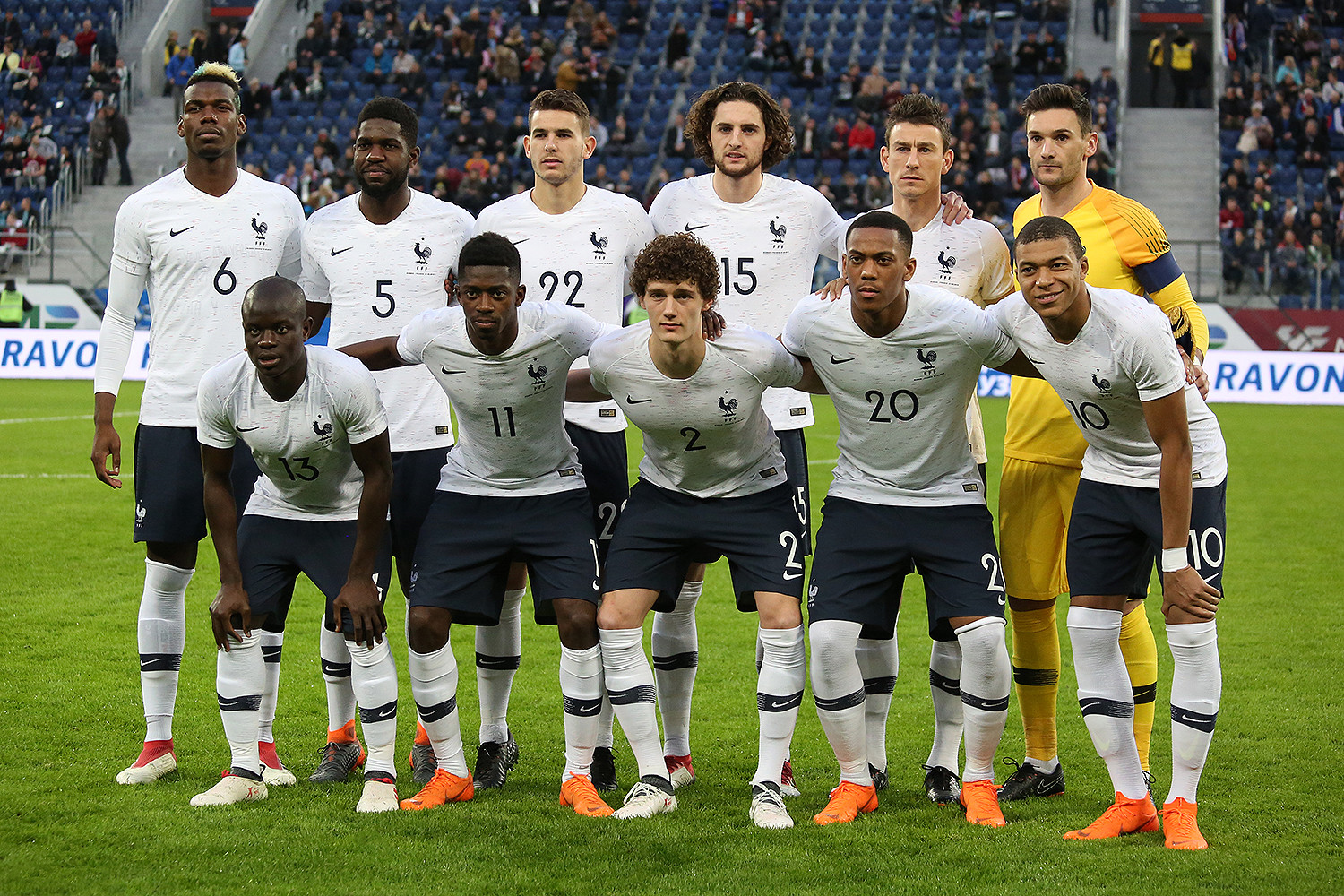
Photo: Кирилл Венедиктов / Wikimedia Commons / CC BY-SA 3.0

This is the entire debate. You can’t talk about a player’s World Cup without talking about the team he has to carry, or the team that carries him.
France is a juggernaut. Didier Deschamps has built a system that has reached three of the last four major tournament finals. The midfield of Tchouaméni, Camavinga, and Griezmann controls games. The defense is experienced and organized. This means Mbappé plays in a side that consistently dominates possession, advances the ball into the final third, and creates overloads. His job is to be the sharpest blade in a well-stocked arsenal. Even on a quiet day, France can win 1-0. His Wikipedia entry on Kylian Mbappé details a career spent in teams expected to win every match, a pressure he’s used to.
Norway is back at the World Cup for the first time since 1998. Their qualification was a triumph, but it was built on beating the teams they should beat. Their system is straightforward: defend compactly, win the ball, get it to Odegaard, and pray he finds Haaland. There is no deep bench. There is no alternative goal-scoring plan. If a top opponent shuts down Odegaard’s passing lanes, Norway’s attack flatlines.
I watched Norway’s playoff match. For 70 minutes, Haaland touched the ball maybe ten times. Two were clearances from corners. One was a flick-on that went nowhere. Then, one through ball split the defense. He was gone. Two touches later, the ball was in the net. That’s his World Cup. A lottery ticket per game, and he has to cash every one.
The pressure differential is immense. Mbappé is expected to shine. Haaland is expected to perform miracles. This dynamic directly shapes the historic goal feats we might see. Mbappé could score a hat-trick against a group-stage minnow because France will create ten chances. Haaland might score a scrappy winner from his only chance against a continental powerhouse. Which is more valuable? The stats sheet favors the hat-trick; the knockout stages often reward the single moment.
TL;DR: France’s system manufactures chances for Mbappé. Norway’s system requires Haaland to manufacture goals from scraps.
The Golden Boot and Golden Ball Calculus
Photo: Helfer Emilio / Wikimedia Commons / CC0
.jpg)
The betting markets are not sentimental. They are probability engines, and they give us a cold, numerical assessment of each player’s likely tournament impact.
As of the latest odds, Kylian Mbappé is the favorite for the Golden Boot (awarded to the tournament’s top scorer). Haaland trails, typically listed around +1400. This gap isn’t about talent; it’s about opportunity. The market expects France to reach the semi-finals or final. That means Mbappé could play 6 or 7 games. The market is skeptical Norway gets out of their group. That caps Haaland’s games at 3.
The math is simple. More games, especially against weaker group-stage opponents, mean more chances to pad the goal tally. Mbappé’s path likely includes a team like Canada or New Zealand in the group, a prime target for multiple goals. Haaland’s group could be a “group of death” scenario from the start.
The Golden Ball (tournament MVP) is a different story. Here, Haaland’s odds lengthen considerably (+2500 or higher). This award usually goes to a player from the champion or finalist team. The market sees Norway’s ceiling as a round-of-16 exit. Even if Haaland scores five goals, if Norway finishes third in their group, he won’t win the Golden Ball. Mbappé, as the star of a favorite, is always in the conversation.
Common mistake: Betting on Haaland for the Golden Ball because “he’ll carry Norway.” The award has only once gone to a player from a team that didn’t reach at least the semi-finals (Lionel Messi in 2014). The precedent is brutal for players on underdog teams.
This market logic reflects the harsh reality of individual awards in a team sport. They are legacy achievements, like the all-time assist leaders, that are often tied to team success. A player can have a transcendent tournament, but if his team falls short, his name is often forgotten in the awards discussion. The BBC Sport report on Haaland’s World Cup qualification captures the narrative of his heroic carry job, but the odds show the bookmakers doubt it can continue for seven games.
Verdict: Who Has the Better 2026 World Cup?
So, who wins? It depends on the question.
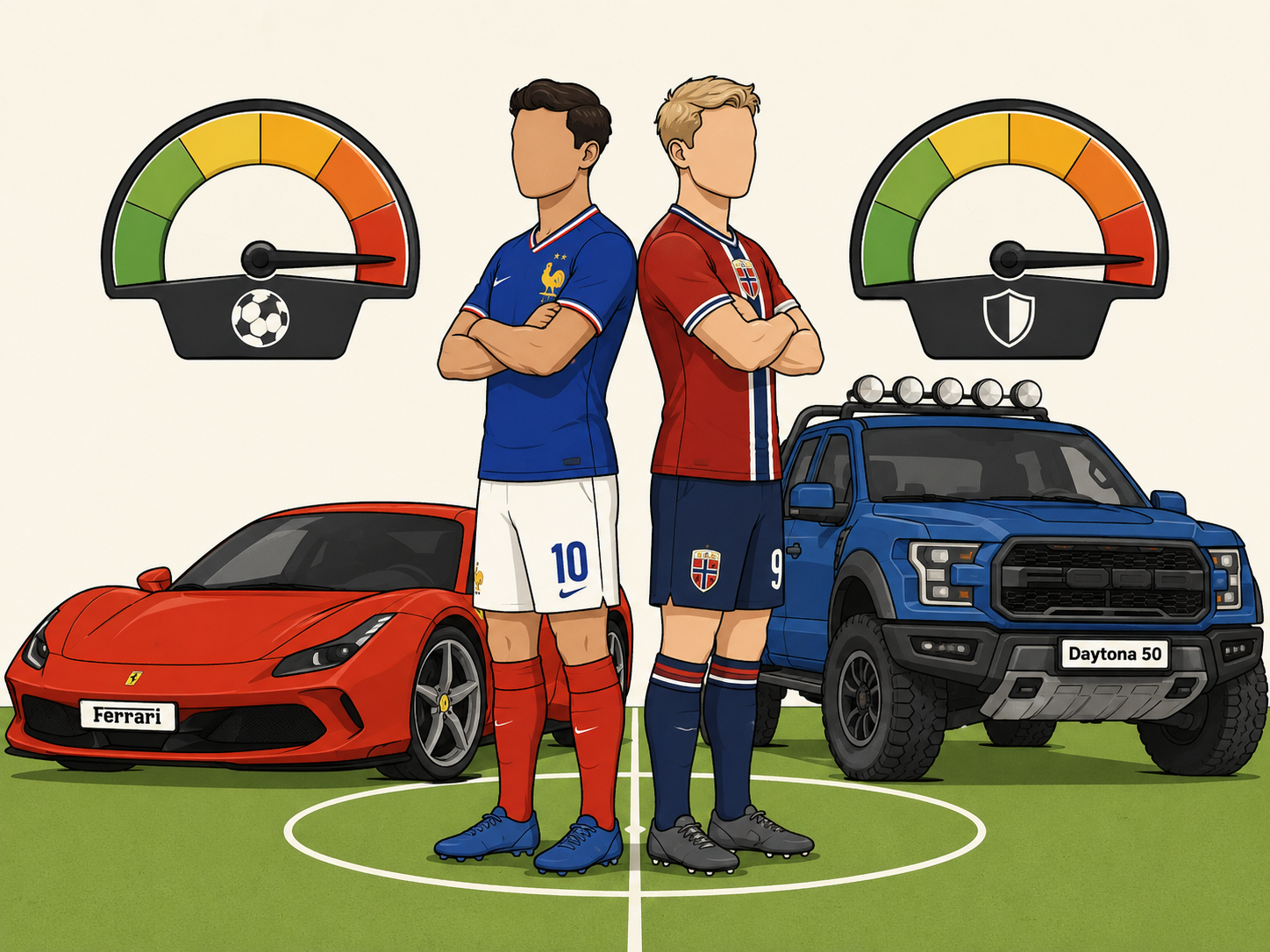
If the question is “Who will score more goals?”, the smart money is on Kylian Mbappé. The combination of France’s expected deep run, their chance creation, and his central role as the primary scorer points to a higher cumulative tally. He is the engine of a Ferrari.
If the question is “Who will be more decisive and indispensable?”, the answer leans toward Erling Haaland. Norway’s entire strategy orbits around him. His goals are not just additions; they are requirements for survival. He is the only engine in a pickup truck trying to win the Daytona 500.
For neutral fans, this clash of contexts is the dream. We get to watch perhaps the most complete forward of his generation in Mbappé, a player whose career assist statistics are starting to match his goal numbers, operate within a perfect system. Simultaneously, we get to watch a force of nature in Haaland attempt the ultimate carry job, a test that only a few underappreciated talents in history have ever passed.
They won’t mark each other. Mbappé will be trying to destroy Norway’s right-back. Haaland will be wrestling with France’s center-backs, likely William Saliba. Their battle is indirect, fought through the scoreline and the headlines. In that battle, the team around them will write half the story.
Frequently Asked Questions
Could Haaland win the Golden Boot if Norway makes a surprise run?
Yes, absolutely. If Norway shocks the world and reaches the quarter-finals, Haaland’s goal total would likely be high enough to contend. He’d need to maintain his qualifying efficiency, and the team would need to provide just enough service in an extra game or two. It’s a long shot, but his talent makes it possible.
Is Mbappé’s move to Real Madrid an advantage for the World Cup?
It’s a significant advantage. Playing in La Liga against disciplined, deep-block defenses every week is perfect preparation for World Cup group stages. The tactical patience and precision required at Real Madrid directly translate to the challenges France will face against organized underdogs. It’s a better prep league for tournament football than Ligue 1 was.
What does Haaland’s lack of World Cup experience mean?
It’s a minor factor, not a major one. Haaland has played in UEFA Champions League finals, Premier League title deciders, and high-pressure international playoffs. The stadium size and media glare won’t faze him. The adjustment is tactical: learning to thrive on 20 touches a game instead of 40.
Who has the better supporting cast for creating chances?
Mbappé, by a massive margin. France boasts Antoine Griezmann, one of the world’s best chance-creators for a decade, alongside Ousmane Dembélé and a midfield capable of incisive passing. Norway has Martin Odegaard, who is world-class, but the drop-off after him is steep. The creative burden is not shared equally.
The Bottom Line
Predicting this duel is a fool’s errand, and that’s what makes it brilliant. Mbappé represents the apex of modern football synergy, a sublime talent amplified by a perfect system. Haaland represents the timeless appeal of the individual hero, a singular force attempting to defy the odds.
Watch Mbappé for the artistry of a team performing at its peak. Watch Haaland for the raw, compelling drama of a man against a system. The 2026 World Cup will be remembered for many things, but the contrasting narratives of these two giants will be at the center of it all. Don’t pick a side. Just appreciate the show.

I come from the “soccer heart” of Germany, the Ruhrpott. I have played, trained and followed soccer all my life and am a big fan of FC Schalke 04. I also enjoy following international soccer extensively.