The 10 Most Underrated Soccer Players in History
To identify the most underrated soccer players of all time, you must look beyond Ballon d’Or winners and global superstars. The real list is filled with goalkeepers, defensive midfielders, and strikers whose contributions were vital but whose names never got the neon treatment. They were overshadowed by teammates, played unglamorous roles, or peaked before the era of 24/7 digital hype.
Most lists get this wrong. They confuse “underrated” with “underexposed” or just pick cult favorites from the 90s. The true underrated greats had massive, continental-level careers, some even won the Champions League multiple times, and still walked off the stage without the standing ovation they earned.
This guide names them. We’ll break down exactly why players like Keylor Navas, Claude Makélélé, and Garrincha belong in this conversation, using specific moments, tactical impacts, and the blunt opinions of the managers and teammates who relied on them.
Key Takeaways
- Goalkeepers and defensive midfielders dominate underrated lists. Their essential, less-flashy work is systematically undervalued by awards and media narratives compared to goalscorers.
- Being overshadowed by a legendary teammate is a common thread. Garrincha played next to Pelé. Ivan Rakitić played with Messi, Xavi, and Iniesta. Their brilliance was often framed as support.
- A Ballon d’Or doesn’t guarantee lasting fame. Winners like Kevin Keegan and Matthias Sammer are often forgotten in “all-time great” debates, their playing careers eclipsed by later endeavors or injuries.
- The “why” matters more than the “who.” A player is underrated due to specific factors: an unfashionable position, a lack of global club pedigree, or a playing style that wasn’t telegenic.
- Teammate and coach testimonials are the best evidence. When peers like Zinedine Zidane or managers like José Mourinho consistently praise a player’s irreplaceable role, it highlights a gap between industry respect and public recognition.
What Makes a Player “Underrated”?
The term is thrown around too loosely. A player isn’t underrated just because your friend hasn’t heard of him. True underrating happens at the highest levels of the sport, where contributions are measured against accolades and legacy.
An underrated soccer player is one whose on-field impact and technical ability consistently exceeded the widespread recognition, awards, and lasting fame they received. This gap is often caused by playing a non-glamorous position, being eclipsed by a more famous teammate, or having a career peak that predates global saturation media coverage.
The first filter is positional bias. The engine room gets less polish than the hood ornament. A midfielder who breaks up 20 attacks a game and completes 95% of his passes will never win the same headlines as a forward who scores one tap-in. This isn’t a new observation, but its effect is cumulative over a career.
Second, consider the shadow of a giant. Playing alongside a once-in-a-generation talent can redefine your entire legacy. Your job becomes to facilitate their genius, and your own skillful moments are archived as footnotes in their highlight reel. The public narrative simplifies: Team X won because of Superstar Y. It rarely digs into who kept the structure intact so Superstar Y could shine.
Finally, there’s the era problem. Before satellite TV and social media, a player’s fame was regional. A dominant striker in 1960s England might be a household name in London but a complete unknown in Milan. That doesn’t make him a worse player than a modern forward with a billion Instagram impressions; it just makes him easier for history to misplace.
TL;DR: A player is underrated if their skill and impact were greater than their fame, usually because they played a hardworking position, stood next to a legend, or played before global TV.
The Goalkeeper’s Curse: Elite Shot-Stoppers History Forgot
Goalkeeping is a special kind of visibility. You are noticed most when you fail. A striker can miss ten sitters and score one winner to be a hero. A keeper can make ten world-class saves and let in one unstoppable shot to be the villain. This asymmetry breeds underappreciation.
Keylor Navas is the perfect modern example. He was the starting goalkeeper for Real Madrid’s three-peat UEFA Champions League winning team from 2016 to 2018. Look at the coverage from those years. The headlines were about Cristiano Ronaldo’s bicycle kick, Sergio Ramos’ last-minute equalizers, and Zinedine Zidane’s tactical magic. Navas’ series-saving stop against Robert Lewandowski in the 2017 quarter-final? A footnote.
The club’s relentless pursuit to replace him with David de Gea or Thibaut Courtois, despite his performances, screamed that his contributions were seen as replaceable. His teammates knew better. Luka Modrić repeatedly called him “the difference” in tight knockout matches. Yet, he never finished higher than 5th in a major goalkeeper award during that stretch.
Shaka Hislop is another. He pulled off one of the great World Cup performances for Trinidad and Tobago against Sweden in 2006, a point-blank denial on Freddie Ljungberg that is still studied. His club career at West Ham United and Portsmouth was defined by consistent, calm excellence. But ask a casual fan to name great Premier League keepers of the 2000s. Hislop’s name appears maybe fifth, if at all. He didn’t play for a “Sky Six” club challenging for titles, so his high-level consistency was framed as merely “reliable.”
Common mistake: Judging a goalkeeper by clean sheets alone, this stat depends heavily on the defense in front of them. Look instead at “post-shot expected goals prevented,” a modern metric that isolates the keeper’s shot-stopping contribution. Naves routinely topped these lists during Madrid’s Champions League runs.
The position’s psychology works against legacy building. A striker’s confidence is celebrated; a goalkeeper’s confidence is often seen as arrogance. The best keepers project a quiet, controlled madness. It’s not a personality that sells many jerseys.
The Makélélé Effect: When a Position is Named After You
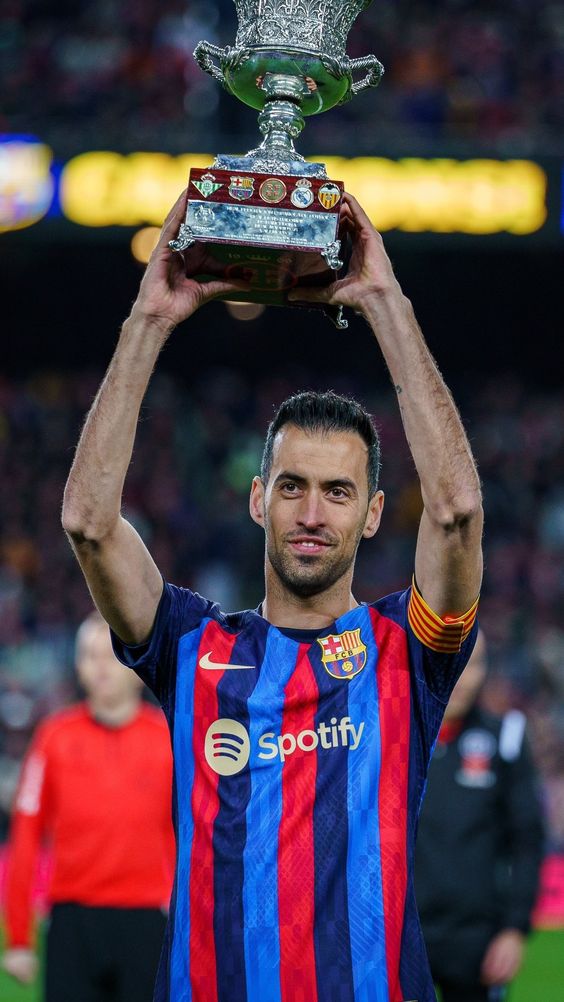
Some players are so fundamental that they change how the game is played. Their name becomes a position. Claude Makélélé is that player. Before his 2003 transfer to Chelsea, he was the silent engine of Real Madrid’s Galácticos. He covered, intercepted, and distributed with a metronomic efficiency that allowed Zidane, Ronaldo, and Figo to attack without a second thought.
After he left, Madrid President Florentino Pérez famously said, “We will not miss Makélélé. His technique is average, he lacks the speed and skill to take the ball past opponents, and ninety percent of his distribution either goes backwards or sideways.” It was one of the most misguided statements in football history.
“Why put another layer of gold paint on the Bentley when you are losing the entire engine?”. Zinedine Zidane, responding to Pérez’s comments about Makélélé’s sale.
The next season, Madrid collapsed. They won nothing. Chelsea, with Makélélé, won the Premier League. José Mourinho built his entire defensive structure around him. The “Makélélé role” entered the lexicon: the defensive midfielder who sits in front of the back four, breaks up play, and recycles possession with simple, effective passes.
| Player | Team (Peak) | Primary Role | Why Underrated |
|---|---|---|---|
| Claude Makélélé | Real Madrid / Chelsea | Defensive Midfielder | His work was intangible; success attributed to attacking stars. His sale proved his worth. |
| Michael Carrick | Manchester United | Deep-Lying Playmaker | Called a “sideways passer” by fans, yet was the tactical brain for multiple Premier League titles. |
| Sergio Busquets | Barcelona | Defensive Midfielder | Made his role look so easy and natural that its extreme difficulty was invisible to casual viewers. |
Michael Carrick suffered a similar fate at Manchester United for years. Pundits labeled him a passive “sideways passer.” Meanwhile, Sir Alex Ferguson and every manager after him picked him for every big game. He was the thermostat, controlling the game’s temperature, slowing it down or speeding it up with a single touch. His England career was unfairly limited because the national team setup never understood how to use a player who dictated play rather than chased it.
These players are the sport’s essential glue. You don’t notice the glue when a table is perfectly assembled. You only notice it when the table falls apart.
TL;DR: Defensive midfielders like Makélélé and Carrick were undervalued because their best work, positioning, interception, simple distribution, wasn’t highlight-reel material, but their absence always caused team collapse.
Shadows of Giants: Brilliance Overshadowed

This might be the purest form of underrated. You are world-class, but you stand next to a solar flare. Your light is real, but no one sees it.
Garrincha is the ultimate case. He played in the same Brazil teams as Pelé. He was the star of the 1962 World Cup when Pelé was injured, winning the Golden Ball and Golden Boot. His dribbling was arguably more electrifying and unpredictable. Yet, globally, he is “the other guy” from that era. Pelé’s brand became synonymous with Brazilian football; Garrincha’s tragic post-career life became his footnote. His genius is remembered by purists, not the masses.
Fast forward to the 2010s. Ivan Rakitić was a phenomenal central midfielder for Sevilla and Barcelona. At Barcelona, he was the balanced, hard-running, tactically disciplined partner to the iconic trio of Messi, Suárez, and Neymar, and the legendary midfield of Xavi and Iniesta. He scored in a Champions League final. He covered endless ground. Ask a fan to name Barça’s key players from that treble-winning season, and Rakitić will come after at least five other names. His job was to provide the platform and discipline so the artists could create. It was a vital job, and he did it flawlessly. He got a fraction of the credit.
I remember watching Rakitić for two seasons straight at Barcelona. He was the one making the third-man run into the box to create space for Messi to cut inside. He was the one tracking back to cover for Dani Alves’ forward surges. He did the work of two midfielders. But the camera followed the ball, and the ball was usually at Messi’s feet. His contribution was systemic, not spectacular.
Ray Parlour, “The Romford Pelé,” is a cult hero at Arsenal but underrated globally. He was a crucial component of Arsenal’s “Invincibles” season. While Thierry Henry, Dennis Bergkamp, and Patrick Vieira grabbed glory, Parlour was the indefatigable engine on the right, scoring important goals, delivering relentless crosses, and possessing a stunning long-range strike. He was the everyman in a team of gods, which made him more relatable but less celebrated in historical retrospectives.
These players aren’t forgotten. They’re just permanently placed one tier below where their talent should sit, simply because of the company they kept.
The Ballon d’Or Winners We Forgot
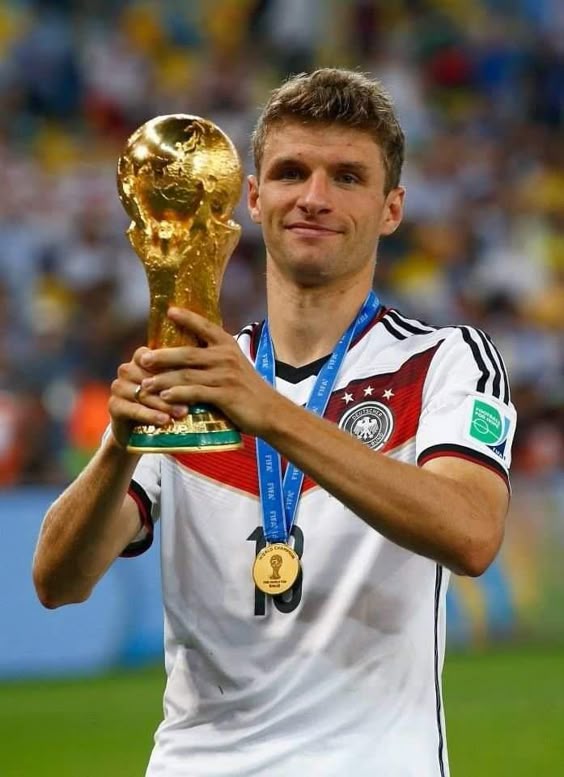
Winning the Ballon d’Or is the pinnacle of individual recognition. Surely, those winners can’t be underrated? History shows they can. The award can be a peak that the rest of a career slides down from, or it can be overshadowed by what came after.
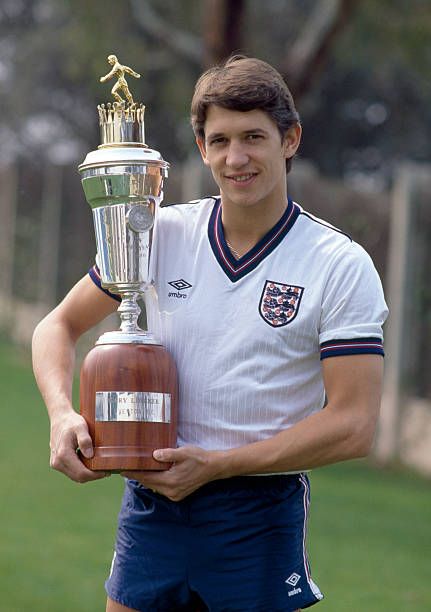
Kevin Keegan won the Ballon d’Or twice, in 1978 and 1979. He was a phenomenal forward for Liverpool, Hamburg, and England, fierce, technically brilliant, and incredibly consistent. Yet, when people discuss “all-time greats,” his name appears less frequently than contemporaries like Franz Beckenbauer or Johan Cruyff. Why? His later career as a volatile, quotable manager, “I would love it if we beat them!”, has come to define his public persona. The memory of his playing brilliance, of those back-to-back Ballon d’Or wins, has been diluted.
Matthias Sammer won the Ballon d’Or in 1996 as a libero for Borussia Dortmund and Germany. He was a defensive force who orchestrated play from the back, a throwback to Beckenbauer. His career was cut short by a severe knee injury at 29. Today, discussions of German greats focus on Beckenbauer, Lothar Matthäus, and modern stars. Sammer’s single, dominant year, where he was arguably the best player in the world, gets lost. He is a footnote in the award’s history, not a pillar.
| Player | Ballon d’Or Year | Peak Team | Reason for Being Underrated |
|---|---|---|---|
| Kevin Keegan | 1978, 1979 | Liverpool / Hamburg | Managerial persona overshadowed playing career; played before global TV boom. |
| Matthias Sammer | 1996 | Borussia Dortmund | Career shortened by injury; played a defensive role in an attacking award era. |
| Allan Simonsen | 1977 | Borussia Mönchengladbach | Won award while playing in Germany during a less-globalized era; overshadowed by later winners. |
The award doesn’t cement legacy. It captures a moment. If that moment isn’t reinforced by a decade of sustained marketing or a career narrative that fits a simple story, even a Ballon d’Or winner can fade.
The Strikers Who Were More Than Goals

Society loves a goalscorer. But sometimes, the most effective strikers are punished for not scoring beautifully enough, or for doing the dirty work that enables others.
Miroslav Klose is the all-time leading scorer in FIFA World Cup history (16 goals). He won the World Cup. He had a long, successful club career in Germany and Italy. And he is almost never mentioned in the same breath as other “all-time great” strikers like Ronaldo, Thierry Henry, or Robert Lewandowski. His goals weren’t spectacular, they were efficient. Headers, tap-ins, poacher’s finishes. He lacked the dazzling dribble or the 30-yard thunderbolt. The football world romanticizes the spectacular, so Klose’s ruthless efficiency is remembered as a quirk, not a hallmark of greatness.
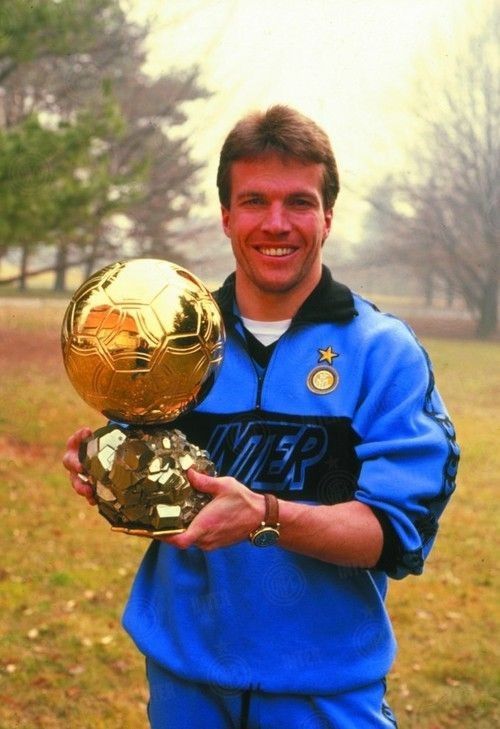
Emile Heskey endured a career of ridicule from English fans and media, labeled as clumsy and unproductive. Yet, every elite striker he played with. Michael Owen, Wayne Rooney, raved about him. His hold-up play, his ability to occupy two defenders, and his selfless running created the space for his more famous partners to thrive. His value was immense to the team’s function, near-zero to the highlight reel. The public, consuming only the reel, decided he was a joke.
Olivier Giroud, despite winning a World Cup and a Champions League and scoring spectacular goals, faces similar debates. He is often called a “plan B” or a “super-sub,” despite consistently starting for elite teams. His style, exquisite link-up, aerial dominance, and occasional scorpion kicks, is seen as a complement to “real” strikers. The numbers and the trophies say he’s a starter. The narrative lags behind.
Common mistake: Evaluating a striker solely on goals-per-game ratio, this ignores their tactical function. Heskey’s England teams consistently performed better with him on the pitch because he altered the opposition’s defensive shape, creating opportunities that don’t appear on his personal stat sheet.
These players redefine what a striker’s job can be. Their legacy is the success of their teams, not their personal scoring charts. History, which loves a neat statistic, often fails them.
Genius in Unexpected Places: The Cult Heroes
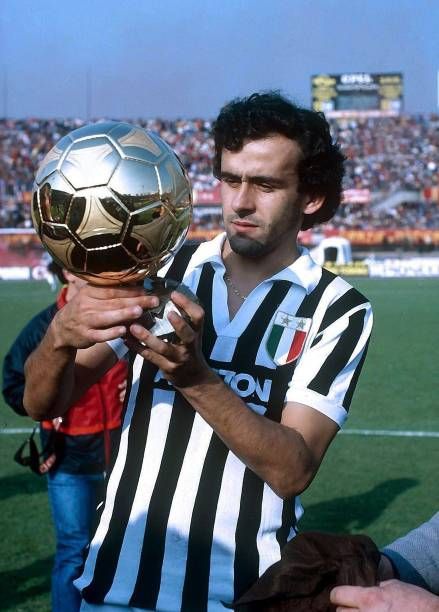
Some players are so technically gifted that they defy their circumstances, yet those very circumstances prevent them from reaching mainstream legendary status. Their talent is the worst-kept secret among hardcore fans.
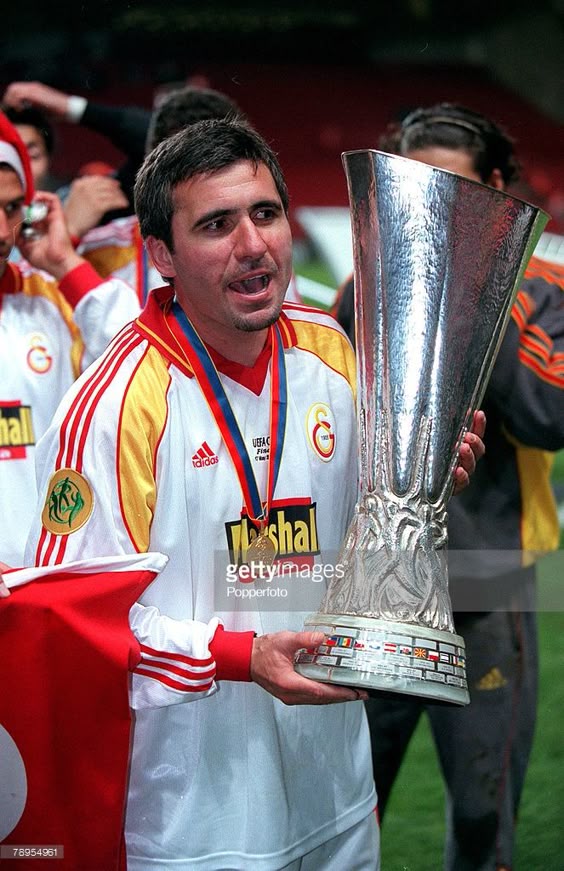
Gheorghe Hagi, the “Maradona of the Carpathians,” is a slight exception as he is widely rated. But is he rated highly enough? He carried ordinary Romanian national teams and club sides like Galatasaray to extraordinary heights almost single-handedly. His passing range and shooting power were supernatural. Because he didn’t win a Champions League or a Ballon d’Or while playing for Barcelona or Real Madrid, he’s placed in the second tier of “maestros.” That tier is still elite, but it undersells the sheer, outrageous weight of talent he had to drag up by its bootstraps.
Jorge “Mágico” González of El Salvador is the archetype. Those who saw him play for Cádiz in Spain in the 1980s speak of him in hushed tones, a dribbler of impossible guile, a player who treated matches like street football. Diego Maradona himself called him “the best dribbler I’ve ever seen.” Yet, because he hailed from a small footballing nation and spent his peak at a modest Spanish club, he remains a beautiful myth, not a cemented legend. His soccer legends status is confined to YouTube compilations and nostalgic articles.
These players prove that supreme talent isn’t always married to supreme fame. The ecosystem of the sport, marketing, club prestige, national team success, acts as a megaphone. Without that megaphone, even the most beautiful shout becomes a whisper in history’s hall.
How to Spot an Underrated Player Today
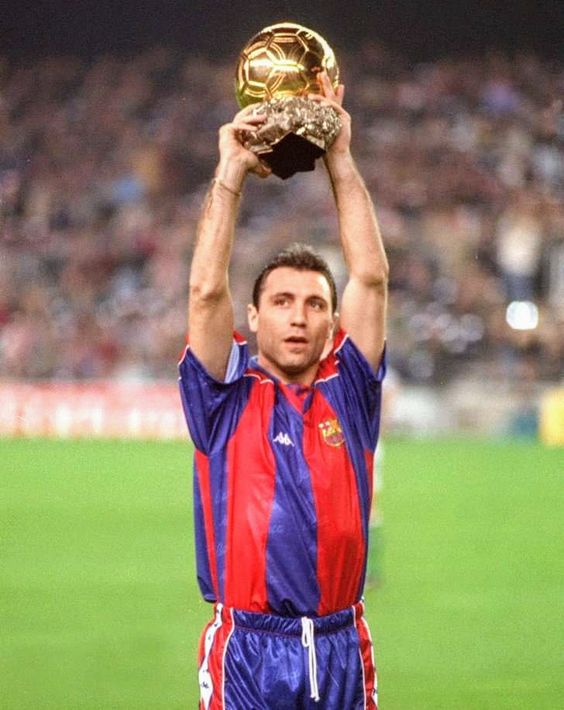
The patterns repeat. Look at today’s game through the same lenses.
- Find the heir to Makélélé. Who is the defensive midfielder that analysts love but fans overlook? For years, it was N’Golo Kanté until he won everything and became a meme. The current candidate might be a player like Rodri at Manchester City. For two seasons, pundits argued he was the most important player in Pep Guardiola’s system, yet he was omitted from FIFPro World XI shortlists. Only after a treble-winning season and a Champions League final winner did the wider public catch up.
- Identify the “system” striker. Look at the forward who is criticized for not scoring enough but is always selected by top managers. Does his movement create space for a more prolific winger? Does his pressing trigger the team’s defensive shape? His soccer player diet and soccer workout plan are built for this relentless, unselfish role.
- Watch the team that loses its star. When a global superstar leaves a club, watch which player’s absence actually causes the team to dysfunction. Often, it’s not the direct replacement for the star, but the less-heralded teammate whose complementary role was the true keystone.
The next generation of underrated greats is on the pitch right now. They’re the ones doing the vital, uncelebrated work that allows the famous Argentine players and modern soccer icons to shine. Understanding soccer tactics is the key to seeing them.
Frequently Asked Questions
Who is the most underrated soccer player ever?
There’s no single answer, but Claude Makélélé has the strongest case based on impact. His role was so vital it was named after him, and his sale directly caused a superteam’s collapse, proving his worth in the most dramatic way possible. Garrincha, overshadowed by Pelé, is the other prime contender.
Can a Ballon d’Or winner be underrated?
Absolutely. Kevin Keegan (winner in 1978, 1979) and Matthias Sammer (1996) are perfect examples. Keegan’s managerial antics overshadowed his brilliant playing career, and Sammer’s injury-shortened peak is often forgotten. The award captures a moment, not a legacy.
Why are goalkeepers so often underrated?
The psychology of the position works against them. They are most visible when they fail, while their successes (saves) are often expected. A striker is a hero for scoring one goal after missing several; a keeper is a villain for conceding one goal after saving several. Metrics like “post-shot expected goals prevented” are now revealing their true value.
Is Miroslav Klose underrated despite his World Cup record?
Yes. As the all-time World Cup top scorer and a World Cup winner, he should be an automatic mention among the greatest strikers. However, his efficient, non-spectacular style of play, headers and tap-ins, means he is often omitted from those conversations in favor of more flamboyant players, making him historically underrated.
How can I identify an underrated player?
Look beyond goals and assists. Focus on players in less glamorous positions (defensive midfield, goalkeeper). Listen to what their teammates and coaches say about them, high praise from peers is a huge clue. Notice which players are always picked by top managers for big games, even if fans question their selection.
The Bottom Line
The history of football isn’t just written by its kings. It’s built by its architects, engineers, and masons, players whose names aren’t on the trophy but whose fingerprints are all over it. Celebrating the most underrated soccer players of all time isn’t about dimming the light of the Lionel Messis of the world. It’s about turning up the light on the players who provided the stage.
It corrects the record. It adds depth to our understanding of why teams really win. The next time you watch a match, try watching the space away from the ball. That’s where you’ll see the player who might, in twenty years, be the subject of an article just like this one.

I come from the “soccer heart” of Germany, the Ruhrpott. I have played, trained and followed soccer all my life and am a big fan of FC Schalke 04. I also enjoy following international soccer extensively.