Your Guide to Things to Do Near Estadio Azteca for World Cup
**
Your guide to things to do near Estadio Azteca for the World Cup focuses on three key areas: explore Coyoacán’s markets and museums, visit Xochimilco’s canals, and tour the historic center’s landmarks, all easily accessible from the stadium.**
To make the most of your World Cup 2026 trip to Estadio Azteca, match your transport to your tolerance for crowds, eat before you go, and use the stadium’s location in Mexico City’s south as a launchpad for exploring Coyoacán, Xochimilco, and the historic center. The stadium itself is an experience, but the city around it is the real prize.
Most visitors fixate on the match and forget the logistics. They show up hungry, try to drive, and spend hours stuck in traffic instead of eating tacos in a sun-drenched plaza. The stadium is loud, hot, and overwhelming in the best way, but you need a plan to handle it.
Here’s how to structure your days, from the moment you step off the plane to the final whistle of Mexico’s quarterfinal match.
Key Takeaways
- The Metro and Tren Ligero are your best bets for getting to Estadio Azteca. Driving means parking costs more than your ticket and a three-hour exit queue.
- Arrive at the stadium at least 90 minutes before kickoff for FIFA security. The gates get swamped two hours out.
- Eat before you go. The lines inside are for beer and crisps, not proper food. The street vendors along Calzada de Tlalpan are better, but you’ll miss the pre-match atmosphere.
- Coyoacán is 20 minutes away by Uber and worth a full afternoon. Book the Frida Kahlo Museum online now, it sells out weeks in advance.
- For a night match, wait inside the stadium for 30 minutes after the final whistle. Then walk 15 minutes south before calling an Uber to avoid 5x surge pricing.
How Do You Get to Estadio Azteca Without Losing Your Mind?
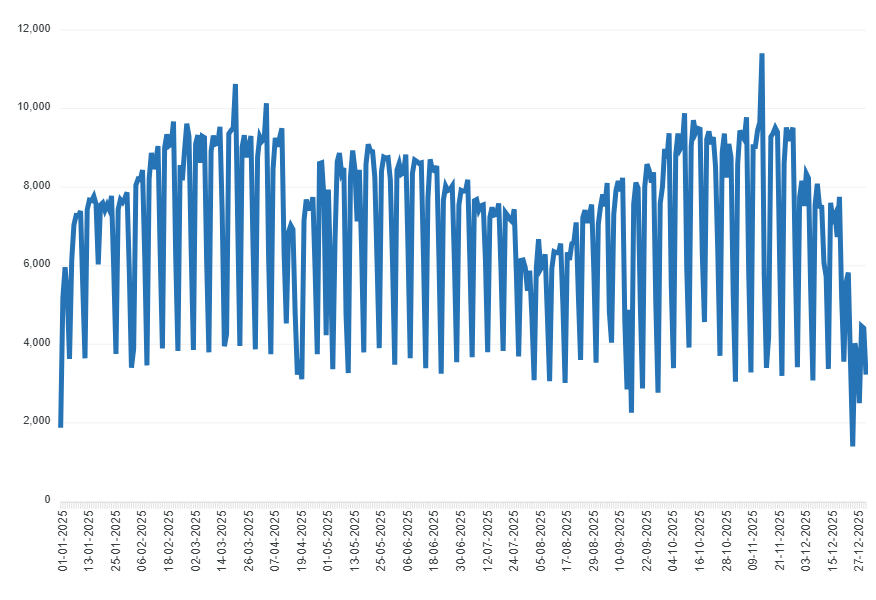
Photo: Servicio de Transportes Eléctricos / Gobierno de la Ciudad de México / Wikimedia Commons / CC BY 4.0
Head straight for the Metro. Mexico City’s subway is fast, frequent, and costs 5 pesos. For Estadio Azteca, you take Line 2 (the blue line) south to its terminus at Tasqueña. From there, you transfer to the Tren Ligero, a light rail line, and ride it to the Estadio Azteca station. The whole trip from the city center takes about 45 to 60 minutes.
.png)
The Estadio Azteca station on the Tren Ligero is the only direct public transport stop for the stadium. Trains run every 5–7 minutes, but on match days they fill completely two hours before kickoff. Boarding at Tasqueña becomes a shoulder-to-shoulder press.
TL;DR: Take Metro Line 2 to Tasqueña, switch to the Tren Ligero, and get off at Estadio Azteca station. It’s cheap, reliable, and avoids all road traffic.
Uber or DiDi is fine if you’re coming from Roma Norte or Condesa, but you need to schedule it. Road closures on Calzada de Tlalpan mean your driver will drop you a 10 to 15 minute walk from the gates. That’s not the problem. The problem is leaving. After a night match, surge pricing hits 3x to 5x normal fares within a 1-kilometer radius of the stadium. The gridlock is biblical. My advice? Use a ride-share to get there, but use the train to get back.
Driving is a last resort. Official parking is limited and expensive. Unofficial lots are a 25-minute walk away and cost almost as much. You’ll then sit in your car for two hours trying to exit. I’ve seen it. Don’t be that person.
| Transport Method | Best For | Biggest Risk |
|---|---|---|
| Metro + Tren Ligero | Anyone on a budget | Overcrowding 2–3 hrs before kickoff; easy to miss a train if you’re late. |
| Uber / DiDi | Groups, late starts | Post-match surge pricing (5x) and traffic jams that add 90+ minutes to your trip. |
| Driving & Parking | No one, honestly | Paying $50+ for parking and still walking 25 mins; 2–3 hr exit queue. |
A FIFA Fan ID might get you free public transport on match days, check the official app when it launches. Have cash for the light rail. Cards work in the Metro, but the Tren Ligero ticket booths often only take pesos.
Common mistake: Relying on Uber for a post-match exit, the app shows “no cars available” for an hour, then surge prices hit 5x once drivers reappear. Walk 15 minutes south along Calzada de Tlalpan first, then request your ride.
What Should You Bring (and Leave) for a Match at Estadio Azteca?
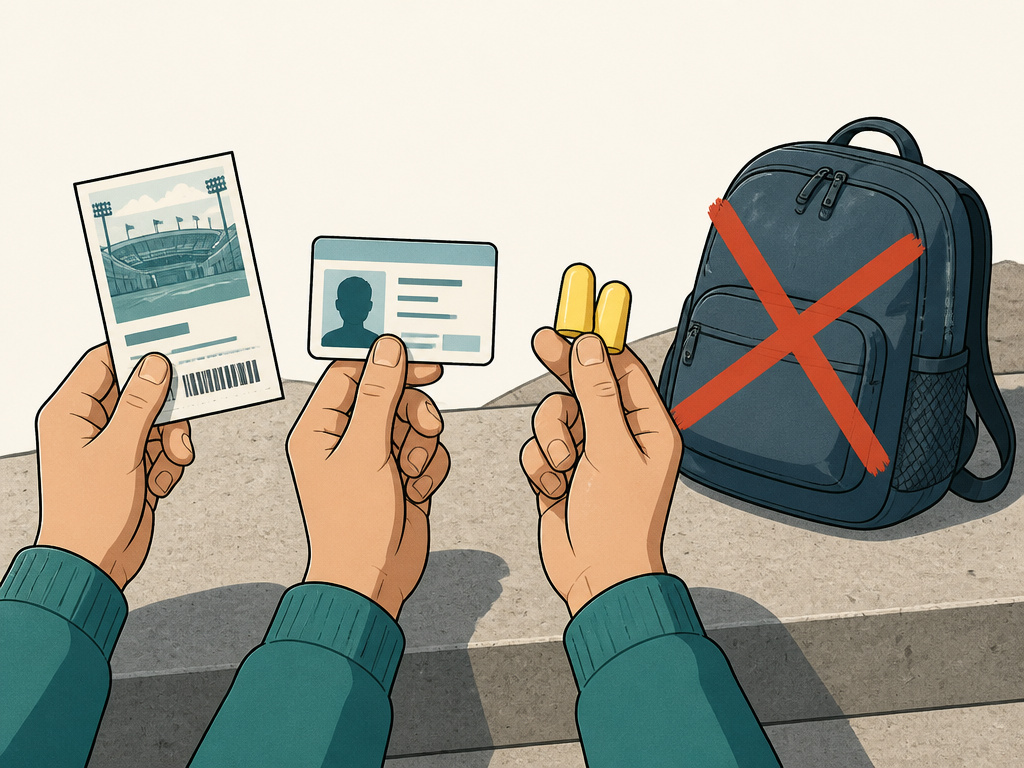
Bring your ticket, your ID, and your patience. FIFA security uses metal detectors and bag checks that are stricter than a regular Liga MX match. Small clear plastic bags are usually allowed, but backpacks often are not. Check the stadium’s specific policy a week before your match.
Wear comfortable shoes. You will walk. The stadium concourses are vast, and the steps are steep. The sun beats down on the east and west stands for daytime matches, bring a hat and sunscreen. The noise inside hits 115 decibels when Mexico scores. Bring earplugs if that’s too much for you. I keep a pair in my pocket.
Leave the selfie stick, the large camera bag, and any glass containers at your hotel. You’ll see them confiscated at the gate. Don’t bring an umbrella; they’ll turn you away. Rain ponchos are sold outside for 20 pesos if you need one.
Your phone battery will die from filming the pre-match laser show and the crowd singing “Cielito Lindo.” Bring a compact power bank. Cash is king for buying water and snacks from vendors inside. Card readers fail when 80,000 people are trying to connect at once.
The 90-Minute Pre-Match Timeline That Actually Works
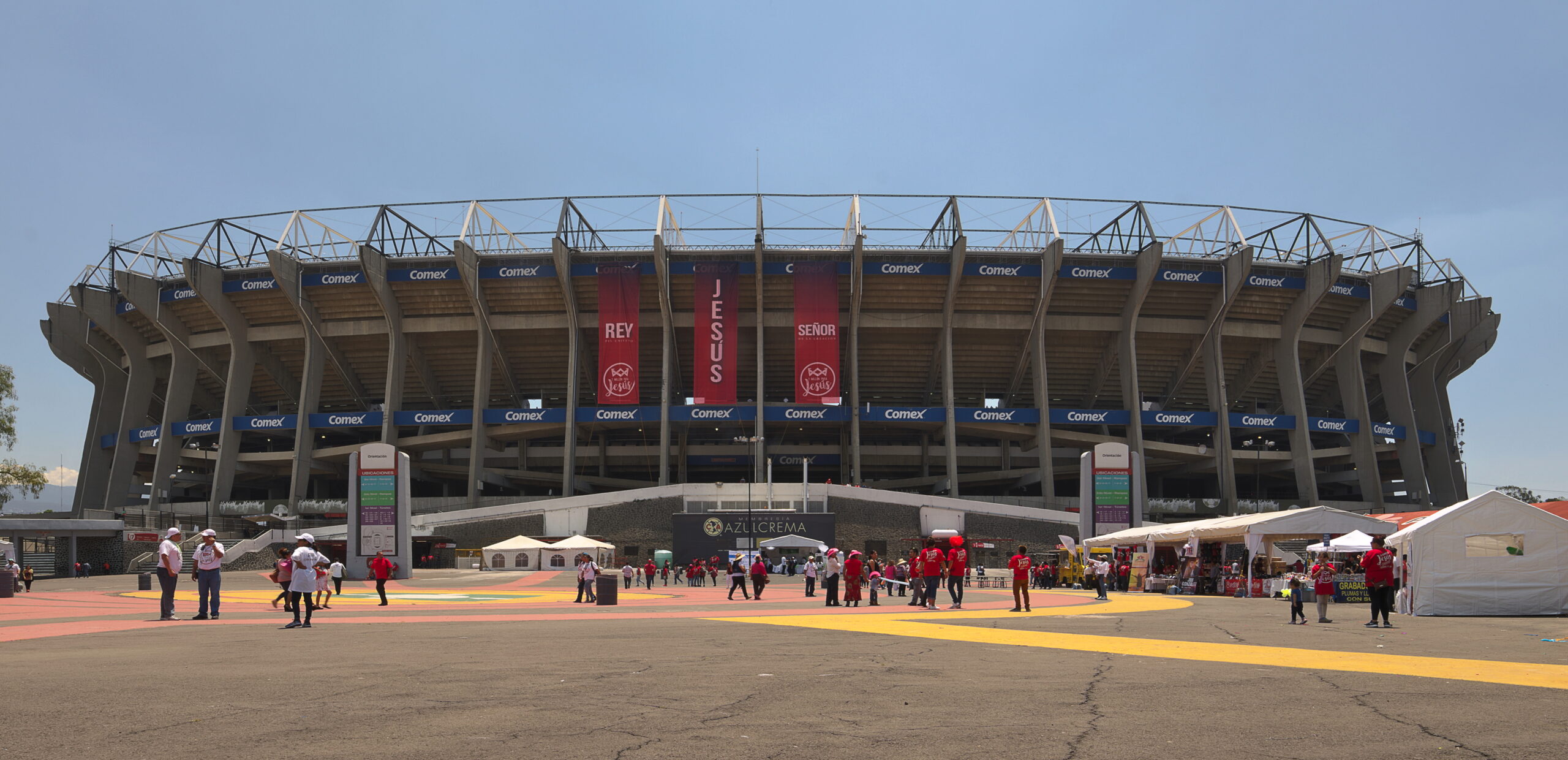
Photo: Carlos Valenzuela / Wikimedia Commons / CC BY-SA 4.0
For a 1:00 PM kickoff, your morning looks different than for a 7:00 PM match. The heat changes everything.

For a 1:00 PM Match:
- 9:00 AM: Eat a big breakfast in Roma Norte or Condesa. Hydrate.
- 10:00 AM: Head to the Metro or order your Uber. This is your buffer for traffic.
- 11:00 AM: Arrive at Estadio Azteca station. Soak in the street food scene along Calzada de Tlalpan, grab a taco al pastor if you skipped breakfast.
- 11:30 AM: Join the security line. It moves slower than you think.
- 12:30 PM: Be in your seat. The green laser show starts about 10 minutes before kickoff, and the “México, México, ra ra ra” chants build from there.
For a 7:00 PM Match:
- 3:00 PM: Take an afternoon to explore Coyoacán (more on that below). Have a late lunch there.
- 4:30 PM: Start your journey to the stadium. The evening rush hour makes the Metro even more packed.
- 5:30 PM: Arrive at the stadium. The light is perfect for photos of the exterior.
- 5:45 PM: Clear security. Find your gate, then find a spot inside to watch the sunset over the bowl.
- 6:30 PM: Be seated. The pre-match atmosphere for a night game is more intense, more electric.
Missing the pre-match build-up is a real loss. The stadium transforms.
Coyoacán: The 20-Minute Cultural Escape
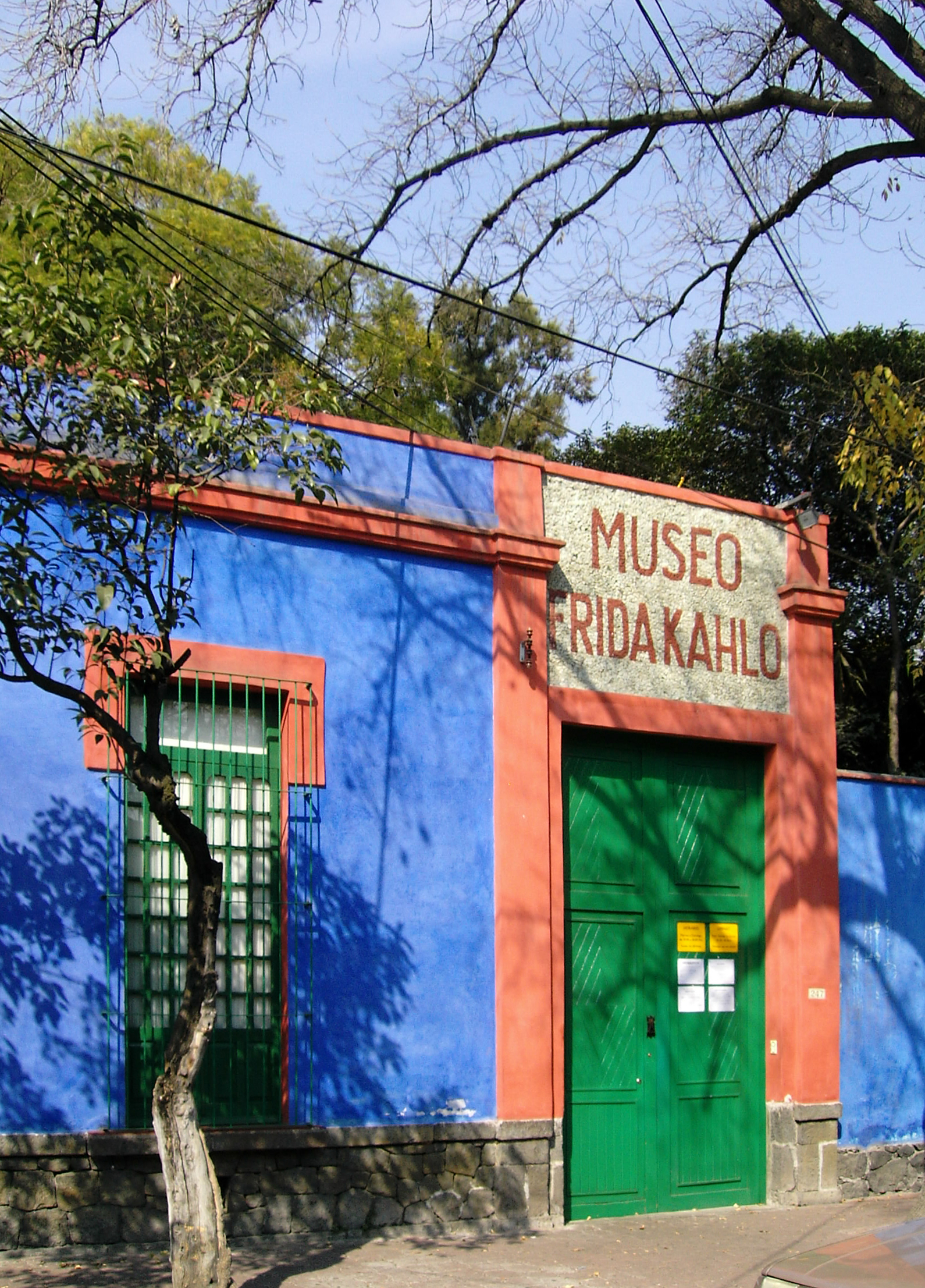
Photo: No machine-readable author provided. Nachtwächter assumed (based on copyright claims). / Wikimedia Commons / CC BY-SA 3.0
Coyoacán is the obvious choice because it’s close. A 20-minute Uber ride from the stadium drops you into cobblestone streets, quiet plazas, and some of the best churros in the city. This is where you spend your non-match days.

The Frida Kahlo Museum (La Casa Azul) is here. You must book tickets online, weeks in advance. They sell out. The museum itself is small, you’ll spend maybe 90 minutes inside, but it’s a pilgrimage site. The Mercado de Coyoacán is better for an extended visit. It’s a covered market with food stalls, juice bars, and handicraft vendors. Try the tostadas de tinga.
I made the mistake of trying to visit the Frida Kahlo Museum on a match-day afternoon once. The queue wrapped around the block, and I’d forgotten to book online. I spent three hours waiting and missed the first half. Now I book the second I have my match tickets.
Jardin Centenario and Jardin Hidalgo are the two main plazas, connected by a pedestrian street. Grab a coffee, watch the street performers, and just breathe. After the sensory overload of the stadium, this feels like a different country.
| Attraction in Coyoacán | Time Needed | Pro Tip |
|---|---|---|
| Frida Kahlo Museum (Casa Azul) | 1.5–2 hours | Book online 3–4 weeks ahead. Entry is timed. |
| Mercado de Coyoacán | 1–2 hours | Go hungry. Eat at the food stalls inside, not the tourist restaurants outside. |
| Jardin Centenario / Hidalgo | 30–60 mins | Best for people-watching and recovering with an ice cream. |
TL;DR: Use Coyoacán as your recovery zone. Book the Frida Kahlo Museum online now, eat at the market, and wander the plazas without a plan.
What Are the Best Non-Match Day Activities in Mexico City?
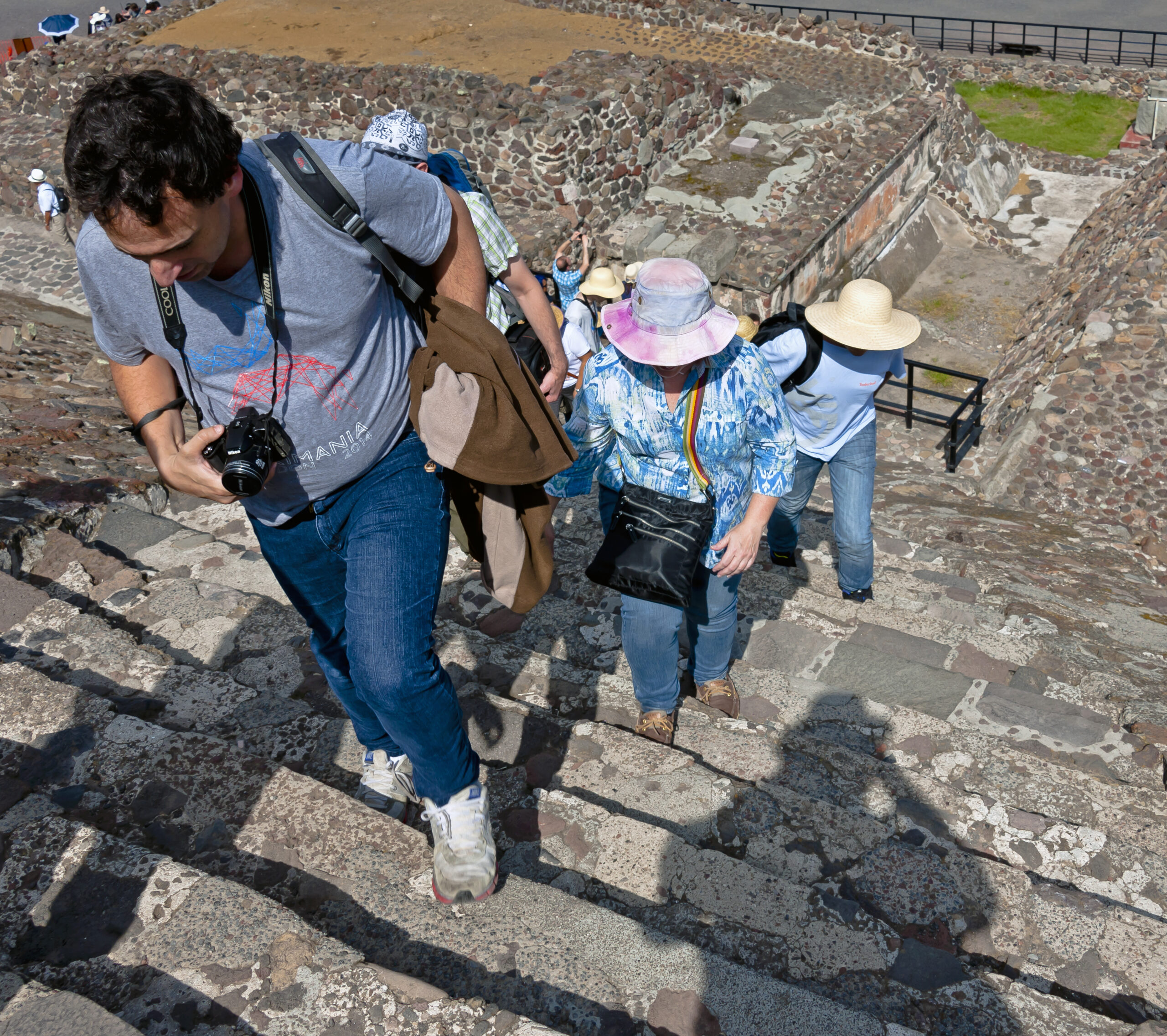
Photo: Daniel Case / Wikimedia Commons / CC BY-SA 3.0
You didn’t fly all this way just for football. Mexico City is vast. Pick one big thing per day, or you’ll exhaust yourself.

Teotihuacan is an hour north of the city. Go on a weekday morning. The crowds are thinner, and the heat is bearable. Climbing the Pyramid of the Sun is a workout, wear those same comfortable shoes from the stadium. The view from the top is worth every step. You can book a guided tour, but the site is well-signposted in English and Spanish if you prefer to go alone.
Xochimilco is south, closer to the stadium. Take the Metro Line 2 to Tasqueña, then the Tren Ligero (the same line that goes to the stadium) to the end of the line. Here you hire a trajinera, a colorful, flat-bottomed boat, for a couple of hours. It’s festive. Other boats sell beer, tacos, and even have mariachi bands float up to serenade you. It’s cheesy and wonderful.
Lucha Libre at Arena México is a Tuesday and Friday night tradition. Tickets are cheap. The spectacle is over-the-top, the crowd is rowdy in the best way, and it finishes early enough that you can get dinner afterwards. It’s a different kind of physical sport, theatrical, acrobatic, and deeply Mexican.
The Centro Histórico holds the Zócalo, the Templo Mayor museum, and the Palacio de Bellas Artes. You can spend a full day here. The Bosque de Chapultepec is a massive urban park with the National Museum of Anthropology and Chapultepec Castle. Don’t try to do both in one day.
Common mistake: Trying to cram Teotihuacan, the Anthropology Museum, and a fancy dinner into one day. You’ll see nothing properly and your feet will revolt. Pick one major sight per day and build lunch and dinner around it.
The main FIFA Fan Festival will be in the Zócalo from June 11 to July 19. It’s worth an evening visit, big screens, live music, food stalls. But it will be packed. Go once for the experience, then find a local plaza for a quieter beer.
Where Should You Eat and Drink Near the Stadium?
Eat before you get to the stadium. The options inside are functional, not memorable. The street food on the approach is the real deal.
Along Calzada de Tlalpan, the main artery leading to the stadium, you’ll find vendors selling tacos, tortas, and elotes (grilled corn). It’s fast, delicious, and cheap. For a proper sit-down meal before or after, you need to leave the immediate area.
In Coyoacán, head to the Mercado de Coyoacán. The tostada stalls are legendary. For something more substantial, Los Danzantes offers upscale Mexican cuisine in a beautiful courtyard. It’s a 10-minute walk from the main plazas.
In Roma Norte and Condesa, the choices are endless. For seafood, Contramar is an institution, get the tuna tostadas. For tacos, Taquería El Califa or the stands on Tamaulipas Avenue are reliable. These neighborhoods are also where you’ll find the best bars and nightlife. After a match, the energy here is palpable. The crowd is a mix of locals and fans, and the conversation is all about the game you just saw.
Think of your meal times as part of your athlete nutrition strategy. A heavy meal right before a match in the sun is a bad idea. A post-match beer and tacos, however, are essential recovery.
Frequently Asked Questions
What is the best way to get to Estadio Azteca on a match day?
Take the Metro Line 2 to Tasqueña station, then transfer to the Tren Ligero light rail to the Estadio Azteca stop. It’s the most reliable method. If you use Uber, schedule it at least two hours before kickoff and be prepared to walk the last 10–15 minutes.
How early should I arrive for a World Cup match at Estadio Azteca?
Plan to be at the stadium gates 90 minutes before kickoff. FIFA security checks are thorough and lines get long. This gives you time to clear security, find your seat, and experience the pre-match laser show and chanting.
Can I visit the Frida Kahlo Museum on the same day as a match?
You can, but it’s risky. The museum is in Coyoacán, a 20-minute ride from the stadium. However, you must have a pre-booked, timed-entry ticket purchased weeks in advance. Trying to walk up on a match day means you’ll likely be turned away.
What should I absolutely not bring to the stadium?
Do not bring backpacks, large camera bags, selfie sticks, umbrellas, or glass containers. FIFA security will confiscate them. Small clear plastic bags are usually permitted, but always check the specific stadium rules for your match date.
What is there to do in Mexico City on non-match days?
Focus on one major attraction per day. Visit the ancient pyramids at Teotihuacan (go weekday mornings). Explore the canals of Xochimilco by trajinera boat. See a Lucha Libre wrestling match on a Tuesday or Friday night. Wander the historic center (Zócalo) or the vast Chapultepec park. Don’t rush.
Before You Go
Your trip hinges on three decisions: how you get to the stadium, where you eat, and what you do with your non-match days. Commit to the Metro and Tren Ligero for transport. Eat in Roma, Condesa, or Coyoacán before heading to the match. Use your off days for one big cultural experience. Teotihuacan, Xochimilco, or Lucha Libre.
The atmosphere inside Estadio Azteca is unlike anything else in football. The noise, the scale, the history, it’s overwhelming. But the city outside is just as compelling. The chaos of the stadium and the calm of Coyoacán’s plazas exist 20 minutes apart. That contrast is the real magic of a World Cup in Mexico City.
I come from the “soccer heart” of Germany, the Ruhrpott. I have played, trained and followed soccer all my life and am a big fan of FC Schalke 04. I also enjoy following international soccer extensively.