World Cup Indoor Stadiums: 4 Fully Enclosed Venues
The 2026 World Cup indoor stadiums are AT&T Stadium (Arlington, TX), Mercedes-Benz Stadium (Atlanta, GA), NRG Stadium (Houston, TX), and BC Place (Vancouver, BC). These four venues have fully retractable roofs and climate control systems, creating a sealed, weather-proof environment when closed. SoFi Stadium (Los Angeles) has a fixed translucent canopy offering shade but is not fully enclosed.
Most fans searching for “indoor” options are trying to solve one problem: avoiding the brutal North American summer. They picture a sealed, air-conditioned box. The reality across the 16 host venues is a spectrum of cover, from full enclosure to generous shade to completely open air.
This guide cuts through the marketing terms. You’ll get a clear breakdown of which stadiums guarantee an indoor experience, which only offer partial relief, and exactly how to plan your matchday for maximum comfort.
Key Takeaways
- Only four stadiums offer full enclosure with retractable roofs and HVAC: AT&T Stadium, Mercedes-Benz Stadium, NRG Stadium, and BC Place.
- SoFi Stadium’s iconic canopy provides shade but no walls or air conditioning; heat and humidity can still build up.
- Lumen Field (Seattle) and Hard Rock Stadium (Miami) have significant seat canopies but are open-air venues.
- For any match in a closed, air-conditioned stadium, bring a light jacket, the temperature drop from a Houston summer to the NRG Stadium bowl is abrupt.
- All U.S. venues with artificial turf, including the indoor BC Place, will install temporary natural grass pitches for the tournament.
The 4 Fully Enclosed, Climate-Controlled Stadiums
These are the venues that match the classic “indoor stadium” definition. They have engineered solutions to remove weather as a factor for both players and fans.
The operational threshold matters. Stadium managers won’t close the roof for a light drizzle. They close it for extreme heat, heavy rain, or high winds. In June and July across Texas and Georgia, the roof will likely be closed for most, if not all, matches. It’s a controlled environment.
AT&T Stadium, Mercedes-Benz Stadium, NRG Stadium, and BC Place utilize retractable roof systems paired with massive HVAC infrastructure. When sealed, these venues maintain a consistent internal atmosphere independent of external weather conditions, effectively creating an indoor environment for the duration of an event.
AT&T Stadium (Arlington, Texas)
Jerry World is a colossus. Its two massive roof panels slide open or closed along rails, a process that takes about 12 minutes. For a summer World Cup match, expect it closed. The air conditioning is potent, you’ll feel the difference walking from the concourse into the bowl. It’s one of the largest enclosed stadiums on the planet, and the scale is part of the spectacle. The temporary grass pitch will be laid directly over the artificial turf, a standard but logistically intense procedure for the tournament.
Mercedes-Benz Stadium (Atlanta, Georgia)
This is architectural theater. The eight-petal “pinwheel” roof is a feat of engineering that opens and closes in about 8 minutes. It’s designed to be closed for major events to control the experience and amplify crowd noise. The 360-degree halo video board hangs from the center. From a tactical perspective, the consistent, windless conditions under a closed roof favor technical, possession-based soccer tactics that rely on precise passing.
NRG Stadium (Houston, Texas)
Houston in July is a steam bath. NRG’s retractable roof and powerful climate system exist for this exact reason. The roof closure decision is almost a certainty for daytime matches. The inside will be cool and dry. This total removal of environmental variables is a dream for coaches planning strategic adjustments, as it nullifies the impact of heat, humidity, and wind.
BC Place (Vancouver, Canada)
The only Canadian venue with a roof, BC Place’s retractable fabric canopy is a permanent fixture. It’s been closed for every major event for years and will remain so for the World Cup. The interior is fully climate-controlled. Like the others, it currently has an artificial turf surface, which will be replaced with a temporary grass field. This ensures the regulation pitch lines and playing surface meet FIFA’s strict standards for a global final tournament.
TL;DR: For a guaranteed, weather-proof indoor experience, target matches in Arlington, Atlanta, Houston, or Vancouver. The roofs will be closed.
Shade vs. Shelter: The “Semi-Indoor” Options
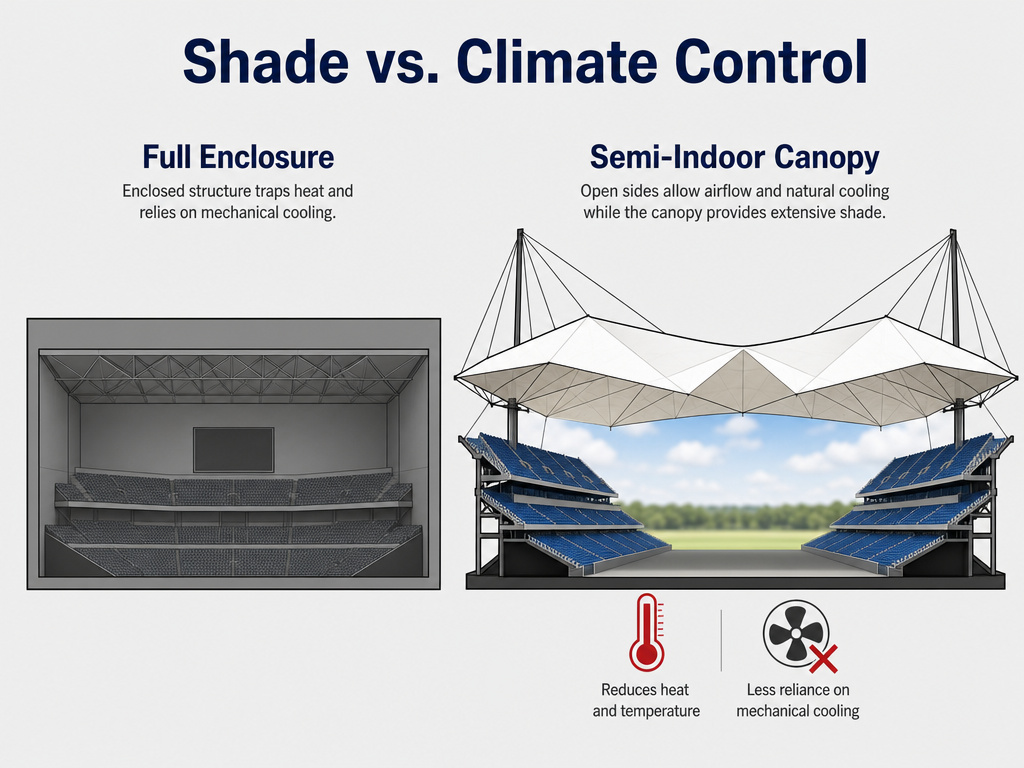
Several other stadiums are marketed as having cover, but they don’t offer a sealed environment. Understanding this distinction is the difference between comfortable shade and sweating in stagnant, humid air.
The canopy at SoFi Stadium is a engineering marvel that provides consistent shade. But without walls, there’s no climate control. The air temperature under the canopy is the same as outside, and on a still day, it can feel hotter. Lumen Field’s partial roof covers about 70% of seats, great for a Seattle drizzle, but useless against a heat wave.
| Stadium | Type of Cover | Best For | Limitation |
|---|---|---|---|
| SoFi Stadium (Inglewood, CA) | Fixed translucent canopy | Consistent shade from direct sun | No walls or A/C; heat/humidity persist |
| Lumen Field (Seattle, WA) | Partial roof (70% of seats) | Light rain and sun protection for most fans | Open ends allow weather in; seat selection critical |
| Hard Rock Stadium (Miami, FL) | Canopy over most seating | Shade for the majority of spectators | Open-air bowl; humid air is not cooled |
| Estadio Akron (Guadalajara, MX) | Integrated design with overhangs | Some shaded seating sections | Primarily an open-air venue |
Common mistake: Assuming SoFi Stadium is air-conditioned because it has a roof, the canopy only blocks sun. The ambient temperature and humidity are the same as outside, which in a Los Angeles summer can still be oppressive.
SoFi Stadium demands a tactical approach to comfort. Its canopy is a blessing for daytime games, eliminating glare and sunburn. But if you’re in the lower bowl on a hot, windless day, you’ll feel it. It’s not an indoor stadium. It’s a very well-shaded outdoor one. This environment could influence high-pressing, offensive team structures that rely on intense stamina.
Lumen Field requires homework. If you buy a ticket in the upper deck along the sidelines, you’re covered. If you’re in the north or south end zones, you’re exposed. Check the seating chart before you buy. The open ends also mean wind can whip through, a factor that might encourage more direct counter-attacking systems rather than patient build-up.
The Open-Air Majority and Match Scheduling
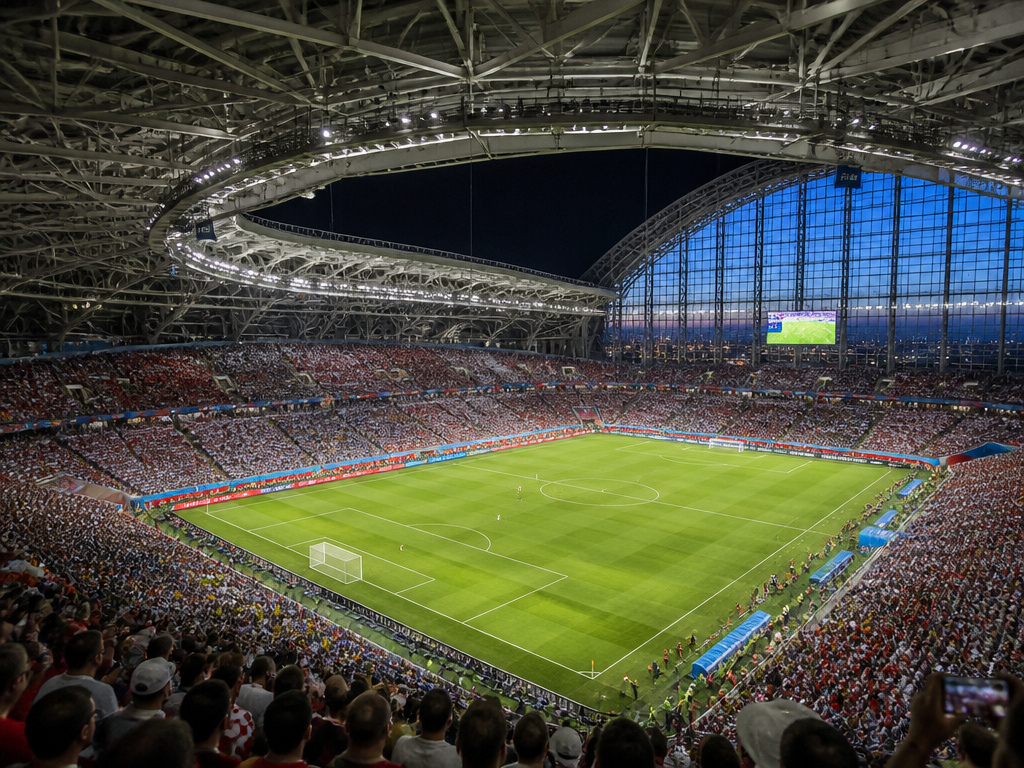
Eleven of the sixteen host stadiums are primarily open-air. This includes historic venues like the Estadio Azteca and modern giants like MetLife Stadium. For these, the match schedule is your best tool for comfort.
FIFA and the local organizing committees know this. You’ll see a heavy bias toward evening kickoffs (5 PM, 7 PM, or later local time) for matches in Phoenix, Philadelphia, New York/New Jersey, and Boston. The temperature drops significantly after sunset.
Evening Games Are Your Friend
A 5 PM kickoff in Foxborough in June is pleasant. A 1 PM kickoff is not. The sun is lower, the heat dissipates. This scheduling is intentional to protect player welfare and fan experience. When planning your trip, prioritize matches under the lights at these venues.
The Grass Conversion Factor
Every U.S. stadium with an artificial surface, including the indoor BC Place and the open-air Lumen Field and MetLife Stadium, will have a temporary natural grass pitch installed. This isn’t just about tradition. Natural grass affects the game: ball speed, player traction, and impact absorption are different. For teams used to playing on turf in MLS, this is a non-issue. For European-based players, it’s a return to the norm. It makes the playing field literally and figuratively level.
TL;DR: For open-air stadiums, target evening kickoffs. All artificial turf will be replaced with grass, standardizing the playing surface across all venues.
How Stadium Environment Influences the Game
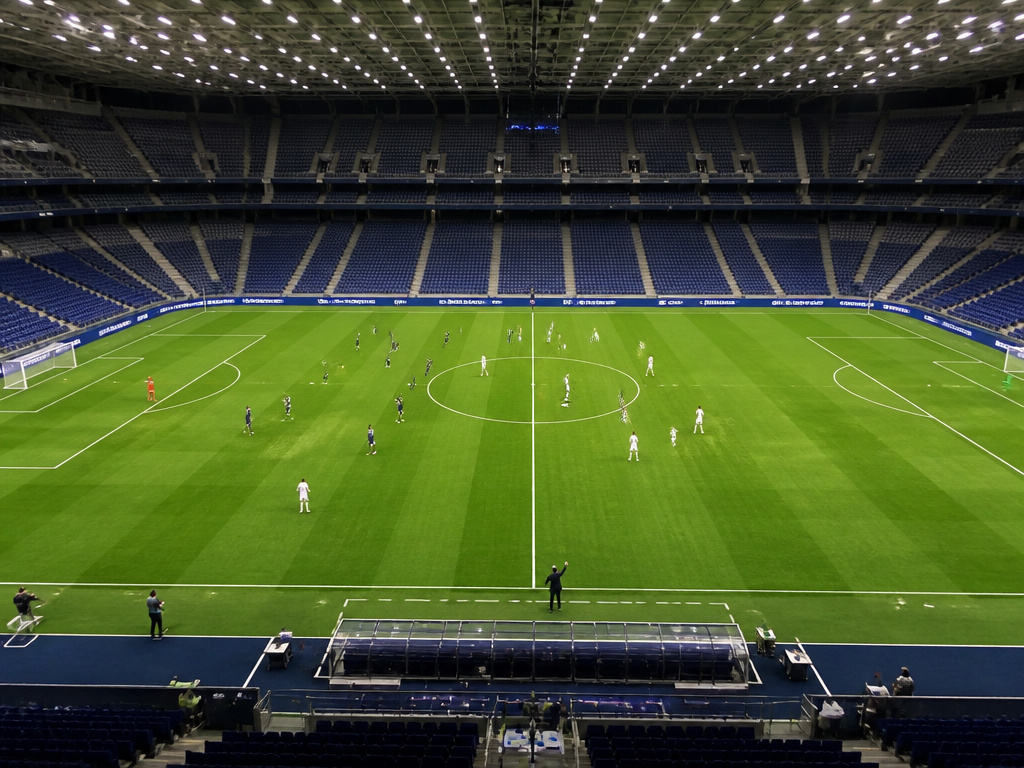
The conditions inside a stadium are a silent tactical player. A coach’s game plan must account for them.
In the four sealed stadiums, the game is purely about the 22 players and the coach’s instructions. There is no wind to bend a cross, no sun to blind a goalkeeper, no heat to sap energy in the 75th minute. This favors technically gifted sides who want to execute a complex 3-5-2 formation with intricate passing patterns. The environment is sterile and predictable.
In a partially covered or open-air stadium, the elements introduce variables.
* Wind: At Lumen Field or Gillette Stadium, a strong wind can turn a speculative cross into a goal. It rewards a more pragmatic, balanced formation that doesn’t rely on delicate long balls.
* Heat/Humidity: A day game in Miami or Houston (if the roof were open) forces a physical toll. Squad depth, hydration, and player nutrition become decisive. High-pressing tactics may be tempered.
* Sun: Late afternoon games can create challenging shadows and glare for players, affecting visibility for long passes and shots.
I once watched a Bundesliga match in Dortmund’s Westfalenstadion where a sudden, driving rainstorm in the second half completely altered the game. A technically superior team struggling on a slick surface was undone by a simpler, direct approach from their opponents. The 2026 organizers are using roofs and scheduling to try to eliminate that kind of random variable, but for most venues, the weather will still be part of the story.
Planning Your Matchday for Comfort
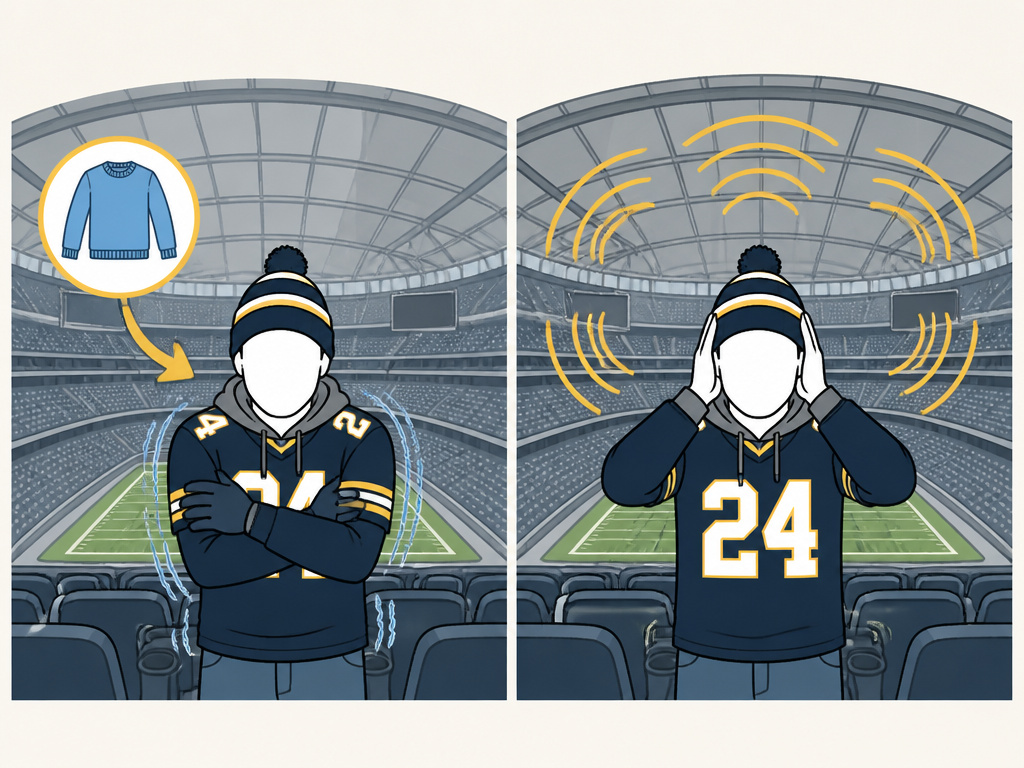
Your preparation changes based on the stadium type. Getting this wrong means an uncomfortable three hours.
For Fully Enclosed Stadiums (AT&T, Mercedes-Benz, NRG, BC Place):
- Bring a light layer. The air conditioning is aggressive. A jersey might not be enough.
- Expect consistent noise levels. Closed roofs trap and amplify sound. It will be loud.
- Don’t worry about weather apps. The forecast is irrelevant once you’re inside.
For Canopy/Partial Roof Stadiums (SoFi, Lumen, Hard Rock):
- Research your exact seat. Use the venue’s online 3D seat viewer.
- Prepare for the ambient temperature. Wear breathable clothing and sunscreen even if you’re under cover.
- Hydrate as if you’re outside. You are.
For Open-Air Stadiums (MetLife, Azteca, etc.):
- Sunscreen and a hat are mandatory for any daytime component.
- Check the hourly forecast for rain, not just temperature.
- Embrace the atmosphere. The open air connects the crowd to the city in a way a dome cannot.
A final, practical note on the temporary grass. It’s grown off-site on plastic trays and installed in sections. The seams are visible at first but knit together. The ball will roll truly. It’s a testament to modern sports science that a world-class pitch can be created in a week inside a dome like BC Place. For the players, it eliminates one more unknown, letting the principles of play take center stage.
Frequently Asked Questions
Which World Cup 2026 stadium is the most indoor?
AT&T Stadium in Arlington, Texas, is the most definitively indoor venue. Its massive retractable roof and powerful climate system are designed to create a perfectly controlled environment, making it a prototype for the modern “indoor stadium” experience.
Will SoFi Stadium have air conditioning for the World Cup?
No. SoFi Stadium has a fixed translucent canopy that provides shade but no air conditioning or enclosing walls. The temperature and humidity under the canopy will match the outside conditions in Inglewood, California.
Do players prefer indoor stadiums?
Most elite players prefer the consistent conditions of an indoor or closed-roof stadium for tournament play. It removes environmental variables like wind, heat, and rain, allowing the game to be decided purely by soccer tactics and skill. It also ensures a perfectly uniform playing surface.
Can it rain inside an indoor stadium?
No. In a fully enclosed stadium like Mercedes-Benz Stadium with its roof closed, precipitation cannot reach the pitch or the seats. The environment is completely sealed from weather. The roof closure decision is made well before any rain could affect the event.
The Bottom Line
If your priority is guaranteed comfort and a weather-proof experience, focus your ticket search on the four fully enclosed stadiums: AT&T, Mercedes-Benz, NRG, and BC Place. These are the only true “indoor” venues. For the others, understand the trade-off: SoFi gives you shade but not cool air; Lumen Field covers most seats but not all. For the classic open-air cathedrals like the Azteca, your comfort hinges on that evening kickoff time. Plan with those distinctions in mind, and you’ll master the unique stadium landscape of the 2026 World Cup.

I come from the “soccer heart” of Germany, the Ruhrpott. I have played, trained and followed soccer all my life and am a big fan of FC Schalke 04. I also enjoy following international soccer extensively.