What Made Pelé Great at Soccer: The 6-Pillar Analysis
Pelé’s greatness at soccer stemmed from a unique fusion of six attributes: explosive athleticism and two-footed power; preternatural vision and football intelligence; flawless first touch and technical improvisation; a complete, unselfish playing style as both scorer and creator; relentless mental resilience; and a legacy that defined an era and a nation’s footballing identity.
Most discussions about Pelé get stuck on the number 1,279. They treat him like a scoring machine, a statistic. That misses the point entirely. You cannot quantify genius with a tally.
This guide breaks down the six pillars that built the legend. We will move past the myths, examine the specific skills that terrified defenders, and explain why peers like Beckenbauer simply called him the best.
Key Takeaways
- Pelé was a complete forward, not just a scorer. His vision and passing made him one of history’s elite playmakers, a fact often overshadowed by his goal tallies.
- His athleticism was freakish for his era: explosive speed over 10 yards, a 40-inch vertical leap, and the ability to strike a heavy leather ball with either foot at full sprint.
- The “dummy” against Uruguay in 1970 wasn’t luck. It was the product of mental processing speed that saw the game two moves ahead of everyone else.
- He won three World Cups, but his 1966 tournament ended in injury from brutal, targeted fouling, a testament to the physical punishment he endured and overcame.
- His legacy includes cementing Brazil’s global football identity and becoming the sport’s first true commercial superstar, changing the game off the pitch.
The Physical Foundation: Speed, Power, and a Two-Footed Cannon
Pelé’s body was his first weapon. Modern metrics did not exist, but eyewitness accounts and film reveal an athlete decades ahead of his time. He possessed a sprinter’s acceleration over the first 10 yards, allowing him to explode past defenders who thought they had him contained. This wasn’t just straight-line speed. It was quickness in tight spaces, a sudden change of direction that left markers stumbling.
Then there was his leap. Standing at about 5’8″, he consistently out-jumped taller defenders. His timing and core strength generated a vertical that photographers captured in iconic images, body horizontal to the ground, neck muscles strained, meeting the ball at its apex. This aerial threat made him dangerous on every cross, a constant double menace.
But the most feared tool was his shot. The balls of the 1950s and 60s were heavier, waterlogged leather. Striking them cleanly required immense technique and power. Pelé had both, with either foot. He could unleash a rising drive from outside the box or place a precise finish across the keeper while off-balance. Defenders couldn’t show him onto a “weaker” side. There wasn’t one.
Pelé’s shooting power was not just raw strength. He mastered the technique of striking through the ball’s center with a locked ankle, transferring full force from his core even when his body was angled away from goal. This is why his shots retained velocity and accuracy under pressure.
TL;DR: Forget the old footage. Pelé had the explosive acceleration of a modern winger, the leaping ability of a basketball player, and a perfectly technical, powerful shot with both feet.
The Mind of a Genius: Vision, Awareness, and Deception
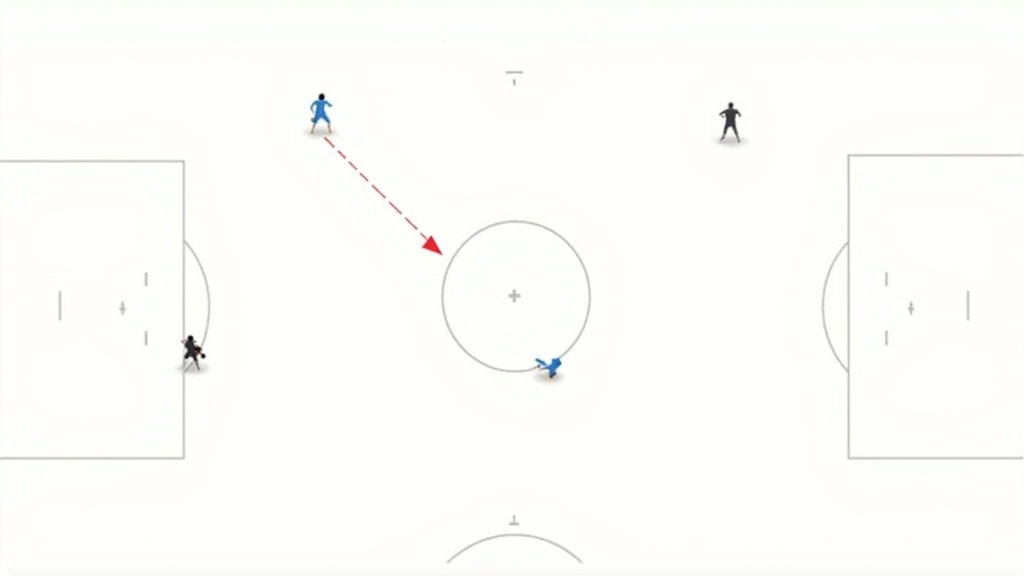
If his physique was the hardware, his football brain was the unmatched software. Pelé saw passes and spaces that didn’t yet exist. He played with a panoramic awareness, understanding the positions of all 21 other players on the field in real time. This allowed him to operate not as a pure striker, but as a deep-lying playmaker who happened to score 600 club goals.
His famous “dummy” in the 1970 World Cup against Uruguay is the textbook example. As a cross came in, he let the ball run through his legs, completely wrong-footing the keeper and a defender, only for a teammate to miss the tap-in. That wasn’t improvisation in the sense of a lucky guess. It was a calculated decision made in a fraction of a second, based on reading the goalkeeper’s momentum and knowing a teammate was making a near-post run. The move was conceived, executed, and it worked, only the finish was lacking.
This mental speed translated to relentless efficiency. He didn’t waste touches. His first action, a touch, a pass, a shot, was almost always the correct one. This conserved energy and constantly kept defenses reacting, never dictating. He made the complex look simple because his brain had already solved the equation before the ball arrived.
Technical Sorcery: First Touch, Dribbling, and the Art of Improvisation
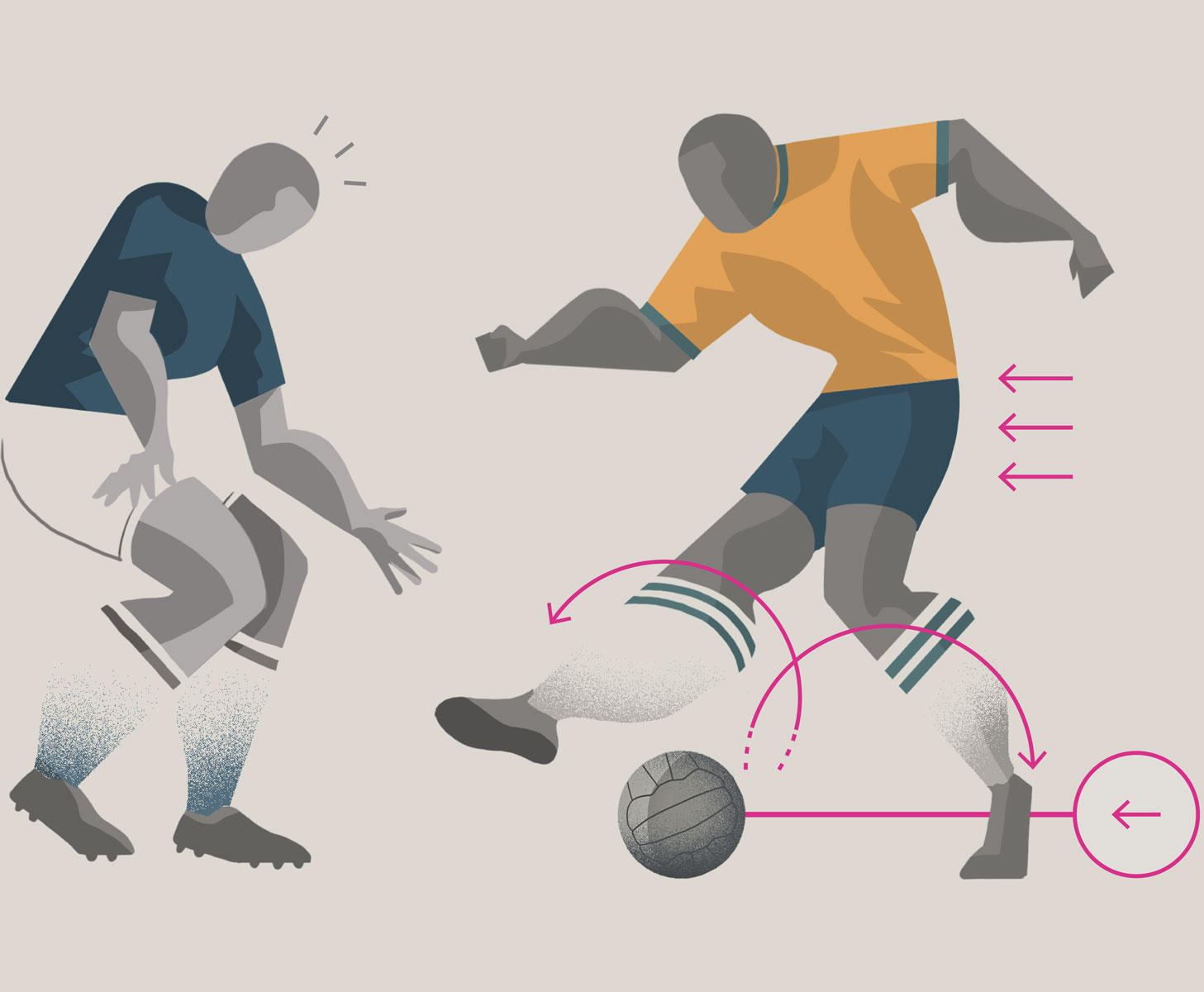
Great players control the ball. The legends make the ball a part of their body. Pelé’s first touch was a shock absorber. He could kill a 50-yard pass on his chest, thigh, or foot, bringing it instantly under his spell regardless of the pace or angle. This gave him extra time in crowded areas, a luxury he used to pick his next move.
His dribbling was not about excessive step-overs. It was economical. A sharp drop of the shoulder, a subtle shift of balance, and he was gone. He dribbled with a purpose: to eliminate a defender and create a passing lane or shooting angle, not to entertain. In the final third, this efficiency was deadly.
Then came the improvisation, the bicycle kicks, the heel passes, the audacious chips. These were not showboating. They were solutions to specific problems. A defender closing too fast? Back-heel to an overlapping runner. The ball bouncing awkwardly behind you? A scissor-kick to keep the attack alive. He had a vast, inventive repertoire because he needed one. Defenses dedicated entire game plans to stopping him; he needed unexpected weapons to break them.
| Technical Skill | How Pelé Executed It | Why It Was So Effective |
|---|---|---|
| First Touch | Used his whole body to cushion passes, killing momentum instantly. | Gave him 2-3 extra seconds of decision-making time in midfield or the box. |
| Dribbling | Economical body feints and sudden acceleration, not elaborate moves. | Efficiently eliminated defenders without losing sight of tactical objective. |
| Improvisation | Unorthodox skills (bicycle kicks, back-heels) as tactical tools. | Solved specific defensive problems that conventional techniques couldn’t. |
The Complete Forward: Why “Just a Goalscorer” is a Historic Miss
Common mistake: Citing only Pelé’s goal tally, it reduces his game to one dimension and ignores that he ranks among the most assists in history for his era.
The Guinness record of 1,279 goals is a distraction. It includes friendlies and tour matches. The more telling number is 643 goals in 659 competitive games for Santos. That is a historic rate. But focusing solely on that is like praising a Ferrari only for its top speed and ignoring its handling.
Pelé was the engine of his teams. For Santos and Brazil, he dropped deep, collected the ball, and orchestrated attacks. He would spread play with 40-yard cross-field passes, play one-twos to release wingers, and hold up the ball to bring midfielders into the game. His role was closer to a modern false nine or a creative midfielder than a classic penalty-box poacher. This completeness is why comparisons with later pure strikers often fall flat. He wasn’t just the finisher; he was the architect.
This unselfishness was strategic. By drawing defenders with his movement and passing threat, he created vast spaces for teammates like Jairzinho and Carlos Alberto to exploit. His greatness multiplied the effectiveness of those around him.
Resilience and Legacy: More Than Three World Cups
The narrative of three World Cup wins is clean. The reality is messier and proves his toughness. In 1962, after scoring a brilliant solo goal against Mexico, he was injured in the next match and watched Brazil’s title defense from the sidelines. In 1966, European defenders, given scant protection by referees, kicked him out of the tournament. He was so battered he contemplated retirement.
He didn’t. He rebuilt his body and his game, returning in 1970 to lead what is considered the greatest national team ever assembled. That resilience, to overcome systematic fouling and career-threatening injuries, is a pillar of his greatness often overlooked.
His legacy has two parts. On the field, he was the personification of “O Jogo Bonito” (The Beautiful Game). His style became synonymous with Brazilian football’s joyful, inventive spirit, influencing generations and cementing the nation’s Brazilian football dominance. Off it, he was football’s first global superstar. His move to the New York Cosmos in 1975 wasn’t a retirement check. It was a mission to popularize the sport in North America. He transcended sport, becoming a humanitarian and global ambassador.
| World Cup | Pelé’s Role | Key Takeaway |
|---|---|---|
| 1958 (Sweden) | 17-year-old superstar. Scored 6 goals, including 2 in the final. | Announced himself with breathtaking skill and precocious mental strength. |
| 1962 (Chile) | Injured early. Team won without him. | Showcased his importance; Brazil could win a World Cup, but needed him to define an era. |
| 1970 (Mexico) | The undisputed leader and icon of a legendary team. | Culmination of his skills, intelligence, and leadership. The peak of “The Beautiful Game.” |
How Pelé’s Training and Era Shaped His Game
We can’t replicate his innate talent, but we can understand the environment that honed it. Structured soccer workout plan routines were not the norm. His conditioning came from playing, constantly. Street football in Bauru developed his touch, improvisation, and spatial awareness in congested areas. This foundation is why modern agility ladder drills aim to replicate that innate quickness.
The tactical landscape was different. Defenses were man-marking, not zonal. As a result, Pelé often had a dedicated “shadow” throughout games. Beating that single marker with skill was a direct route to goal. The game was also more physically brutal, with tackles from behind legal. His durability and skill under that punishment are a testament to his toughness.
Finally, the club vs. international argument is a modern lens. He spent his prime at Santos, not in Europe. But Santos was a global powerhouse, winning two Copa Libertadores and two Intercontinental Cups against the best of Europe. They toured the world, and Pelé was the main attraction, proving his genius on every continent. His Wikipedia biography of Pelé details this globe-trotting chapter, showing how he showcased his talent against all comers.
Frequently Asked Questions
How many official goals did Pelé actually score?
The widely cited 1,279 includes friendly and tour matches. For Santos, he scored 643 goals in 659 official games. For Brazil, he scored 77 goals in 92 matches. The exact “official” total is debated by statisticians, but his prolificacy at the highest levels is undeniable.
Was Pelé better than Maradona or Messi?
This is the eternal debate. Pelé’s combination of peak athleticism, complete skill set, and unprecedented team success (3 World Cups) makes his case. Maradona’s 1986 World Cup is the greatest single tournament by a player. Messi’s sustained club dominance and creative numbers are unmatched. Pelé defined an earlier era and set the standard for holistic football greatness.
Is it true there was no offside rule when Pelé played?
No. This is a complete myth. The offside rule was established in 1863, nearly a century before his career. The game was, however, more physically demanding with heavier balls and more lenient refereeing towards defenders, making his scoring feats even more impressive.
What was Pelé’s greatest single skill?
If forced to choose, it was his two-footed shooting power combined with accuracy. This made him utterly unpredictable in the penalty area. A defender couldn’t channel him onto a weaker side, and goalkeepers couldn’t anticipate his shot placement.
How did Pelé change soccer off the field?
He became the sport’s first true global icon and commercial superstar. His presence legitimized soccer in the United States with the New York Cosmos. He also served as a global ambassador, using his fame for humanitarian causes and permanently elevating the sport’s worldwide profile.
Before You Go
Pelé’s greatness wasn’t a single trait. It was the synthesis of a perfect athlete’s body, a visionary’s mind, and a craftsman’s technique. He played the game with a joyful completeness that may never be matched. Look beyond the highlight reels and the goal counts. Watch the way he moves without the ball, the weight of his passes, the timing of his runs. That is where you see the true blueprint of a footballing genius. His legacy is not just in trophies, but in the very idea of how beautiful this sport can be.

I come from the “soccer heart” of Germany, the Ruhrpott. I have played, trained and followed soccer all my life and am a big fan of FC Schalke 04. I also enjoy following international soccer extensively.