Indirect Free Kick in Soccer: Reasons & Offenses Explained
An indirect free kick is given in soccer for seven specific non-penal fouls and technical violations where a goal cannot be scored directly. The referee awards it for offenses like playing dangerously, impeding an opponent without contact, dissent, and specific goalkeeper infractions like holding the ball too long or handling a deliberate backpass.
Most fans and even some players get this wrong. They see a high foot or a keeper holding the ball and assume it’s a direct free kick or a penalty. The confusion starts with the referee’s arm signal and ends with a weird restart nobody expected.
This guide breaks down every offense that triggers an indirect free kick, the critical referee signal you must watch for, and the exact procedures that follow. We’ll also cover the upcoming rule change that replaces one indirect free kick with a corner kick.
Key Takeaways
- The referee must raise an arm straight up and hold it until the ball is touched by a second player or goes out of play. If they forget and a direct goal is scored, the kick is retaken.
- A goal can only count if the ball touches another player before crossing the line. A direct shot into the net results in a goal kick for the defending team.
- Goalkeepers giving up an indirect free kick inside their own six-yard box is incredibly rare; Premier League data shows only eight instances since 2015, with zero goals scored.
- From the 2025/26 season, the penalty for a goalkeeper holding the ball too long changes from an indirect free kick to a corner kick for the attacking team.
- Opponents must retreat 9.15 meters (10 yards) from the ball, but if three or more form a wall, attackers must stay at least 1 meter (1 yard) away from it.
The 7 Offenses That Trigger an Indirect Free Kick
The Laws of the Game are precise. An indirect free kick is not for tackles or pushes. It’s for a specific list of infractions that break the game’s spirit or its technical rules without being direct fouls.
The first three involve no contact at all.
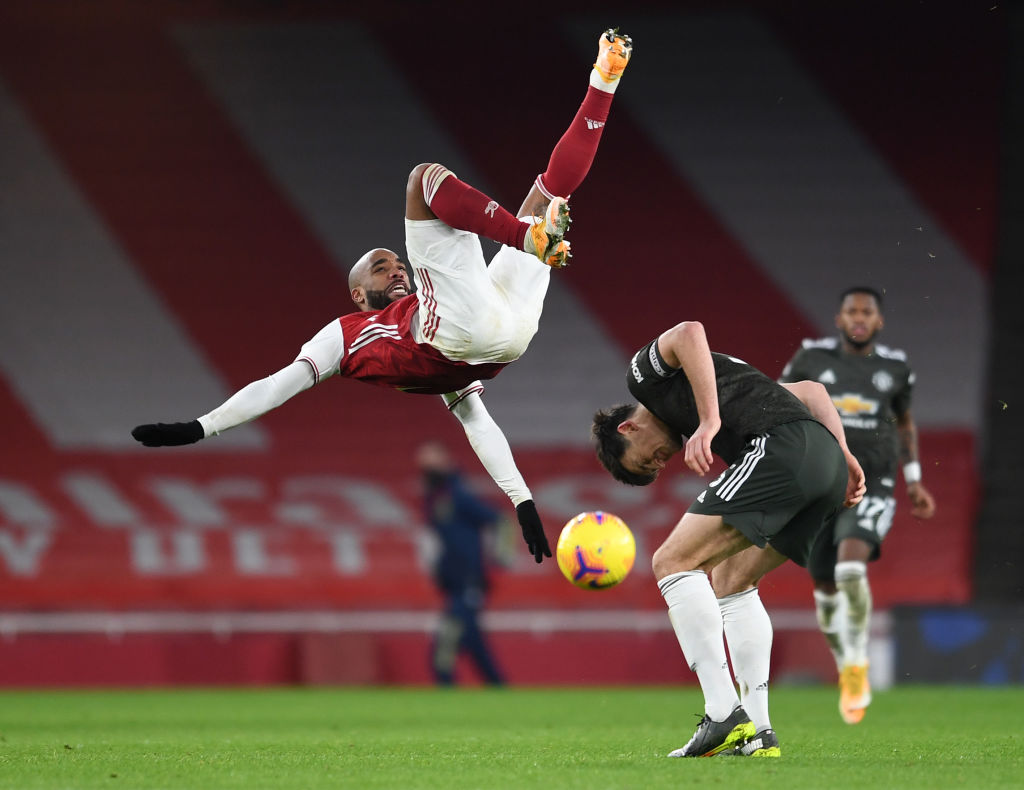
Playing in a dangerous manner. This is any action that threatens injury to an opponent or the player themselves. The classic example is a high boot near an opponent’s head. Contact isn’t required. If a player scissors or attempts a bicycle kick in a crowded penalty area, the referee blows the whistle. The risk alone is enough.
Impeding the progress of an opponent. This is obstruction without contact. If a defender steps into an attacker’s path, shields the ball when it’s not within playing distance, or just stands in the way to block a run, it’s an indirect free kick. The attacker doesn’t need to be knocked over. The mere act of blocking the run is the offense.
Dissent and verbal offenses. This covers offensive, insulting, or abusive language and actions. Swear at the referee, gesture aggressively at a linesman, or direct a slur at an opponent, and play stops. The restart is an indirect free kick from where the ball was when you opened your mouth. This rule is a direct tool for match control.
A player commits an offense by playing in a manner considered dangerous to an opponent or themselves, impeding an opponent’s movement without making contact, or using language that is offensive, insulting, or abusive. The restart for each is an indirect free kick.
The next four offenses are more technical, and three specifically involve the goalkeeper.
Preventing the goalkeeper from releasing the ball. You cannot challenge a keeper who is in the process of throwing or kicking the ball from their hands. Hovering a foot in to block the throw or kicking the ball as they drop it is an indirect free kick. It’s a protection rule.
A deliberate trick to circumvent the back-pass law. A player cannot use a trick—like flicking the ball up to their own head or knee to pass it back—to get around the rule that prohibits handling a deliberate pass from a teammate’s foot. If the keeper then handles it, the indirect free kick is given. If the player initiates the trick, the keeper is penalized.
Goalkeeper holds the ball for more than six seconds. This is the time-wasting rule. From the moment the keeper gains control with their hands, they have six seconds to release it into play. Stand there holding it for a seven-count, and it’s an indirect free kick where they were standing. This changes in the 2025/26 season.
Goalkeeper handles the ball after releasing it, before another player touches it. A keeper cannot bounce the ball, set it down, and pick it back up. Once they release it from their hands to the ground, they must play it with their feet until another player touches it. Picking it up again is an indirect free kick.
| Offense Category | Specific Example | Typical Match Situation |
|---|---|---|
| Dangerous Play | High boot near an opponent’s head | Attacker attempts an overhead kick in a crowded box |
| Obstruction | Shielding the ball when it’s not within playing distance | Defender steps into the path of a runner without going for the ball |
| Verbal | Swearing at the assistant referee | Player protests a close offside call loudly |
| Goalkeeper Time | Holding the ball for a 7+ second count | Keeper delays restart while their team organizes |
| Goalkeeper Release | Picking the ball up after dropping it for a kick | Keeper fumbles the placement, then grabs it again |
| Back-pass Trick | Flicking the ball up to the thigh to pass to keeper | Defender under pressure tries to legally give the keeper the ball |
| Keeper Disturbance | Kicking the ball as the keeper drops it to punt | Forward pressures the keeper’s release |
TL;DR: Memorize the seven triggers: dangerous play, obstruction, verbal abuse, disturbing the keeper, a back-pass trick, keeper holding too long, and keeper re-handling.
How Does the Referee Signal an Indirect Free Kick?
This is the single most important visual cue in the game for this restart, and most fans miss it. The referee raises one arm straight above their head. They keep it raised until the ball touches a second player, goes out of play, or it becomes clear a direct goal cannot be scored.
Forget the signal, and you get chaos.
I saw it happen in a regional cup final. The referee awarded an indirect free kick just outside the box but forgot to raise his arm. The attacking team’s midfielder curled a beautiful shot directly into the top corner. The defenders went mad, pointing at where the offense occurred. The referee consulted his assistant, realized his error, and had to disallow the goal and order the kick retaken. The attacking team lost their momentum and skied the retake over the bar.
The rule is absolute. The signal is mandatory. If the referee fails to give it and the ball goes directly into the goal, the goal does not stand. The kick is retaken. This is why assistants are trained to watch for the signal as much as the foul itself.
Common mistake: Assuming a direct free kick for a high foot with no contact — the referee’s raised arm is the only visual confirmation it’s indirect, and missing that signal invalidates a direct goal.
The Critical Goalkeeper Rules (And the Upcoming Change)
Goalkeepers operate under a special set of restrictions, and breaking them gifts the opposition an indirect free kick in a very dangerous area. The most famous is the back-pass rule. A goalkeeper cannot handle a ball that has been deliberately kicked to them by a teammate. A deliberate header or chest back is legal. A deliberate kick is not.
The keeper also cannot handle a ball received directly from a teammate’s throw-in. This forces the game to keep moving.
The six-second rule is the one everyone knows. It’s also the one that’s changing. Starting with the 2025/26 season, the International Football Association Board (IFAB) has trialed and approved a new punishment. If a goalkeeper holds the ball for more than eight seconds (the limit is increasing from six), the restart will no longer be an indirect free kick.
It will be a corner kick.
The rationale from IFAB is that a corner kick is a more effective deterrent against time-wasting and is quicker for referees to manage. They will give a visual five-second countdown. This is a major strategic shift. A team winning 1-0 late can no longer just give away an indirect free kick at the edge of their box; they’ll concede a corner and a real scoring chance.
How an Indirect Free Kick is Taken: Placement and Procedure
The procedure is strict and differs from a direct free kick in one key way: the ball must touch another player before a goal can be scored. Everything else about the setup is similar.
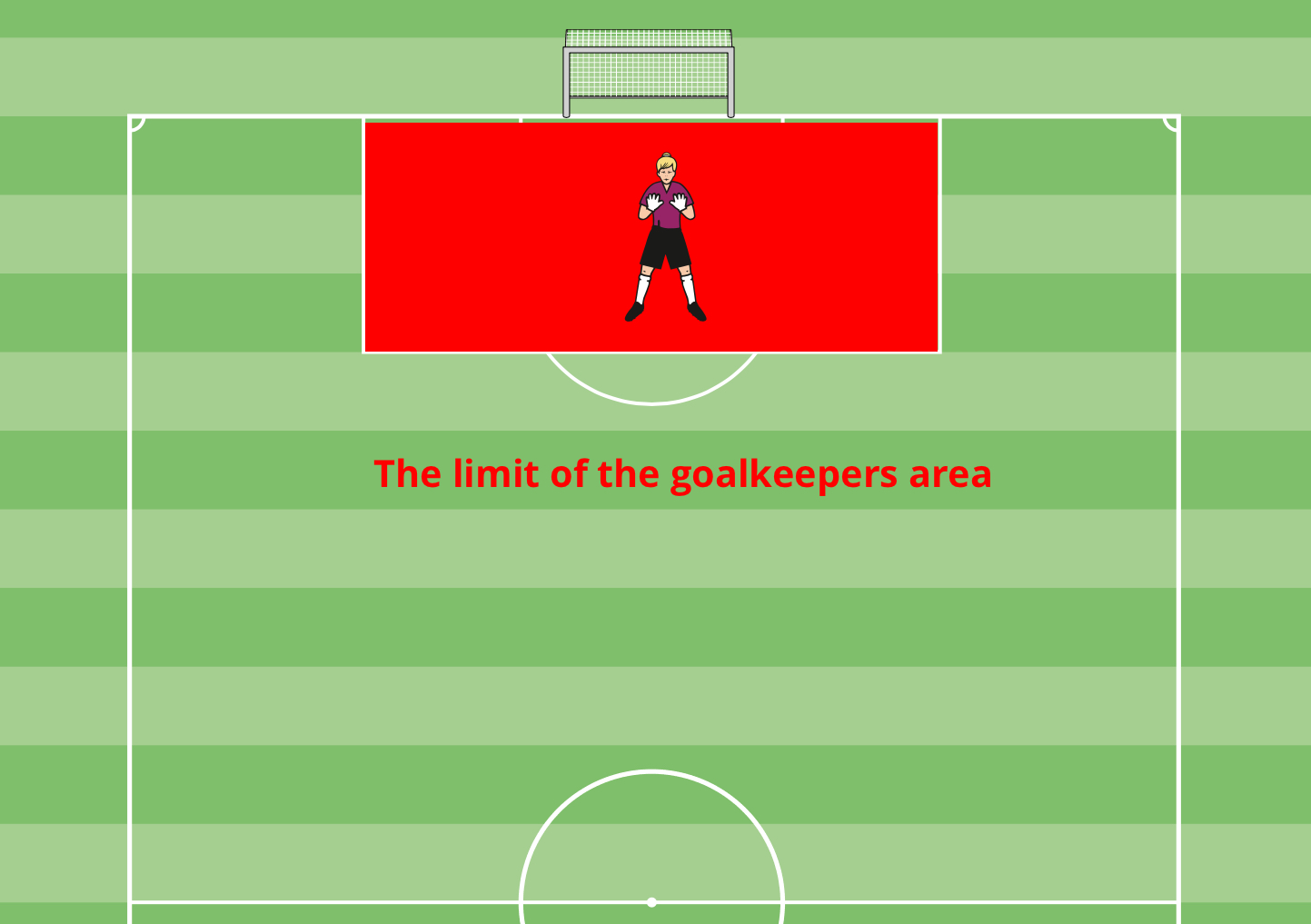
The kick is taken from where the offense occurred, with one big exception. If the offense happens inside the defending team’s own six-yard box (the goal area), the ball is moved. It is placed on the goal area line parallel to the goal line, at the point nearest to where the offense happened. This prevents an impossible kick from being taken a yard from the goal line.
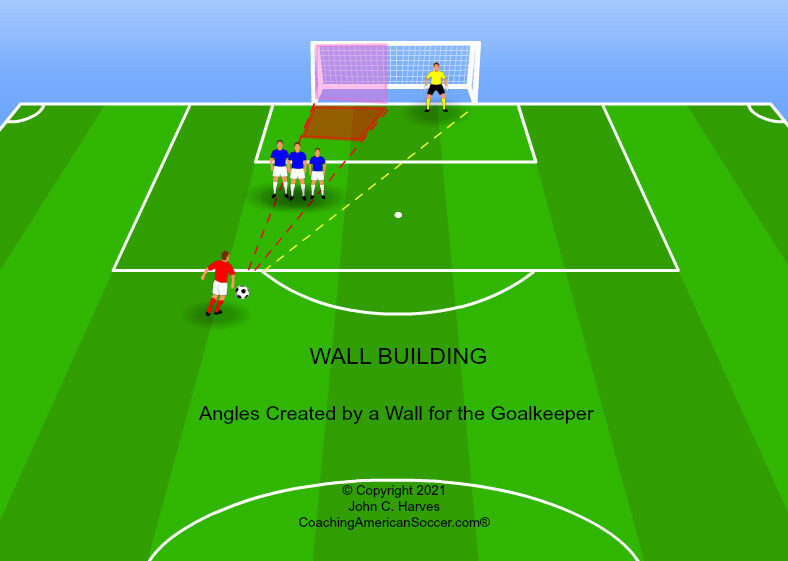
Before you start: Opponents must be at least 9.15m (10 yards) away. If three or more defenders form a wall, all attacking players must stay at least 1m (1 yard) from that wall until the ball is in play. Encroachment leads to a retake and a potential yellow card.
The defensive wall rules are identical to those for a direct free kick. Defenders must retreat the official 9.15-meter distance. Referees often use vanishing spray to mark the spot and the wall’s line. The nuance is the 1-meter rule for attackers. If three defenders form a wall, you cannot have an attacker standing in the wall, leaning in, or disrupting its formation. They must give a yard of space.
What happens if you shoot directly? The rules are clear.
* If the ball is kicked directly into the opponent’s goal, a goal kick is awarded.
* If the ball is kicked directly into your own goal, a corner kick is awarded to the other team.
This makes the tactics different. You’ll often see a short, tapped pass to a teammate who then shoots, or a clever chip into the mixer for a header. The direct blast is useless.
Indirect Free Kick vs. Direct Free Kick: What’s the Difference?
This is the core confusion for most newcomers. The difference is not about how hard you can kick it. It’s about the nature of the offense and the resulting goal-scoring possibility.
A direct free kick is awarded for what we think of as “classic” fouls: kicking, tripping, pushing, holding, handball (except the keeper’s back-pass), charging, striking, or tackling carelessly/recklessly with excessive force. From a direct free kick, you can score directly against the opponents. If you score directly on your own goal, it’s an own goal.
An indirect free kick is for the seven technical and non-contact offenses we’ve detailed. You cannot score directly. The ball must touch a second player.
The referee’s signal is the instant tell. Arm raised vertically? Indirect. Arm pointed at the goal? Direct. Knowing this distinction is crucial for understanding why a game stops and what might happen next. For a deeper comparison, our guide on the difference between direct and indirect kicks breaks down the infractions side-by-side.
Why Are Indirect Free Kicks in the Box So Rare?
Statistically, an indirect free kick awarded to the attacking team inside the penalty area is one of the rarest events in soccer. Since the 2015/16 Premier League season, there have been only eight instances. None resulted in a goal.
The reasons are practical. The space is incredibly congested. The defending team can pack every player on the goal line. The defensive wall starts just 9.15 meters away, but with everyone back, there’s often no clear passing lane for the mandatory second touch. The ball is usually tapped, then blasted into a mass of bodies.
The psychological pressure is immense. It feels like a gift, but the conversion rate is lower than a penalty or even a standard direct free kick from distance. Teams rarely practice this specific scenario, so the execution is often messy. It looks more dangerous than it is.
Strategic Implications and How to Defend One
For the attacking team, simplicity is key. The primary objective is to get that second touch legally. A short pass sideways to a player who one-times a shot is common. A chipped ball to the far post for a header is another option. The key is to avoid the low-percentage direct shot.
For the defending team, organization is everything. The first job is to ensure the official wall distance of 9.15 meters is respected—no creeping forward. The second is to mark every attacking player tightly, especially those lurking for the second ball. The goalkeeper must be vocal, organizing the wall and pointing out runners. Everyone must be alert for the quick, short pass.
Frequently Asked Questions
Can you score directly from an indirect free kick?
No. The ball must touch another player (from either team) before crossing the goal line. If a player kicks it directly into the opponent’s net, the result is a goal kick. If they kick it directly into their own net, it’s a corner kick.
What is the referee’s signal for an indirect free kick?
The referee raises one arm straight up above their head. They must hold this signal until the ball is touched by a second player, goes out of play, or it is clear a direct goal cannot be scored. This signal is mandatory.
What’s the difference between a direct and indirect free kick?
direct free kick is awarded for contact fouls like tripping or pushing, and a goal can be scored directly. An indirect free kick is for non-contact and technical offenses (dangerous play, obstruction, keeper violations), and the ball must touch a second player before a goal counts.
What happens if an indirect free kick offense occurs in the six-yard box?
The kick is not taken from the spot of the offense. Instead, the ball is placed on the goal area line (the six-yard line) at the point nearest to where the offense happened. This ensures a playable distance from the goal.
Is a handball an indirect free kick?
Usually, no. A deliberate handball by any player except the goalkeeper handling a back-pass is a direct free kick offense. The specific case of a goalkeeper handling a deliberate kick from a teammate is the indirect free kick offense.
What is the new rule for goalkeeper time-wasting?
Starting in the 2025/26 season, if a goalkeeper holds the ball for more than eight seconds (increased from six), the restart will be a corner kick for the attacking team, not an indirect free kick. This change is designed to be a stronger deterrent.
The Bottom Line
An indirect free kick is soccer’s answer to the non-contact foul. It’s for the high boot that doesn’t connect, the verbal outburst, and the goalkeeper who bends the technical rules. The referee’s raised arm is your instant clue. Remember, the ball must find a second player before the net ripples.
These kicks are more common than penalties but far less understood. Knowing the seven offenses makes you a smarter fan. You’ll watch the referee’s signal, not just the foul. You’ll understand why a goal is disallowed after a beautiful shot. And you’ll be ready for the 2025/26 change that turns keeper time-wasting into a corner kick, not a harmless restart. The game’s details are in these rules.

I come from the “soccer heart” of Germany, the Ruhrpott. I have played, trained and followed soccer all my life and am a big fan of FC Schalke 04. I also enjoy following international soccer extensively.