Free Kick in Soccer Explained: Rules, Types, Scoring Tips
A free kick in soccer is a method of restarting play awarded to a team after the opposing team commits a foul or infringement. The ball is placed stationary at the point of the offense, and the kicker puts it back into play. The two main types are direct free kicks, from which a goal can be scored directly, and indirect free kicks, which require the ball to touch another player before a goal counts.
Most people think any free kick is a chance to shoot straight at the net. That’s wrong, and it’s the reason beginners get confused watching referees raise their arms. The arm signal is the visual cue that separates a scoring chance from a tactical setup.
This guide walks through the exact fouls that trigger each type, the step-by-step procedure players and referees follow, and the small, critical rules that decide whether a goal stands or gets wiped off.
Key Takeaways
- Only a direct free kick allows a shot directly into the goal for a score. An indirect free kick requires a second touch by any player before a goal is valid.
- The referee’s raised arm signal is mandatory for an indirect free kick and must stay raised until the ball touches another player or leaves play.
- Opponents must retreat at least 9.15 meters (10 yards) from the ball, but a “quick free kick” can be taken before they comply, changing the tactical dynamic.
- If the kicker touches the ball twice before anyone else touches it, the restart is reversed, an indirect free kick is awarded to the opposing team.
- For a defensive wall of three or more players, attacking players must stay at least 1 meter (1 yard) away. Violating this gives the defending team an indirect free kick.
How Are Free Kicks Awarded? Direct vs Indirect
The referee’s decision hinges on the severity and nature of the foul. The International Football Association Board (IFAB) Laws of the Game categorize offenses into two clear lists.
A direct free kick is awarded for what are considered “penal” fouls, actions that are careless, reckless, or use excessive force against an opponent. The classic examples are kicking, tripping, jumping at, charging, striking, or pushing an opponent. It also includes the obvious: a handball. If any of these offenses happen inside the offending team’s own penalty area, the punishment escalates to a penalty kick.
A direct free kick offense inside a team’s own penalty area results in a penalty kick, not a free kick. The location of the foul changes the restart type entirely.
An indirect free kick covers a different set of infringements. These are often about safety, fairness, or procedural violations rather than violent contact. Playing in a dangerous manner, like a high boot near another player’s head, is one. Impeding an opponent’s progress without making contact (obstruction) is another. The third major category is specific goalkeeper offenses within their own penalty area: holding the ball for more than six seconds, handling a deliberate kick or throw-in from a teammate (the back-pass rule), or picking up the ball after releasing it before another player touches it.
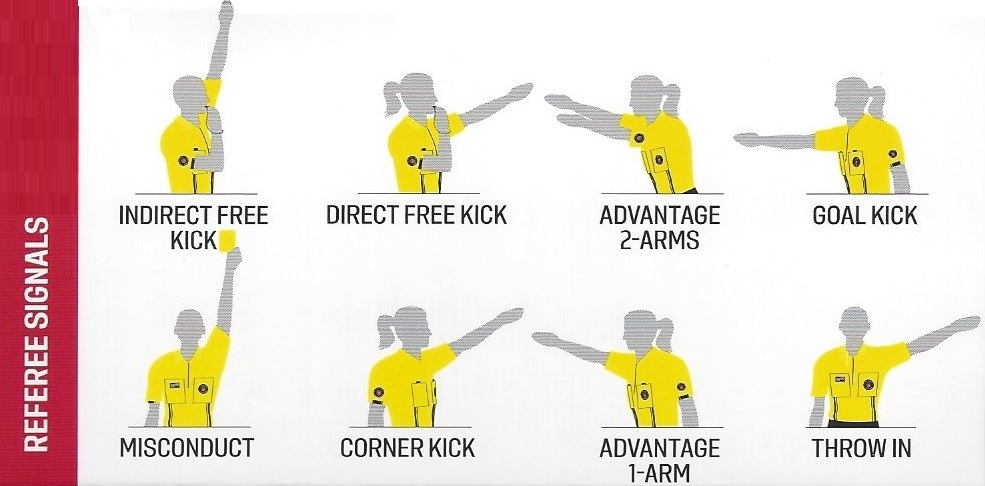
The referee signals an indirect free kick by raising one arm vertically above their head. They keep it up until the kick is taken and the ball touches another player or goes out of play. No raised arm means it’s a direct free kick.
| Free Kick Type | Triggering Offenses | Scoring Rule |
|---|---|---|
| Direct Free Kick | Kicking, tripping, charging, striking, pushing, handball (careless/reckless/excessive force) | Goal can be scored directly |
| Indirect Free Kick | Dangerous play, obstruction, goalkeeper offenses (6-second hold, back-pass, double touch) | Ball must touch another player before a goal counts |
TL;DR: Direct free kicks come from violent or handball fouls and can score directly. Indirect free kicks come from safety or procedural breaches and need a second touch to score.
The Step-by-Step Free Kick Procedure
Once awarded, the restart follows a strict sequence. Skipping a step doesn’t just break the rules, it often reverses the advantage.
Step 1: Place the Ball
The ball must be stationary at the exact point where the infringement occurred. There are a few exceptions, like for an offense off the field of play, but 99% of free kicks happen on the spot. This matters because moving the ball even a meter forward can be considered “taking the kick from the wrong place,” and the referee will order a retake.
Step 2: Set the Distance
All opposing players must be at least 9.15 meters (10 yards) from the ball until it is in play. They can stand on their own goal line between the posts if they wish. If the free kick is taken from inside the kicking team’s own penalty area, opponents must be outside the entire penalty area. This is where the referee’s vanishing spray comes in, that white foam line marks the minimum distance for the defensive wall.
Step 3: Take the Kick
The kicker must put the ball in play by kicking it and making it move clearly. You can lift the ball with one or both feet simultaneously. Feinting to kick is allowed; it’s a legitimate tactic to disrupt the defense’s timing.
Step 4: The Second-Touch Rule
After taking the kick, the kicker cannot touch the ball again until it has touched another player, any other player, teammate or opponent. This is the most commonly forgotten rule in amateur games.
Common mistake: The kicker taking a quick touch after the free kick before a teammate arrives, this awards an indirect free kick to the opposing team at the spot of the second touch.
If the kicker violates this and the second touch is a handball offense, it becomes a direct free kick (or penalty kick) for the opponents. That’s a double punishment.
Step 5: Observe the Outcome
What happens next depends on the kick type and where the ball goes.
- A direct free kick kicked directly into the opponents’ goal is a goal. Simple.
- An indirect free kick kicked directly into the opponents’ goal is not a goal. The restart becomes a goal kick for the defending team.
- Any free kick (direct or indirect) kicked directly into the kicking team’s own goal results in a corner kick for the opponents.
Why the Defensive Wall Distance is 9.15 Meters (Not 10 Yards)
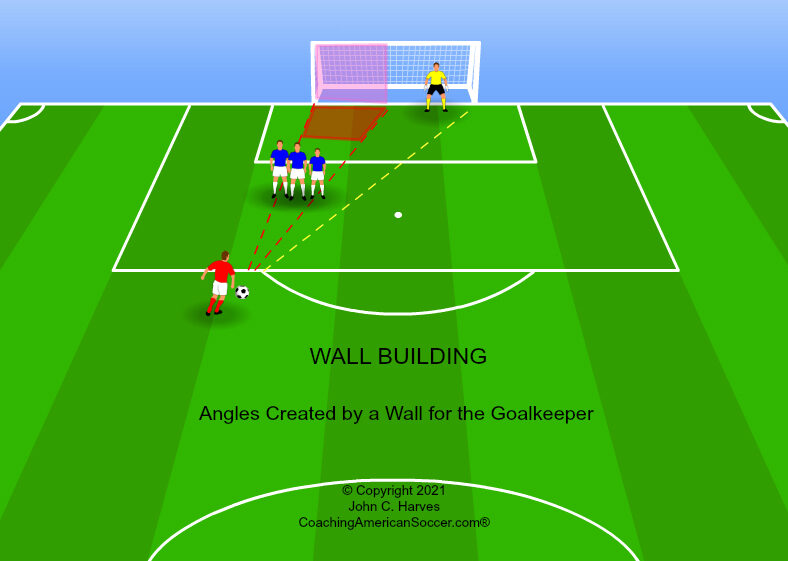
The official Laws of the Game specify 9.15 meters. That’s the exact metric conversion of 10 yards, and it’s the standard used worldwide in official match documents. The “ten-yard rule” is just the English colloquial name.
The distance isn’t arbitrary. 9.15 meters gives the kicking team a reasonable chance to execute a play while giving the defending team enough space to react. It’s a balance between punishment for the foul and fairness for the defense. When a quick free kick is taken before the wall forms, that balance shifts, the attacking team gains an advantage because the defense isn’t set.
This is where the 1-meter rule for attacking players comes in. If three or more defenders form a wall, any attacking player must stay at least 1 meter (about 1 yard) away from that wall until the ball is in play. The reason is tactical fairness: an attacker leaning into the wall can obstruct defenders trying to jump or move. It’s a subtle rule, but referees watch for it closely on set pieces near the box.
I watched a Bundesliga match where Schalke’s attacker was maybe half a meter from the Dortmund wall. The referee spotted it, didn’t blow the whistle immediately, but after the kick was taken and cleared, he awarded Dortmund an indirect free kick for the infringement. The attacker had disrupted the wall’s ability to jump cleanly. We lost that attacking chance because of a detail most fans don’t notice.
The required wall distance is non-negotiable. If an opponent is closer than 9.15 meters and interferes with the kick, the referee will order a retake. But if the attacking team takes a quick free kick and an opponent who hasn’t retreated intercepts the ball, play continues. The key is “deliberately preventing” the restart. That’s a yellow card.
What Happens if the Ball Goes Straight into the Goal?
This is the core confusion for new fans. The outcome is dictated by the free kick type and which goal it enters.
For a direct free kick:
– Into the opponents’ goal: Goal awarded.
– Into your own goal: Corner kick awarded to the opponents.
For an indirect free kick:
– Into the opponents’ goal (without a second touch): No goal. Goal kick awarded to the defending team.
– Into your own goal (without a second touch): Corner kick awarded to the opponents.
The logic is about the required conditions for a valid goal. A direct free kick has no preconditions, the ball crossing the line is enough. An indirect free kick has one precondition: another player must touch it. If that touch doesn’t happen, the ball entering the goal is treated as if it went out of play over the end line. Hence, a goal kick.
| Scenario | Direct Free Kick | Indirect Free Kick |
|---|---|---|
| Ball goes into opponents’ goal directly | Goal | No Goal → Goal Kick |
| Ball goes into own goal directly | Corner Kick | Corner Kick |
| Ball touches another player then goes into opponents’ goal | Goal | Goal |
This is why referees keep their arm up for an indirect free kick. It’s a visual reminder to everyone on the field, players, coaches, fans, that the next touch matters. If the arm goes down before the second touch, the goal would stand incorrectly. They don’t drop it until the condition is met.
The Evolution of Free Kick Rules and Their Impact
Free kicks weren’t always this codified. In early football games, restarts after fouls were often chaotic, the ball was simply given to the offended team with minimal structure. The standardization came with the formation of the IFAB and the creation of a unified Laws of the Game.
Two major changes shaped the modern free kick. First, the formal split between direct and indirect offenses in the late 19th century. Second, the introduction of the penalty kick in 1891 as a separate, more severe punishment for fouls inside the box. This created the three-tier system we have now: indirect free kick (minor), direct free kick (serious), penalty kick (serious inside the box).
The tactical impact is massive. Because goals are scarce in soccer, a free kick within shooting range is a high-value opportunity. Teams spend hours training set-piece plays, wall organization, and kick techniques. The introduction of referee’s vanishing spray in the 2010s further refined this by eliminating wall creep, defenders slowly edging forward before the kick. Now the line is visible and permanent until the kick is taken.
Common mistake: Defenders forming a wall but placing the tallest player in the middle, the tall player should be on the side covering the post the keeper isn’t guarding, to block the curling shot around the wall.
Understanding these basic soccer rules, including the nuances of game restart rules like free kicks, is essential for players and fans. The official field markings, including the penalty area line, directly determine whether a foul becomes a free kick or a penalty. It’s all connected.
Frequently Asked Questions
Can you score directly from an indirect free kick?
No. The ball must touch another player, any player, teammate or opponent, before entering the goal for the score to count. If it goes in directly, the result is a goal kick for the defending team.
What is the referee’s arm signal for?
The raised arm is the official signal for an indirect free kick. The referee must keep it raised until the ball touches another player or goes out of play. If you don’t see a raised arm, the free kick is direct.
How far away must opponents stand?
Opponents must be at least 9.15 meters (10 yards) from the ball until it is in play. This is often marked with the referee’s vanishing spray. If three or more defenders form a wall, attacking players must also stay at least 1 meter away from that wall.
What happens if the kicker touches the ball twice?
If the kicker touches the ball again before it touches another player, an indirect free kick is awarded to the opposing team at the spot of the second touch. If that second touch is a handball, it becomes a direct free kick (or penalty kick) for the opponents.
What’s the difference between a free kick and a penalty kick?
free kick is taken from the spot of the foul anywhere on the field. A penalty kick is a specific type of direct free kick awarded for a direct-free-kick offense that occurs inside the defending team’s own penalty area. It’s taken from the penalty mark 11 meters from the goal, with only the goalkeeper allowed to defend it directly.
Before You Go
Free kicks are more than just a restart, they’re a structured punishment that balances the severity of the foul with a fair chance for both teams. Knowing the difference between direct and indirect kicks changes how you watch a game. That raised arm isn’t just a gesture; it’s a rule in motion.
The 9.15-meter distance, the 1-meter wall rule, and the second-touch condition are small details with big consequences. They decide goals, change tactics, and often decide matches. Next time you see a referee point to the spot, look for the arm signal. It tells you everything about what’s coming next.

I come from the “soccer heart” of Germany, the Ruhrpott. I have played, trained and followed soccer all my life and am a big fan of FC Schalke 04. I also enjoy following international soccer extensively.