Why Is World Cup in Three Countries? The Real Reason
The 2026 FIFA World Cup is hosted by three countries, the United States, Canada, and Mexico, because the tournament expanded to 48 teams, requiring 104 matches. No single nation in North America had the stadium capacity, hotel space, and transportation infrastructure to manage this unprecedented scale alone, making the joint “United 2026” bid a logistical and financial necessity.
Most people see the three flags and assume it’s a political gesture or a compromise. It’s not. It’s a simple math problem. The 2026 World Cup is 60 percent bigger than the 2022 edition in Qatar. You cannot fit 60 percent more football into one country’s existing facilities without a decade of bankrupting construction.
This guide breaks down the hard numbers behind the expansion, the realpolitik of the 2018 host vote, and what this three-nation experiment means for fans, teams, and the future of the tournament itself.
Key Takeaways
- The jump from 32 to 48 teams is the single biggest factor, forcing the need for 16 host cities and over 100 matches.
- The “United 2026” bid beat Morocco by offering FIFA a risk-free, profit-maximizing option with stadiums already built.
- Match hosting is lopsided: the U.S. gets 78 games including the final, while Canada and Mexico get 13 each, preserving key ceremonial roles.
- All three host nations qualify automatically, a major incentive that shaped the cooperative bid.
- The model creates massive logistical challenges for security, fan travel, and cross-border coordination that are still being solved.
The Core Reason: A Tournament Too Big for One Nation
Forget politics and symbolism. The 2026 World Cup is in three countries because FIFA made the tournament physically too large for any one of them to host comfortably. The expansion to 48 teams is not a minor tweak. It’s a complete rebuild of the event’s skeleton.
The 2022 World Cup in Qatar featured 32 teams playing 64 matches. The 2026 edition will feature 48 teams playing 104 matches. That’s 40 additional games. Each match needs a stadium, security, broadcast infrastructure, and accommodations for tens of thousands of fans. A single country would need to build or drastically renovate at least eight new major stadiums to cope. The North American bid avoided that entirely.
The 48-team format increases the total number of matches from 64 to 104, a 62.5% rise in games requiring venues, staffing, and fan infrastructure. The group stage alone expands from 48 to 72 matches, spreading the initial load across more cities.
The “United 2026” proposal leveraged a continent’s worth of ready-made assets. It promised 23 existing stadiums, most in the NFL, with capacities over 60,000. It pointed to North America’s extensive hotel chains and airport networks. The bid wasn’t selling a dream of future construction. It was selling a turnkey operation. This was a direct response to the expanded 48-team tournament and its logistical demands.
The table below shows the sheer scale difference, which made the solo bids from the U.S., Canada, or Mexico individually non-viable.
| Tournament Element | 2022 World Cup (Qatar) | 2026 World Cup (North America) | Change |
|---|---|---|---|
| Number of Teams | 32 | 48 | +16 teams |
| Total Matches | 64 | 104 | +40 matches |
| Minimum Host Cities | 8 | 16 | +8 cities |
| Tournament Duration | 29 days | 39 days | +10 days |
TL;DR: The 48-team format created a monster event. The three-country model was the only way to feed it using existing infrastructure.
How the 2026 Host Vote Was Won
The decision was made on June 13, 2018, in Moscow. The vote was a landslide, but the story starts years earlier with FIFA’s broken reputation.
After the corruption scandals of the 2010s, FIFA President Gianni Infantino needed a clean, transparent win. The old system, where a 24-member executive committee chose hosts in smoke-filled rooms, was gone. For 2026, every one of FIFA’s 211 member associations got a vote. This new openness favored the bid with the clearest financial upside and least execution risk.
Two bids stood: Morocco, and the united bid of the U.S., Canada, and Mexico. Morocco’s pitch was emotional, a first World Cup in Africa since 2010. But their dossier showed a country that would need to build or renovate almost every stadium. Their budget was shaky.
The North American bid, branded “United 2026,” was a spreadsheet. It projected $14 billion in revenue and an $11 billion profit for FIFA. It highlighted 23 stadiums, all built, all with corporate suites and high-definition broadcast booths already installed. For FIFA members wary of another cost overrun saga, it was the safe choice. The vote was 134 to 65.
I remember watching that vote. Many European federations, still smarting from the U.S.-led corruption investigations, were expected to back Morocco. The sheer margin of victory proved that money and infrastructure talk louder than old grudges. The promise of a tourism boost for North America and guaranteed commercial success was irresistible.
Breaking Down the Host Responsibilities
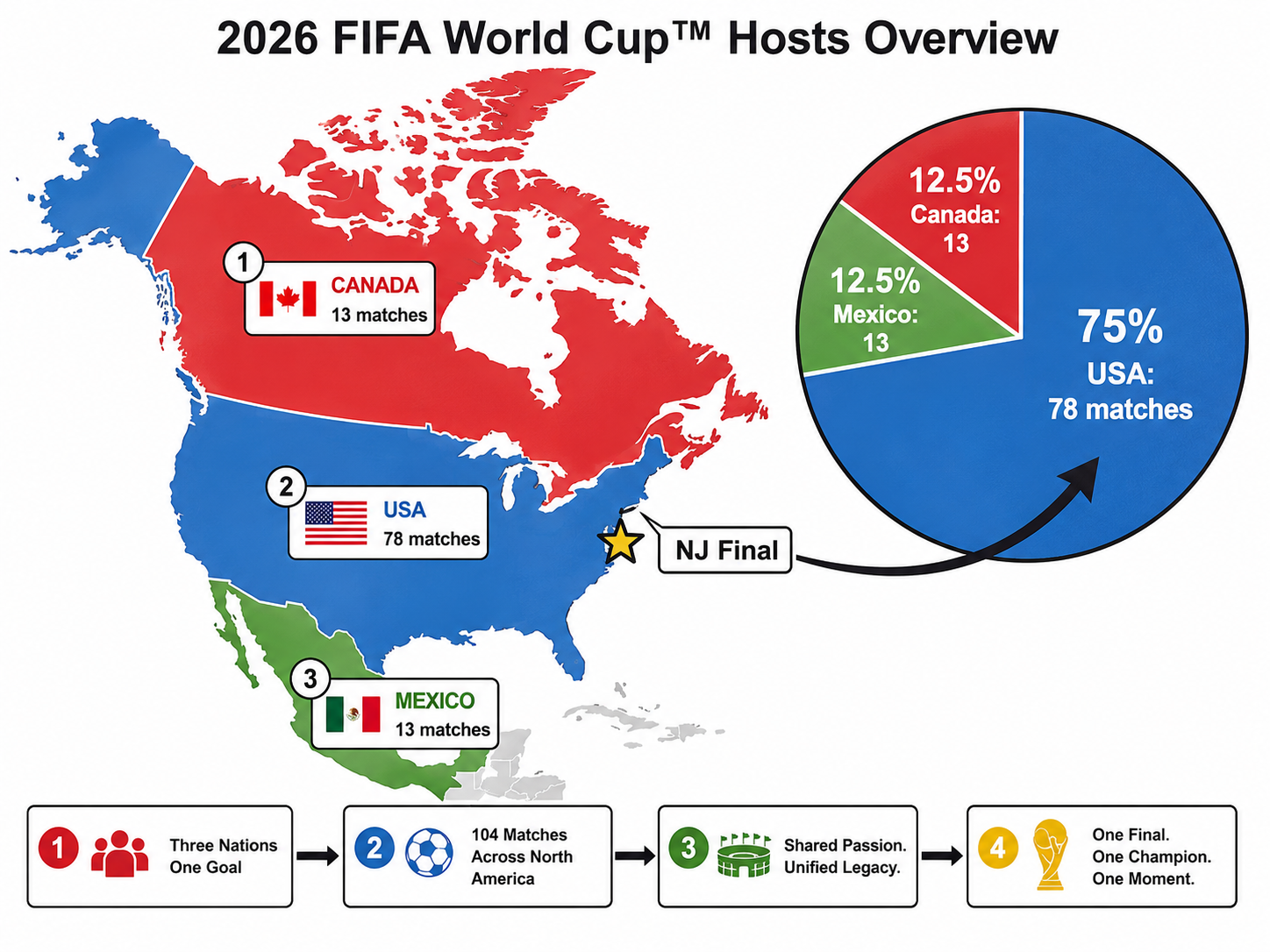
The hosting duties are not split evenly. They are divided strategically, like a football team assigning positions based on strength.
The United States is the striker, taking the most shots. It will host 78 of the 104 matches. More crucially, it will host every single match from the quarter-finals onward. The final will be at MetLife Stadium in New Jersey on July 19, 2026. The U.S. gets the bulk because it has the most large-scale stadiums and the commercial apparatus to maximize ticket and sponsorship revenue.
Mexico plays the role of the revered veteran. It hosts only 13 matches, but it gets the prestigious opener at the historic Estadio Azteca in Mexico City on June 11. This stadium hosted the 1970 and 1986 finals. Giving Mexico the opening game acknowledges its deep football culture and provides a symbolic start on hallowed ground.
Canada is the promising newcomer, also hosting 13 matches in Toronto and Vancouver. For a nation where football is growing rapidly, this is a coming-out party. It’s their first men’s World Cup, and the matches will focus on building the sport’s profile there.
Common mistake: Thinking each host gets a third of the games, the U.S. hosts 75% of the matches, and the knockout stage is entirely on American soil.
This distribution isn’t fair. It’s pragmatic. It ensures the most watched, most lucrative games happen in the largest markets with the most seamless global broadcast links. The three-nation venue plan was designed for efficiency, not equality.
The Automatic Qualification Incentive
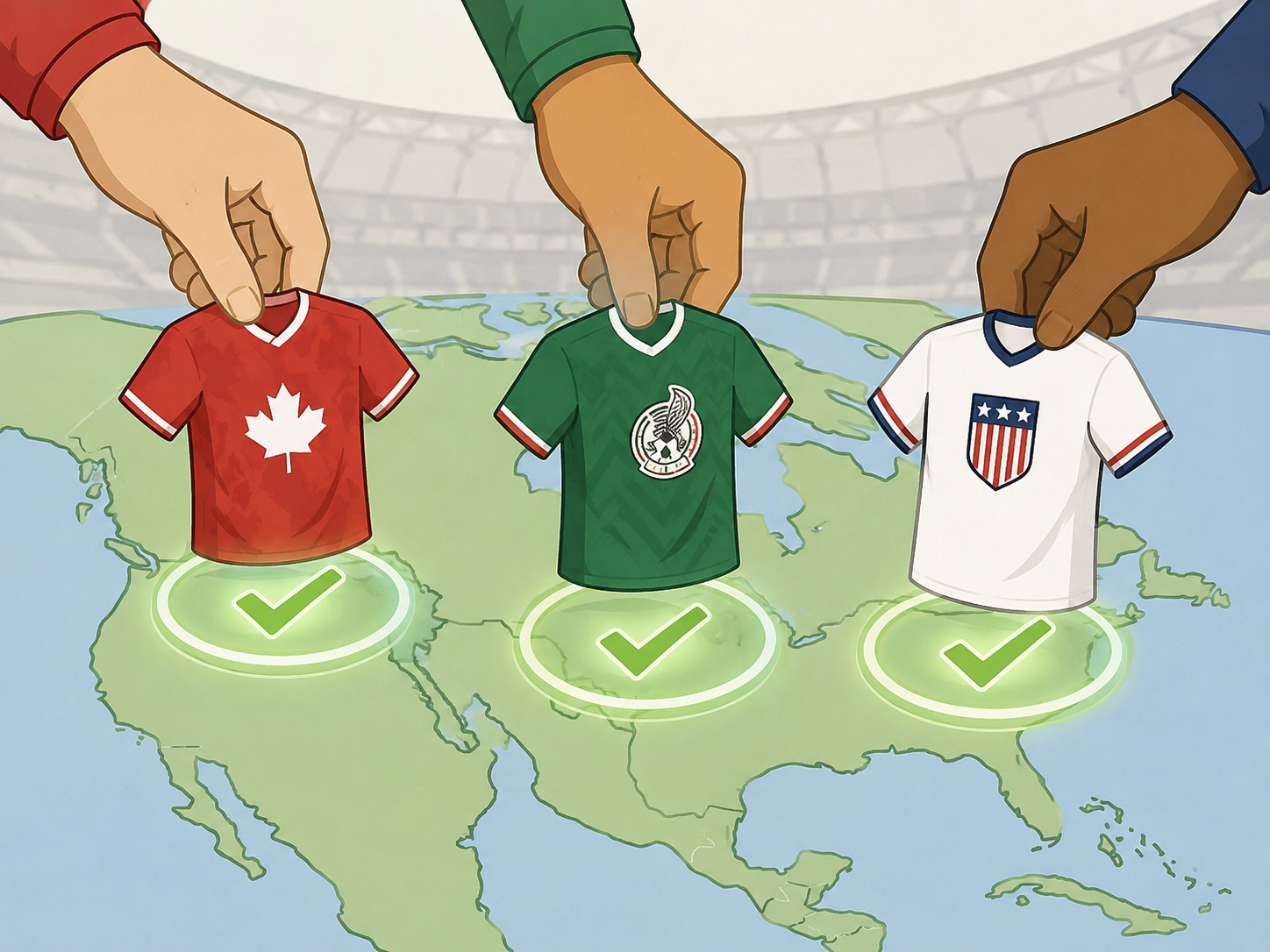
Here’s the open secret that glued the bid together: automatic qualification. All three host nations get a free pass to the 2026 tournament.
For Canada and Mexico, this was a massive incentive. Canada’s men’s team has only qualified for the World Cup twice in history (1986 and 2022). Guaranteeing a spot in 2026, on home soil, justified the political and financial investment. For Mexico, a regular qualifier, it removed any risk of a catastrophic and embarrassing failure to reach their own tournament.
For the United States, which missed the 2018 World Cup, the guarantee was a relief. It allowed the U.S. Soccer Federation to focus entirely on planning and logistics without the existential dread of a qualifying campaign.
This triple automatic qualification does create a minor controversy. It uses three slots that would normally be fiercely contested in the CONCACAF region. But for the bid to work, all three governments needed a guaranteed return for their citizens. A spot in the tournament was the non-negotiable down payment.
Logistical Challenges and the Fan Experience
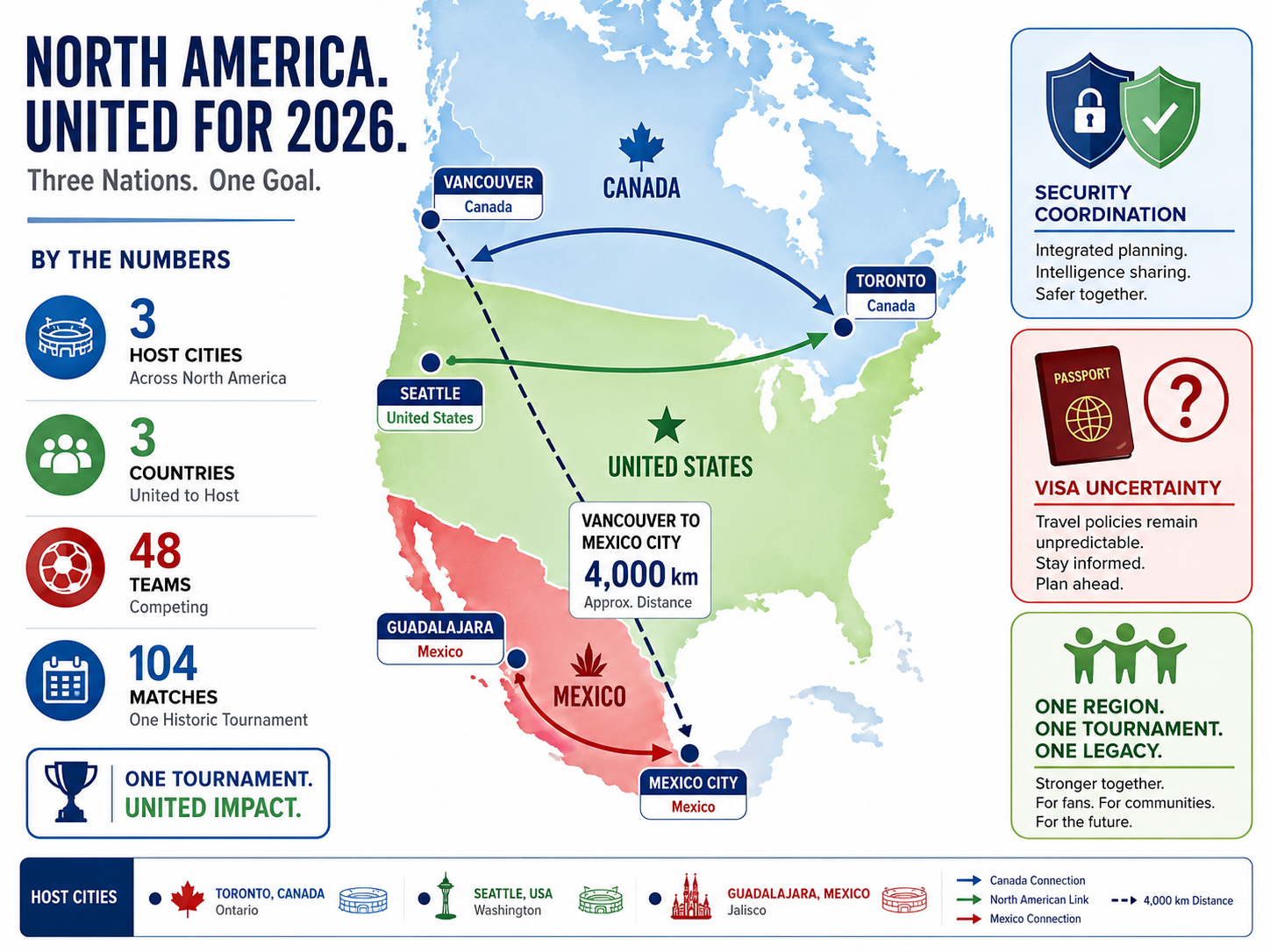
Hosting across three nations isn’t just a clever idea. It’s a logistical nightmare that is currently being untangled by three federal governments.
Border and Visas: A fan with a ticket in Toronto for a Tuesday match might want to see a game in Seattle on Saturday. That requires crossing an international border, twice. While the U.S., Canada, and Mexico have discussed special visa waivers for ticket holders, nothing is finalized. The host city schedules and travel windows will need careful alignment.
Security Coordination: Police and intelligence agencies that don’t routinely share operational details must now work in lockstep. A threat assessment in Guadalajara must be communicated instantly to partners in Atlanta and Vancouver. This requires a level of trust and integrated systems that doesn’t currently exist at this scale.
Travel and Costs: North America is vast. The distance from Vancouver to Mexico City is over 4,000 kilometers. Following a team across the group stage could mean flights across multiple time zones, a huge financial and physical burden for fans. The North American time zones alone, from Eastern to Pacific, will create a chaotic but potentially round-the-clock broadcast schedule.
The fan festivals in non-host cities will be crucial. If you can’t afford to chase games across the continent, your local city might host a large public viewing area. The success of the tournament will hinge on these peripheral experiences as much as the matches in the North American stadiums.
Long-Term Legacy and What It Means for the Future
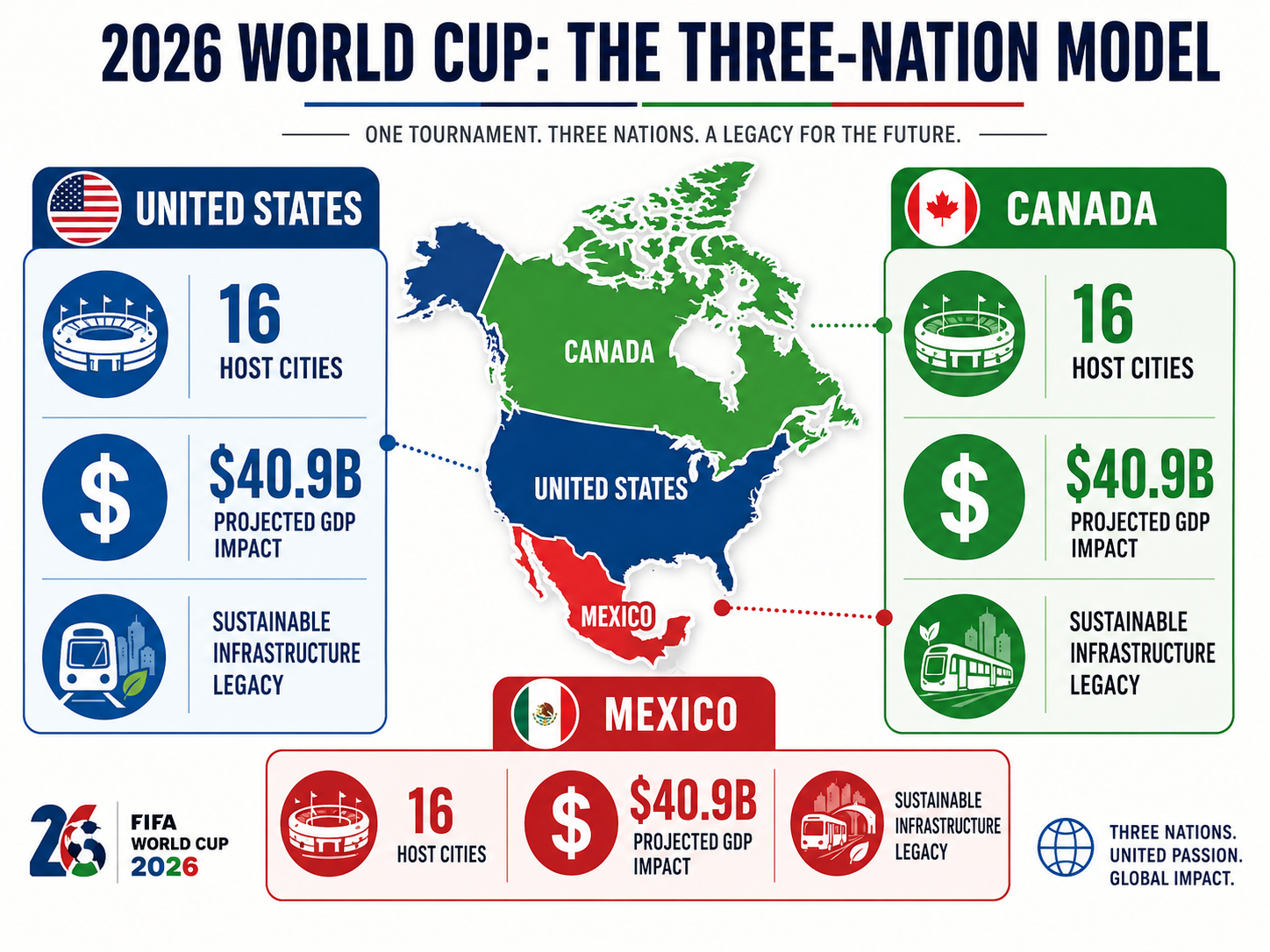
The 2026 World Cup is a test case. If it works, FIFA will see the multi-host model as a template for managing the bloated 48-team format elsewhere. If it fails, future bids might force a contraction back to 32 teams.
The projected economic impact is staggering, an estimated $40.9 billion added to the combined GDP of the three nations. But the real legacy should be in infrastructure and football development. The U.S. is using the tournament to push upgrades to public transit around stadiums. Canada is investing in youth academies. Mexico is renovating historic venues.
The risk is that the legacy becomes a handful of improved train lines and some faded murals. The infrastructure investments must be sustainable. The expanded tournament demands it, and the host nation benefits should last for decades.
I worry about the waste. Mega-events have a habit of building white elephants. The North American bid’s strength was using what was already there. The legacy must be about making existing systems better, not building new monuments to a month of football.
Frequently Asked Questions
Will the World Cup always be in multiple countries now?
Not necessarily. The three-country model for 2026 is a direct solution to the 48-team expansion. Future hosts with existing massive infrastructure, like a united Western European bid, could potentially host solo. But for most regions, sharing the load will be the only feasible option.
Do all three host countries automatically qualify for every World Cup they host?
Yes, that is the standard FIFA rule. Any host nation receives an automatic berth. In a joint bid, all named host nations qualify. So in 2026, the U.S., Canada, and Mexico are all in.
What happens if a team from one host country plays a match in another host country?
It will be treated as a neutral venue for sporting purposes, but the atmosphere will be anything but neutral. If Canada plays a group match in Seattle, expect a massive traveling support. The logistics for fan movement for these specific matches are a top priority for organizers.
How will the trophy tour work with three countries?
The FIFA World Cup trophy tour will be longer and more complex. It will likely spend significant time in each nation, visiting multiple host cities in the year leading up the tournament to build excitement across the entire region.
Could this model work for other tournaments, like the Euros?
It already has. The 2020 UEFA European Championship was hosted across 11 cities in 11 different countries, although that was a one-off celebration. The 2026 World Cup is proving that a geographically dispersed, multi-nation tournament can be the main model, not the exception.
The Bottom Line
The 2026 World Cup is in three countries because the tournament outgrew the old model. FIFA created a 48-team, 104-match event that demands a continent’s worth of resources. The United States, Canada, and Mexico didn’t choose to share. The scale of the modern World Cup forced them to.
The “United 2026” bid won because it was a safer, richer bet for a FIFA needing stability. The execution will be a masterclass in international logistics or a cautionary tale about overreach. For fans, it means an unprecedented football road trip across three cultures. For the sport, it’s the new reality.
The final whistle on this experiment blows on July 19, 2026, at MetLife Stadium. The result will shape the World Cup for the rest of the century.
I come from the “soccer heart” of Germany, the Ruhrpott. I have played, trained and followed soccer all my life and am a big fan of FC Schalke 04. I also enjoy following international soccer extensively.