Top 10 Most Goals in a Soccer Game: The Real Records ()
The top 10 most goals in a soccer game includes matches from 149 total goals down to 12, spanning protest farces, historic cup thrashings, and modern goal-fests. The list is defined by the AS Adema 149-0 SO l’Emyrne protest match from 2002, Arbroath’s 36-0 Scottish Cup win in 1885, and Vanuatu’s 46-0 international record from 2015.
Most people search for this list and get a simple countdown. They miss the stories. They don’t understand why a 149-0 game counts but feels wrong, or why a 36-0 match from 1885 still stands as the real record. The context changes everything.
This guide breaks down the ten most prolific scoring matches in soccer history. We’ll separate the protest from the sport, explain why these scores happened, and show you where to find the current records for the World Cup, Champions League, and your favorite leagues.
Key Takeaways
- The official highest score is AS Adema 149-0 SO l’Emyrne (2002), a protest match where one team scored 149 own goals.
- The widely accepted legitimate record is Arbroath 36-0 Bon Accord in the 1885 Scottish Cup.
- For international matches, the record is Vanuatu 46-0 Micronesia from the 2015 Pacific Games.
- In the FIFA World Cup, the highest-scoring game is Austria’s 7-5 win over Switzerland in 1954 (12 total goals).
- The UEFA Champions League record is Borussia Dortmund’s 8-4 victory over Legia Warsaw in 2016 (12 total goals).
What Is the Highest Soccer Score Ever?
You have two answers. The technical, Guinness World Records answer is a 149-0 victory in Madagascar. The football historian’s answer is a 36-0 demolition in Scotland. The first was a political stunt. The second was a genuine, if brutally one-sided, contest.
The match between AS Adema and SO l’Emyrne on October 31, 2002, holds the record for the highest score in a professional football match. SO l’Emyrne deliberately scored 149 own goals to protest a refereeing decision from a previous match that cost them the league title.
The story is wild. SO l’Emyrne were furious over a controversial offside call that had handed the championship to their rivals. Their coach instructed the team to protest by scoring on their own net from the opening kickoff. They did. For the full 90 minutes. The final scoreline of 149-0 was a statement, not a sporting achievement. It’s a footnote, not a benchmark for competitive play.
The real record, the one that matters for the history of the game, is Arbroath 36-0 Bon Accord. This happened in the first round of the Scottish Cup on September 12, 1885. The gulf in class was astronomical. Arbroath’s John Petrie scored 13 goals himself. Matches like this are why early football records are often untouchable; the sport was less organized, and mismatches were catastrophic.
TL;DR: The official record is 149-0 from a protest. The legitimate competitive record is 36-0 from 1885.
Why So Many Goals? The Historical Context
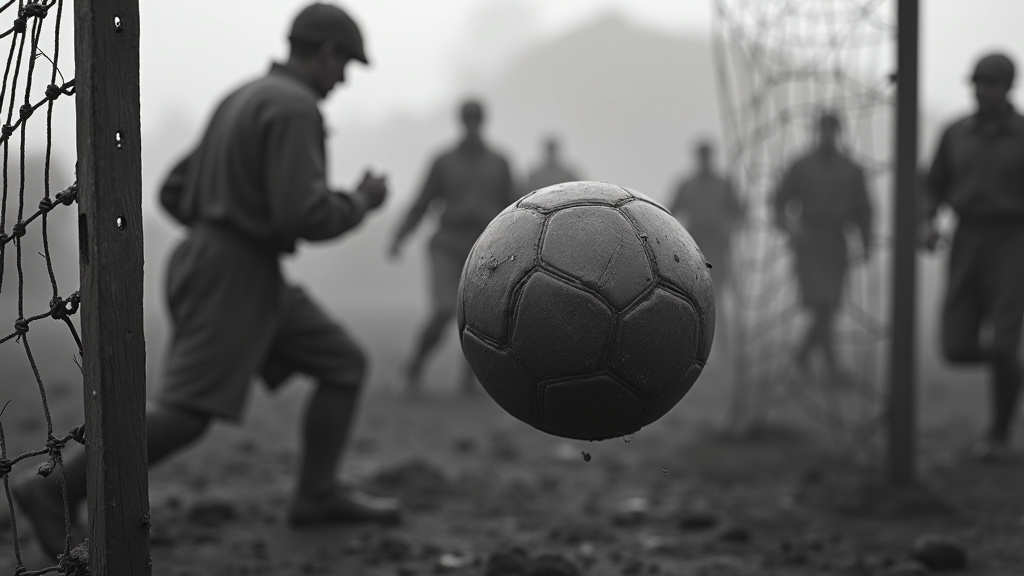
High-scoring games were the norm, not the exception, in football’s infancy. The 4-2-3-1 formation wasn’t invented. Defensive tactics were basically “kick it clear.” Goalkeepers could be charged shoulder-to-shoulder inside the box. The offside rule was different.
I remember watching grainy footage of old matches. The players cluster in the middle, the ball pings around, and goals feel almost accidental. It was a chaotic, end-to-end game. When a semi-professional team like Arbroath met a literal works team like Bon Accord—a group of mechanics and clerks—the result was inevitable. The same logic applies to many early international mismatches.
The game evolved. Tactical discipline, specialized defensive training, and rule changes like the modern offside law and the back-pass rule systematically reduced the average goals per game. A 10-0 win today is a global scandal. In 1885, it was a slow Tuesday. This context is crucial when comparing eras. A player’s physical conditioning and the strategic demands of the modern game mean that breaking these century-old records is nearly impossible, which is why today’s fastest soccer players use their pace in a much more structured system.
The Top 10 Highest-Scoring Soccer Matches
This list ranks matches by the total number of goals scored. It includes the protest match for completeness but focuses on legitimate contests. The cutoff is 12 total goals, which is why several famous high-scoring games just miss out.
| Rank | Match & Date | Score | Total Goals | Competition / Context |
|---|---|---|---|---|
| 1 | AS Adema vs SO l’Emyrne (Oct 31, 2002) | 149-0 | 149 | Madagascar THB Champions League (Protest) |
| 2 | Arbroath vs Bon Accord (Sep 12, 1885) | 36-0 | 36 | Scottish Cup First Round |
| 3 | Vanuatu vs Micronesia (Jul 7, 2015) | 46-0 | 46 | Pacific Games |
| 4 | Australia vs American Samoa (Apr 11, 2001) | 31-0 | 31 | FIFA World Cup Qualifying |
| 5 | Dundee Harp vs Aberdeen Rovers (Sep 12, 1885) | 35-0 | 35 | Scottish Cup First Round |
| 6 | Preston North End vs Hyde United (Oct 15, 1887) | 26-0 | 26 | FA Cup First Round |
| 7 | Athletic Club vs Barcelona (Feb 8, 1931) | 12-1 | 13 | La Liga |
| 8 | Borussia Dortmund vs Legia Warsaw (Nov 22, 2016) | 8-4 | 12 | UEFA Champions League Group Stage |
| 9 | Austria vs Switzerland (Jun 26, 1954) | 7-5 | 12 | FIFA World Cup Quarter-final |
| 10 | Portsmouth vs Reading (Sep 29, 2007) | 7-4 | 11 | English Premier League |
Breaking Down the List
- AS Adema 149-0 SO l’Emyrne: The ultimate protest. It stands alone.
- Arbroath 36-0 Bon Accord: The gold standard for competitive matches. This is the number to beat.
- Vanuatu 46-0 Micronesia: The international record. Micronesia sent a team of teenagers with almost no experience. Vanuatu’s Jean Kaltak scored 5 goals in the first 14 minutes.
- Australia 31-0 American Samoa: Archie Thompson scored 13 goals, a senior international record. This match directly led FIFA to introduce preliminary qualifying rounds for smaller nations.
- Dundee Harp 35-0 Aberdeen Rovers: Happened on the same day as Arbroath’s 36-0 win. Harp’s secretary mistakenly reported the score as 35-0 when it was actually 37-0, but the lower figure was officially recorded.
- Preston North End 26-0 Hyde United: An FA Cup record that still stands. Preston’s John Goodall scored 9.
- Athletic Club 12-1 Barcelona: La Liga’s highest-scoring game. Athletic’s Bata scored 7 goals. It remains Barcelona’s heaviest-ever defeat.
- Borussia Dortmund 8-4 Legia Warsaw: The Champions League record. A wild, open game with zero regard for defense. Marco Reus scored a hat-trick.
- Austria 7-5 Switzerland: The World Cup record. A back-and-forth quarter-final in the scorching Swiss heat. Austria came back from 3-0 down.
- Portsmouth 7-4 Reading: The Premier League record. Benjani and Kanu ran riot in a match that felt like a basketball game. Reading’s Dave Kitson got two late consolations.
Common mistake: Citing the 149-0 match as a competitive achievement — it discredits your knowledge immediately among serious fans. Use it as a curiosity, not a benchmark.
Record Holders by Competition

Not every competition has a 30-goal thriller. The modern records for major tournaments are much tamer, reflecting the increased parity and tactical sophistication of the global game. Here’s where to look for the biggest scores in each arena.
FIFA World Cup: The 12-Goal Standard
The pinnacle of the sport has only seen 12 goals in a match once. Austria’s 7-5 win over Switzerland in the 1954 quarter-final is the king. The game was played in 40-degree Celsius heat in Lausanne, and the pace was relentless.
The 1954 World Cup match between Austria and Switzerland is the highest-scoring game in the tournament’s history. The 12-goal thriller saw Austria overcome an early three-goal deficit, with Erich Probst scoring the decisive seventh goal in the 76th minute.
Other high-scoring World Cup games include:
* Hungary 9-0 South Korea (1954) – 9 goals
* Yugoslavia 9-0 Zaire (1974) – 9 goals
* Hungary 10-1 El Salvador (1982) – 11 goals
* France 7-3 Paraguay (1958) – 10 goals (Just Fontaine scored a hat-trick)
The trend is clear. The last time a World Cup match saw double-digit goals was 1982. Modern tournaments are tighter, with team defense paramount. The athleticism required for this is immense, reflected in the distance soccer players run during a modern World Cup match.
UEFA Champions League: Dortmund’s 8-4 Showcase
The premier club competition’s record is relatively recent. In 2016, Borussia Dortmund hosted Legia Warsaw in a group stage dead rubber. Both teams had already been eliminated, and they played like it. The final score was 8-4. Shinji Kagawa and Marco Reus were sublime, but the defending was non-existent. It’s a record that could be broken again, given the attacking talent in today’s game, much of it from 2026 soccer legends still in their prime.
English Premier League: Portsmouth’s 7-4 Feast
The Premier League era (post-1992) record is 11 goals. Portsmouth’s 7-4 win over Reading in 2007 is a cult classic. It was 7-1 at one point. The match had everything: long-range screamers, defensive howlers, and a scoreline that kept climbing. The previous top-flight record was also 11 goals, from Aston Villa’s 7-4 win over Blackburn in 1935. The biggest winning margin in the Premier League is 9-0, a scoreline that has occurred four times, most recently when Liverpool dismantled Bournemouth in 2022.
The Anatomy of a Record-Breaking Thrashing
How does a game get to 36-0? Or 31-0? It’s not just skill disparity. It’s a perfect storm of conditions that rarely align in the modern era.
- Extreme Talent Mismatch: This is the non-negotiable foundation. One team is fully professional, the other is amateur or, in the case of Micronesia 2015, literally learning the rules. When Australia played American Samoa, the Samoans’ goalkeeper had never played a full match before.
- Psychological Collapse: After the fifth or sixth goal, morale shatters. Defenders stop tracking runs. Midfielders stop covering. The losing team’s shape dissolves into a collection of individuals, making them easier to pick apart. This is where true cricket scores happen.
- No Mercy Rule: Unlike some sports, soccer has no mechanism to end a game early due to a lopsided score. The clock runs 90 minutes, no matter what.
- Attacking Momentum: For the winning team, scoring becomes a habit. Players start taking risks, trying ambitious shots, and playing with a freedom that amplifies their technical advantage. It becomes a training exercise.
I’ve been on the wrong end of a 9-0 loss in a youth tournament. By the 70th minute, you’re not thinking about tactics. You’re just praying for the final whistle. The feeling is one of total helplessness. That psychological factor is what turns a 5-0 defeat into a 10-0 historic rout. The teams that inflict these scores often contain underappreciated goal scorers who seize the chance to pad their stats in a unique circumstance.
Will These Records Ever Be Broken?
The 149-0 protest record is safe. No professional team will ever repeat that stunt.
The legitimate competitive records, however, face two opposing forces. On one hand, global football is more organized than ever. Preliminary qualifying rounds and better funding for smaller nations prevent total mismatches at the highest levels. The FIFA ranking system tries to seed teams appropriately. A 31-0 scoreline in a World Cup qualifier is now almost unthinkable.
On the other hand, the club game sees immense financial inequality. Could a Premier League giant put 20 past a semi-pro team in the FA Cup? Technically, yes. But managers would rotate their squad, show mercy after going 6-0 up, and risk injury by over-exerting stars. The incentive isn’t there. The record for a competitive match between two professional sides in a major league is more likely to be broken by a wild 8-6 or 9-5 game, like the Dortmund spectacle, rather than a 30-goal demolition. It would require a bizarre combination of relentless attacking, comical defending, and a refusal to slow down—a perfect storm we might see once in a generation. Such a game would instantly make its participants global football icons.
TL;DR: The huge historical records (36-0, 31-0) are probably safe. The modern competition records (12 goals in the UCL, 11 in the EPL) could definitely fall.
Frequently Asked Questions
What is the highest score in a professional soccer game?
The highest score in a professional match is AS Adema’s 149-0 victory over SO l’Emyrne in the 2002 Madagascar THB Champions League. This was a protest, not a competitive fixture.
What is the highest legitimate score in soccer history?
The widely accepted record for a legitimate competitive match is Arbroath’s 36-0 win over Bon Accord in the 1885 Scottish Cup. This is considered the real benchmark for an official high score.
Has there ever been a 40-0 soccer game?
No, there has never been a verified 40-0 result in a senior competitive match between two professional or registered clubs. The closest is the 36-0 result from 1885. Higher scores, like 149-0, were protest actions.
What is the highest-scoring World Cup game?
The highest-scoring FIFA World Cup game was the 1954 quarter-final between Austria and Switzerland, which ended 7-5 to Austria for a total of 12 goals. This record has stood for over 70 years, a testament to the tournament’s increasing competitiveness, much like the enduring legacy of famous Argentine soccer players on the world stage.
Before You Go
The list of the top 10 most goals in a soccer game is a journey through football’s strangest and most one-sided moments. Remember the 149-0 game as a bizarre protest, not a sporting feat. Respect the 36-0 and 31-0 scores as relics of a less organized era. And appreciate the modern records—the 12-goal World Cup classic and the 8-4 Champions League frenzy—as rare explosions of attacking football in a tactically disciplined age.
These scores are more than numbers. They tell stories of protest, of historical mismatch, and of pure, unadulterated goal-scoring chaos. They are the extreme outliers on the statistical graph of the beautiful game. For the players who create goals in more typical settings, mastering soccer shooting drills is the daily work that leads to ordinary glory.

I come from the “soccer heart” of Germany, the Ruhrpott. I have played, trained and followed soccer all my life and am a big fan of FC Schalke 04. I also enjoy following international soccer extensively.