Serie A Soccer League Guide: What Is Italy’s Top Division?
Serie A is the top professional football division in Italy, a 20-club league organized by Lega Serie A where teams play a double round-robin season. The champion wins the Coppa Campioni d’Italia trophy and earns the right to wear the scudetto shield on their kit the following season. The league operates on a promotion and relegation system with Serie B and qualifies its top clubs for UEFA’s elite European competitions.
Most explanations stop at the basic facts. They tell you it’s Italy’s top league, list a few clubs, and move on. What they miss is the soul of the competition, the tactical grind that defines it, the historical quirks that explain its present, and the specific financial and structural battles that have shaped its modern identity. You don’t just watch Serie A; you study it.
This guide unpacks everything from the foundational rules to the cultural DNA that separates it from the Premier League’s chaos or La Liga’s technical ballet. We’ll cover its controversial beginnings, its current global league structures, and why a mid-table clash in Italy feels so different from one in England.
Key Takeaways
- Serie A’s current format began in 1929, but the Italian Football Federation recognizes championships from as early as 1898, which is why Juventus’s title count (36) includes pre-1929 wins.
- The league’s tactical reputation for defensive rigor isn’t a stereotype; it’s a statistical and stylistic reality born from a deep cultural focus on structured play and minimizing mistakes.
- A 2009 split over TV revenue distribution led to Serie A clubs forming their own governing body, Lega Serie A, separate from Serie B, a defining moment for its modern economics.
- Qualification for the UEFA Champions League is the primary seasonal goal for top clubs, offering financial and prestige rewards far beyond domestic success.
- The iconic scudetto patch, worn by the defending champion, is a unique tradition that visually crowns the titleholder throughout their title defense campaign.
What Defines Serie A? More Than Just a League
Calling Serie A just a league is like calling a Ferrari just a car. It’s a specific cultural product with a century of baggage, brilliance, and bureaucracy. Its official name tells part of the story: Serie A Enilive in Italy, Serie A Made in Italy for international broadcast. Those sponsor tags underline its dual identity, a domestic sporting institution and a global export brand.
The league’s soul is tactical patience. Where the Premier League is a sprint and La Liga a technical chess match, Serie A is a grueling war of attrition. Coaches are revered as tactical professors. A 1-0 win earned through a perfectly executed defensive scheme and a single counter-attack is often celebrated more than a 4-3 goal fest. This mindset filters down from the iconic clubs to the teams fighting relegation. It creates a specific kind of pressure. Strikers aren’t just facing a defender; they’re solving a meticulously organized block. This is the league’s true signature.
Serie A, operating under the governance of Lega Serie A since 2010, is a private consortium of the 20 member clubs. It is responsible for the league’s organization, commercial rights, and disciplinary matters, functioning separately from the Italian Football Federation (FIGC) which retains authority over the national team and the broader Italian football league system.
Serie A Format and Competition Structure
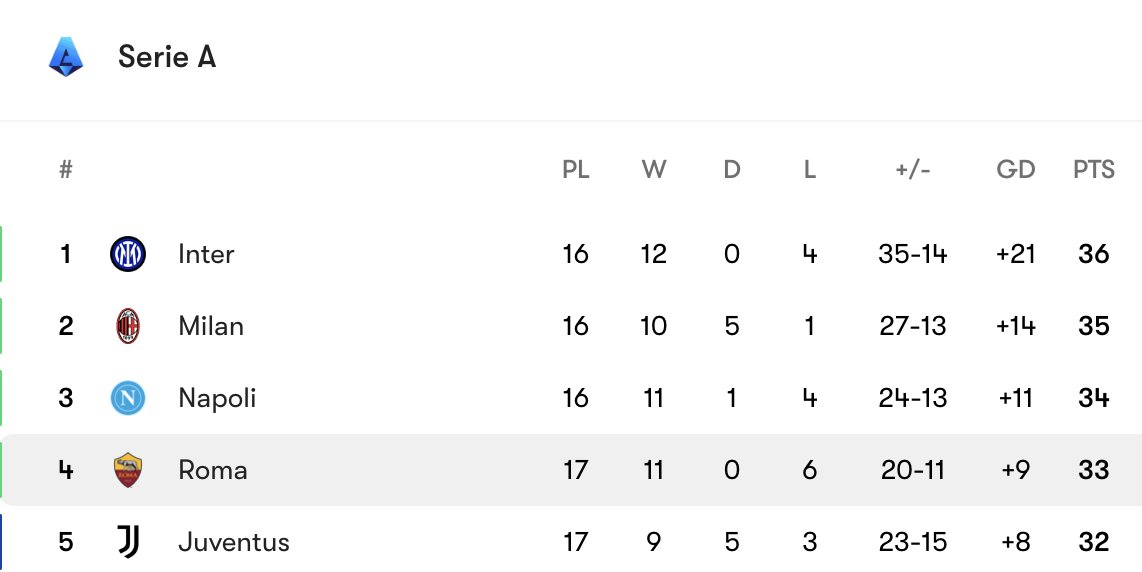
The Serie A season structure is a marathon of consistency. Since the 2004-05 season, 20 clubs have faced each other twice, once at home, once away, for a total of 38 matches per team. The points system is standard: three for a win, one for a draw, zero for a loss. The team with the most points after 38 rounds is crowned Campione d’Italia.
Tie-breakers are where the drama hides. If teams are level on points, the head-to-head record between them is the first decider (points, then goal difference in those games). Only if that is equal does the overall goal difference, then total goals scored, come into play. This rule makes every direct clash a potential title decider, even in April.
The season’s true stakes extend beyond the trophy. The top four finishers (positions can vary based on Italy’s UEFA coefficient) enter the UEFA Champions League group stage. The next slots typically grant entry to the UEFA Europa League, and a third tier European competition, the UEFA Europa Conference League, offers another route. Meanwhile, at the bottom, the pressure is existential. The last three teams are relegated to Serie B. Their places are taken by the top three from that division, maintaining the promotion and relegation models that define European football.
| Position | Prize / Consequence |
|---|---|
| 1st | Serie A Champion. Wins Coppa Campioni d’Italia, wears scudetto, qualifies for UEFA Champions League. |
| 2nd–4th | Qualification for UEFA Champions League group stage (exact number depends on UEFA coefficients). |
| 5th–6th | Qualification for UEFA Europa League. |
| 7th | Possible qualification for UEFA Europa Conference League. |
| 18th–20th | Relegation to Serie B. |
TL;DR: 20 teams play 38 games; points decide the champion who wears the scudetto; top four reach the Champions League; bottom three go down to Serie B.
A League Forged in History: From 1898 to Enilive
The history isn’t a straight line. The Italian Football Championship started in 1898, but it was a regional playoff format. The modern, national round-robin Serie A season format we know was born in 1929. The Italian Football Federation (FIGC) controversially considers those early championships as official, which is why total title counts include them. Juventus’s record 36 scudetti include those pre-1929 wins.
The league has constantly evolved in size. It has ranged from 16 to 21 clubs before settling at 20. A pivotal, less-discussed moment came in 2009. Serie A clubs split from Serie B to form their own governing body, Lega Serie A, primarily to gain control over their lucrative television rights. This financial divorce reshaped the league’s economic power and is key to understanding its modern operations.
Another historical layer is in the names. Internazionale, upon winning their first Serie A title in the 1929-30 season, were actually called Ambrosiana due to fascist-era policies forbidding foreign names. These details matter. They explain club identities and fan passions that still run hot today. For a deeper look at how another major league developed its own distinct identity, you can explore the history and structure of the French top-tier league.
The Clubs, Records, and Icons
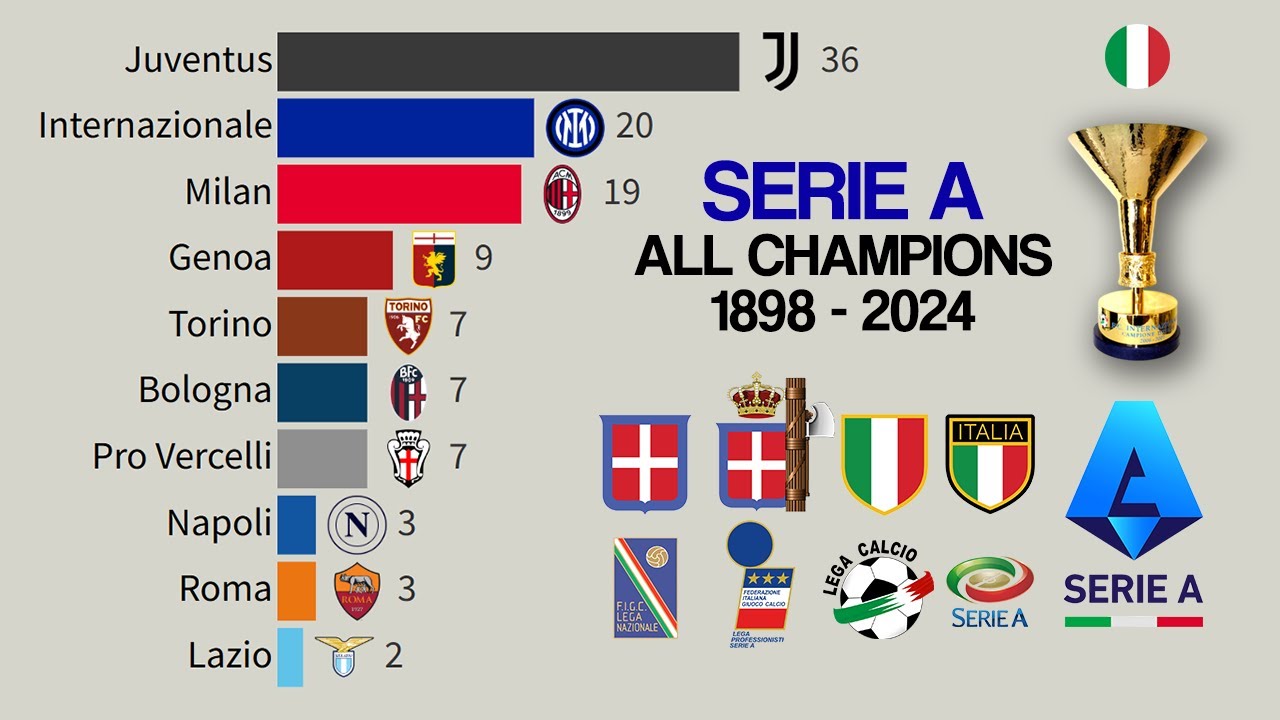
The narrative of Serie A is written by its clubs. Juventus stands alone with 36 recognized championships, a dynasty built on periods of domestic dominance. Their rivals, Inter Milan and AC Milan, follow with 19 and 18 titles respectively, creating the fierce Derby della Madonnina that divides Milan. AS Roma, SS Lazio, SSC Napoli, and Fiorentina add the regional flavor and passionate fanbases that make the league a nationwide obsession.
The records are monuments to longevity and excellence. Silvio Piola’s 274 goals, scored between 1929 and 1954, remains the untouchable benchmark for strikers. In goal, Gianluigi Buffon’s 657 appearances are a testament to a two-decade career of elite consistency at Parma and Juventus. These aren’t just statistics; they are legends etched into the league’s fabric.
Common mistake: Comparing Serie A title counts without the pre-1929 context, you’ll start arguments with fans who count differently. Juventus’s 36 includes early championships; Inter’s 19 starts from the 1929-30 season.
Current success is measured by the crest on the chest. The defending champion earns the right to wear the scudetto, a shield adorned with the Italian tricolor, on their jersey for the entire following season. It’s a badge of honor and a target. The physical trophy, the Coppa Campioni d’Italia, has been awarded since 1961. Beyond the domestic glory, the ultimate goal for the elite is consistent performance in the premier European competition, where Serie A clubs have a storied history.
Serie A’s Place in European and World Football
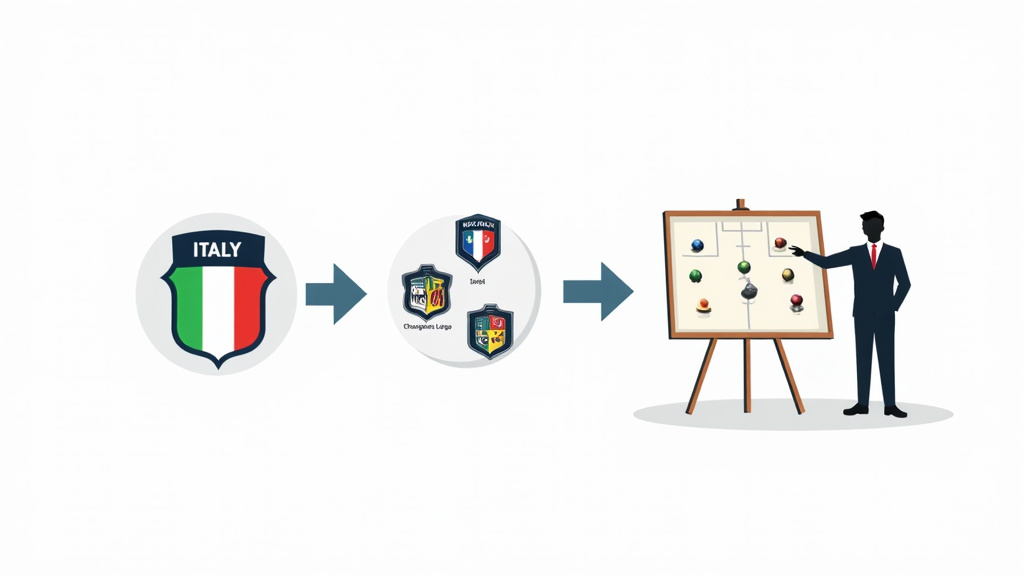
Serie A’s strength is quantified by its UEFA coefficient, which determines how many clubs it sends to the Champions League format and other European tournaments. Italy has historically been a top-three nation, often providing four Champions League spots. This performance is bolstered by the fact that Italian clubs have been European Cup finalists 27 times, more than any other nation.
The league’s global reputation is built on this European pedigree and its distinct style. In the 1990s, it was considered the strongest league in the world, attracting the planet’s best players with its financial power and prestige. While the financial landscape has shifted, its tactical identity remains a major draw. Aspiring coaches and analytically minded fans study Serie A for its defensive organization and strategic nuances often glossed over in more end-to-end leagues.
This stylistic contrast is sharp when compared to other major leagues. The La Liga structure is often noted for its technical emphasis and possession-based play. The English league pyramid is defined by physical intensity, pace, and competitive depth. Serie A sits between them, offering a slower, more deliberate game where a single tactical adjustment can decide a match. Understanding these league structural differences is key for any fan following the global game. The battle for continental spots also creates a direct link to the secondary European tournament, the Europa League, which offers a crucial path back to the top table for ambitious clubs.
Frequently Asked Questions
How is Serie A different from the Premier League?
The difference is philosophical. The Premier League prioritizes pace, physicality, and verticality, end-to-end action. Serie A is slower, more tactical, and values defensive solidity above all. A technical player who can’t handle the Premier League’s speed might thrive in Serie A’s more calculated environment, and vice-versa. The financial models and promotion and relegation models also differ, with England’s pyramid being uniquely deep.
What does ‘scudetto’ mean?
Scudetto means “little shield” in Italian. It’s the small shield featuring the Italian tricolor that the defending Serie A champion wears on their kit throughout the following season. It’s a unique and proud tradition of visual recognition for the titleholder.
Which club has won Serie A the most?
Juventus holds the record with 36 officially recognized Italian championships. This total includes titles won before the league’s reorganization into a national round-robin format in 1929. AC Milan and Inter Milan are next, with 19 and 18 titles respectively in the post-1929 era.
How does promotion and relegation work with Serie B?
At the end of each Serie A season, the three teams that finish in 18th, 19th, and 20th place are automatically relegated to Serie B. They are replaced by the top three teams from Serie B. This system of movement, similar to the Spanish promotion system, ensures competitive turnover and is a core feature of most European professional soccer leagues.
What are the other competitions organized by Lega Serie A?
Beyond the league itself, Lega Serie A also organizes the Coppa Italia (Italy’s main domestic cup), the Supercoppa Italiana (a season-opening match between the league champion and cup winner), and the top-tier youth competitions (Campionato Primavera 1). This makes it the central organizing body for the top level of the Italian club game.
The Bottom Line
Serie A is a league of depth, not just breadth. Its identity is a blend of historical weight, tactical sophistication, and relentless domestic rivalry. Understanding it means looking past the table to see the scudetto on a jersey, recognizing the significance of a well-drilled 1-0 win, and knowing why a mid-table game in Italy feels like a high-stakes puzzle. It’s a competition where the mind games are as important as the physical ones.
Follow a full season, and you won’t just see a champion crowned. You’ll witness the brutal reality of relegation, the financial lifeline of European qualification, and the constant strategic evolution that makes it a masterclass for any serious football fan. Start with the giants, but pay attention to the rest, that’s where the league’s true character, and its future, is often forged.
I come from the “soccer heart” of Germany, the Ruhrpott. I have played, trained and followed soccer all my life and am a big fan of FC Schalke 04. I also enjoy following international soccer extensively.