How Semi-Automated Offside Technology Uses Full-Body Scans
Semi-automated offside at World Cup 2026 uses full-body scans to create a precise AI avatar for each player, tracking their exact limbs 50 times per second. This data syncs with a sensor in the ball to generate offside alerts and clear 3D animations for VAR review in seconds, not minutes.
Most fans think the generic, stick-figure avatars from 2022 are the final word. They are not. The real leap for 2026 is moving from a standardized model to a hyper-personalized digital twin. This changes everything from millimeter-level accuracy to how a linesman feels the game.
Here is how FIFA’s most advanced officiating system works, the massive logistics behind it, and what it actually means for the teams on the pitch.
Key Takeaways
- Every one of the 1,248 players gets a full-body scan to create a unique 3D AI avatar, replacing the generic models used in 2022.
- The core tracking technology remains Hawk-Eye cameras and a sensor-laden ball, but the new avatars provide anatomical precision for drawing offside lines.
- Creating a single avatar takes about three hours, requiring a fleet of 28 scanning stations deployed across team base camps.
- The system is still semi-automated; it generates an alert and an animation, but a human VAR official must confirm the decision before the referee acts.
- This microscopic accuracy will force teams to recalibrate the offside trap, as the margin for error shrinks to virtually zero.
How the New Offside System Actually Works
Forget the stick figures. The 2026 system builds on a proven technical spine but adds a layer of biological truth. The hardware in the stadiums is largely unchanged from 2022.
The semi-automated offside system uses approximately 30 specialized Hawk-Eye cameras mounted under the stadium roof. These track 29 specific data points on each player’s body, knees, ankles, shoulders, elbows, at a rate of 50 frames per second. A Kinexon sensor embedded in the Adidas match ball transmits its position 500 times per second, timestamping the exact moment of contact.
That tracking data now gets mapped onto a perfect digital copy of the player. This is the fundamental upgrade. When the system detects a potential offside, it doesn’t compare two blobs on a screen. It compares the precise position of Kylian Mbappé’s outstretched knee, as defined by his personal 3D model, to the position of the last defender’s trailing shoulder.
The connected ball technology is non-negotiable. Without that 500Hz signal, you cannot definitively pinpoint the exact frame of the pass. Relying solely on camera frames introduces a blur of 20 milliseconds, enough time for a sprinting attacker to gain a decisive few centimeters.
TL;DR: The system tracks real-time skeletal data, maps it onto a player’s exact 3D avatar, and uses a ball sensor to pinpoint the pass moment, creating an offside call with anatomical precision.
The “Digital Twin”: Why a Full-Body Scan Beats a Generic Avatar

Photo: Prime Minister’s Office / Wikimedia Commons / GODL-India
The generic avatar was a compromise. It worked, but it averaged body proportions. For 95% of offside calls, that was fine. For the remaining 5%, the tight, game-deciding margins, it introduced a small but real error margin.

FIFA’s new partner, Lenovo, is building a biometric library. Each player stands in a scanning booth for about one second. The system uses volumetric capture, reconstructing the body from millions of data points. It is not a photograph. It is a measurable 3D model.
| Aspect | 2022 Qatar World Cup | 2026 North America World Cup |
|---|---|---|
| Player Model | Generic, averaged skeletal avatar | Personalized AI “Digital Twin” from full-body scan |
| Scanning Process | None | 1-second scan per player, 3-hour total processing |
| Key Advantage | Speed over manual VAR | Anatomical accuracy for tight calls |
| Visual Output | Simplified stick-figure animation | Realistic 3D reconstruction with kit details |
The AI then segments this model. It separates skin, hair, boots, and the kit. This allows for a stunning visual effect, the broadcast animation can show the player in their correct kit, with their correct number, even if they change clubs or get a new haircut after the scan. More importantly, it isolates the body parts that matter for the law: any part of the head, body, or feet that can legally play the ball.
This eliminates the “but his shoulder was leaning” debates. The line drawn on screen is not an estimate. It is drawn from the edge of the player’s own scanned shoulder.
The Logistical Marathon: Scanning 1,248 Players

Photo: N509FZ / Wikimedia Commons / CC BY-SA 4.0
The scale of this operation is wild. One thousand two hundred forty-eight players. Each scan takes one second. The processing, rendering, and quality assurance for a single digital twin takes about three hours.
.jpg)
Lenovo is deploying 28 mobile scanning stations. They will not be at the stadiums. They will be stationed at the team base camps and official hotels. Imagine the scheduling. A team arrives, and within their first 48 hours, all 26 players must cycle through the scanner. It becomes part of the pre-tournament admin, like picking up accreditation.
What happens if a player gets injured and is replaced after the squad deadline? The replacement must be scanned immediately upon arrival. The system’s integrity depends on having every possible participant in the database. This logistical layer is a silent, massive undertaking that most articles gloss over.
Common mistake: Thinking the scan is just for TV graphics, the 3-hour processing window is for building the biomechanical model that the offside algorithm uses to calculate positions. Skip the quality checks, and the model’s limb lengths could be off by centimeters, making it worse than a generic avatar.
From Alert to Animation: The VAR’s New Visual Toolbox
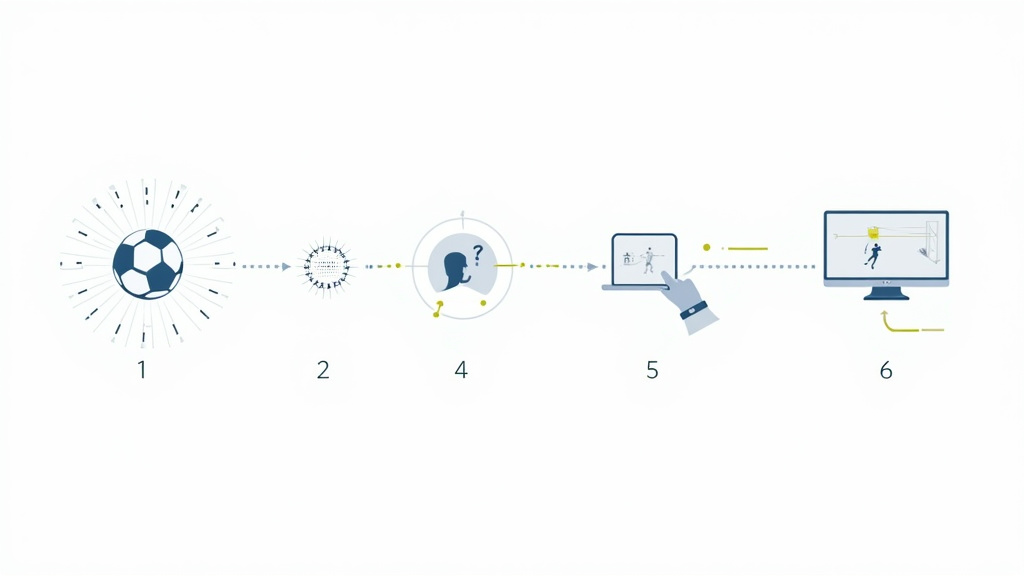
The technology does not make the call. This is the most persistent misconception. The system is an assistant, not a judge.
Here is the sequence when a potential offside occurs:
1. The tracking data and ball sensor signal are processed in real time.
2. The AI detects an attacker in an offside position at the moment the ball is played.
3. An automatic alert, a beep and a visual cue, is sent to the Video Operation Room.
4. The VAR team sees the alert and calls up the generated 3D animation on their monitor.
5. The VAR reviews the animation, checks for any interfering phases of play, and confirms the decision.
6. The VAR then communicates the final decision to the on-field referee.
The animation is the game-changer for the officials themselves. Instead of staring at frozen camera frames and manually drawing lines, they are presented with a clear, rotatable 3D scene. It shows the exact moment of the pass, with the offside line drawn between the relevant body parts of the attacker and second-last defender.
This visual clarity should cut the average decision time from several minutes to under 30 seconds. It turns a forensic investigation into a quick verification.
How This Changes Team Strategy and the Offside Trap
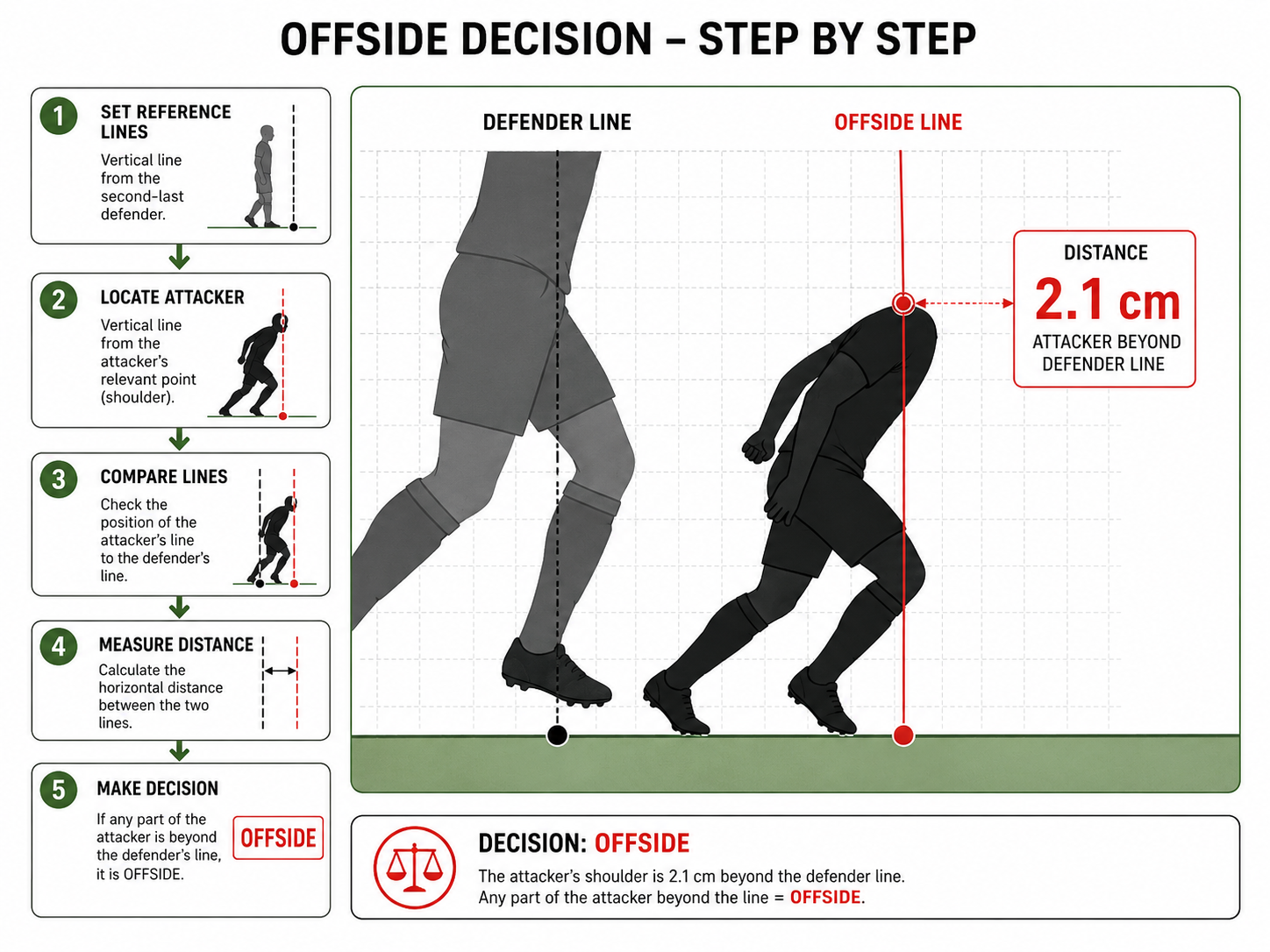
Defensive coaches live by the offside trap. The entire tactic is based on synchronized movement and exploiting the human officials’ limitations. A linesman’s eye must track the ball, the passer, and the runner all at once. It is an impossible task.
The new system removes that limitation. The trap must now be perfect at a microscopic, biomechanical level. The difference between being onside and offside is no longer a step, it could be the lean of a torso.
- Tighter timing: Defenders can hold their line longer, knowing the technology will catch any attacker who strays a millimeter too early.
- Riskier traps: Teams might be more aggressive, squeezing the play into a higher line because the reward (a free kick) is more guaranteed.
- Attacker adaptation: Forwards will need to time their runs with robotic precision. The “burst from a standing start” becomes more valuable than a long, arcing run from deep.
The psychological impact is real. A defender who trusts the technology will hold the line. One who doesn’t will drop off. That half-second of doubt creates space. The very presence of this system will reshape defensive shapes before a single pass is made.
Training the Officials: More Than Just a New Screen
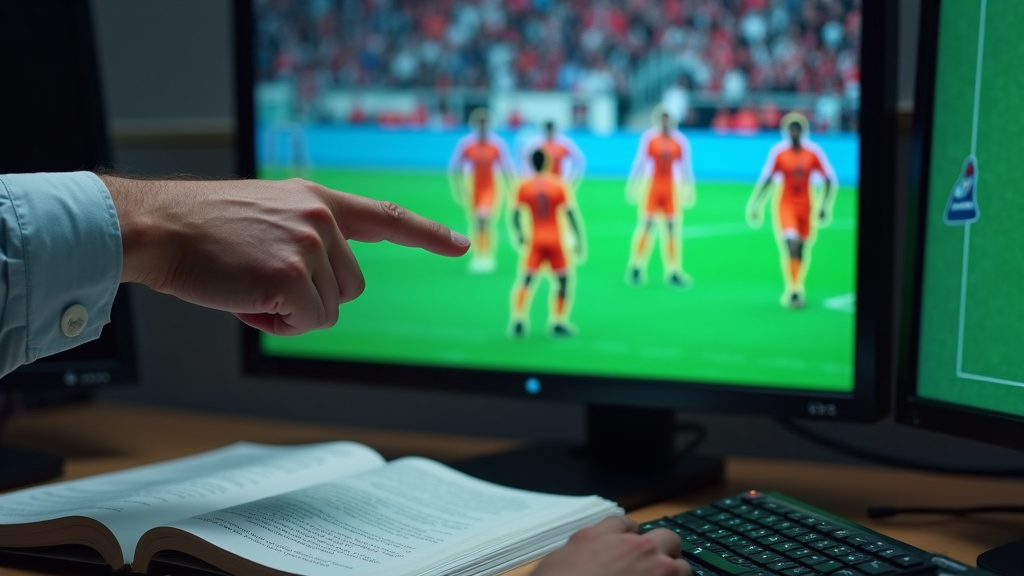
Introducing a new tool to the VAR room is not plug-and-play. The officials for 2026 are already undergoing specific training modules focused on this technology.
They are not learning how it works technically. They are learning how to use it. The training focuses on two things: trust and interpretation. Officials must learn to trust the animation as an accurate representation of reality, not a cartoon. They also must remember that the animation shows position; they still must judge offside offense.
“I won’t recommend relying solely on the animation for judging involvement in active play,” one experienced VAR official noted in a recent FIFA seminar. “The 3D model tells you where the player was. It doesn’t tell you if he was blocking the goalkeeper’s line of sight. That’s still our job.”
This is a critical nuance. The system solves the “where” with insane accuracy. The “what happens next”, was he interfering?, remains a human judgment call based on the existing laws of the game. The expanded scope of VAR, including reviews for corner kick offenses, adds more layers for these officials to manage.
The Fan Experience: Clearer Graphics and New Angles
For viewers, the payoff is visual. The clunky, two-line graphic from early VAR is gone. The 2022 stick figure was a step up. The 2026 broadcast will show a smooth, realistic 3D reconstruction of the moment.
You will see the players involved, in their kits, from any angle the director chooses. The offside line will be drawn between the specific body parts in question. The decision becomes a story you can see, not a mystery you have to accept.
Furthermore, FIFA has confirmed the use of referee body cameras with AI-powered stabilization. For the first time, fans will get a first-person view of the official’s perspective during key moments, adding another layer of transparency, or drama, to the broadcast.
These technological advancements in officiating are part of a broader push to make the game’s administration as cutting-edge as the play itself, fitting for the unprecedented scale of the expanded 48-team structure in 2026.
Frequently Asked Questions
Does the AI make the final offside call at World Cup 2026?
No. The system is “semi-automated.” It provides an alert and generates an animation for the video assistant referee (VAR). The human VAR official must review that information and confirm the decision before it is relayed to the on-field referee, who makes the final call.
What happens if a player is substituted in after the scanning process?
Replacement players will be scanned as soon as they arrive at the tournament. Lenovo’s mobile scanning stations will remain operational at team bases to accommodate any last-minute changes to squad lists, ensuring the digital twin database is complete.
Will this technology be used in leagues like the Premier League or Champions League?
Not immediately. The infrastructure cost is significant. FIFA is deploying it for the World Cup as a showcase. Its adoption by domestic leagues will depend on cost, feasibility studies, and decisions by bodies like UEFA and individual football associations. The core VAR protocols are being updated globally, but the full-body scan element is a World Cup-first.
How does the “Digital Twin” handle a player changing hairstyles or kits?
The AI model separates the player’s body from their kit, hair, and accessories. The kit and hair are treated as separate layers that can be updated digitally without re-scanning the underlying body model. The functional offside calculation uses only the immutable body geometry.
Can the system mistake another object for the ball?
No. The offside calculation relies on the official match ball embedded with a Kinexon sensor. The system only registers the precise moment this specific ball is struck. Other balls on the pitch or objects are ignored by the tracking system.
The Bottom Line
The semi-automated offside technology for 2026 is an evolution, not a revolution. It takes the capable system from 2022 and injects it with a dose of biological reality through full-body scans. The goal is not to remove humans, but to arm them with perfect information.
The result should be fewer controversies about line-drawing and faster decisions. But it also ushers in a new era of precision that will filter down from the World Cup, eventually changing how the offside trap is coached and executed at all levels. The margin for error is gone. The game just got a little more exact.

I come from the “soccer heart” of Germany, the Ruhrpott. I have played, trained and followed soccer all my life and am a big fan of FC Schalke 04. I also enjoy following international soccer extensively.