Soccer’s Offside Trap Explained: A Risky Defensive Maneuver
The offside trap is a high-risk, high-reward defensive maneuver in soccer. It involves the entire back line stepping forward in unison just before an opponent’s pass, placing an attacking player in an offside position to force a stoppage and regain possession without a physical challenge.
The offside trap is a coordinated defensive tactic where a backline moves forward together just before an opponent’s pass, aiming to place an attacking player in an offside position. It requires perfect timing and communication from the entire defensive unit. The goal is to force a stoppage and regain possession without a tackle.
Most people think the trap is about catching a lazy forward napping. The real challenge is getting four defenders to move as one organism in the half-second before the pass. One player out of sync turns a clever tactical win into a catastrophic one-on-one with the goalkeeper.
This guide breaks down the mechanics, the psychology, and the specific drills that make it work. We’ll cover why teams use it, how to beat it, and the one mistake that guarantees a goal against.
Key Takeaways
- The offside trap is a proactive, high-risk defensive strategy, not a passive rule. It forces the offside call through coordinated movement.
- Its success depends entirely on unison movement and communication. A single defender stepping late or holding the line keeps an attacker onside.
- The introduction of Video Assistant Referee (VAR) technology has made the tactic more precise but also more punishing for microscopic errors.
- Effective traps require a specific visual trigger, like the passer loading their foot, not the pass itself.
- Beating the trap involves timed runs from deep positions or clever diagonal movements that disrupt the defensive line’s coordination.
How the Offside Trap Works
The trap isn’t magic. It’s a rehearsed physical reaction to a specific visual cue on the field. The entire backline, usually the center-backs and full-backs, must act as a single unit.
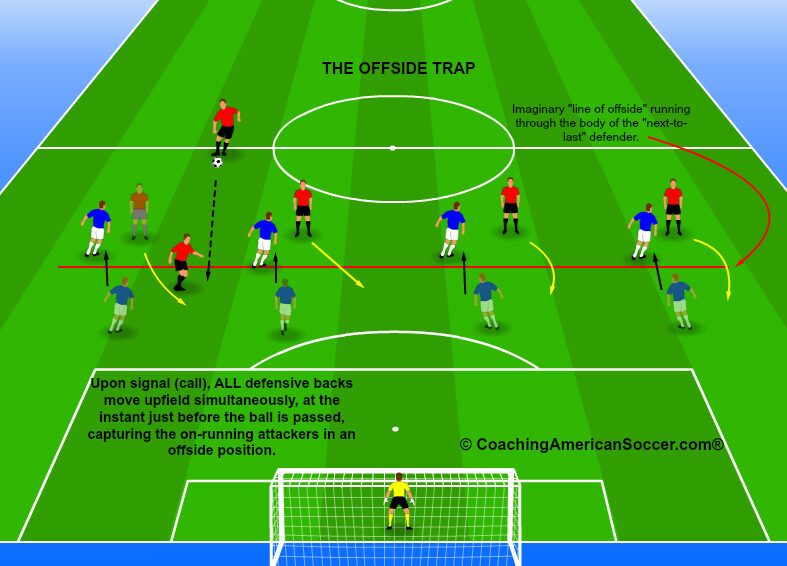
The moment comes when an opposing midfielder or defender prepares to play a through ball behind your defense. As the passer lifts their head and loads their passing foot, that’s the trigger. The defensive line takes two or three synchronized steps forward. This moves the offside line, an imaginary plane across the field level with the second-last defender, up the pitch. If the pass is then played toward an attacker who was level before the step, they are now in an offside position.
A successful offside trap hinges on the defensive line moving forward as a single unit at the exact moment the passer commits to the through ball, leaving the attacker in an offside position when the ball is played.
The basic offside rule is the foundation. The trap manipulates that rule for defensive gain. For a visual breakdown of where players can legally position themselves, our guide on offside rule diagrams is essential.
TL;DR: Watch the passer’s eyes and hips. The instant they commit to the through ball, the entire back four steps up together. Hesitation by one defender ruins it.
Why Teams Use the Offside Trap: The Tactical Payoff
Coaches don’t implement this high-wire act for fun. The rewards, when it works, are significant. It’s a core component of many modern defensive tactics.
First, it neutralizes speed. You don’t need a defender who can out-sprint a lightning-fast forward. You just need him to be in an offside position when the ball arrives. Second, it condenses the playing area. By pushing your defensive line 20 yards into the opponent’s half, you squeeze the space their midfield has to operate. This forces mistakes and allows for a higher press.
Third, it’s a psychological weapon. Forwards who get caught offside three times in a half start second-guessing their runs. They hesitate, they check their shoulder, they lose that half-step of conviction. That hesitation is a win for the defense before a pass is even made.
| Tactical Benefit | How It Works | Risk If Misapplied |
|---|---|---|
| Neutralizes Pace | Renders a fast attacker irrelevant by positioning. | A mistimed step gives that attacker a 10-yard head start on a breakaway. |
| Compresses Space | Pushes the defensive line up, shrinking the opponent’s midfield. | Leaves a massive gap behind the defense for a chipped ball or a runner from deep. |
| Creates Turnovers | Wins possession via a free kick without a tackle. | A failed trap surrenders possession in the most dangerous area of the pitch. |
| Psychological Edge | Frustrates attackers, causing hesitant runs. | Can embolden attackers if they successfully beat the trap repeatedly. |
The trap fits certain formation strategies better than others. A flat-back-four in a 4-4-2 is the classic setup, but it’s also central to the high-pressing systems used in a 3-4-3 formation.
The Anatomy of a Failed Trap: Common Mistakes
The difference between a masterclass and a disaster is about two yards. One defender’s doubt can cost a goal.
Common mistake: The center-back shouts “step!” but the left full-back is watching the winger’s feet instead of the line, the winger stays onside, collects the ball, and is in on goal before the keeper can react.
The most frequent error is a lack of synchronization. One defender, often a full-back preoccupied with a direct opponent, holds their position or steps a fraction late. That defender becomes the “second-last defender,” playing everyone onside. There’s no recovery from that.
Another critical flaw is poor body shape. Defenders must be side-on, knees slightly bent, ready to spring forward and sprint back. A defender leaning back or standing flat-footed cannot execute the explosive step forward and will be slow to recover if the trap is beaten. This is non-negotiable.
A third mistake is using the trap too often or in the wrong areas. Deploying it in your own defensive third is suicidal. The recommended area is near the halfway line, where there’s space behind to recover if it fails. Using it inside your own penalty box is a recipe for a penalty or a tap-in.
TL;DR: The trap fails when one defender breaks the line, when body positioning is passive, or when it’s used too close to your own goal. All three errors are coaching issues.
Coaching the Trap: Drills and Communication
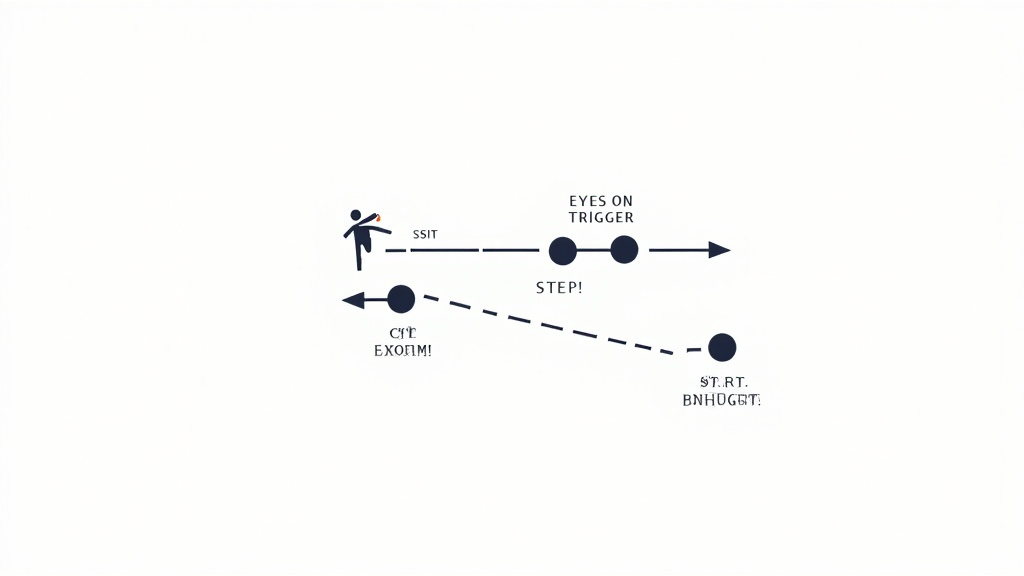
You cannot install an offside trap by talking about it. You build it through repetitive, pressure-based drills. Start without attackers.
Set up a back four against two passive midfielders and a coach with a ball. The coach is the “trigger.” On the coach’s visual cue, a raised head, a specific touch, the back four steps up in unison. We do this for 10 minutes, just stepping and holding. The focus is on peripheral vision and footwork.
Then add two passive attackers. The drill repeats, but now the attackers make gentle runs. The defense must step up while tracking the runners in their peripheral vision. The next progression is live: the attackers now try to time their runs to stay onside. Finally, add full pressure with a midfield unit trying to play the through ball.
Communication is not democratic. One player, usually the central defender on the side of the play, is the general. They yell “step!” or “hold!” or “drop!”. The others listen and obey. There is no debate in the moment. This chain of command is as vital as the physical movement.
I lost a cup final in under-19s because our right-back was a quiet kid. He saw the trigger, thought about it, and stepped half a second late. Their left winger, who was three yards offside when the pass was struck, was played onside by that hesitation. He scored. We never let communication be optional again.
Integrating the trap into your broader coaching tactics means linking it to your midfield press. The trap is the last line of a coordinated defensive squeeze.
How to Beat the Offside Trap
As a forward, beating the trap is about deception and timing. It’s a chess match. The most effective method is the run from deep. Instead of starting high alongside the defenders, you drop into a midfield position, then accelerate from behind the defensive line as the pass is played. You’re already moving at speed when they step up.
Another method is the diagonal run. Start wide, in line with the full-back, then arc your run inward and toward goal as the pass is played. This curved path makes it harder for the assistant referee to judge the exact moment of the pass relative to your position. It also often pulls one defender slightly out of the line, breaking their shape.
Watching for a “trapper” is key. Identify which defender is the vocal leader organizing the line. If you can distract or occupy that player, you disrupt the entire unit’s timing. A simple decoy run from a teammate can freeze that leader for a split second.
TL;DR: Attackers beat the trap with late, angled runs from deep positions, targeting the communication link in the defensive line.
The Referee’s Role and VAR’s Impact
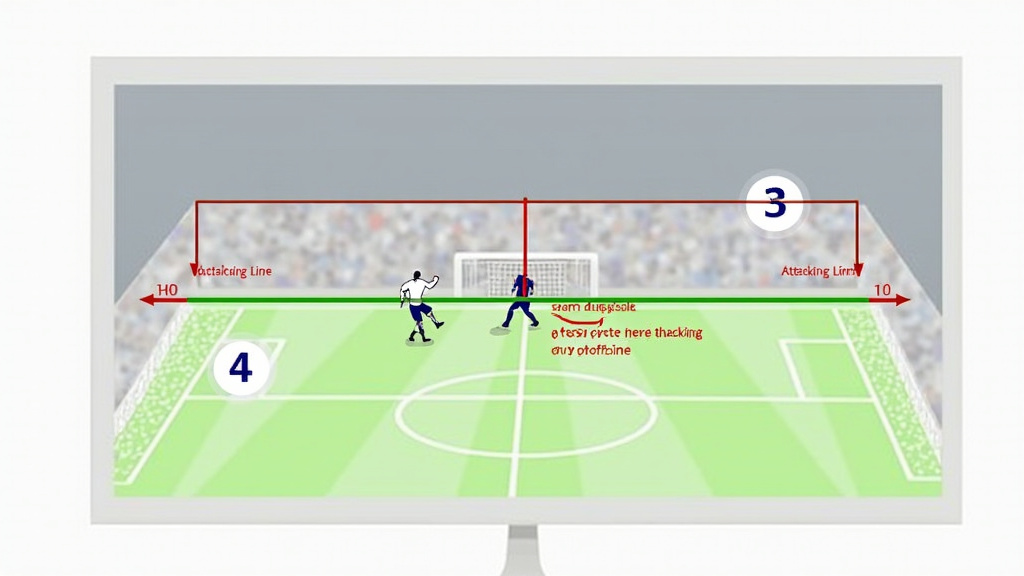
The assistant referee’s flag dictates everything. Their positioning is parallel to the second-last defender. In the modern game, they are instructed to delay the flag if a goal-scoring opportunity is developing, the “wait and see” approach. This means a forward might appear offside, play continues, score, and then the flag goes up for a VAR review.
That delay changes the defender’s job. You cannot assume the whistle will blow. You must play to the whistle. If the trap is sprung and the flag stays down, you must immediately transition to recovery defending. This is the hardest part to coach.
VAR has made the offside line a digital, millimeter-precise measurement. The official Cambridge English dictionary entry defines the tactic, but VAR defines its modern execution. It rewards perfectly executed traps and ruthlessly punishes any error. Defenders can no longer rely on the benefit of the doubt from a human linesman. The line is absolute.
This technological precision has made the trap a higher-stakes gamble. Teams that master it, like Liverpool under Jurgen Klopp, gain a massive defensive weapon. Teams that are sloppy get exposed on television for everyone to see the exact moment a heel or a shoulder was offside.
Formations and the Offside Trap
Not every defensive shape is suited to a high line and trap. The system demands a flat, connected backline.
The traditional 4-4-2 formation is ideal. The back four is naturally flat, and the two banks of four make it easier to compress space ahead of them. A 5-3-2 formation with a back three is riskier. The wider center-backs have more ground to cover laterally, making unison movement harder. However, the extra central defender provides cover if the trap is beaten.
Modern three-at-the-back systems like the 3-5-2 use the trap differently. The three central defenders hold the line, while the wing-backs push high to compress space. The risk is the channel between the wide center-back and the wing-back, which is vulnerable to diagonal runs.
| Formation | Suitability for Trap | Key Consideration |
|---|---|---|
| 4-4-2 | High. Flat back four is classic. | Requires disciplined midfielders to press and protect the space in front. |
| 4-3-3 | Moderate to High. | Full-backs must be extremely athletic to recover if the high line is breached. |
| 3-5-2 / 5-3-2 | Moderate. | The three central defenders must be perfectly synchronized; wing-backs must recover quickly. |
| 3-4-3 | Low to Moderate. | The high defensive line is aggressive, but the system is so attacking that recovery runs are long and exhausting. |
Choosing to employ the trap is a fundamental part of your tactical formations decision. It commits your entire team to a specific, aggressive defensive style.
Frequently Asked Questions
Can you be offside from a corner kick?
No. According to Law 11 of the game, a player cannot be offside directly from a corner kick. This is one of the key scenarios not offside in soccer. The offside rule is reset on set pieces like corners, goal kicks, and throw-ins.
What’s the difference between a high line and an offside trap?
high line is a defensive position, standing far up the pitch. The offside trap is an action taken from that high line. A team can play a high line passively, defending space, and only use the trap selectively when they see the trigger.
Who is responsible for calling the step?
Typically, the central defender on the side of the field where the ball is located. This player has the best view of the passer, the ball, and the attacking runners. The other defenders must trust and react to their call instantly.
Has VAR killed the offside trap?
No. It has refined it. VAR removes human error from the offside decision, which means a perfectly executed trap is always rewarded. It has eliminated the “tight call” that might have gone in the attacker’s favor. However, it also means there is zero margin for error, a toe or shoulder past the line will be caught.
What’s the best way to practice the offside trap?
Start without opposition, drilling the synchronized step on a visual trigger. Then add passive attackers, then active attackers. Finally, integrate it into small-sided games with a focus on the midfield unit triggering the press that forces the long pass the trap is designed to catch.
The Bottom Line
The offside trap is the ultimate test of defensive coordination. It turns a defensive rule into an offensive weapon, but the margin for error is measured in inches and tenths of a second. When it works, it looks effortless, a simple raised flag stops a dangerous attack. When it fails, it’s a highlight-reel goal against you.
Mastery requires more than understanding the offside rule definition. It demands drilled synchronization, clear communication, and the nerve to hold your position as a forward sprints past you, trusting your teammates and the referee’s assistant. It’s not a tactic for every team or every game. But for those who perfect it, it’s a defining part of their identity, a way to control the game without ever touching the ball.

I come from the “soccer heart” of Germany, the Ruhrpott. I have played, trained and followed soccer all my life and am a big fan of FC Schalke 04. I also enjoy following international soccer extensively.