Ranking the Best World Cup Jerseys: Our Top Picks Revealed
To rank the best 2026 World Cup jerseys, you weigh design audacity against wearability, check for a meaningful story behind the pattern, and see if the manufacturer played it safe or took a real swing. The top-tier kits, like Chile’s floral away shirt or France’s copper-accented home, do all three. The worst ones fail at least two.
Most ranking lists just slap jerseys in order based on one person’s taste. They miss the why. They don’t tell you that a clean Japan away kit will still look sharp in five years, or that a Croatia away shirt with a faint checkerboard is a marketing misfire you’ll regret buying by October. This isn’t about pretty colors. It’s about which shirt you’ll actually wear after the tournament ends.
This guide breaks down the 2026 kits by the criteria that matter: bold design, cultural resonance, and everyday versatility. We’ll cover the instant classics that are selling out, the solid mid-tier options, and the kits you should avoid unless you’re a die-hard fan of that specific nation.
Key Takeaways
- The best 2026 jerseys tell a visual story. Chile’s away kit uses jagged lines and floral accents to map the Atacama Desert onto fabric.
- Streetwear crossover is the new benchmark. Kits from Curacao (simple retro Adidas) and Japan (minimalist) are designed to be worn anywhere, not just in the stands.
- Manufacturer trends are clear. Adidas is leaning into intricate patterns and cultural homages. Nike is focusing on player input and modernized classics. Puma is experimenting with placement, for better or worse.
- Some kits are already selling out. High-demand designs like the France home jersey with its “FFF” copper pattern are going fast.
- Price doesn’t always equal quality. The most expensive “player issue” versions often use the same design as the fan replica, just with different materials.
What Makes a World Cup Jersey Great?
A great tournament jersey does three things at once. It looks striking on television under stadium lights. It honors something about the nation or team wearing it. And crucially, it works as a piece of clothing you’d choose to wear on a Tuesday. That last point is the real separator now.
A jersey’s lifespan used to be four years, one World Cup cycle. Now, with streetwear and vintage markets booming, a kit’s design is judged by its longevity off the pitch. The 2026 releases show manufacturers finally designing with that second life in mind.
The visual hook is the first test. Does it stop you scrolling? Chile’s away kit does this with a bold, abstract floral pattern. France’s home kit does it with a subtle, all-over “FFF” monogram and copper accents inspired by the Statue of Liberty. These aren’t just shirts. They are cultural artifacts.
Then there’s the story. Is there a reason for the pattern beyond aesthetics? The USA home kit’s wavy red stripes, born from direct player feedback after the bland 2022 designs, have a narrative. Mexico’s home kit is a direct, modern homage to their iconic 1998 Aztec-inspired shirt. That story adds value.
Finally, would you wear it to the pub or the park? This is where many technically interesting kits fall apart. A jersey that’s too busy, uses clashing colors, or has a texture that looks cheap in daylight fails this test. The best 2026 designs pass all three.
TL;DR: A top-tier World Cup jersey needs a bold visual, a good story, and everyday wearability. It’s a tall order, and most kits only nail one or two.
The Top Tier: Instant Classics
These are the kits that will sell out first and define the 2026 tournament visually. They are the conversation starters.
Chile Away: The Atacama on a Shirt
Adidas did something special here. The jagged lines cutting across the torso are a topographic map of the Atacama Desert’s valleys. The floral accents are native desert blooms. It’s audacious, geographically specific, and unlike any other kit in the tournament. The color palette, deep red, white, and that specific shade of Chilean blue, is perfect. It’s an away kit that outshines most home kits.
Common mistake: Buying a visually loud kit without considering fabric. The Chile away shirt uses a textured, printed pattern that can feel heavier than standard polyester. In direct summer sun, it won’t breathe as well as a plain knit.
France Home: Liberty’s Torch
The French Football Federation pattern is subtle from a distance but gorgeous up close. The copper accent color on the collar, cuffs, and badge is a direct nod to the oxidized copper of the Statue of Liberty, a gift from France. It’s a clever, understated link between the two nations hosting the 2026 tournament. The collar itself is a classic polo style, which immediately elevates it from a sportswear tee to something you could pair with chinos. This is Adidas understanding assignment.
Mexico Home: The 1998 Redux
When a manufacturer references a beloved classic, they walk a tightrope. Get it wrong, and it’s a cheap knockoff. Get it right, and you print money. Adidas got it right. The Aztec-inspired motif is cleaner and more geometric than the 1998 original, but the spirit is identical. The green is richer. The only misstep, echoed by many fans, is the duplicated badge in the center of the chest. It feels like a corporate mandate rather than a design choice. Even with that, it’s a top-three shirt.
| Jersey | Manufacturer | Key Feature | Why It’s Top Tier |
|---|---|---|---|
| Chile Away | Adidas | Atacama Desert topographic & floral pattern | Unmatched artistic ambition and cultural specificity. |
| France Home | Adidas | “FFF” monogram pattern, copper accents | Clever story, elevated collar, perfect for streetwear. |
| Mexico Home | Adidas | Modernized 1998 Aztec motif | Nostalgia executed flawlessly, instantly iconic. |
| Japan Away | Adidas | Clean, minimalist white with subtle red detail | Ultimate in wearability; looks sharp years from now. |
| Curacao Away | Adidas | Retro 90s Adidas template, bright colors | Pure nostalgia, simple design that works everywhere. |
The Japan away kit deserves its spot. In a sea of complexity, its clean white base with a single, subtle red graphic is a masterclass in restraint. It will age beautifully. The Curacao away kit wins on pure vibe. It looks like it fell out of a 1994 Adidas catalog, with block numbering and that classic three-stripe shoulder. It celebrates the bright colors of Willemstad’s buildings without trying too hard.
TL;DR: The best 2026 kits. Chile away, France home, Mexico home, combine stunning design with a great story. They’re the ones you buy now before they vanish.
The Strong Contenders

Photo: United States Soccer Federation / Wikimedia Commons / Public domain

These jerseys are excellent, often brilliant in one area, but might have a single flaw that keeps them from the very top shelf. They are still fantastic purchases.
USA Home: A Course Correction
After the widely panned 2022 kits, Nike handed the pen to the USMNT players. The result is a home shirt with purpose. The horizontal red stripes create an undulating, dynamic effect meant to symbolize energy and movement. It’s a vast improvement. It’s distinctly American without relying on stars and stripes cliché. The fit is modern. Yet, it doesn’t quite have the timeless, story-rich quality of the Adidas top tier. It feels very much of 2026, for better or worse.
Germany Home
Adidas always brings its A-game for Germany. This home kit is sleek, with a tonal pattern that reveals itself upon closer inspection. The black shorts and white socks complete a look that is both traditional and modern. It’s a safe bet. It will look good on the pitch and in the fan park. It lacks the “wow” factor of Chile or the narrative depth of France, but you will not be disappointed wearing it.
Spain Away & Ghana Home
Both are consistently highly ranked for good reason. Spain’s away kit often features a bold, alternative color, sometimes a striking yellow or a deep navy, that breaks from the red-and-yellow norm. It’s where their designers take risks that pay off. Ghana’s home kit is perennially excellent, usually balancing its iconic pan-African colors with a fresh pattern. For 2026, the bright orange base of the Ivory Coast home kit with its all-over tonal pattern is also a standout in this category, loud, proud, and incredibly vibrant.
I held the 2022 Germany away kit in a Munich fan shop. The photos online looked great, a modern, grey, geometric pattern. In person, the material felt thin, almost papery, and the print had a cheap plasticky sheen. The 2026 Germany home kit, from the product shots and early reviews, seems to have corrected that. The fabric looks denser, the pattern integrated, not slapped on. That tactile difference is everything.
The Middle of the Pack
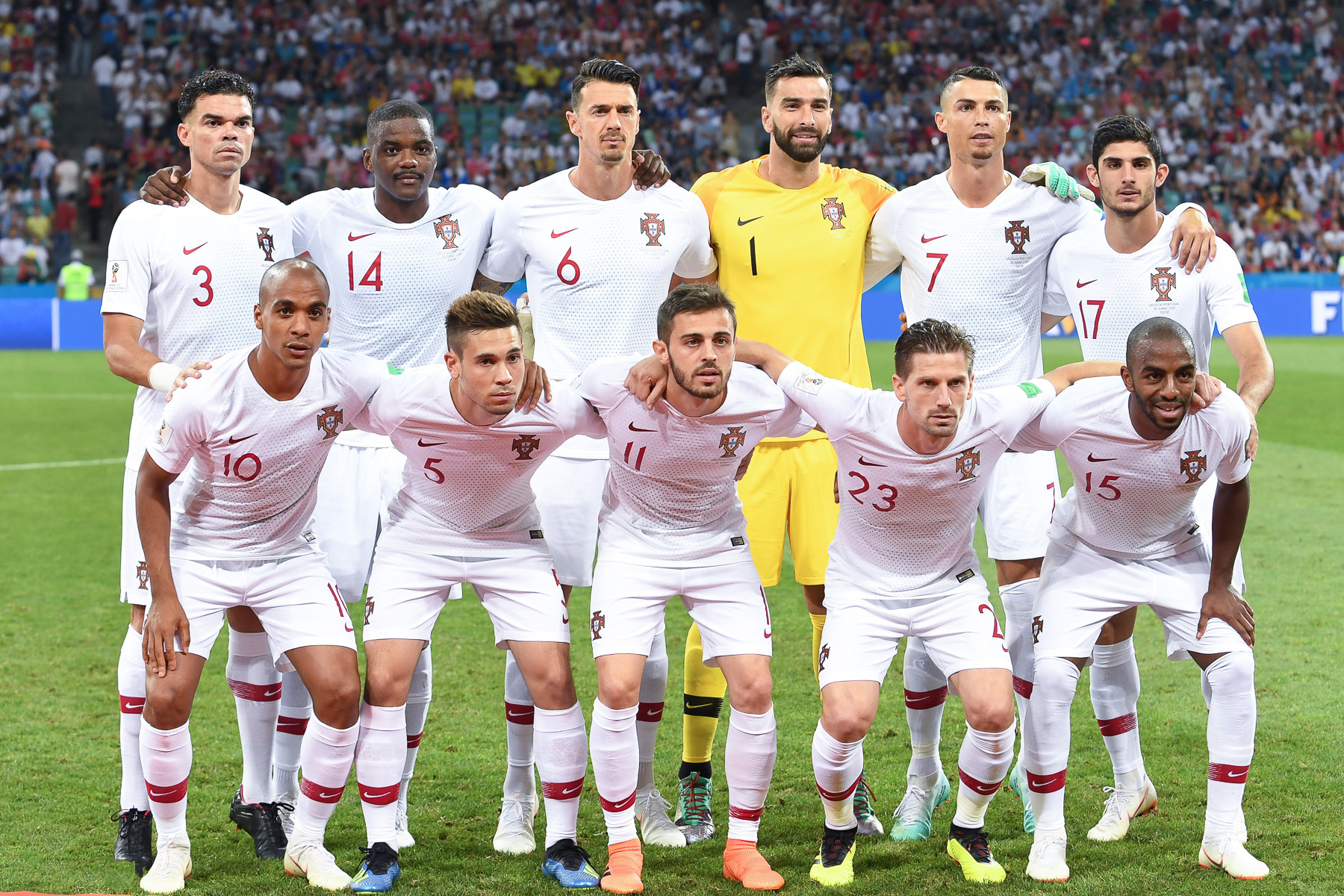
Photo: Анна Нэсси / Wikimedia Commons / CC BY-SA 3.0

This is where most kits live. They are fine. They represent their country. They will not offend anyone. They also will not inspire anyone to spend $120.
Portugal Home: The Puma Debut
Portugal’s switch to Puma was a big deal. The first kit is… fine. The wavy pattern is inoffensive. The V-neck collar is a polarizing choice, some find it classic, others find it dated. The overall effect is safe. It doesn’t scream “Cristiano Ronaldo’s last World Cup.” It doesn’t scream anything. It’s a competent shirt that will sell because of the player on the back, not the design on the front.
Argentina Home
You know what you’re getting: blue and white stripes. Adidas rarely messes with a formula that works and sells millions. The 2026 version is a slight evolution, with perhaps a different shade of blue or a slightly altered stripe width. It’s Argentina. It’s iconic by default. Ranking it feels unfair because it’s not trying to be in the top five. It’s trying to be Argentina, and it succeeds.
| Tier | Jerseys | Defining Trait | Purchase Advice |
|---|---|---|---|
| Instant Classics | Chile Away, France Home, Mexico Home | Bold design + strong story + high wearability | Buy immediately if you like it; sizes vanish first. |
| Strong Contenders | USA Home, Germany Home, Spain Away, Ghana Home | Excellent in 1-2 categories, minor flaws | Wait for a fan store sale or bundle deal. |
| Middle Pack | Portugal Home, Argentina Home, Netherlands Home | Safe, traditional, low-risk designs | Only buy if you’re a die-hard fan of that nation. |
| Disappointments | Croatia Away, Scotland Home, Switzerland Away | Failed concepts or lazy execution | Avoid unless collecting every kit is your goal. |
Netherlands home kits often fall here too. The orange is glorious, but the design is frequently a repetitive pattern or a slight tweak on a previous template. They are beautiful because of the color, not in spite of it. You buy it because you love Oranje, not because the kit took your breath away.
TL;DR: The middle-of-the-pack kits are for dedicated national team fans. They’re solid, sometimes beautiful, but lack the ambition or crossover appeal of the top tier.
The Disappointments: Kits to Avoid

Photo: Zicera / Wikimedia Commons / Public domain

For every Chile, there’s a kit that makes you wonder what the design team was thinking. These are the shirts that feel like afterthoughts.
Croatia Away: The Missing Checkerboard
The checkerboard is everything for Croatia. It’s their identity. Their 2026 away kit reportedly mutes this iconic pattern to a barely visible, washed-out grey. From a distance, it looks like a plain white shirt. It’s a baffling choice that strips the team of its most recognizable element. It feels timid. In a tournament where others are being bold, this is the definition of playing it safe and losing.
Scotland Home
It’s just… there. The navy blue is fine. The crest is in the right place. But there’s no spark, no clever detail, no story to tell. It’s a template. In contrast, their away kit, a homage to a 1980s design, shows what could have been. The home kit is the sartorial equivalent of a 0-0 draw.
Common mistake: Buying a “concept” kit with a weird texture or pattern because it looks cool in a product shot. In person, these designs, like Switzerland’s away kit that looks drawn in highlighter, often feel cheap and tacky. The novelty wears off in a week, and you’re stuck with a shirt you’ll never wear.
Switzerland’s away kit has been described as looking like it was scribbled with a highlighter. Austria’s home kit often gets lost in a sea of red-and-white templates. Qatar’s away kit, while not yet fully revealed in some circles, is anticipated to follow a similar path of overly busy, gimmicky design based on recent cycles. These are the kits that remind you that not every design swing connects.
The disappointment isn’t just about ugly colors. It’s about missed opportunity. With 48 teams in the 2026 tournament, the visual landscape is huge. A bland kit gets swallowed whole.
How to Actually Buy One (Before They Sell Out)
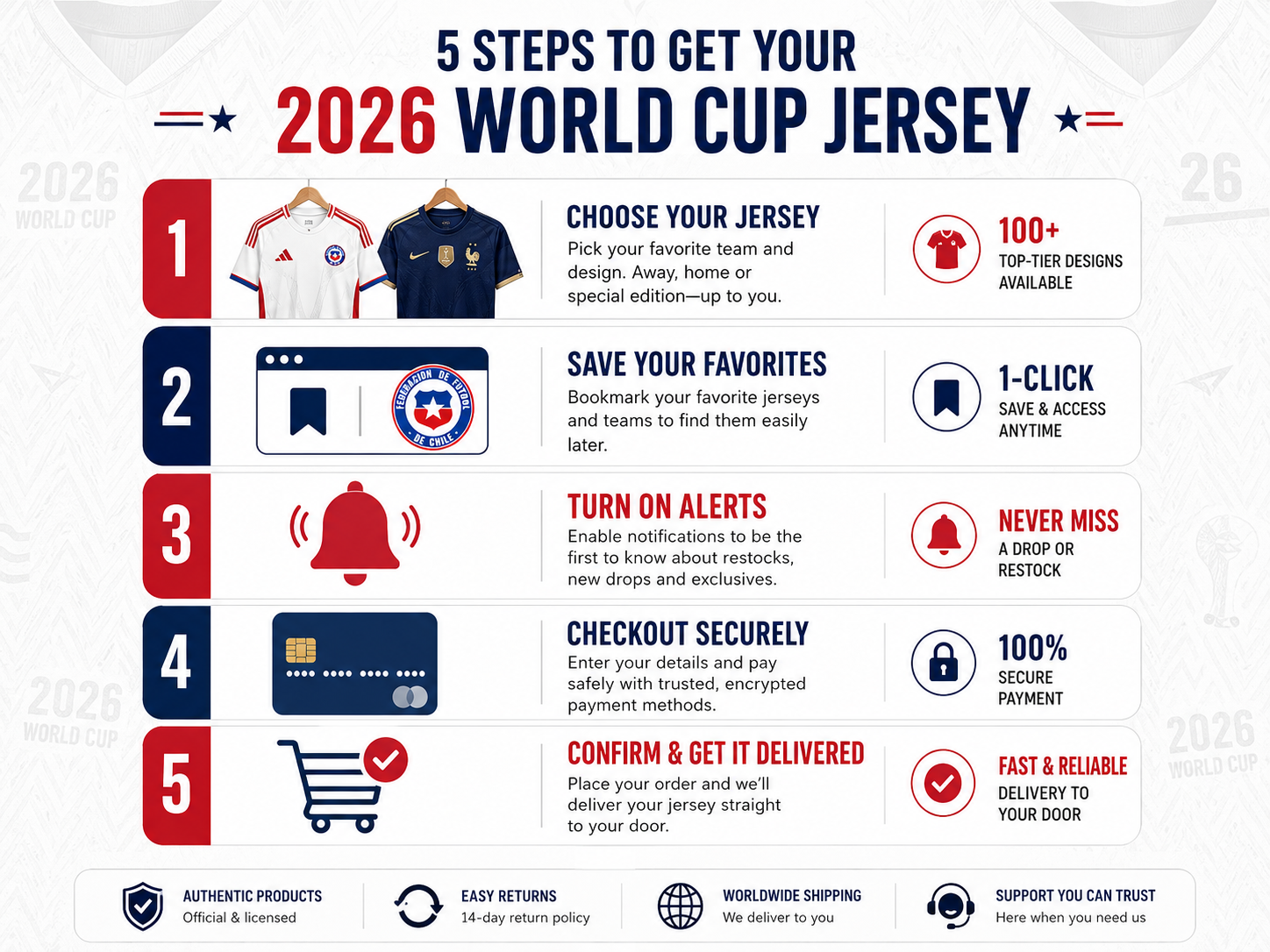
The best kits sell out fast. The Chile away shirt will be gone in certain sizes within days of wider release. You need a plan.
First, sign up for stock alerts on the official team stores and major retailers like Adidas, Nike, and Puma. The fan versions (replicas) sell out quicker than the player-issue, more expensive versions. Decide which you want. The replica is fine for 99% of people.
Second, understand the release schedule. Kits are released in waves. The first big wave hit before the March 2024 international break. The next wave will come about six months before the tournament. That’s your last best chance for the top-tier kits.
Third, be wary of the “third kit” or special editions. These are sometimes released later and can be even more limited, and more expensive. They are for collectors.
Here is your action list, in order:
1. Identify your top two target jerseys from the top tier.
2. Bookmark their product pages on the manufacturer’s site AND the national federation’s official store.
3. Enable notifications for those product pages if the site allows it.
4. Have your payment information saved and ready.
5. When the alert hits, buy immediately. Do not hesitate.
The window for getting the exact size and style you want is small. After that, you’re at the mercy of resellers on eBay marking up the price by 50 percent.
Frequently Asked Questions
Which manufacturer has the best 2026 World Cup jerseys?
Adidas is having a standout tournament. Their designs for Chile, France, Mexico, and Japan show a commitment to bold storytelling and wearability. Nike has strong entries with the USA and others, but Adidas’s top tier is more consistent and ambitious for 2026.
Are the more expensive “player issue” jerseys worth it?
For most fans, no. The player issue versions use a different, often less comfortable, more technical fabric designed for performance, not casual wear. They are tighter fitting and lack the traditional embroidered badge, using a heat-transfer instead. The fan replica is more durable for everyday use and looks nearly identical from a few feet away.
How many teams have released their 2026 kits so far?
As of now, a significant majority of the 48 qualified teams have released at least their home kit. Many, like Chile, France, and the USA, have released both home and away. A handful of nations, often those with smaller manufacturers or later qualification, are still finalizing designs.
Will these jerseys be available after the World Cup?
The most popular ones will be scarce. Manufacturers produce limited runs and rarely re-issue exact tournament kits. Niche or less popular designs might be discounted after the tournament, but the classics like the Mexico home or Chile away will become collector’s items and vanish from official channels.
What’s the biggest mistake people make when buying a World Cup jersey?
They buy based on a team’s performance or a single player, ignoring the kit’s design and quality. You end up with a poorly made, ugly shirt for a team that didn’t advance past the group stage. Buy the shirt you love the look of first. Fandom can come later.
How does the expanded 48-team tournament format affect kit releases?
It creates a wider range of design philosophies. Traditional powerhouses often stick to heritage, while newer qualifiers see the World Cup as a chance to make a bold statement. This leads to more variety, from the sublime to the strange, giving us both the Chile away masterpiece and some of the more puzzling designs.
Before You Go
The 2026 World Cup jersey landscape is a tale of three manufacturers. Adidas is chasing art. Nike is chasing refinement. Puma is chasing an identity. The result is a collection where the best shirts. Chile, France, Mexico, are instant classics you’ll see in streetwear circles for years. The worst are forgettable templates.
Your money and closet space are limited. Go for the kits with a story you connect to and a design you’d wear even if the team loses. That Chile away kit, with its map of the Atacama, tells a story no other shirt can. The France home kit, with its Statue of Liberty copper, links two host nations elegantly. These are the jerseys that transcend the tournament.
Check the official qualified teams list to see if your nation has dropped its design yet. Follow the release schedules closely. And when you see a kit that makes you stop scrolling, buy it. Don’t wait for a sale that will never come.

I come from the “soccer heart” of Germany, the Ruhrpott. I have played, trained and followed soccer all my life and am a big fan of FC Schalke 04. I also enjoy following international soccer extensively.