FIFA World Cup Qualified Teams: Complete 48-Nation List
The full list of FIFA World Cup 2026 qualified teams includes 48 nations, an expansion from the previous 32-team format. The three co-hosts. Canada, Mexico, and the United States, qualify automatically, joined by 45 other nations that secured their spots through regional qualification tournaments. The final lineup was confirmed after the Inter-confederation Play-Off Tournament in March 2026.
Most fans look at the 48-team list and get lost in the sheer number of names. They miss the real story: which traditional powers are missing, which tiny nations made history, and how the new format changes everything about the group stage.
This guide gives you the complete roster, breaks down how each confederation filled its slots, and highlights the teams that will define this historic tournament in North America.
Key Takeaways
- The 2026 World Cup features 48 teams, up from 32, creating the largest tournament in history.
- Six debutant nations. Curaçao, Cape Verde, Jordan, Uzbekistan, New Caledonia, and New Zealand (via direct slot), will make their first-ever appearances.
- Notable absences include Italy (ranked 9th) and Denmark (ranked 21st), who both failed to qualify from a competitive UEFA region.
- The tournament format shifts to 12 groups of four teams, with the top two from each group plus the eight best third-placed teams advancing to a new Round of 32.
- The group stage draw occurred on December 5, 2025, setting the match schedule across 16 host cities in Canada, Mexico, and the United States.
The New 48-Team Reality: Understanding the Expansion
Forget the old 32-team bracket you know. The 2026 edition is a different beast. FIFA’s expansion to 48 teams isn’t just about adding more games, it’s a complete recalibration of global football’s competitive landscape. Every confederation received more direct slots, which reshuffled the entire World Cup qualification process.
The math is simple but transformative. Asia’s AFC doubled its guaranteed spots from four to eight. Africa’s CAF jumped from five to nine. Oceania’s OFC, for the first time ever, gets a direct entry without a playoff. This rebalancing is the single biggest shift in tournament access since 1998.
The 48-team format, ratified by FIFA in 2017, allocates qualification slots based on confederation strength and development goals. It increases global participation from 46% of FIFA’s member associations to over 22%, a direct response to calls for greater inclusivity in the sport’s premier event.
The practical effect? More pressure on traditional European and South American powerhouses during qualification, and more opportunities for emerging football nations to plan a four-year cycle around a realistic shot at the finals. It changes how federations hire coaches, develop youth players, and schedule friendlies. The expanded format changes everything.
TL;DR: The 48-team format isn’t just bigger; it’s a strategic overhaul that gave more slots to every region, altering qualification dynamics worldwide.
The Complete 48-Team Roster (Grouped by Confederation)
Here is the definitive list of all qualified nations, organized by their FIFA confederation. This is the final roster following the conclusion of all regional qualifiers and the Inter-confederation Play-Off Tournament in March 2026.
| Confederation | Slots | Qualified Teams |
|---|---|---|
| AFC (Asia) | 8 + 1 Playoff | Australia, IR Iran, Japan, Jordan, Korea Republic, Qatar, Saudi Arabia, Uzbekistan, Iraq (Playoff Winner) |
| CAF (Africa) | 9 | Algeria, Cabo Verde, Côte d’Ivoire, Egypt, Ghana, Morocco, Senegal, South Africa, Tunisia |
| Concacaf | 3 + 3 Hosts | Canada (Host), Mexico (Host), USA (Host), Curaçao, Haiti, Panama |
| CONMEBOL (South America) | 6 | Argentina, Brazil, Colombia, Ecuador, Paraguay, Uruguay |
| OFC (Oceania) | 1 | New Zealand |
| UEFA (Europe) | 16 | Austria, Belgium, Bosnia and Herzegovina, Croatia, Czechia, England, France, Germany, Netherlands, Norway, Portugal, Scotland, Spain, Sweden, Switzerland, Türkiye |
Total: 48 Teams.
A few critical notes on this table. Iraq is listed as an AFC playoff winner. They secured the final Asian spot by winning the AFC’s internal playoff for 9th place. Similarly, the DR Congo, listed in some early reports for the CAF playoff, did not qualify; the nine African teams listed above are the direct qualifiers.
The story within the list matters. Look at the Concacaf section. Beyond the automatic hosts, you see Curaçao, a nation with a population under 150,000, qualifying for its first World Cup. In Africa, Cape Verde (Cabo Verde) also makes its debut. These are the tangible results of the expanded 48-team format.
How Each Team Earned Its Spot: The Qualification Paths
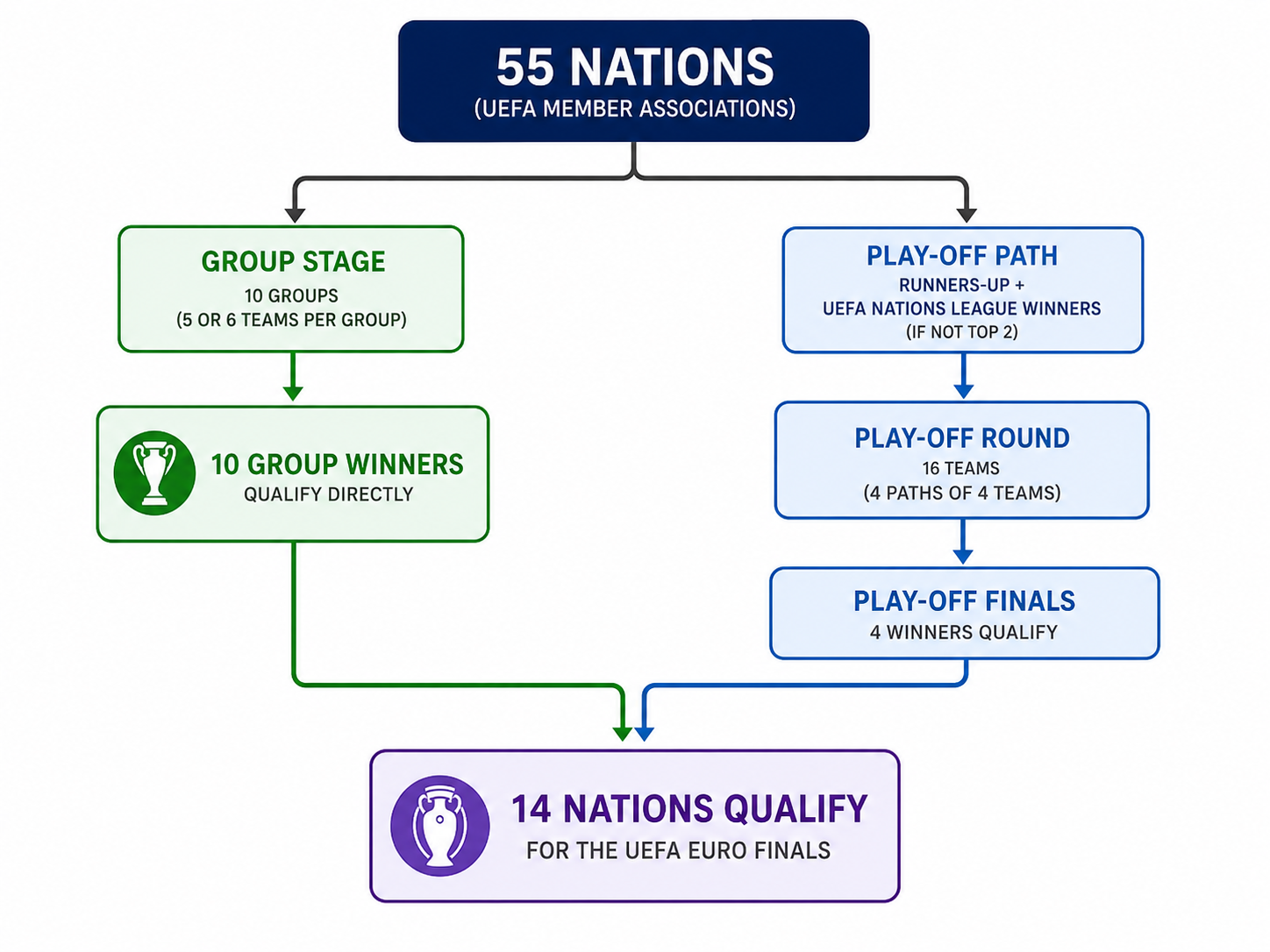
Qualification wasn’t a uniform process. Each confederation ran its own grueling, multi-year tournament with a unique set of rules. Knowing how teams got here adds context to their presence.
UEFA (Europe): The European qualifiers are a brutal, 55-nation gauntlet. Teams were split into 12 groups, with the winner of each group qualifying directly. The remaining four slots were decided by a complex playoff path based on UEFA Nations League performance. This system is why a highly-ranked team like Denmark can finish second in its group and still miss out on the playoffs entirely.
CONMEBOL (South America): The simplest and most brutal path. All ten South American nations play each other home and away in a single league table. The top six qualify. No playoffs, no second chances. Argentina and Brazil cruised, while the battle for spots five and six went down to the final matchday, with Paraguay snagging the last direct ticket.
AFC (Asia): Asia’s road involved multiple rounds. The final phase saw 18 teams split into three groups of six. The top two from each group (six teams) qualified directly. The third and fourth-placed teams (six teams) then entered a playoff bracket for the final two direct spots. A subsequent playoff between the losers decided the ninth-place team, Iraq, who then entered the Inter-confederation Play-Off.
Common mistake: Assuming all confederation playoffs are the same, the AFC’s multi-layered playoff for its 8th and 9th slots is uniquely complex, and missing a round can confuse a team’s final status.
CAF (Africa): African qualification used a group stage format, with the winners of nine separate groups earning direct passage. There were no continental playoffs. This direct-group-winner system rewards consistency over a handful of matches and is why every African qualifier is a reigning group champion.
Concacaf (North America): The three hosts qualified automatically. The remaining three spots came from the final round of qualification, a league of the region’s top teams. Panama and Haiti secured two of them. The third spot was decided by a playoff between the next-best finishers, which was won by Curaçao, marking their historic achievement.
OFC (Oceania): For the first time, Oceania had a direct slot. New Zealand won the OFC qualification tournament to claim it, no playoff required. This is a monumental change for the region.
TL;DR: Each continent had a different race. Europe’s was a marathon with a tricky playoff, South America’s was a ten-team slugfest, and Oceania’s had a guaranteed prize for the first time.
Historic Firsts and Debutant Nations to Watch
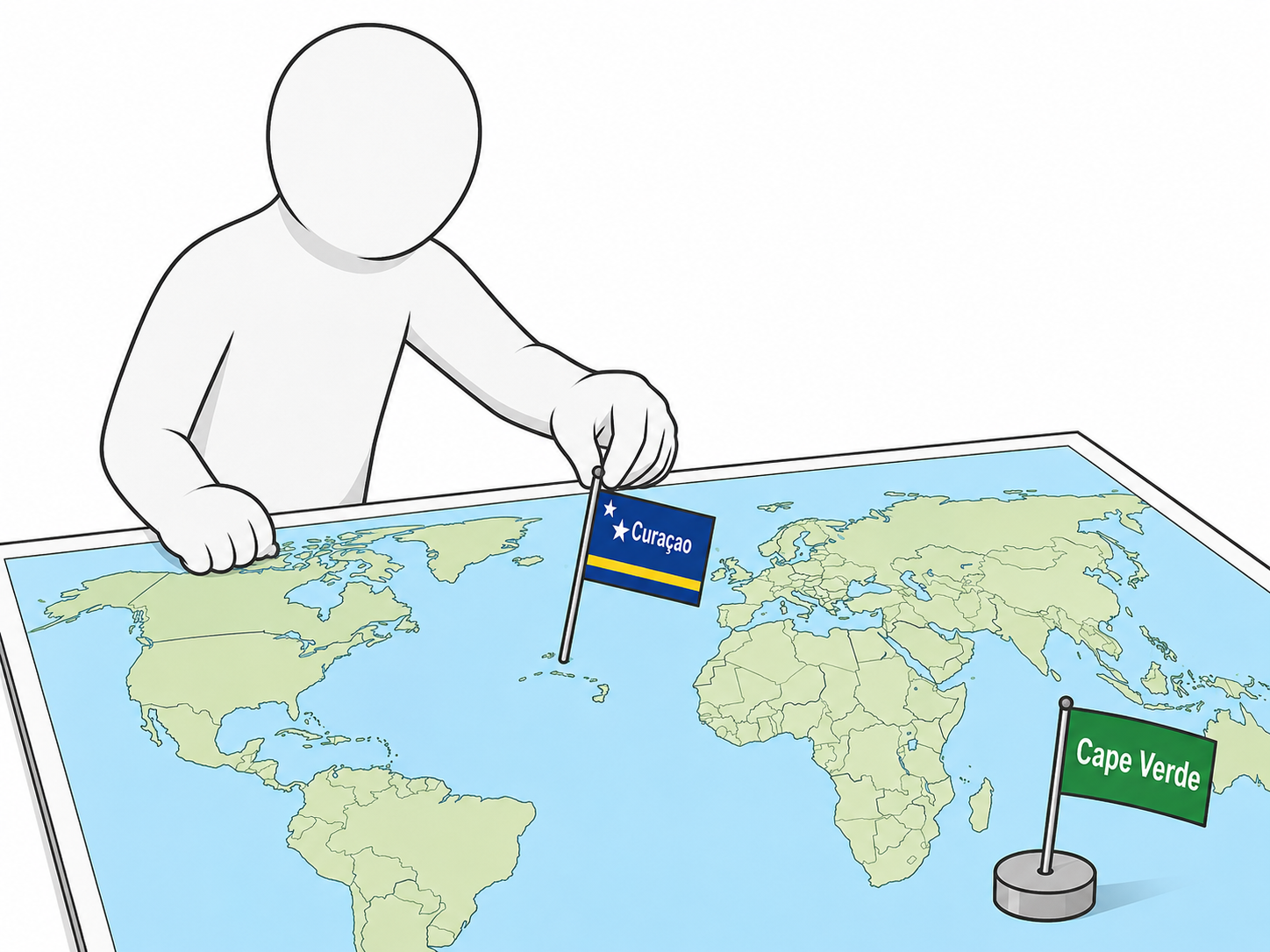
The expanded format was designed to open doors, and in 2026, the door was kicked off its hinges. We have six nations set for their World Cup debut, each with a unique story.
Curaçao is the headline. A Dutch Caribbean island with a population smaller than most European clubs’ weekly attendance. Their qualification is a triumph of diaspora talent and shrewd federation planning. They built a team around Dutch-born players eligible through heritage, a model several smaller nations now follow.
Cape Verde is another debutant with a similar blueprint. Their “Crioulos” team, drawn from the large diaspora in Portugal, France, and the Netherlands, topped a qualifying group containing giants like Egypt. They play an organized, counter-attacking style that can frustrate anyone.
In Asia, Jordan and Uzbekistan break new ground. Jordan’s qualification, sealed with a dramatic playoff win, is a landmark for West Asian football. Uzbekistan, a perennial youth football powerhouse, has finally translated that success to the senior level, validating years of investment in their football infrastructure.
Then there’s New Caledonia, who won the Inter-confederation Play-Off Tournament. A French territory in the Pacific, they are the smallest nation by population ever to qualify for a men’s World Cup. Their presence is the purest expression of the expansion’s inclusive goal.
Finally, New Zealand qualifies directly for the first time. While they’ve been to tournaments before, it was always through a playoff against a team from another continent. Winning the OFC spot outright is a new level of achievement for the All Whites.
These first-time qualifiers aren’t just making up the numbers. They are technically sound, tactically disciplined, and will be desperate to prove they belong. Expect at least one of them to cause a major upset in the group stage.
Notable Absences: The Big Names That Didn’t Make It

Photo: Independent Ideas for Federazione Italiana Giuoco Calcio / Wikimedia Commons / Public domain

With more slots available, the shock of who’s missing hits harder. Two omissions stand out for their sheer improbability.
Italy. The four-time world champions, currently ranked 9th globally, will watch from home. Their failure was a slow-motion collapse in UEFA qualifying. A loss to North Macedonia in a crucial match, a repeat of their failure to qualify for the 2022 World Cup, sealed their fate. The tactical rigidity and lack of a consistent goal-scorer doomed them. It’s a systemic crisis for Italian football.
Denmark. Ranked 21st and a European Championship semi-finalist just years ago, the Danes also fell short. They finished second in their qualifying group behind a resurgent Switzerland and then failed to secure a playoff spot due to their UEFA Nations League performance. It’s a stark reminder that in Europe’s hyper-competitive landscape, there is no margin for error.
Their absences create a vacuum. It opens a path for other European sides like Bosnia and Herzegovina or Norway, who haven’t been to a tournament in years. It also removes two defensively elite, tournament-hardened sides from the pool of potential knockout opponents. For the tournament favorites like France or Argentina, Italy’s absence is one less defensive juggernaut to potentially face.
I watched Italy’s final qualifier in a packed bar in Gelsenkirchen. The silence after the Macedonian goal was heavier than any I’ve heard after a Schalke loss. It wasn’t anger; it was a profound, confused disappointment. A nation that defines itself through calcio was suddenly unmoored. That’s the weight of missing this tournament.
The table below summarizes the most significant teams that won’t be in North America.
| Nation | Confederation | Reason for Absence |
|---|---|---|
| Italy | UEFA | Finished 2nd in qualifying group, lost in Nations League playoff path. |
| Denmark | UEFA | Finished 2nd in qualifying group, did not qualify for playoffs. |
| Chile | CONMEBOL | Finished 7th in the single-table standings. |
| Nigeria | CAF | Finished 2nd in their qualification group. |
| Russia | UEFA | Remains suspended from FIFA and UEFA competitions. |
TL;DR: Italy and Denmark’s failures are the biggest stories of who’s not at the 2026 World Cup, proving that even with more slots, qualification in Europe remains brutally unforgiving.
What Happens Next? The Tournament Format and Schedule
The teams are set. Now, how does a 48-team World Cup actually work? The new World Cup structure is already locked in.
The 48 teams were drawn into 12 groups of four (Group A through Group L) on December 5, 2025. You can find the full draw and analysis in our dedicated 2026 tournament hub. The group stage will be played from June 11 to July 2, 2026, across the 16 host cities in three nations.
The knockout phase is where the format gets novel. The top two teams from each of the 12 groups (24 teams) advance. They are joined by the eight best third-placed teams. Yes, third place can be enough. This creates a 32-team knockout bracket, beginning with a “Round of 32” before proceeding to the standard Round of 16, quarter-finals, semi-finals, and final.
This system makes every single group match critical. A team losing its first two games could still advance with a big win in its third match and favorable results elsewhere. It incentivizes attacking football until the very end. The final is scheduled for July 19, 2026, at MetLife Stadium in New Jersey.
For fans and teams, this means more football, more travel, and a greater need for squad depth. The expanded squad sizes and potential substitution rules adjustments will be tested like never before. It’s a marathon culminating in a sprint.
Frequently Asked Questions
Which teams are new to the 2026 World Cup?
Six nations are making their men’s World Cup debut: Curaçao, Cape Verde, Jordan, Uzbekistan, New Caledonia, and New Zealand (via a direct slot for the first time).
How many teams from Europe qualified for 2026?
UEFA, Europe’s confederation, has 16 qualified teams for the 2026 World Cup: Austria, Belgium, Bosnia and Herzegovina, Croatia, Czechia, England, France, Germany, Netherlands, Norway, Portugal, Scotland, Spain, Sweden, Switzerland, and Türkiye.
Did Italy qualify for the 2026 World Cup?
No, Italy did not qualify for the 2026 FIFA World Cup. The four-time champions finished second in their UEFA qualifying group and failed to secure a spot through the subsequent Nations League playoff path.
When was the World Cup 2026 group stage draw?
The official draw ceremony took place on December 5, 2025. This event placed all 48 qualified teams into the 12 groups for the tournament’s first stage.
Where can I find the full 2026 World Cup schedule?
The complete match schedule, including dates, times, and venues for all 104 matches, is available on FIFA’s official website and through major sports news outlets following the final draw.
Before You Go
The list of 48 is more than names on a page. It’s a map of global football’s current hierarchy and its future. The debutants from Curaçao and Cape Verde represent a new era of inclusive competition. The painful absences of Italy and Denmark are stark reminders that history guarantees nothing.
With the groups drawn and the schedule set, the focus shifts to the pitches across North America. The new format promises more drama, more goals, and more stories. Keep this list handy, you’ll be referring to it from the opening match in Mexico City to the final whistle in New Jersey. For the latest tactical breakdowns and 2026 predictions, stay tuned right here. The countdown is on.
I come from the “soccer heart” of Germany, the Ruhrpott. I have played, trained and followed soccer all my life and am a big fan of FC Schalke 04. I also enjoy following international soccer extensively.