Erling Haaland World Cup Profile: Stats, Form & Impact
Erling Haaland’s World Cup impact is defined by his record-shattering qualification form, his unique role as Norway’s focal point, and his physical dominance that warps defensive schemes. His 16 qualifying goals and 95kg repeat-sprint engine create space for teammates, driving Norway’s return after a 28-year absence.
Erling Haaland’s complete profile for the 2026 FIFA World Cup centers on his record-shattering qualification campaign for Norway, his peak physical and technical form at Manchester City, and his unique role as the focal point of a golden generation finally returning to the global stage after a 28-year absence. He is not just a participant. He is the reason Norway is there.
Most profiles stop at the goal tally. They list the 16 qualifying goals, the five against Moldova, the fastest-to-50 international goals record. They miss the engine underneath. They miss the specific, granular habits that turn a 95kg frame into a repeat-sprint machine for 90 minutes. They miss how his mere presence warps entire defensive schemes, creating space for players like Martin Ødegaard that didn’t exist before.
This profile connects those dots. We will look at the numbers that matter, the preparation nobody sees, the tactical reality he imposes, and what it all means for a Norwegian team written off for a generation.
Key Takeaways
- Haaland scored in all eight of Norway’s 2026 World Cup qualifiers he played, netting 16 goals total to equal Robert Lewandowski’s record tally from the 2018 cycle.
- His physical regimen is built on explosive power maintenance, with a diet heavy in pasta, fish, and potatoes to fuel repeated high-intensity sprints—a non-negotiable for his style.
- While his goal output is monstrous, his assist and progressive passing numbers are comparatively modest, defining him as a pure, hyper-efficient finisher rather than a creative hub.
- Norway’s success hinges on the Haaland-Ødegaard partnership; when it clicks, it’s telepathic, but when marked out, the team’s attack can stagnate.
- His contract with Manchester City runs until June 2034, securing his club status and allowing full focus on international glory at his absolute peak.
The Unavoidable Force: Haaland’s Path to 2026
For 28 years, the World Cup stage felt a world away from Norway. The memory of 1998 faded. Then Erling Haaland happened. His path to the 2026 tournament isn’t a story of gradual improvement. It is a demolition. He didn’t just help Norway qualify. He carried them there on his back, rewriting the record books in the process.
The cold numbers tell the story of a force of nature. He finished the qualifying campaign with 16 goals. More tellingly, he scored in every single one of the eight matches he played. That stat alone reveals a consistency that crushes hope. Opponents knew he was the only threat. They still couldn’t stop him.
Haaland’s 16-goal qualifying tally equaled Robert Lewandowski’s record from the 2018 cycle, and his five-goal haul against Moldova made him the first European male player to score five in a World Cup qualifier since 1977.
He also strung together goals in 11 consecutive international appearances, matching a record set in the 1960s. The milestone of 50 international goals came in just 46 matches, smashing Harry Kane’s previous record. This isn’t mere talent. It is a systematic dismantling of historical benchmarks.
TL;DR: Haaland’s qualification was historic: goals in every match, a record-tying 16-goal haul, and the fastest player ever to 50 international goals.
Haaland’s 2026 World Cup Qualifying Campaign: A Statistical Domination
The raw data paints a picture of relentless efficiency. You do not score 16 times in eight games by accident. You do it by being the absolute focal point of every attacking move and by converting chances at a rate that defies expectation.
The 11-1 win over Moldova in September 2025 stands as the ultimate exhibit. Haaland scored five and assisted two. The match was over at halftime, but he played the full 90. That is the mentality. It is not about stat-padding. It is about imposing maximum psychological damage, setting a tone that echoes through the rest of the group. Defenders in subsequent matches knew exactly what was coming. They were powerless to stop it.
This campaign cemented his status not just as Norway’s star, but as the most potent international striker of his generation. His pace and strength, detailed in analyses of the fastest players in 2026, are a big part of that. His physical dominance allows him to create separation and finish moves that other forwards cannot. While his goal-scoring prowess is unmatched, his role differs from the creative engines listed among the all-time assist leaders. He is the end point, the final product.
| Qualifying Metric | Haaland’s Performance | Context & Record |
|---|---|---|
| Total Goals | 16 | Equaled Robert Lewandowski’s record (2018 qualifiers) |
| Goals Per Game | 2.0 | Scored in all 8 matches played |
| Consecutive Scoring Streak | 11 matches | Matched Abdul Ghani Minhat’s record (set in the 1960s) |
| Fastest to 50 Int’l Goals | 46 caps | Broke Harry Kane’s previous record (69 caps) |
| Peak Performance | 5 goals, 2 assists vs. Moldova (Sept 2025) | First European male to score 5 in a WC qualifier since 1977 |
The numbers are staggering, but they are just the output. The input is a machine built over years.
The Physical & Mental Machine
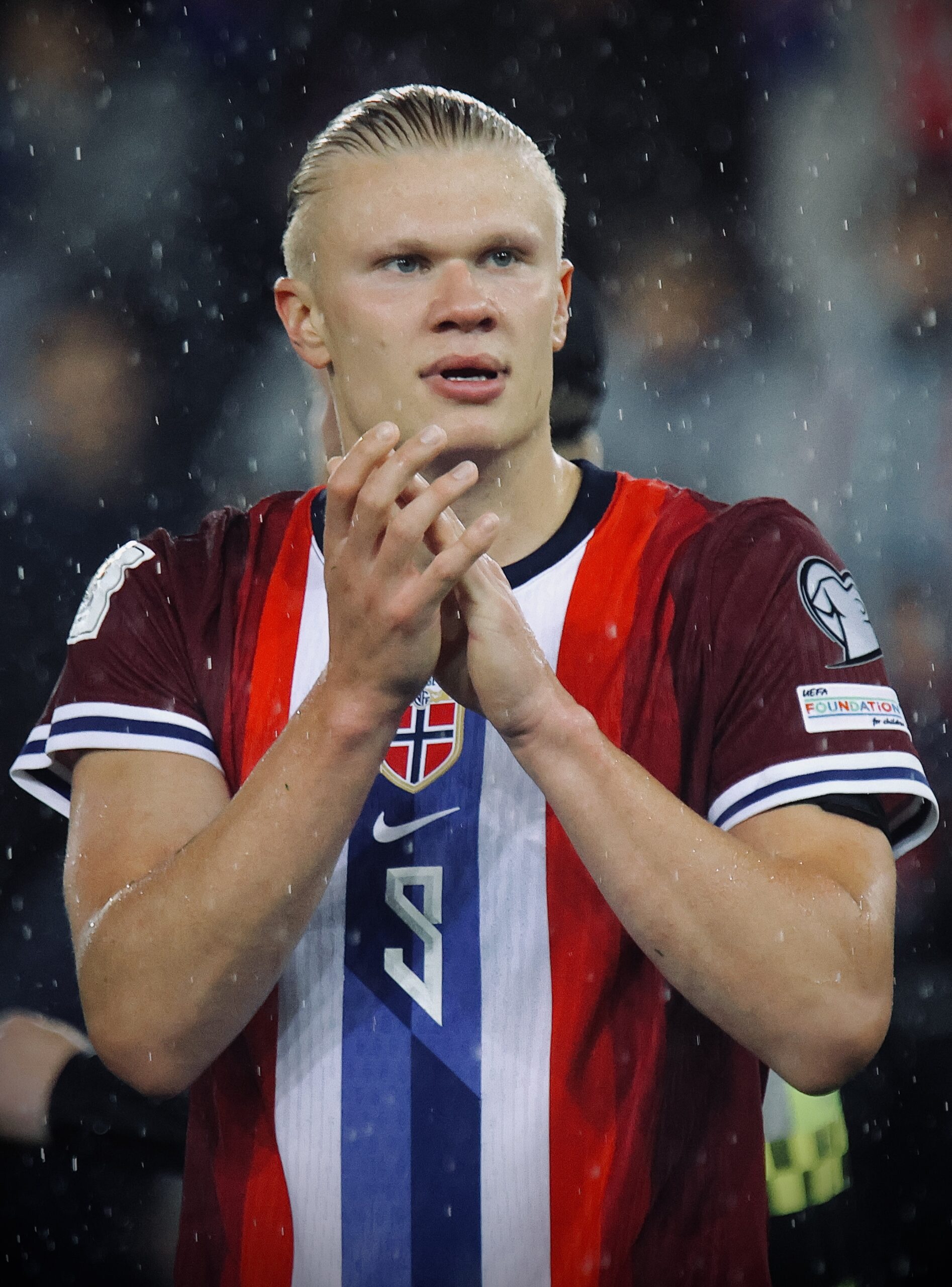
Photo: MichaelEmilio / Wikimedia Commons / CC BY 4.0

Calling Haaland a “physical specimen” is underselling it. At 1.95m (6’5″) and 95kg, he possesses a frame more common in the NBA than the Premier League. This places him among the tallest footballers, but his game is not about height alone. It is about applying that mass at speed. The real surprise for defenders isn’t his strength. It is that he can deploy it repeatedly, sprint after sprint, for the entire match.
His preparation is monastic. In interviews, he breaks it down simply: sleep, eat, train. He prioritizes nine to ten hours of sleep. His diet, as outlined in resources on optimal soccer player nutrition, is heavy on pasta, fish, and potatoes—clean carbohydrates and protein to repair the muscle fiber he shreds every game. The gym work is not for vanity. It is for maintaining the explosive power that lets him out-muscle a center-back one moment and out-sprint a full-back the next.
I watched him in a Champions League match where he made a 70-yard sprint in the 89th minute to press a goalkeeper. The defender marking him simply stopped, hands on knees, exhausted. Haaland turned and jogged back, ready to go again. That is the difference. It is a physiological advantage he has weaponized.
Then there is the mind. His now-iconic meditation celebration is not a gimmick. It is a deliberate decompression ritual. In the chaos of a goal, the screaming fans, the teammates mobbing him, he finds ten seconds of stillness. This ability to compartmentalize, to reset instantly, is a competitive edge. It allows him to stay present. The missed chance from two minutes ago is gone. The next one is all that exists.
This combination of physical durability and mental control is what makes him a “cyborg” in the eyes of pundits. It is also what makes him uniquely suited for the grueling schedule of a modern World Cup, with matches coming thick and fast.
Club Pedigree: The Manchester City Blueprint
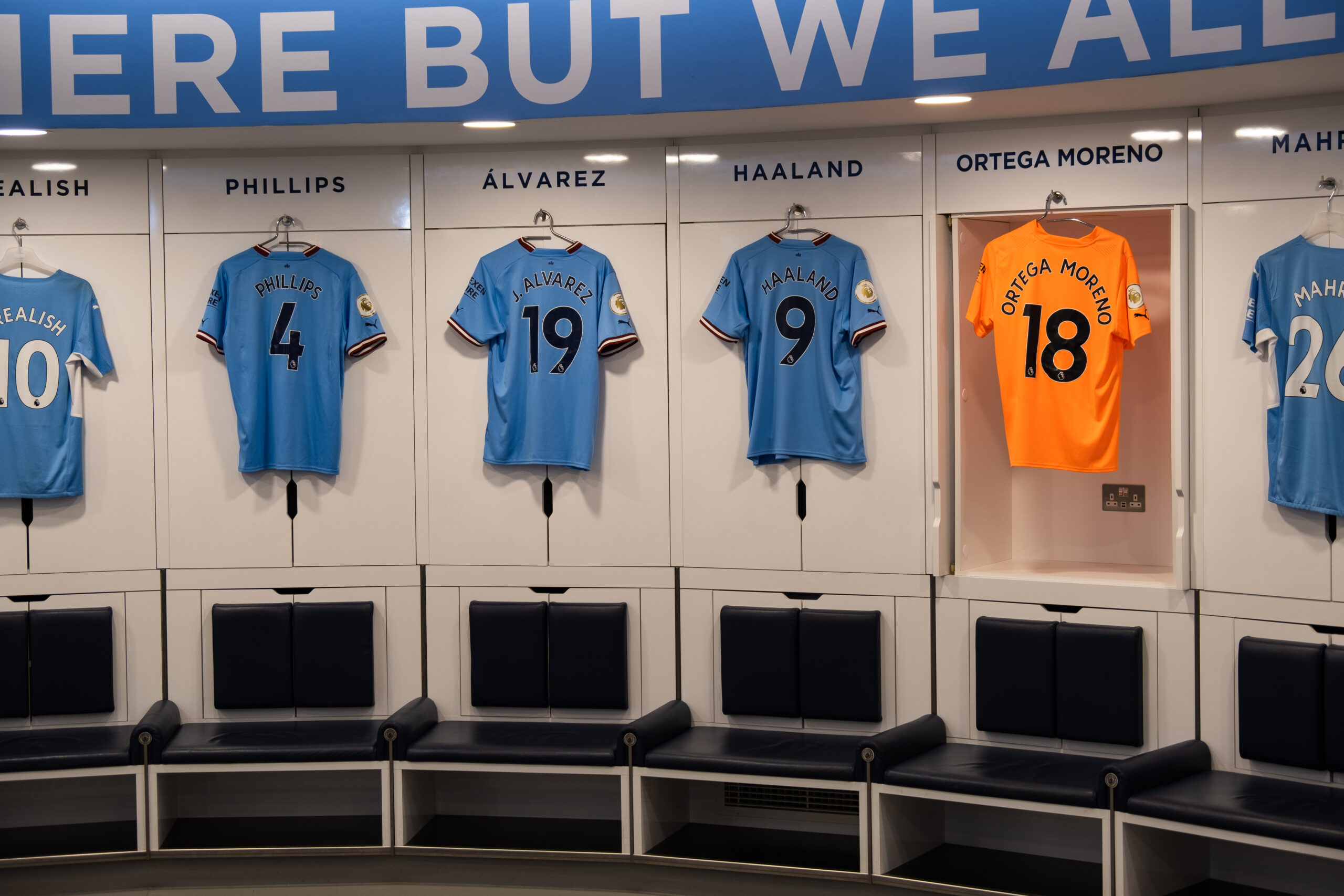
Photo: Christian David / Wikimedia Commons / CC BY-SA 4.0

International tournaments are often won by players arriving in peak form from their clubs. On that metric, Haaland could not be better positioned. Since his 2022 move to Manchester City, he has been the final piece in a footballing machine designed to dominate. He has already won the lot: two Premier League titles, an FA Cup, a Champions League, a UEFA Super Cup, and a Club World Cup. The collective winning mentality at City is now his default setting.
The 2025/26 season, leading into the World Cup, saw him record 26 goals and 8 assists in 28 Premier League appearances. Those are the numbers of a player at the absolute summit of his powers. More importantly, he is doing it within Pep Guardiola’s system—a system that demands tactical intelligence, pressing, and spatial awareness beyond just finishing. Haaland has adapted. He is no longer just a goal-poacher; he is the intelligent, mobile focal point of the most sophisticated attack in world football.
His contract runs until 2034. That stability is crucial. There is no transfer speculation, no contract drama clouding his summer. His entire focus can be on the tournament. This club success forms the bedrock of his confidence. He knows how to win the biggest games. The pressure of a World Cup knockout match will feel familiar. It will feel like a Tuesday night at the Etihad.
The Norwegian Ecosystem: More Than a One-Man Team
Photo: Вячеслав Евдокимов / Wikimedia Commons / CC BY-SA 3.0
_Erling_Braut_H%C3%A5land_2018-8-30.jpg)
This is the biggest misconception about Norway’s chances. Haaland is the headline, but he is not the whole story. A striker, no matter how prolific, cannot qualify for a World Cup alone. Norway’s return to the global stage is the product of a genuine golden generation, with talent blooming across the pitch.
At the heart of it is his partnership with captain Martin Ødegaard. The Arsenal playmaker is the architect to Haaland’s execution. Ødegaard’s vision and passing range are the perfect complement to Haaland’s ruthless movement. Their understanding, forged in the national team setup for years, borders on telepathic. Ødegaard knows the runs Haaland will make before he makes them. Haaland trusts the ball will arrive. When this connection fires, defenses are pulled apart.
On the flanks, players like Antonio Nusa provide the vertical threat and dribbling that stretches play. This creates the space in the middle for Haaland and Ødegaard to operate. The midfield, marshaled by players like Sander Berge, offers a blend of physicality and ball progression. This is not the Norway of 1998. This is a technically gifted, physically robust squad built for modern football.
Common mistake: Assuming Norway is a one-man team — while Haaland is the standout, their qualification was secured through a cohesive team performance, with Ødegaard providing 7 assists and Nusa adding crucial width and goal threat.
The tactical approach is pragmatic. Manager Ståle Solbakken is not a dogmatic ideologue. He builds a solid, organized defensive block and leverages the explosive transition quality of his front three. The strategy is clear: stay compact, win the ball, and release Haaland, Nusa, or Ola Brynhildsen into space. It is a plan that plays directly to their strengths.
How Haaland Will Define Norway’s 2026 World Cup
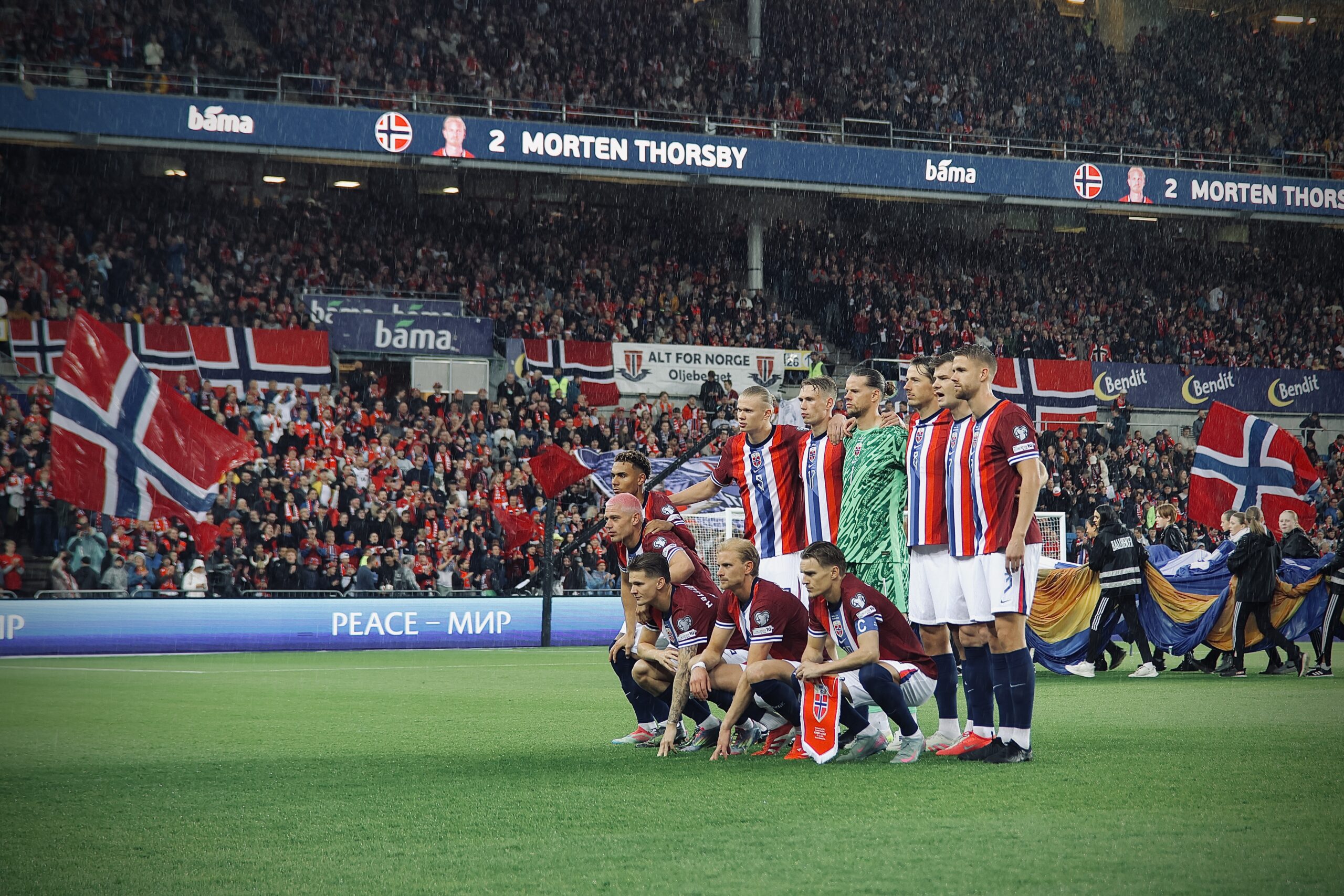
Photo: MichaelEmilio / Wikimedia Commons / CC BY 4.0

So what does this mean for the tournament itself? Norway will be placed in Pot 2 for the draw, avoiding the absolute favorites but facing a tough group regardless. Their success will hinge on a few key factors where Haaland is central.
First, his movement. Against low-block defenses that Norway will inevitably face, his ability to find space in crowded penalty areas is paramount. He does not just stand between center-backs. He drags them out of position, creates gaps for others, and times his runs to perfection. This untraceable movement is what makes him so difficult to mark.
Second, his aerial dominance. At 1.95m, he is a magnet for crosses. Norway will look to utilize this, especially if they need a late goal. His leap and timing make him a threat even against taller defenders. Set pieces become a legitimate primary weapon.
Third, and most crucially, his mentality. Norway has not been on this stage for 28 years. The pressure, the noise, the scrutiny will be immense for the entire squad. Haaland has been there. He has scored in Champions League finals. He has shouldered the expectation at Manchester City. He will be the calm in the storm. His meditation celebration is a symbol of that. He can switch off the external chaos and focus on the next run, the next chance.
His impact will be measured in more than goals. It will be in the space he creates for Ødegaard. It will be in the defensive attention he commands, freeing up Nusa on the wing. It will be in the belief he instills in a nation. For a complete look at other players shaping this historic year, explore the stories of 2026 soccer legends across the globe.
Potential Pitfalls and What Could Go Wrong
For all his power, Haaland is not infallible. His game has defined parameters. His assist numbers, while improving, are not on par with the world’s elite creative forwards. If Ødegaard is successfully marked out of a game, Norway’s link between midfield and attack can break down. Haaland can become isolated, forced to feed on scraps.
His style is also physically demanding. The repeated sprints, the constant battles with defenders, take a toll. An injury, even a minor one that reduces his explosive capacity by 10%, would diminish Norway’s threat exponentially. There is no like-for-like replacement in the squad. The team’s tactical system is built around his specific skill set.
Furthermore, the World Cup is a different beast. The pressure is more intense, the scrutiny is global, and every opponent has spent months studying his tendencies. Teams will try to frustrate him, to provoke a reaction. Maintaining his clinical composure over a seven-game tournament will be his ultimate test.
The Legacy in Waiting
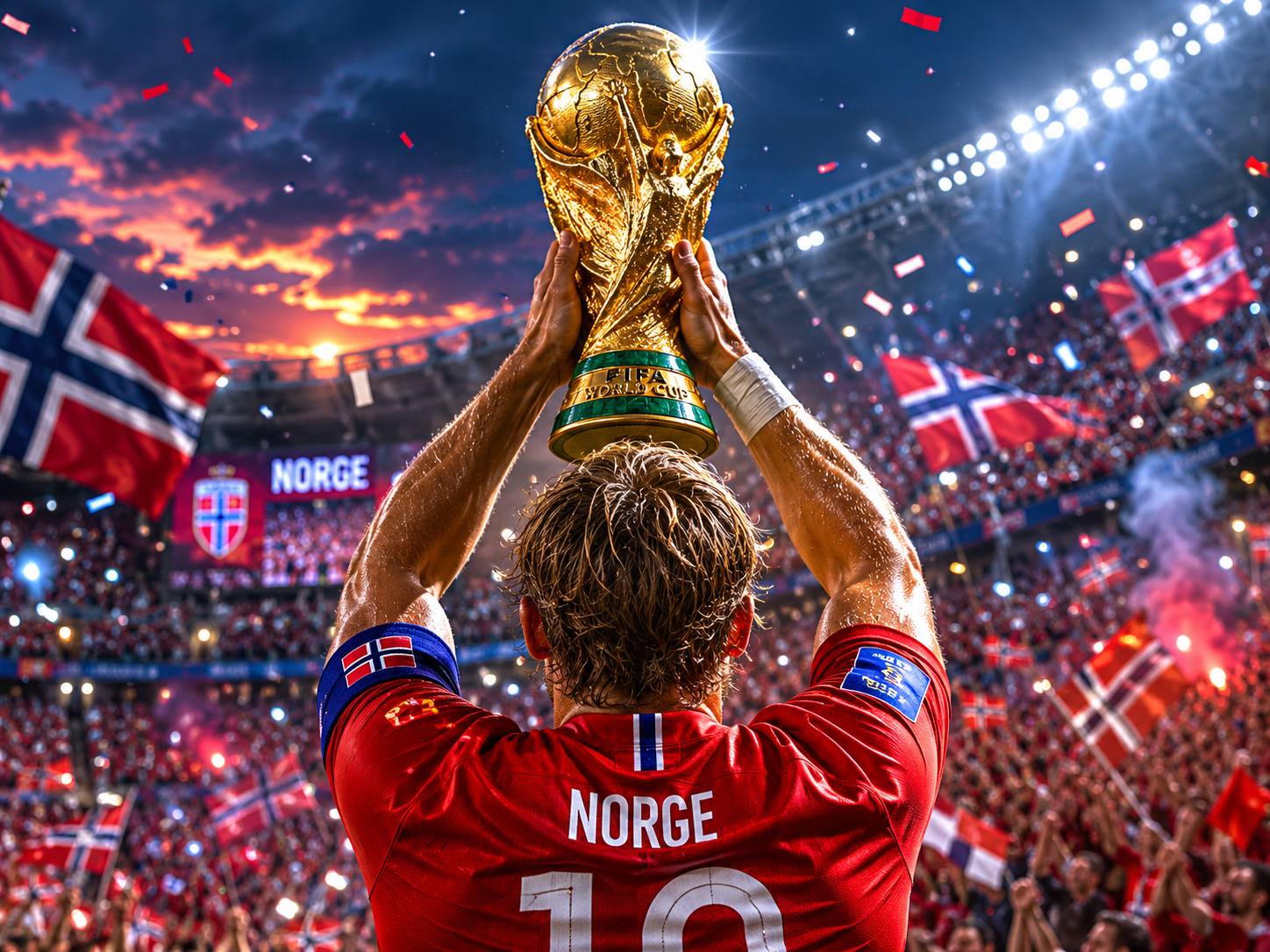
Erling Haaland is 25 years old as the 2026 World Cup approaches. He is entering what should be the absolute peak of his athletic powers. He has the club trophies. He has the individual records. The one glaring omission on a career that is already legendary is international glory. This tournament is his canvas.
A strong showing, let alone a deep run, would cement his status as one of the all-time greats. It would transform him from a club superstar into a national icon. For Norway, a country with a rich football history but limited tournament success, his presence alone changes everything. They are no longer just happy to be there. With Haaland, they have a weapon that can hurt anyone.
The narrative writes itself. The Viking, leading his nation back to the world stage after a generation away, ready to conquer. The world will be watching. And he will be ready.
Frequently Asked Questions
How many goals did Erling Haaland score in 2026 World Cup qualifying?
He scored 16 goals in the 2026 World Cup qualifying campaign, netting in all eight matches he played for Norway. This tally equaled the record set by Robert Lewandowski during the 2018 qualifiers.
Is Erling Haaland playing in the 2026 World Cup?
Yes. Erling Haaland will be playing for Norway in the 2026 FIFA World Cup, marking the nation’s first appearance at the tournament since 1998. He was instrumental in their qualification.
What is Erling Haaland’s height and weight?
Erling Haaland stands 1.95 meters tall (6 feet 5 inches) and weighs approximately 95 kilograms (209 pounds). This combination of height and muscle mass is a key component of his physical dominance on the pitch.
How old will Erling Haaland be at the 2026 World Cup?
Erling Haaland was born on July 21, 2000. He will be 25 years old during the 2026 FIFA World Cup, which takes place in June and July of that year.
What is Erling Haaland’s contract situation with Manchester City?
Haaland’s current contract with Manchester City runs until June 2034. This long-term security ensures he can focus entirely on the World Cup without any club-related transfer distractions.
Who are Norway’s other key players alongside Haaland?
Captain and playmaker Martin Ødegaard is the second crucial pillar, providing the creative link to Haaland. Winger Antonio Nusa offers pace and directness, while midfielder Sander Berge provides physicality and stability.
The Bottom Line
Erling Haaland arrives at the 2026 World Cup as the most feared striker on the planet, coming off a record-breaking qualification and a dominant club season. His physical prowess is unmatched, but his true edge is a machine-like consistency and a mentality forged in winning the biggest club games. Norway is not a one-man team, but he is their catalyst. His partnership with Martin Ødegaard will dictate their ceiling. If it fires, they can beat anyone. His legacy is ready to be written. The world is watching.
I come from the “soccer heart” of Germany, the Ruhrpott. I have played, trained and followed soccer all my life and am a big fan of FC Schalke 04. I also enjoy following international soccer extensively.