Is Luka Modric Playing in the World Cup? Here’s the Answer
Yes, Luka Modric is playing in the 2026 FIFA World Cup. The 40-year-old captain is named in Croatia’s preliminary 26-man squad announced by coach Zlatko Dalic. This confirms his historic fifth World Cup appearance, pending final roster submission by May 30, 2026.
The confusion starts with a late-season injury and his age. People see “40” and “broken cheekbone” and assume the story is over. They miss the concrete facts from the training pitch and the coach who has built his entire system around this player for a decade.
This guide cuts through the noise. We’ll cover the official squad status, the real timeline of his injury recovery, what his fifth World Cup means for Croatia’s tactics, and why betting against Modric has always been a mistake.
Key Takeaways
- Modric is in Croatia’s preliminary 26-man squad for the 2026 World Cup, with final confirmation due by May 30.
- He suffered a broken cheekbone in late April 2026 but underwent successful surgery and is training with a facial mask, with full recovery expected.
- This will be his fifth World Cup, a testament to a career that defies the typical retirement age for soccer players.
- Coach Zlatko Dalic has stated he has “no doubts” about Modric’s form or his crucial role as the team’s midfield anchor.
- Croatia faces England, Ghana, and Panama in Group L, with their first match against England on June 17.
The Official Word: Modric Is In
The paperwork is filed. On May 18, 2026, Croatia head coach Zlatko Dalic named his provisional squad for the tournament in North America. Luka Modric’s name was on the list, number one in the midfield section. This isn’t a speculative blog post or fan wishlist. It’s the official preliminary roster submitted to FIFA.
The 26-player preliminary list for the FIFA World Cup 2026 includes captain Luka Modric, who at 40 years old is set for a record-tying fifth appearance in the tournament for Croatia. The final squad must be confirmed by the FIFA deadline of May 30, 2026.
The keyword is “preliminary.” All 32 nations name a provisional squad before whittling it down to the final tournament roster. But for a player of Modric’s stature, especially one the coach calls “irreplaceable,” preliminary inclusion is as good as final. Dropping him now would be a seismic tactical and psychological shift Dalic is not prepared to make. You don’t build your team’s identity around a creative midfield maestro for fifteen years and then leave him at home weeks before the flight.
This squad announcement, detailed in outlets like the BBC Sport Modric recovery confidence report, ended months of speculation. It formally places Modric in the 2026 football landscape alongside the new generation.
TL;DR: Modric is officially in the preliminary squad. Barring a new catastrophic injury, he’s on the plane.
The Injury Question: Will Modric Be Fit?
Here’s where the panic set in. In late April 2026, while playing for AC Milan, Modric suffered a facial fracture, a broken cheekbone. The images were jarring. Immediately, headlines questioned his World Cup.
The timeline is everything. The injury occurred in late April. Surgery followed immediately and was declared successful. By mid-May, when Dalic announced the squad, Modric was already back in training wearing a custom protective mask. The coach’s statement was unequivocal.
Common mistake: Assuming a facial fracture sidelines a player for months, the bone itself heals in 4-6 weeks, and a carbon-fiber mask protects the area. The real risk was infection post-surgery or vision impairment, both of which were cleared.
“I have no doubts regarding his form,” Dalic told the press, a quote captured in the Sportstar Modric preliminary squad report. “He has been training with the mask and looks sharp. Luka is Luka.” That last part is the most important. For a coach, it means the player’s football brain, touch, and positioning are intact. The body just needs the protective gear.
The mask itself becomes a factor. It can limit peripheral vision and cause discomfort from sweat and pressure. Modric’s soccer-specific workout plans in the weeks leading to the tournament will have included acclimatization drills with the mask on. They’ll test passing angles and spatial awareness repeatedly.
| Injury Factor | Status for World Cup | Impact on Performance |
|---|---|---|
| Cheekbone Fracture | Surgically repaired, healed | None with protective mask |
| Protective Mask | In use during training | Potential minor vision restriction; requires acclimatization |
| General Match Fitness | Maintained via club season with AC Milan | High – no long-term layoff |
| Coach’s Confidence | Publicly stated “no doubts” | Psychological boost for team |
The recovery path is clear. He didn’t tear a knee ligament. He broke a bone in his face that is now fixed. The World Cup starts in June. He will be fit.
Fifth Time Around: What Modric Brings at 40
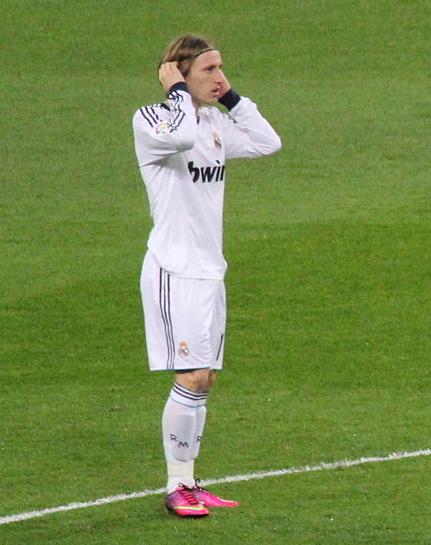
Photo: LauraHale / Wikimedia Commons / CC BY-SA 1.0

A fifth World Cup is not a sentimental participation trophy. For Croatia, it’s a strategic asset. Modric’s value in 2026 transcends his ability to play a perfect through ball, though he still can. It’s about tempo, pressure management, and tournament IQ.
His physical output has undeniably changed. The player who covered every blade of grass in Russia 2018 now picks his moments. He operates in a more withdrawn, regista role. He dictates the pace of the game from deeper positions, using his preternatural vision to launch attacks rather than finish them. This shift is a classic example of intelligent professional career longevity, adapting before decline forces your hand.
His presence alone alters the dynamic for opponents. They must assign a dedicated marker to harass him, which opens space for younger, dynamic runners like Luka Sucic or Martin Baturina. In the pressure cooker of a World Cup group stage, especially in an opener against England, having a conductor who has played in two World Cup semi-finals and a final is priceless.
I’ve watched midfielders freeze in big tournament moments. The game feels faster, the pitch shrinks. Modric does the opposite. He slows the game down in his head. That calm is infectious. It’s why Dalic would take a 75%-fit Modric over a 100%-fit rookie every single time.
This experience also directly mentors the next wave. Seeing how he prepares, how he handles media, how he recovers, these are intangible lessons. His performance-optimizing foods and recovery routines set the standard for the entire squad.
The 2026 Squad: A Golden Generation’s Last Stand?
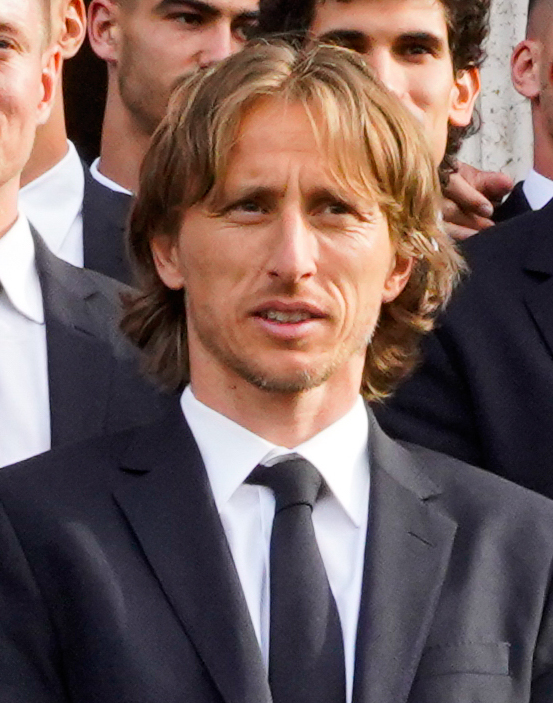
Photo: Fotografías Archimadrid.es / Wikimedia Commons / CC BY 2.0
_(Luka_Modri%C4%87).jpg)
Croatia’s preliminary squad is a fascinating blend of legacy and youth. It’s the last World Cup for the core that delivered a final (2018) and a third-place finish (2022). Alongside Modric, Ivan Perisic, Mateo Kovacic, and Andrej Kramaric provide the veteran backbone.
But look at the names Dalic has called up: Josko Gvardiol, the defensive rock; Luka Sucic, the energetic Red Bull Salzburg midfielder; Martin Baturina, the creative heir apparent. This is a deliberate passing of the torch during the tournament. The old guard provides the stability for the new guard to express themselves without shouldering the entire nation’s hope.
Their Group L draw. England, Ghana, Panama, is manageable. England is the clear favorite, but Ghana and Panama present very different tactical challenges. Modric’s role against a physical Ghana midfield will differ from his role against a Panama side likely to sit deep. This is where his tactical intelligence shines. He’s the on-pitch manager, implementing the advanced soccer tactics Dalic devises.
The squad’s journey here matters. They were unbeaten in qualifying, not conceding a goal for eight straight matches. That defensive solidity, often orchestrated from the front by Modric’s pressing cues, is their platform. They don’t need to outscore everyone. They need to control, frustrate, and strike efficiently, a perfect blueprint for an aging, intelligent team.
TL;DR: This is a transition squad built for one more deep run, using veteran savvy to shelter emerging standout players of 2026.
Historical Context: Joining the Pantheon
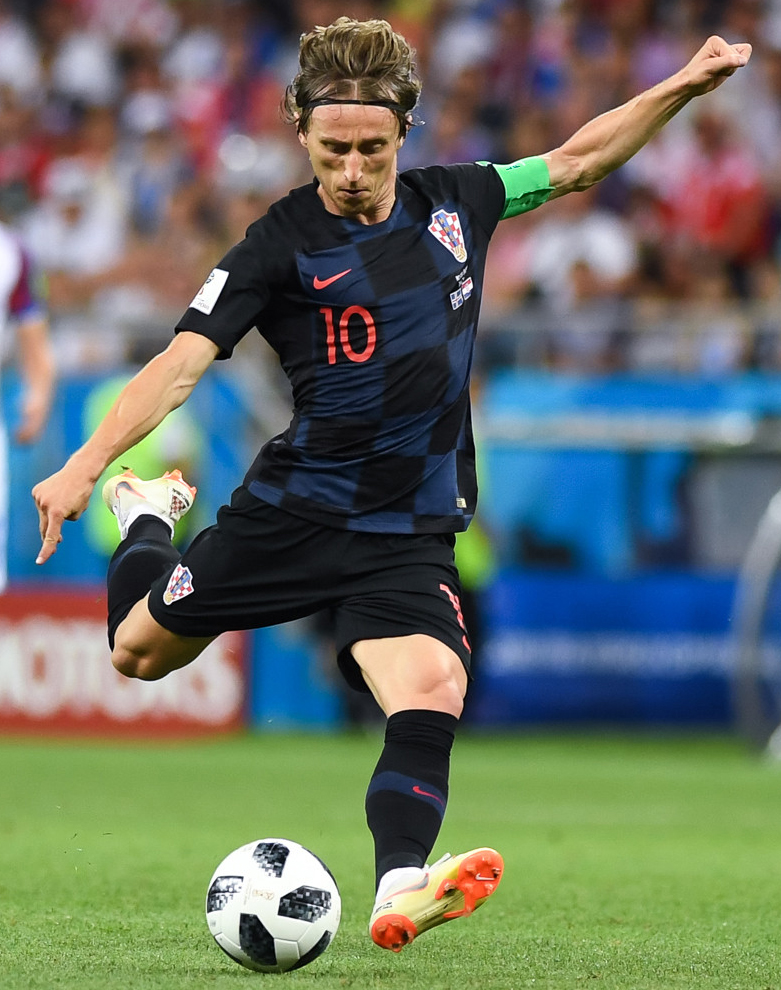
Photo: Светлана Бекетова / Wikimedia Commons / CC BY-SA 3.0

Modric playing a World Cup at 40 places him in rare company. He’s not the oldest outfield player ever, that record belongs to Cameroon’s Roger Milla (42 in 1994). But he is arguably the most technically gifted player to compete at that age on this stage.
The comparison isn’t about athleticism. It’s about influence. Most players at 40 who make a World Cup squad are goalkeepers or niche impact substitutes. Modric is still his team’s central tactical pillar. This speaks to a career built on technique and intelligence over pure physical dominance. While others rely on elite speed in soccer, Modric’s game is based on anticipation and touch, attributes that fade last.
His longevity also reframes the conversation around underrated football talents. For years, even after his 2018 Ballon d’Or win, pundits underrated his consistent, season-defining impact. This fifth World Cup is the ultimate rebuttal. It’s a sustained excellence that few Argentinian football legends or global icons can match.
The narrative is complete: the boy from Zadar who survived war, the midfielder deemed too slight, the Ballon d’Or winner who broke the Messi-Ronaldo duopoly, now the enduring captain for a fifth World Cup. It’s a career that writes its own legend, one tournament at a time.
Frequently Asked Questions
Will Luka Modric be fit for Croatia’s first World Cup 2026 match?
Yes, all indications point to full fitness. His cheekbone surgery was successful, and he has been training with a protective mask for weeks. Coach Dalic has expressed no concerns, and Modric is expected to start against England on June 17 barring any last-minute setbacks.
How many World Cups has Luka Modric played in?
The 2026 tournament will be Luka Modric’s fifth World Cup. He previously played for Croatia in 2006, 2014, 2018, and 2022. His 2018 campaign, where he won the Golden Ball and led Croatia to the final, is the most celebrated.
What is Luka Modric’s role in the 2026 Croatian team?
At 40, Modric’s role has evolved into a deep-lying playmaker or regista. He will control the game’s tempo from a deeper midfield position, using his experience and vision to launch attacks and manage pressure, while allowing younger midfielders like Sucic and Baturina to make forward runs.
Has Luka Modric retired from international football?
No, Luka Modric has not retired from international football. His inclusion in the 2026 World Cup preliminary squad confirms his continued commitment to the Croatian national team. He is expected to assess his international future after the tournament concludes.
The Bottom Line
Luka Modric is playing in the 2026 World Cup. The squad list is official, the injury is healing, and the coach’s faith is absolute. This fifth appearance is more than a farewell tour; it’s a strategic necessity for a Croatian team balancing legacy and future.
Forget the age on the passport. Watch the player on the pitch. He will be the one dictating the rhythm, shielding the defense, and picking the pass that nobody else sees. Betting against him has always been a mistake. The 2026 World Cup will be no different.

I come from the “soccer heart” of Germany, the Ruhrpott. I have played, trained and followed soccer all my life and am a big fan of FC Schalke 04. I also enjoy following international soccer extensively.