How to Wash Goalkeeper Gloves Properly — The Right Way
To wash goalkeeper gloves without damage, use only lukewarm water and a specialist glove cleaning solution or mild, pH-neutral soap. Hand wash gently without twisting or scrubbing, rinse thoroughly, and air dry flat in the shade with glove shapers inside. Never use a washing machine, hot water, harsh detergents, or direct heat.
People ruin gloves by treating them like regular laundry. They toss them in a machine, blast them with hot water, or leave them baking on a radiator. That turns premium latex into stiff, cracked cardboard in weeks. The process isn’t complicated, but it demands a specific sequence and the discipline to avoid shortcuts.
This guide walks through the exact steps, from the immediate post-match rinse to the final storage trick that keeps palms tacky for months. We’ll cover what to use, what to avoid, and why each rule exists based on how latex actually works.
Key Takeaways
- Wash gloves immediately after use; dried-on mud and sweat degrade latex faster than wear.
- Use only lukewarm water and a specialist glove wash or mild, pH-neutral soap, never laundry detergent.
- Hand wash by gently rubbing palms together; aggressive scrubbing or twisting creates micro-tears.
- Air dry flat in a shaded, ventilated spot with glove shapers inside; heat makes latex brittle.
- Clean after every muddy session, but limit deep cleans with soap to once every 1-2 weeks to preserve natural grip.
Why Proper Washing Is Non-Negotiable
Goalkeeper gloves are a friction tool, not just padding. The latex palm is a porous, tacky surface designed to grip a ball. Dirt, dried sweat, and ground-in mud act like sandpaper, filling those pores and abrading the surface. Every training session without a rinse grinds away a layer of grip.
Latex polymers break down under three main stressors: chemical attack from alkaline soaps, thermal degradation from heat, and mechanical stress from stretching or twisting. Proper washing minimizes all three.
I learned this the hard way with my first pair of Reusch gloves. I was sixteen, proud of them, and lazy. After a rainy Tuesday match, I shoved them, still caked in mud, into my bag. By Thursday training, the palms had a grey, hardened film. No amount of washing brought the sticky grip back. They were slick within a month. That cost me a replacement pair and a lesson, latex has no memory for neglect.
TL;DR: Immediate, gentle cleaning isn’t just about hygiene; it’s the single biggest factor in how many saves you get out of a pair.
What You Need (And What to Absolutely Avoid)
Gather the right tools before you start. Using the wrong one guarantees damage.
You need a sink or bucket, lukewarm water, and a cleaning agent. For the cleaner, you have two proven paths. A dedicated glove wash like Sondico Glove Wash or Uhlsport Protein Cleaner is formulated for latex. It cleans without stripping the tackifying agents. The alternative is a mild, pH-neutral soap, think baby shampoo or a plain glycerin soap. The key is neutral pH; most hand soaps and all laundry detergents are too alkaline.
The “avoid” list is longer. Never use a washing machine. The agitation shreds seams and delaminates the palm. Never use hot water, it cooks the latex, making it brittle. Ban all brushes, scouring pads, and anything abrasive. Your fingers are the only tool allowed.
| Tool / Agent | Use For | Risk If Used |
|---|---|---|
| Specialist glove wash (e.g., Sondico) | Deep cleaning, odor removal, grip preservation | None if used as directed; it’s designed for the job. |
| pH-neutral baby shampoo | Accessible alternative for light cleaning | Potential residue if not rinsed thoroughly, can slightly dull grip over many uses. |
| Laundry detergent | DO NOT USE | Strips natural latex oils, leaves alkaline residue that accelerates cracking. |
| Stiff-bristled brush | DO NOT USE | Scratches the palm surface, creating permanent grip-loss channels. |
| Hot water / Direct heat (radiator, hair dryer) | DO NOT USE | Denatures latex proteins, causing permanent stiffening and cracks in under 10 drying cycles. |
TL;DR: Buy a bottle of glove-specific wash. It’s cheaper than replacing gloves ruined by dish soap.
The Step-by-Step Washing Process (Hand Wash Only)

This is the core sequence. Missing a step or rushing it compromises the result.
Before you start: Remove any removable finger spines. If you wash gloves with spines inside, water gets trapped in the channels, leading to internal mildew and a foul smell that never leaves.
Step 1: The Immediate Post-Use Rinse
Do this at the pitch side if you can. Right after the session, run your gloves under a tap or use a water bottle. Use cool or lukewarm water. This isn’t a full wash, it’s a flood to suspend mud and sweat before they dry and bond to the latex. Gently squeeze the palms to push water through the material. You’ll see brown water running out. That’s dirt leaving.
Skipping this lets debris harden. That hardened grit then grinds against the latex during your next cleaning attempt, acting like sandpaper.
Step 2: Prepare the Wash Solution
At home, fill a bucket or sink with lukewarm water. It should feel neutral to your wrist, not warm. If your tap runs hot, mix in cold water. Add your cleaner. For a specialist wash, follow the bottle’s dosage, usually a capful. For baby shampoo, two or three drops are plenty. Swirl the water to distribute.
Using too much soap is a common error. Excess sugs make rinsing a marathon, and leftover residue creates a slippery film. More soap does not mean cleaner gloves.
Step 3: The Gentle Hand Wash
Submerge both gloves. Use your hands to gently rub the palms together in a circular motion. Use your fingertips to work the solution into the finger stalls and backhand. Focus on stained areas. Let the soap and water do the work.
Do not scrub. Do not twist the gloves. Do not wring them out. That stretching motion stresses the latex at a molecular level, creating micro-tears that expand into splits. The force you use should be less than you’d use to wash your own face.
Step 4: The Thorough Rinse
This step is where most people cheat. Empty the dirty water. Refill the bucket with fresh, clean lukewarm water. Submerge the gloves and gently squeeze them repeatedly, flushing out the soapy water. Change the water and repeat until no suds appear when you squeeze. This usually takes two or three bucket changes.
Incomplete rinsing leaves a soap film. That film kills grip on first contact with a ball. It also attracts more dirt next time you play.
Step 5: Removing Excess Water
Do not wring. Lay a clean, absorbent towel flat. Place the gloves on it, palms up. Roll the towel up from one end, applying gentle, even pressure as you go. You’re blotting, not twisting. Unroll the towel. The gloves should be damp, not dripping.
Drying and Storage: The Make-or-Break Phase

How you dry gloves matters as much as how you wash them. Heat is the enemy.
Common mistake: Drying gloves on a radiator or in direct sun, the latex loses plasticity within a single drying cycle, becoming stiff and prone to cracking on the first punch or catch.
After blotting, insert your glove shapers. If you don’t have commercial shapers, loosely crumpled paper towels or a dry hand towel will work. The goal is to support the glove’s natural shape as it dries, preventing the fingers from curling and the palm from creasing.
Lay the gloves flat on a drying rack or a fresh towel in a shaded, well-ventilated room. A garage or a room with a fan works. Ensure the palms are facing up and not touching each other. Drying time is 12 to 24 hours depending on humidity. They must be completely dry to the touch inside and out before storage.
Never store damp gloves in a sealed bag or your kit bag. That creates a petri dish for bacteria and mold. The smell becomes permanent. For long-term storage, keep them in a cool, dry place, ideally with the palms facing away from each other or with a piece of paper between them to prevent sticking.
For more detailed methods, our guide on proper drying methods covers advanced techniques for humid climates.
TL;DR: Dry flat, in the shade, with shapers inside. Any heat source is a glove killer.
How Often Should You Wash Goalkeeper Gloves?
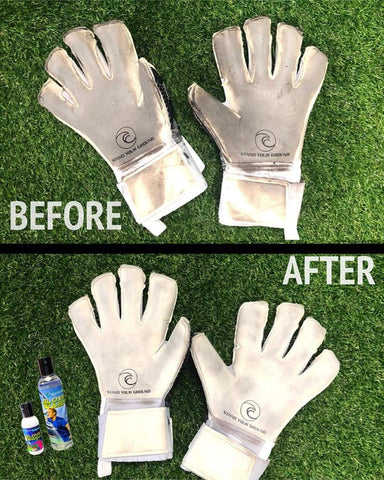
Frequency is a balance. You must clean after dirty use, but over-washing with soap can degrease the latex.
- After every session: Rinse with water only. This is mandatory to remove sweat and surface dirt.
- Deep clean with solution: Every 1 to 2 weeks for regular training, or after every 3-4 matches. This tackles ingrained grime and odor.
- Pre-game prep: Lightly dampen palms with water 10 minutes before play to activate the latex grip. Do not soak them.
This schedule aligns with the need for a glove break-in period for new pairs, where gentle, frequent water rinses help mold the latex to your hand without harsh chemicals.
If you play on artificial turf, you’ll need to rinse after every single session without fail. The black rubber crumb embeds itself into the palm and is highly abrasive.
Troubleshooting: Odor, Stiffness, and Minor Repairs
Sometimes, despite your best efforts, problems arise.
Persistent Odor: If a deep wash doesn’t kill the smell, try a baking soda soak. Mix a tablespoon of baking soda into your lukewarm wash water and soak the gloves for 15 minutes before rinsing thoroughly. Baking soda is a mild alkali that neutralizes acidic odor compounds without damaging latex like bleach would. For ongoing care, consider the odor removal techniques used for synthetic sportswear.
Stiff Palms: This is usually a heat-drying injury and is often permanent. You can try a very light application of a latex conditioner or reviver spray from brands like Reusch. It might restore some suppleness, but the structural integrity is compromised. Stiff gloves are a primary glove replacement sign.
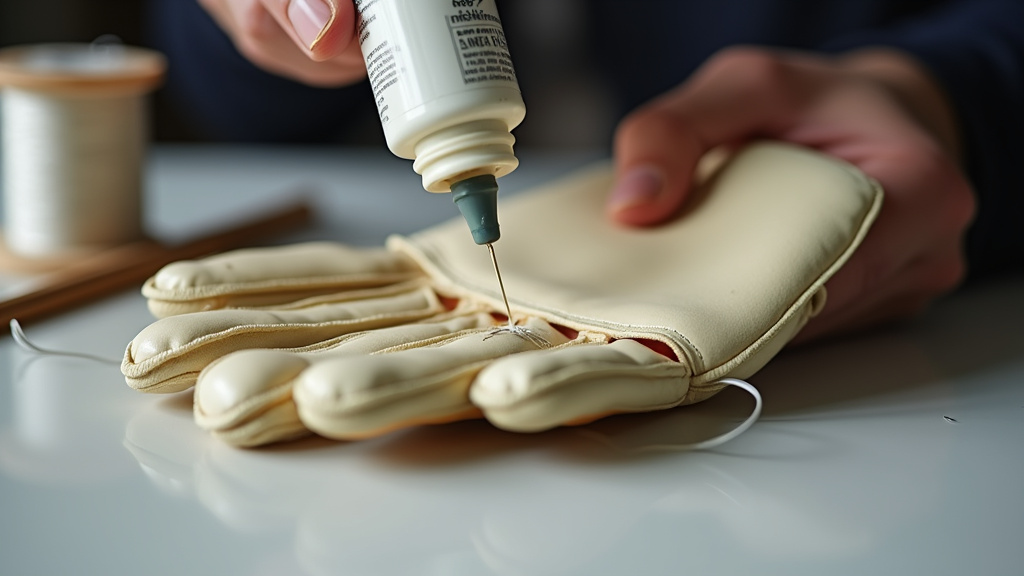
Small Tears or Loose Seams: For a small latex tear (under 1cm), a drop of flexible latex glue or rubber cement can seal it. Apply sparingly, press closed, and let it cure for 24 hours. For a loose seam on the backhand, a few hand-stitches with a strong nylon thread can extend life. Understand your glove palm materials first, repairing a soft, rolled latex is different from fixing a durable negative cut.
Frequently Asked Questions
Can I use washing machine for goalkeeper gloves?
No. Never. The spin cycle’s agitation and the high heat of most machine washes will destroy the latex palms, shred the internal stitching, and warp the glove shape. It is the fastest way to ruin a good pair.
What soap is safe for goalkeeper gloves?
specialist goalkeeper glove wash is safest. If unavailable, use a mild, pH-neutral soap like baby shampoo or an unscented glycerin soap. Avoid all laundry detergents, dish soaps, and hand soaps with moisturizers or antibacterials.
How do I dry goalkeeper gloves quickly without damaging them?
You don’t. Rushing the process causes damage. The only safe method is air drying at room temperature. Place them near a fan for increased airflow, but not directly on a heat vent. Using glove shapers or paper towels inside dramatically speeds up moisture absorption.
Why are my gloves still smelly after washing?
Odor is often trapped in the lining or the foam layer behind the latex. Ensure you rinse thoroughly to remove all soap residue, which can trap smells. For stubborn cases, a baking soda soak or a commercial glove deodorizer spray is necessary. Always store gloves completely dry.
Can hard water damage my gloves?
Over many washes, mineral deposits from hard water can build up on the latex, slightly reducing grip. If you live in a very hard water area, a final rinse with distilled or filtered water can help. This is a minor concern compared to using the wrong soap or heat.
How does this care compare to washing a jersey?
The principles of gentle handling and air drying are similar, but the materials are worlds apart. Follow our jersey cleaning guide for kits, but never use the same detergents or techniques on your gloves. Latex requires specific, non-abrasive care.
Before You Go
Washing goalkeeper gloves is a ritual, not a chore. It directly translates to more secure catches, better punches, and a longer relationship with a trusted piece of gear. The rules are simple: be immediate, be gentle, and never introduce heat. Invest in a proper cleaner and a pair of shapers. Your gloves, and your clean sheets, will thank you.
Remember, the correct glove size and proper pre-game preparation are part of the same performance ecosystem as post-match care. It’s all connected. Now go get them dirty, then get them clean.

I come from the “soccer heart” of Germany, the Ruhrpott. I have played, trained and followed soccer all my life and am a big fan of FC Schalke 04. I also enjoy following international soccer extensively.