World Cup Jerseys: Adidas vs Nike Compared on Build Quality
This post contains affiliate links. As an Amazon Associate, we earn from qualifying purchases.
Choosing between Adidas and Nike 2026 World Cup jerseys means comparing two different philosophies. Nike’s focus is on kit innovation with Aero-FIT technology and recycled materials, but it’s marred by a confirmed shoulder seam defect. Adidas is channeling its 2026 energy into groundbreaking footwear like the Adizero Prime X3 Strung and 3D-printed Climacool sneakers, leaving its kit designs more traditional.
Most comparisons stop at the marketing copy about breathability and recycled plastic. They miss the real story, the one playing out in fan forums and on the shoulders of players. In March 2026, Nike released kits for England, France, and the USMNT that immediately developed a visible bulge at the seam. The company admitted the product “fell short.” Meanwhile, Adidas isn’t trying to win the jersey war this cycle. Its statement is being made on the feet of athletes and in labs, with stack heights hitting 50mm and energy return rates pushing past 76%.
This breakdown cuts through the hype. We’ll compare the actual tech specs, dissect a real manufacturing failure, and look at where each brand is truly betting its 2026 reputation.
Key Takeaways
- Nike’s 2026 kits use Aero-FIT technology and 100% recycled polyester, but a widespread shoulder seam defect has undermined their launch.
- Adidas is focusing its 2026 innovation on footwear, with superfoams like Lightstrike Pro and experimental 3D-printed uppers, not kit redesigns.
- Lab data reveals Adidas’s shoe tech leads in measurable performance, like the Adizero Prime X3 Strung’s 76.7% forefoot energy return.
- Fan sentiment on platforms like Reddit is split between excitement for qualified nations and calls to boycott the North American host venues over cost and politics.
- The choice isn’t just brand loyalty; it’s about valuing flawless execution on a jersey versus supporting a brand pushing the limits of athletic gear elsewhere.
The Tech Specs: Aero-FIT vs. A Footwear Focus
Forget vague claims about “performance feel.” The 2026 kit battle is defined by one brand’s targeted apparel innovation and the other’s strategic pivot to shoes.
Nike’s entire 2026 World Cup kit line, from the USMNT (style IB5183-133) to Brazil (style IB5143-724), is built on two pillars. The material is 100% recycled polyester, spun from plastic bottles. The technology is Nike Aero-FIT, a lightweight, stretch-woven fabric engineered for what Nike calls “maximum breathability and airflow against the skin.” The design process for the USMNT kit notably involved direct player feedback on fit and mobility, a direct response to criticisms of past tournaments. On paper, it’s a sustainability and performance story.
Adidas’s 2026 story isn’t on the jersey. It’s underfoot. Their parallel 2026 releases are footwear like the Adizero Prime X3 Strung running shoe. Its midsole packs three layers of Lightstrike Pro superfoam and a full-length carbon fiber plate. Lab tests from RunRepeat measure its forefoot energy return at 76.7%. For context, that’s a quantifiable propulsion metric most running shoes don’t touch. This is where Adidas is spending its R&D budget.
Nike Aero-FIT technology utilizes a specific knit structure to create micro-channels across the jersey surface. This design promotes air circulation directly against the skin, aiming to manage moisture and reduce heat buildup during high-intensity match conditions, as detailed in the technical specifications for the USMNT 2026 authentic jersey.
The difference in focus creates a clear divergence. Nike wants to own the narrative of the kit itself, how it looks, feels, and performs on the player’s torso. Adidas is betting that the supporting gear, the tools for athletic performance, will define its 2026 legacy. One approach is aesthetic and tactile; the other is mechanical and data-driven.
TL;DR: Nike’s kit tech is Aero-FIT breathability; Adidas’s 2026 tech is in superfoams and carbon plates found in their performance shoes.
The Shoulder Seam Defect: A Non-Commodity Problem
This is where commodity reviews end and real-world ownership begins. Shortly after the March 2026 release, a specific physical flaw appeared on the Nike kits.
During the ensuing international break, fans and photographers noticed it on the pitch. The shoulder seams on the jerseys of England, France, and Uruguay were bulging, creating a visible, wrinkled bunch. It wasn’t a one-off. Social media filled with images of the £135 jersey “bunching like this, no matter what,” as one owner put it. The defect was consistent enough to suggest a manufacturing flaw, not a laundry error.
Nike confirmed it. The company stated a “minor issue” with manufacturing had caused the product to “fall short of our standards.” They acknowledged working with federations and retailers on “next steps.” Reports from outlets like PapaLinc noted the kits’ design involved AI, raising questions about the intersection of digital design and physical assembly.
| Aspect | The Commodity Claim | The Documented Reality |
|---|---|---|
| Shoulder Construction | Reinforced, seamless fit for mobility. | Seams bulge and wrinkle, creating an unkempt appearance. |
| Manufacturing Quality | “Built to perform in high-intensity conditions.” | Nike admits the product “fell short” of its own standards. |
| Fan Experience | Proudly wear an authentic, player-grade jersey. | High-cost item displays a visible, widespread defect. |
The consequence is immediate and social. Wearing a defective kit, especially one with a flaw highlighted in match broadcasts, changes the purchase from a point of pride to a potential embarrassment. It breaks the illusion of authenticity. For collectors and fans, this isn’t a minor detail, it’s the central detail.
Common mistake: Ignoring early user reports of manufacturing flaws on newly released kits, by the time the manufacturer acknowledges it, your expensive authentic jersey may already be a known defective batch.
This flaw provides a non-commodity lens. Any review can list the recycled materials. Only an analysis grounded in post-launch evidence can tell you the shoulder might not hold its shape.
Adidas’s 2026 Parallel Play: Shoes as Statement

Photo: pinkllamanade / Wikimedia Commons / CC BY-SA 2.0
While Nike managed a kit crisis, Adidas was showcasing a different kind of 2026 innovation. It wasn’t about jerseys. It was about rethinking the entire concept of a shoe.

Their headline was the 3D-printed Climacool sneaker. This isn’t an incremental update. It’s a single-piece, lattice-structured shoe printed from a rubbery polymer, with density varying from a firm sole to a flexible upper. Adidas marketed it as a lightweight, futuristic casual shoe. The Verge’s review delivered a non-commodity reality check: at 416 grams, it was “heavier and more rigid than expected.” Its true use case solidified as a washable, statement-making streetwear item, not a performance breakthrough.
The real performance came from the lab. Let’s talk about the Adizero Prime X3 Strung. The numbers from RunRepeat’s cut-in-half analysis are stark:
* Heel Stack Height: 50 mm
* Forefoot Energy Return: 76.7%
* Heel Shock Absorption: 160 SA (a lab-measured unit for impact damping)
These aren’t marketing terms. They are physical measurements from a standardized lab test. A 76.7% energy return means the foam gives back that proportion of the energy you put into compressing it. It’s a quantifiable proxy for “bounce.” This is Adidas’s actual 2026 battleground: measurable, biomechanical advantage.
The comparison becomes asymmetrical. You’re not just choosing between two jersey makers. You’re choosing between a brand fixing a seam problem on its apparel and a brand publishing lab reports on foam elasticity. For a fan, the question is whether you care more about the symbol on your back or the engineering in the gear surrounding the sport.
Fan Sentiment and the 2026 Atmosphere
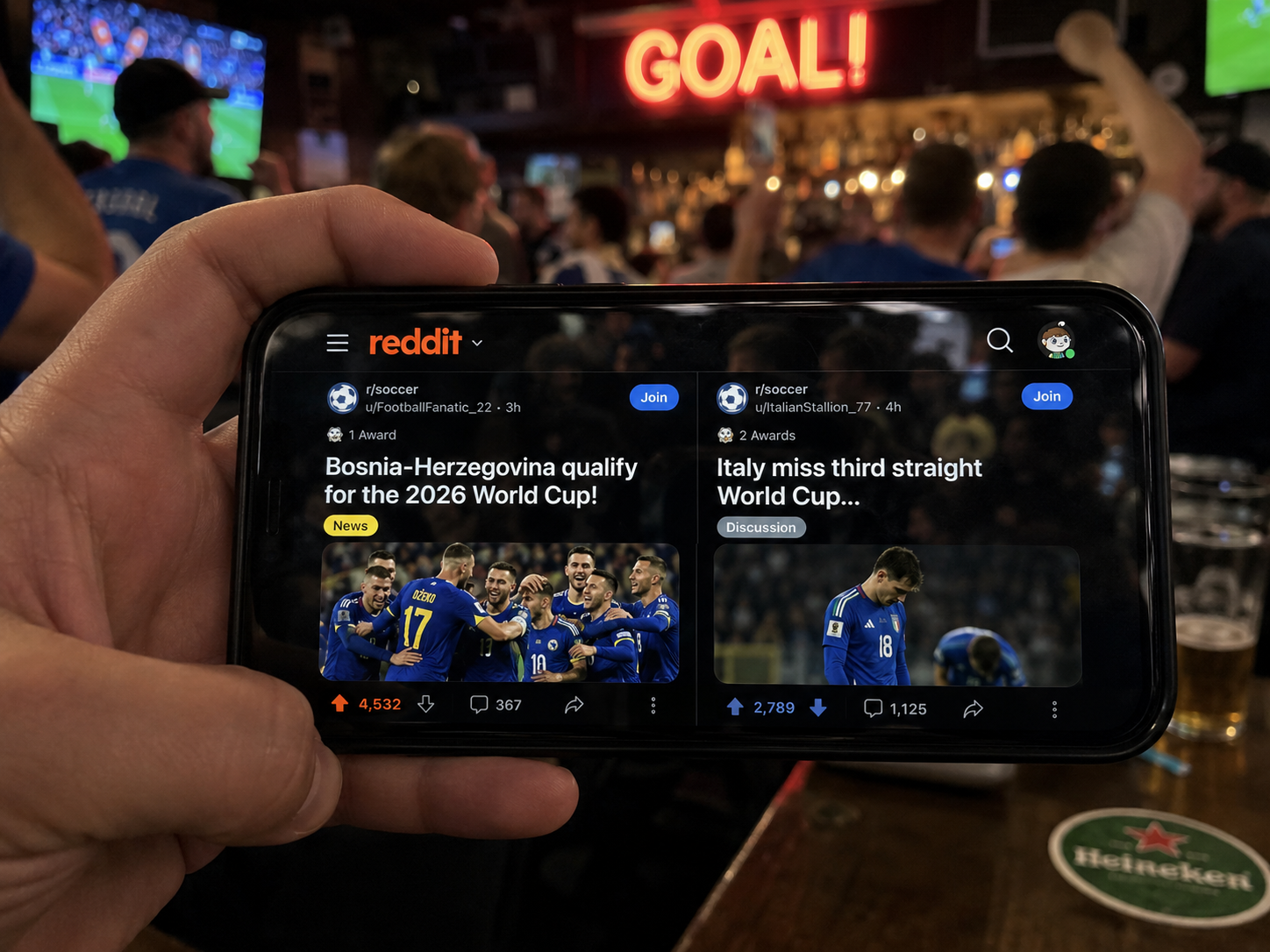
The jersey debate doesn’t happen in a vacuum. It’s set against the backdrop of a fractured and passionate global fan conversation about the 2026 tournament itself.
On Reddit, the mood is split. There’s palpable joy for historic qualifiers. “Bosnia-Herzegovina qualify for the 2026 World Cup!” read one top post in r/soccer, celebrating a nation reaching its first finals. Another thread somberly noted Italy missing its third straight World Cup, a “painful” reality for a four-time champion. These emotional extremes define a tournament’s narrative before a ball is kicked.
Simultaneously, significant dissent brews. In r/Scotland, a highly-upvoted post titled “Boycott the 2026 World Cup” gained traction. The arguments weren’t about soccer. They cited the “prices alone,” political turmoil in the host United States, and a desire for the event to be moved to Canada or Mexico. For some fans, the location has become a barrier to celebration.
This atmosphere affects the jersey purchase. Buying a 2026 kit isn’t just supporting a team; it’s participating in a contested event. The garment carries the weight of that geopolitical and economic debate. A flawless jersey might feel like a worthwhile token. A defective one, like Nike’s, can feel like a metaphor for a flawed tournament.
TL;DR: Fan discussions are polarized between pure sporting joy for new qualifiers and serious calls to boycott the host nations, adding a political layer to the simple act of buying a jersey.
Materials and Sustainability: A Draw with an Asterisk

Photo: Gary Halvorson, Oregon State Archives / Wikimedia Commons / CC BY 4.0
On the surface, the sustainability story is identical. Both brands have converged on the same solution for 2026.

Nike and Adidas both manufacture their 2026 kits from 100% recycled polyester. The process is the same: collect plastic bottles, clean and shred them into flakes, convert them to pellets, and spin them into polyester yarn. Nike claims this reduces carbon emissions by up to 30% compared to virgin polyester and diverts an average of one billion bottles annually. Adidas makes similar claims across its product lines.
This is a commodity fact. Every major brand is doing it. The non-commodity angle is the asterisk: sustainable materials don’t guarantee sustainable quality. A jersey that develops a defect and is discarded after a season negates the environmental benefit of its recycled origin. Longevity is the missing metric in the sustainability equation.
The material choice also influences performance. Recycled polyester is excellent for moisture-wicking and durability. It lacks the natural temperature regulation of cotton or wool, but for a high-intensity sportswear application, it’s the industry standard. The real differentiator isn’t the what, it’s the how well. A perfectly sewn seam on recycled fabric is a sustainable product. A bulging seam on the same fabric is potential waste.
Head-to-Head: Which 2026 Brand Wins for You?
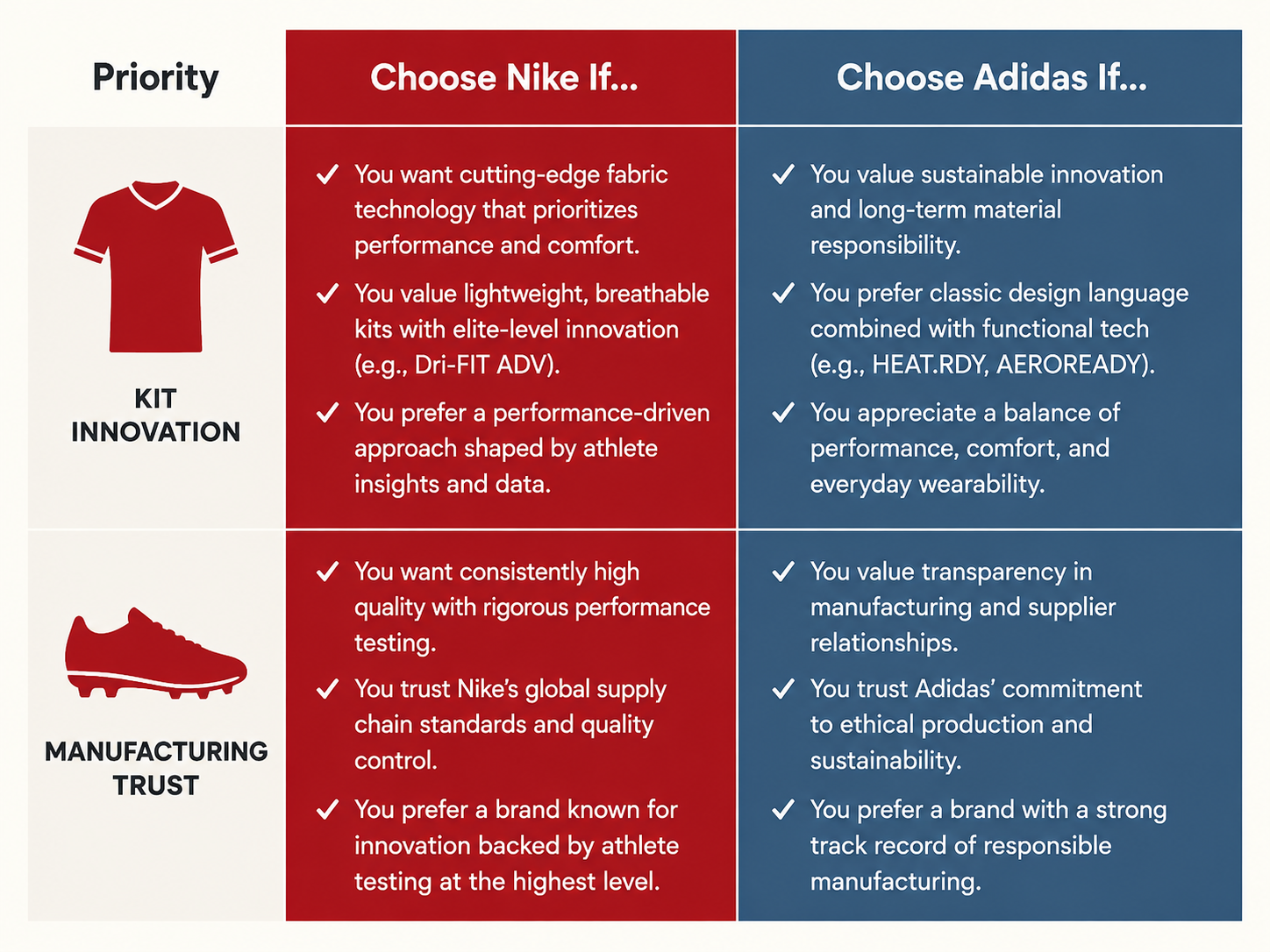
This isn’t a tie. The winner depends entirely on what you value as a fan and consumer. The following table breaks down the decision.
| Priority | Choose Nike If… | Choose Adidas If… |
|---|---|---|
| Kit Innovation | You want the latest apparel-specific tech (Aero-FIT) and value player-influenced design. | You prioritize footwear engineering and material science over jersey redesigns. |
| Manufacturing Trust | You believe the shoulder seam issue will be fully resolved in later production runs. | You prefer a brand whose current headline product (footwear) isn’t under a quality cloud. |
| Performance Data | You care about breathability and fit specs from the kit manufacturer. | You are impressed by lab-measured shoe metrics like 76.7% energy return and 160 SA shock absorption. |
| Statement Purchase | Wearing the exact, player-issued kit design (flaws and all) is most important. | You value cutting-edge, conversational tech like 3D-printed sneakers in your fan identity. |
For the purist who lives and dies with the 2026 soccer legends on the pitch, the authentic kit is non-negotiable. You accept the risk for the symbol. For the technophile fascinated by the fastest players in 2026 and the gear that enables them, Adidas’s parallel development in footwear is a more compelling story of progress.
Consider the athlete’s entire ecosystem. The soccer player diet and soccer workouts that build the player physique are supported by equipment. Does your brand loyalty extend to that entire performance chain, or does it stop at the shirt on your back?
Frequently Asked Questions
Are the Nike 2026 World Cup jerseys defective?
Nike has acknowledged a manufacturing issue causing a bulging shoulder seam on several 2026 national team kits, including those for England and France. The company stated the products “fell short” of its standards and is working on a resolution. Not every jersey may be affected, but the defect is widespread enough for an official acknowledgment.
What is Adidas’s main product for the 2026 World Cup?
Adidas’s primary 2026 innovations are in performance footwear, not jerseys. Flagship products include the Adizero Prime X3 Strung running shoe with Lightstrike Pro foam and a carbon plate, and the experimental 3D-printed Climacool sneaker. Their kit designs for the tournament are more evolutionary.
Which brand is more sustainable for 2026 jerseys?
Both Nike and Adidas use 100% recycled polyester from plastic bottles for their 2026 kits, making their core material sustainability very similar. The true environmental impact, however, depends on product longevity, a jersey that lasts years is more sustainable than one discarded due to a defect.
How does fan sentiment affect buying a 2026 jersey?
Fan sentiment is deeply split. While there is excitement for qualifying nations, there are also vocal calls to boycott the 2026 tournament over host country politics and costs, as seen in communities like r/Scotland. Buying a jersey can feel like an endorsement of the entire event, adding a political dimension to the purchase.
Before You Go
Your choice between an Adidas or Nike 2026 jersey now hinges on more than color and crest. Nike offers direct kit innovation shadowed by a real quality control failure, a gamble on a fix. Adidas presents a compelling sideline story of radical footwear engineering, from lab-tested superfoams to printable sneakers.
Look past the recycled polyester marketing that both brands share. Instead, consider the modern tactics of brand positioning. One is fighting a reputation battle on the seams of a shirt. The other is competing on the cutting room floor of a lab, defining performance for the 2026 football season in a different way. Base your decision on which battle you find more authentic, and which potential flaw you’re willing to wear.

I come from the “soccer heart” of Germany, the Ruhrpott. I have played, trained and followed soccer all my life and am a big fan of FC Schalke 04. I also enjoy following international soccer extensively.