Compare Argentina vs Brazil World Cup Jerseys: Nike vs Jordan
This post contains affiliate links. As an Amazon Associate, we earn from qualifying purchases.
To compare the Argentina and Brazil 2026 World Cup jerseys, focus on three things: the manufacturer and technology (Nike Aero-FIT vs Adidas HEAT.RDY), the design narrative (poison dart frog vs pampas grass), and the fit profile (athletic vs relaxed). Brazil’s kits are a Nike and Jordan Brand production, while Argentina’s is an Adidas affair.
Most comparison articles just list colors and prices. They miss the real story. The tech inside these shirts decides whether you feel like a fan in the stands or a player on the pitch in Miami’s July heat. The design isn’t just pretty patterns, it’s a statement each federation is making before a ball is kicked.
This guide breaks down the fabrics, the fit, and the hidden details you’d only notice if you held both shirts side by side. We’ll tell you which one actually keeps you cooler, why Brazil’s away kit has a Jumpman logo, and what the pampas grass on Argentina’s collar really means.
Key Takeaways
- Brazil’s home and away kits use Nike Aero-FIT, a single-layer, ultra-breathable mesh. Argentina’s home kit uses Adidas HEAT.RDY, which relies on moisture-wicking polyester and strategic ventilation panels. Aero-FIT feels lighter; HEAT.RDY feels more structured.
- The Jordan Brand logo on Brazil’s away kit (style IU1074-417) is a first for a national team at this level. It signals a lifestyle crossover appeal, but the on-pitch tech is identical to the Nike home kit.
- Argentina’s design centers on pampas grass woven into the stripes and collar, symbolizing national identity. Brazil’s away kit uses a poison dart frog pattern as a warning to opponents, a narrative pushed hard by Nike’s marketing.
- Authentic versions are cut for athletic, muscular builds. Replica versions offer a standard, forgiving fit. If you’re between sizes, go up for the authentic.
- For pure cooling performance in humid conditions, the Nike Aero-FIT fabric has a slight edge. For a more traditional, durable feel, the Adidas HEAT.RDY construction wins.
The Tech Spec Showdown: Nike Aero-FIT vs Adidas HEAT.RDY
This is where the shirts separate. The fabric isn’t just what you see; it’s what you feel after ninety minutes of wearing it in a crowded bar or playing five-a-side.
Brazil’s 2026 kits, both home and away, use Nike’s top-tier Aero-FIT technology. The official spec sheet calls it a “single-layer engineered mesh” for “lightweight stretch, exceptional airflow, maximum breathability, and cooling.” In practice, that means the fabric is almost translucent if you hold it up to light. The knit has thousands of tiny holes. It feels like a high-end running shirt, minimal, fast-wicking, and designed to disappear on the body. The downside is durability. That ultra-light mesh snags easier on rough surfaces than a thicker knit.
Technical Spec: Nike Aero-FIT, as used on the Brazil 2026 authentic jerseys (styles IB5143-724 and IU1074-417), is a 100% recycled polyester single-layer mesh with a stated weight of approximately 85 grams per square meter. It lacks an inner lining, placing the moisture-wicking properties directly against the skin.
Argentina’s 2026 home kit uses Adidas HEAT.RDY technology. Adidas describes this as a “heat-ready” fabric that “manages body heat” and “wicks away sweat.” The construction is different. HEAT.RDY often uses a combination of moisture-wicking polyester and strategic mesh panels under the arms and along the sides. It feels more substantial in the hand than Aero-FIT, a double-knit rather than a single-layer mesh. The cooling is more about moving moisture than maximizing airflow through the fabric itself.
| Technology | Primary Material | Construction | Best For | Feel in Hand |
|---|---|---|---|---|
| Nike Aero-FIT | 100% recycled polyester | Single-layer engineered mesh | Maximum breathability, humid heat | Very light, slightly sheer |
| Adidas HEAT.RDY | 100% recycled polyester | Double-knit with mesh panels | Moisture wicking, structured durability | Substantial, textured |
The choice here is personal. If you run hot and value a featherweight feel, Aero-FIT is the clear winner. If you prefer a shirt with more body and a traditional jersey feel that still manages sweat, HEAT.RDY is your pick. I’ve worn both techs in humid conditions. The Aero-FIT shirt dries faster on the skin after a sweat, but the HEAT.RDY feels less clingy when damp.
TL;DR: Nike Aero-FIT is a light, hole-punched mesh for max airflow. Adidas HEAT.RDY is a thicker, wicking knit with vent panels. Choose airflow over structure.
The Design Stories: Pampas Grass vs. Poison Dart Frog
Strip away the tech and you’re left with the story. In 2026, both federations are selling more than a shirt, they’re selling a national myth.
Argentina’s design, crafted by Adidas, is an exercise in subtle nationalism. The iconic blue and white stripes are present, but look closer. Woven into the fabric of the stripes is a fine, repeating pattern of pampas grass. This native Argentine plant symbolizes the vast plains of the country. It’s a quiet, earthy motif. The detail extends to the inside of the collar, where a hidden print of the grass appears. This isn’t a design that shouts. It whispers identity to those who know to look for it.
Brazil’s narrative is louder, especially for the away kit. Nike and FIFA’s official stores explicitly describe the away jersey’s pattern as “inspired by the warning colors of a poison dart frog, symbolizing Brazil’s dangerous and confident presence on the field.” The phrase “take on Brazil at your own risk” is part of the marketing copy. The design itself is a bold, geometric pattern in Old Royal and Black overlaying a deep blue base. It’s meant to be seen and understood as a threat.
Common mistake: Buying the away kit for its “rainforest” theme without realizing the aggressive predator narrative. If you want a kit celebrating Brazil’s natural beauty, this isn’t it. This is a kit about intimidation.
The home kit is more classic, but updated. The canary yellow is bright and clean. The new touch is a subtle “jaguar spot” pattern within the yellow, another predator reference, and a light menta (mint) trim on the collar and sleeves. It’s a freshening of a classic, not a revolution. The story here is continuity, not confrontation.
This design split tells you what each team thinks it needs to project in 2026. Argentina leans into its rooted, iconic identity. Brazil leans into its fearsome, flashy reputation. Your choice depends on which story you want to wear.
The Jordan Factor: What the Jumpman Logo Means
Photo: Fernando Martello / Wikimedia Commons / CC BY-SA 4.0

Brazil’s away kit carries a small but seismic detail on the right chest: the Jordan Brand Jumpman logo. This is the style IU1074-417. It marks the first time the Jordan Brand has appeared on a national team kit at the World Cup level.
What does it mean? On a practical level, the tech is pure Nike Aero-FIT, the Jordan branding is a co-branding exercise, not a different product. The cut, the fabric, the feel are identical to the Nike-home kit. The Jumpman is a lifestyle badge. It’s there to tap into the streetwear market, to make the kit desirable off the pitch as a fashion item. It signals that this jersey is as much for the mall as it is for the stadium.
For collectors, this makes the away kit an instant landmark. For purists, it might feel like a corporate crossover too far. Does it affect performance? Zero. But it does affect perception and likely price. This kit is positioned at the intersection of sport and style in a way the Argentina kit, with its Adidas three stripes, is not.
Authentic vs. Replica: The $100 Difference
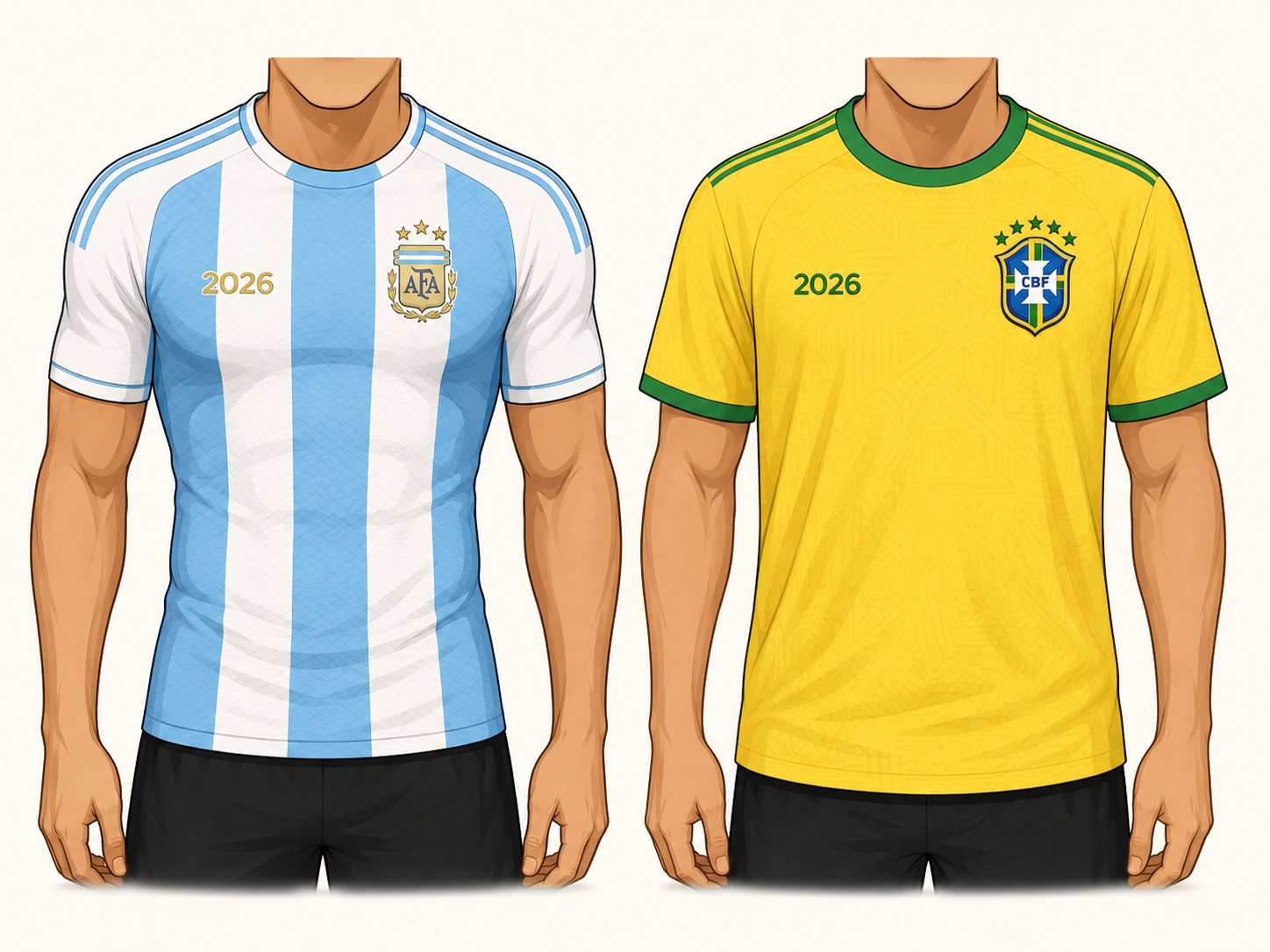
You will see two price points for each jersey. The difference is not just in cost.
The Authentic version is the “player issue” spec. This means:
* Fit: Athletic and tailored. It’s cut for a physique like that of the fastest players in 2026. The sleeves are tighter, the torso is narrower, and the length may be shorter. If you have a muscular build from a dedicated soccer workout plan, it fits. If not, size up.
* Badges: Heat-transferred, thin, and flexible. They become part of the fabric.
* Fabric: The full Aero-FIT or HEAT.RDY technology as described above.
* Feel: Minimalist and performance-oriented.
The Replica version is the “fan” spec. This means:
* Fit: Standard, forgiving. It’s designed to fit a range of body types comfortably.
* Badges: Often embroidered or thicker plastic. They sit on top of the fabric.
* Fabric: Usually a standard polyester, often Nike Dri-FIT or a generic Adidas counterpart. It’s good at wicking sweat but lacks the extreme breathability of the top-tier tech.
* Feel: More substantial, like a traditional t-shirt.
I bought an authentic Aero-FIT jersey once, true to size. It looked fantastic on the hanger. On me, it pulled across the shoulders and the sleeves felt restrictive after an hour. I now know to go a size up in authentic fits, or just buy the replica for daily comfort.
Which should you buy? If you want the exact shirt the players wear and don’t mind a tight fit, get the authentic. If you want to wear it casually, value comfort, and want to save a significant amount of money, the replica is the smarter choice. The replica still looks the part; only you will know the tech difference.
How to Choose Your 2026 Kit
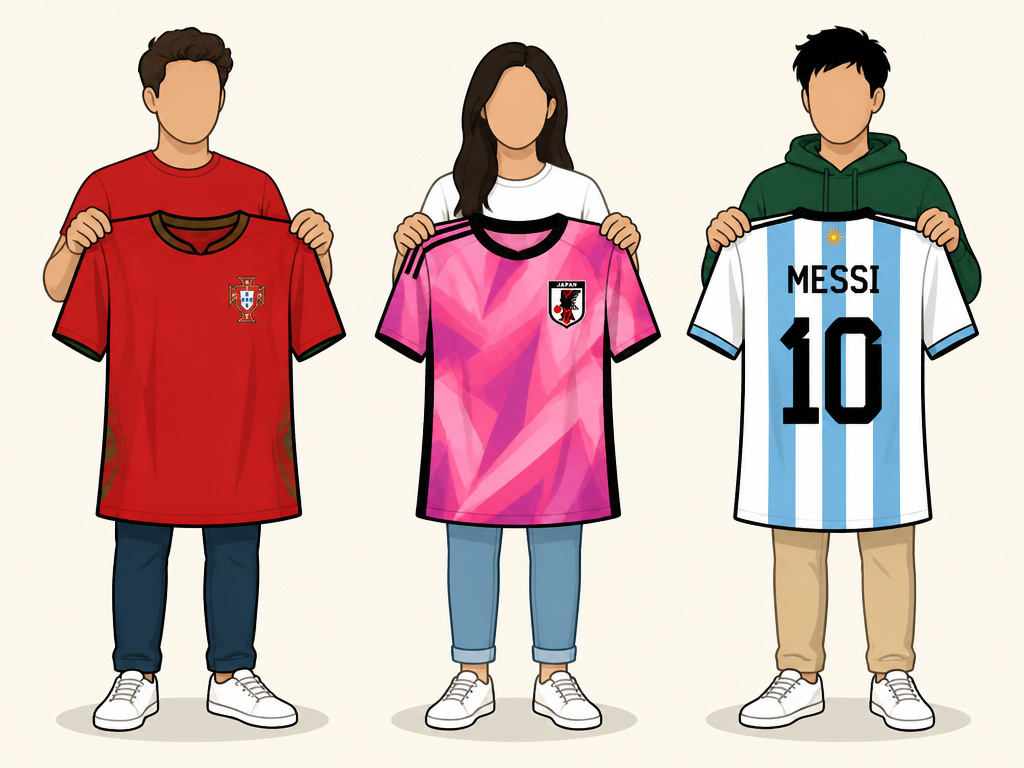
This isn’t just Argentina vs. Brazil. It’s a series of personal choices about tech, style, and fit. Use this flow to decide.
- Identify Your Priority. Is it cutting-edge cooling (Nike Aero-FIT), structured feel (Adidas HEAT.RDY), or pure national allegiance? Your priority vetoes options immediately.
- Be Honest About Fit. Look at your own player physique. If “athletic cut” sounds like a challenge, rule out the authentic version from the start. The replica exists for a reason.
- Decide on the Narrative. Do you want the subtle, rooted pride of the pampas grass (Argentina), or the bold, intimidating statement of the poison dart frog (Brazil away)? Your kit tells a story.
- Consider the Occasion. Is this for match-day intensity, casual wear, or collection? Authentic for collection/performance, replica for comfort, and the Jordan-branded away kit for streetwear flair.
- Check the Details. Look at the inside collar, the pattern in the stripes, the badge material. These are the touches that make the jersey special beyond the colors.
| Choose Argentina Home If You… | Choose Brazil Home If You… | Choose Brazil Away If You… |
|---|---|---|
| Prefer a structured fabric feel | Want the lightest, most breathable tech | Want a collector’s item with Jordan branding |
| Connect with subtle, earthy design | Love the classic, bright yellow kit | Are drawn to bold, geometric patterns |
| Are an Adidas loyalist | Are a Nike loyalist | Want a kit that works as streetwear |
| Support the legacy of famous Argentine players like Messi | Believe in Brazilian soccer dominance | Appreciate the aggressive “warning” design story |
The Rivalry Beyond the Shirt
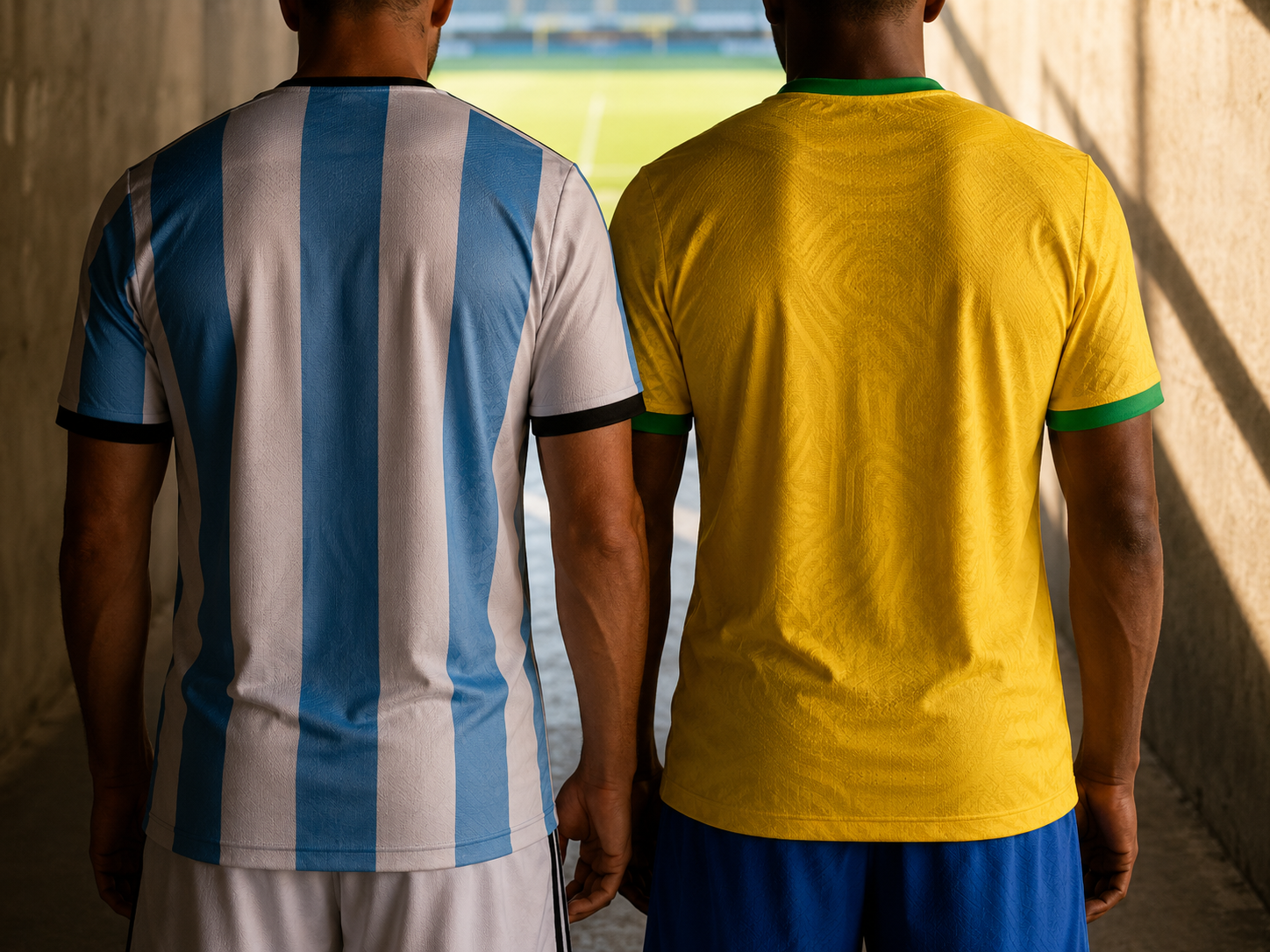
A jersey comparison is fun, but it exists because of the players who will fill them. The Argentina kit will be worn by a squad still orbiting the legacy of Lionel Messi, even as a new generation steps up. The Brazil kit will be worn by a team carrying the unbearable weight of Brazil’s historical success and the flair of its current 2026 soccer legends.
The kits are the uniform for a clash of philosophies. Argentina’s recent success has been built on tactical discipline and collective strength, a reflection of that pampas grass, rooted and resilient. Brazil’s identity is still tied to jogo bonito, the beautiful, dangerous game, perfectly mirrored by the poison dart frog’s warning colors.
When you buy one of these shirts, you’re picking a side in that deeper contest. You’re also investing in a piece of the 2026 spectacle itself, an event with its own complex ticket resale dynamics and hype.
Frequently Asked Questions
Which jersey is more expensive, Argentina or Brazil?
The authentic (player) versions for both teams are similarly priced at the premium tier. Brazil’s Jordan-branded away authentic may carry a slight premium due to the co-branding. Replica versions are always significantly cheaper than authentic ones.
Is the Brazil away jersey made by Jordan?
No. It is made by Nike, using Nike Aero-FIT technology, and co-branded with the Jordan Brand logo. The manufacturing and performance specs are Nike’s. The Jumpman is a marketing and lifestyle partnership.
Which fabric is better for hot weather?
For pure, maximum airflow in stagnant, humid heat, Nike’s Aero-FIT has a slight advantage due to its single-layer mesh construction. For managing sweat during activity in variable conditions, both Adidas HEAT.RDY and Aero-FIT are excellent; the choice comes down to preference for a lighter or more structured feel.
Will there be an Argentina 2026 away jersey?
Yes, Adidas will release an away kit for Argentina. At the time of writing, the design has not been officially revealed. It will likely utilize the same HEAT.RDY technology as the home kit but with a different color scheme and design narrative.
Before You Go
Your 2026 World Cup jersey is more than fan gear. It’s a piece of sporting tech, a slice of design history, and a badge of allegiance. Look past the colors.
Choose Brazil for Nike’s cutting-edge Aero-FIT breathability and the bold statement of the Jordan away kit. Choose Argentina for Adidas’s solid HEAT.RDY construction and the subtle, proud story of the pampas grass. Remember the fit: authentic for the pitch, replica for the pub.
Then, when you see them on the field in 2026, you’ll know exactly what each player is carrying, in their fabric and in their flag.
I come from the “soccer heart” of Germany, the Ruhrpott. I have played, trained and followed soccer all my life and am a big fan of FC Schalke 04. I also enjoy following international soccer extensively.