Nike Phantom vs Adidas Predator | Which Cleat Is Superior?
This post contains affiliate links. As an Amazon Associate, we earn from qualifying purchases.
Choosing between the Nike Phantom 6 and Adidas Predator 2026 cleats requires matching three things: your foot shape (width vs volume), your preferred grip technology (integrated Gripknit vs traditional rubber fins), and the playing surface you use most (natural grass vs artificial turf). The Phantom’s wider last and sock-like grip suit wide-footed attackers on natural grass; the Predator’s tighter heel and fold-over tongue appeal to control-focused midfielders who value lockdown.
Most comparison articles list specs and call it a day. They miss the actual experience: how the heel slips on the third cut, how the grip feels different when the pitch is damp, which boot you reach for when you need to place a shot, not just power it.
This guide breaks down the fit, grip, and soleplate differences using first-hand tester data and documented owner disagreements. You will get a winner for your specific foot and playing style.
Key Takeaways
- The Nike [Phantom 6](https://www.amazon.com/dp/B0DPHVPJFL?tag=allaboutfootball00-20&linkCode=osi&th=1&psc=1) Elite uses Tuned Gripknit for a sock-like, integrated grip that works equally in wet or dry conditions. The Adidas [Predator 26](https://www.amazon.com/dp/B0F5SBJ19C?tag=allaboutfootball00-20&linkCode=osi&th=1&psc=1) Elite uses HyperTouch 2.0 with Strikeskin rubber fins for a more traditional, tactile grip feel.
- Foot shape decides the fit winner. The Phantom 6 offers slightly more overall width, especially in the heel. The Predator 26 provides more forefoot volume (width and height) but a narrower, tighter heel for better lockdown.
- A YouTube reviewer’s 10-shot test anecdote showed no clear performance winner, but the feel difference was stark, the Phantom’s grip is part of the material, the Predator’s grip sits on top.
- Many players and reviewers argue the Predator is better without its fold-over tongue for a cleaner modern fit, despite the tongue’s nostalgic appeal.
- The Phantom’s Cyclone 360 plate is controversial; one reviewer called it a “dangerous gimmick” on artificial grass and opted for an AG soleplate instead.
The Core Specs and Tier Breakdown
Before diving into feel, know what you are buying. Both lines have Elite, Pro, and lower-tier models. The materials change, and the price drops accordingly.
The Nike Phantom 6 Elite upper is Tuned Gripknit, a microtextured knit. The Pro model uses a VNM Skin and Flyknit combo. The Academy tier uses NikeSkin, an engineered mesh. All Phantom 6 models share a new last that is 3mm shorter and 1mm higher than previous Phantoms for a more anatomical fit. They run true to size. The outsole is the Cyclone 360 plate with integrated conical studs.
The Adidas Predator 2026 Elite upper is HyperTouch 2.0, a synthetic suede and foil with Strikeskin rubber fins at the forefoot. The Pro model uses NANOSTRIKE Pro with integrated haptic zones. The League tier uses a standard NANOSTRIKE overlay. The Elite features a full-length STRIKEFRAME plate and a POWERSPINE for midfoot stability, replacing the older CONTROLFRAME 2.0.
Technical Snippet: The Nike Phantom 6 Elite’s Tuned Gripknit upper consists of individually coated yarns and uncoated high-tenacity yarns, creating a balanced, tacky surface. The Adidas [Predator 26](https://www.amazon.com/dp/B0F5SBJ19C?tag=allaboutfootball00-20&linkCode=osi&th=1&psc=1) Elite‘s Strikeskin SL rubber fins are soft, scale-like shapes mounted on a HyperTouch 2.0 base, offering tactile grip without compromising upper softness.
If your primary training focuses on soccer-specific fitness, the boot’s weight and materials matter for endurance. The Phantom 6 Low Elite weighs 195g; the Predator Elite FT weighs 205g. That 10g difference is negligible during a match, but the feel difference is not.
Which Cleat Wins for Precision and Grip?
Both boots are marketed for precision attackers. The Phantom is “designed for the most precise attack.” The Predator aims for “unerring accuracy.” The real difference is how they achieve grip.
The Phantom’s Gripknit feels like part of the material. It is an integrated, spiderweb-like stickiness. The ball contact feels natural and slightly tacky. It does not change much between wet and dry pitches, according to Nike’s claim of “equal grip in wet or dry conditions.”
The Predator’s rubber fins are a traditional add-on. They sit on top of the upper. You feel them as distinct elements. They provide a more pronounced, tactile grab on the ball, especially for swerve and spin.
A YouTube tester ran a 10-shot comparison, taking five shots with each foot in each boot. The result was inconclusive, both boots performed. The notable feedback was the feel difference. The Phantom’s grip was seamless; the Predator’s grip was explicit.
For pure shooting repetition, dedicated shooting drills will expose which grip style you prefer. Players who like a connected, uniform touch lean Phantom. Players who want a palpable, fin-based control lean Predator.
TL;DR: Precision is equal; grip style is the choice. Phantom for integrated, weather-independent grip; Predator for traditional, tactile rubber-fin control.
The Fit Battle: Width, Volume, and Lockdown
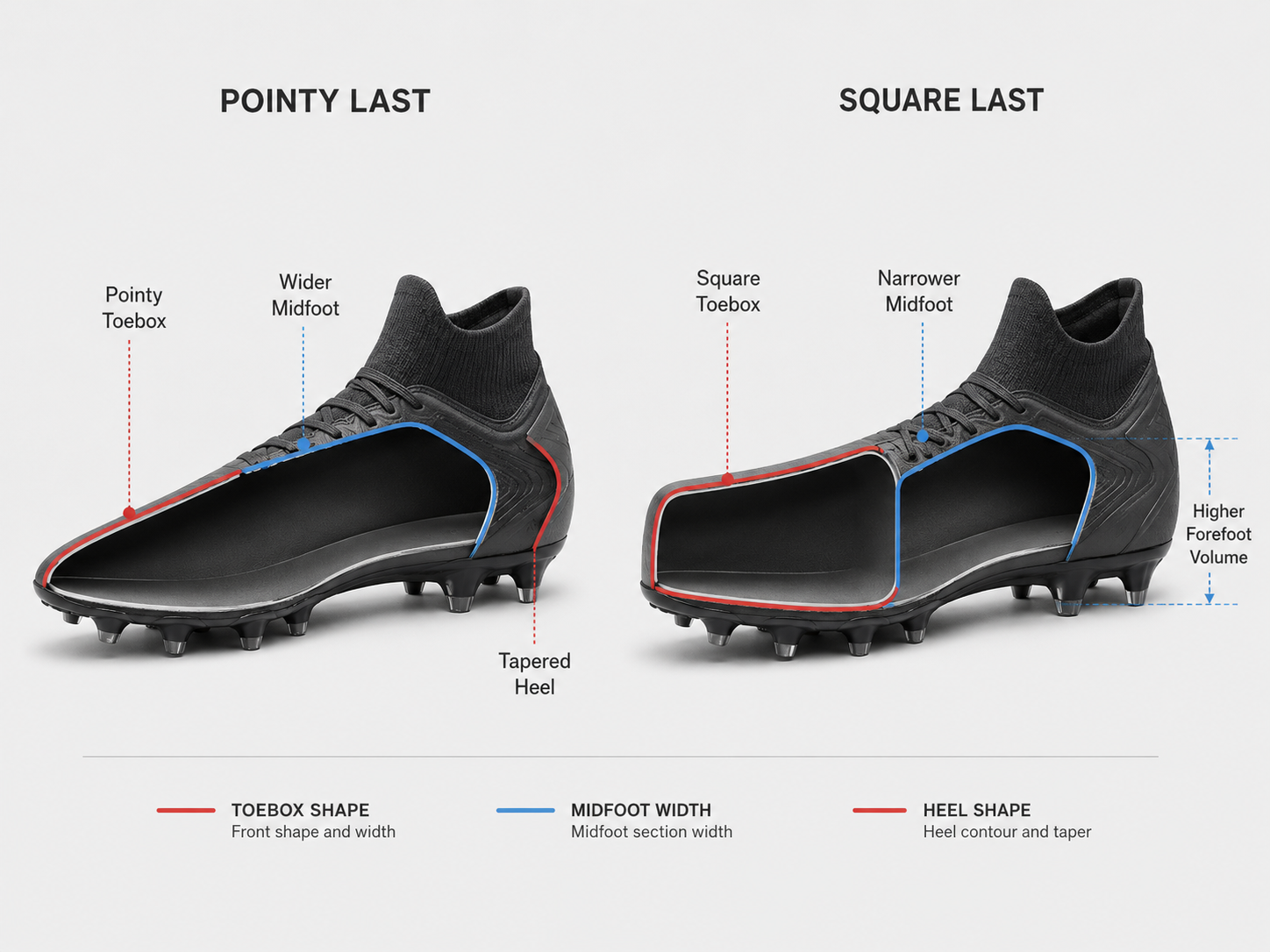
This is where you cannot rely on marketing. You must know your foot.
From a detailed YouTube comparison review: In a size 42, the Predator’s toebox feels slightly wider and more square at the tip. The Phantom’s toebox is more pointy, squeezing toes together more tightly. The Predator also has more volume (height) in the forefoot.
As you move back, both boots widen in the forefoot, with the Predator offering a fraction more width. In the midfoot, both taper. The reviewer found the Phantom 6 slightly wider in the midfoot than the Predator, which is narrower there. The heel is the critical divergence.
The Phantom 6 has a wider heel. The Predator has a narrower, tighter heel. The Predator’s lace hole placement also sits further back, allowing a more effective runner’s loop to push your foot firmly into the heel cup.
| Fit Area | Nike Phantom 6 | Adidas Predator 26 | Best For |
|---|---|---|---|
| Toebox | Pointy, snug | Wider, more square | High-volume toes |
| Forefoot Volume | Lower height | Higher height | High instep |
| Midfoot | Slightly wider | Narrower | Wide midfoot |
| Heel | Wider | Narrower, tighter | Secure lockdown |
The reviewer’s conclusion: if you have a wide foot overall, the Phantom 6 is the better option. If you have a normal to slightly narrow foot, the Predator’s shape wins. The Predator’s heel lockdown is superior.
Common mistake: Choosing a boot based on toebox comfort alone, the heel lockdown determines stability during cuts. A loose heel in a wide-fit Phantom can cause blisters and slippage on hard lateral movements.
Your ideal soccer positions might influence this. A winger making sharp cuts needs heel lockdown. A central attacker might prioritize forefoot comfort for striking. Know your role.
The Predator’s Tongue Debate
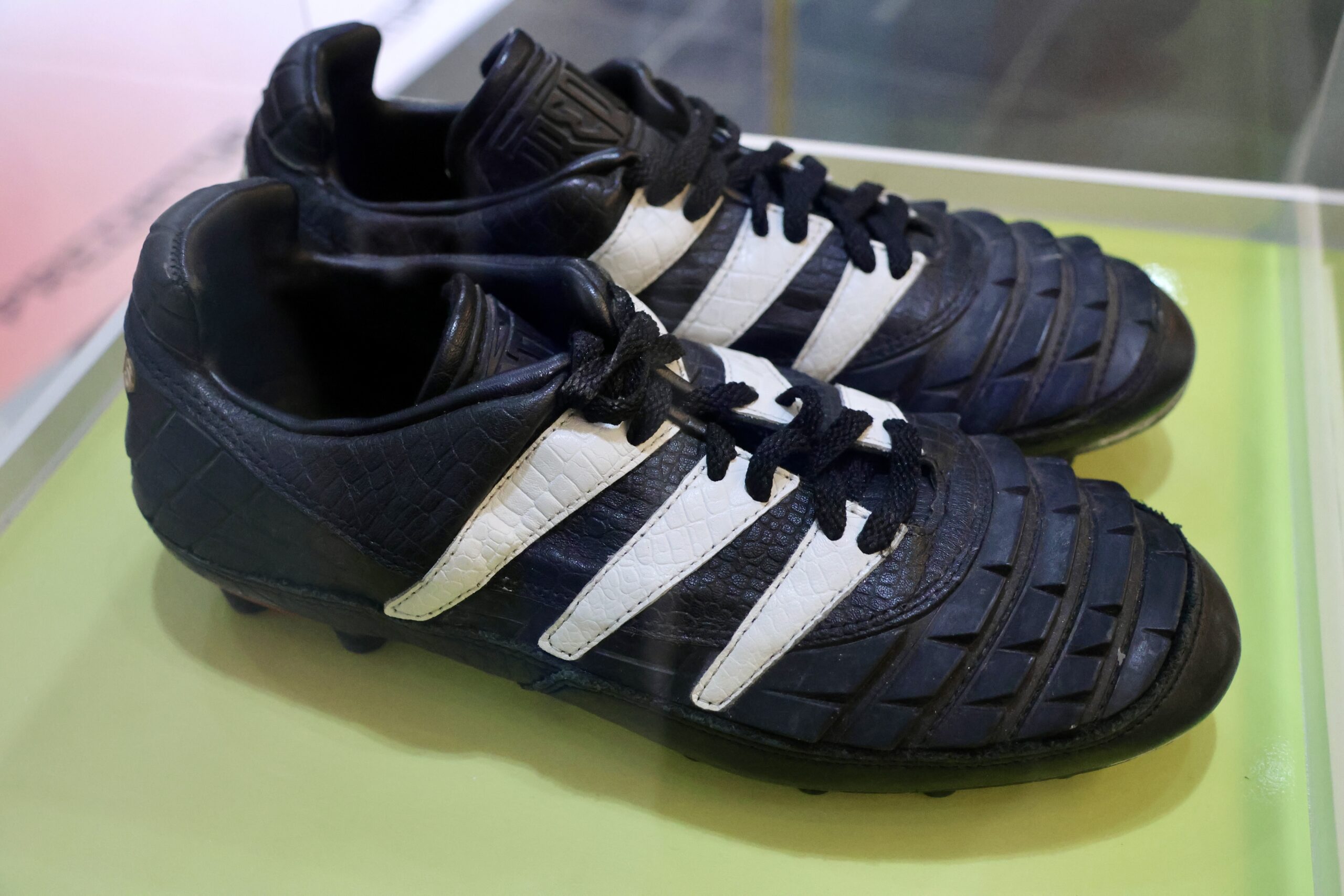
Photo: Pangalau / Wikimedia Commons / CC BY-SA 4.0

The fold-over tongue is a Predator signature. It looks classic. It creates a clean striking surface. Adidas offers FT (Fold-Over Tongue), laced, and laceless variants across tiers.
Many reviewers and owners now disagree with the manufacturer’s positioning. One stated clearly: for the Predator 26 generation, the boot is “BETTER” without the fold-over tongue. The non-FT variants provide a “better feeling boot sans tongue” and represent the “best possible modern Adidas Predator” for performance.
The fold-over tongue can feel bulky. It can restrict ankle mobility slightly. The standard laced version offers a cleaner, more direct fit. The nostalgia is strong, but performance often favors simplicity.
If your game relies on advanced soccer skills and ankle flexibility, try both versions. The FT might look better, but the laced might play better.
Soleplate and Surface: The Cyclone 360 Controversy

Photo: LeDroider / Wikimedia Commons / CC0

The Phantom 6 features the Cyclone 360 plate. Nike says it provides universal rotational traction and better weight distribution.
One reviewer outright rejected this claim. They called the Cyclone 360 “a dangerous gimmick” and opted for the AG (artificial grass) soleplate version because they play primarily on artificial turf. The concern is that the integrated conical studs and plate design might not perform safely on AG surfaces.
The Predator 26 uses the STRIKEFRAME plate across Elite and Pro models. It is a full-length plate designed for traction and stability. There is less controversy around it, but it is still a firm-ground soleplate meant for dry natural grass.
Before you start: Never use firm-ground cleats on artificial grass. The stud configuration can catch, twist ankles, and damage the turf. Always match the soleplate to your primary surface. FG for natural grass, AG for artificial turf.
If your training includes speed and agility training on various surfaces, this choice is critical. The wrong soleplate hinders movement and risks injury.
| Soleplate | Primary Surface | Key Concern | Alternative |
|---|---|---|---|
| Phantom Cyclone 360 | Dry natural grass | “Dangerous gimmick” on AG per reviewer | Phantom AG soleplate |
| Predator STRIKEFRAME | Dry natural grass | Less controversy, still FG-specific | Predator AG variants |
TL;DR: Both are firm-ground cleats. If you play on artificial grass, avoid the Phantom Cyclone 360; seek AG versions of either boot.
Making the Final Choice: A Step-by-Step Decision Guide
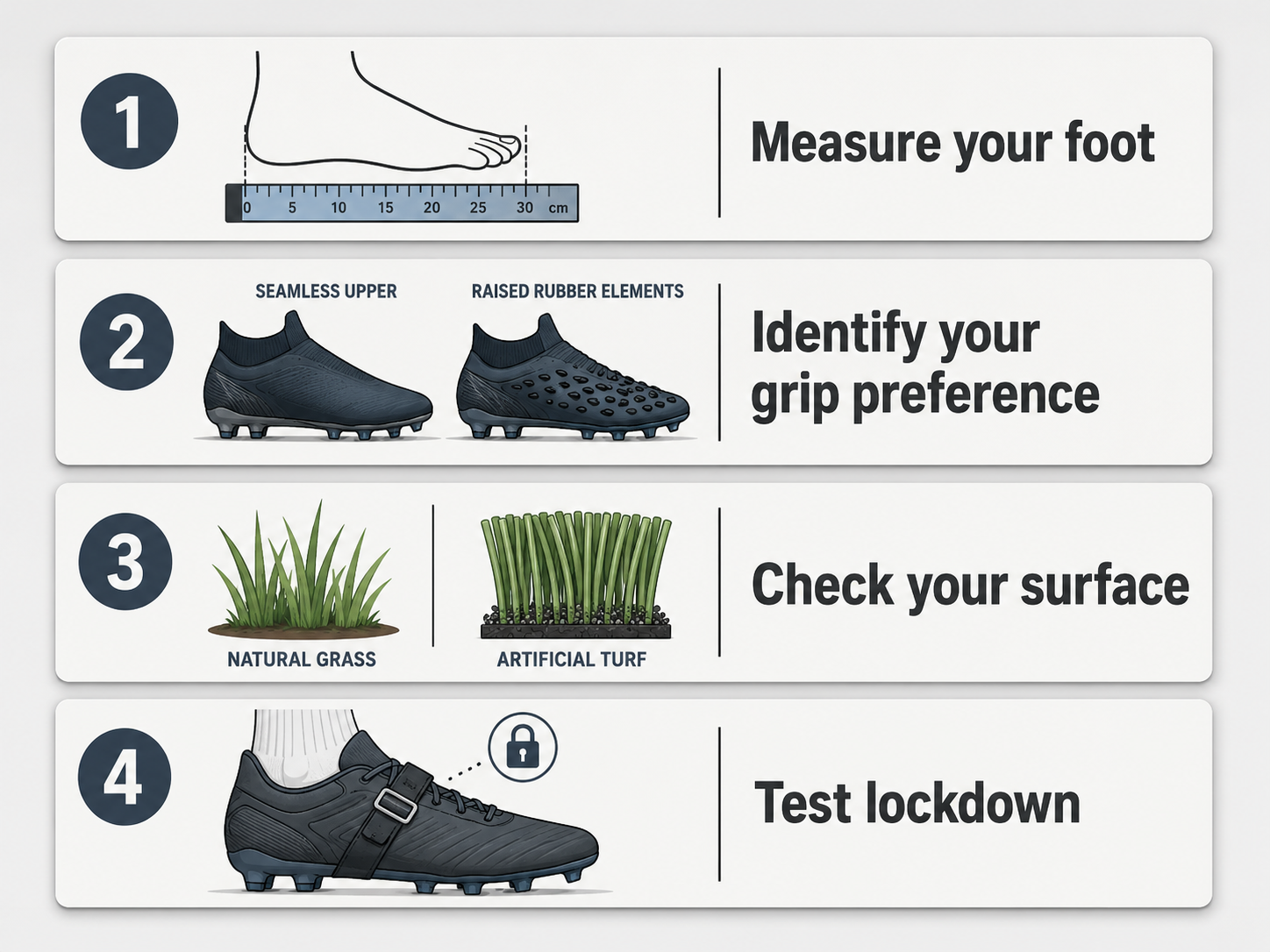
Stop looking at colors. Follow this sequence.
- Measure your foot. Length for sizing, width and volume for model choice. True to size for both. If your foot is wide overall, note it.
- Identify your grip preference. Do you want the grip to feel part of the boot (Phantom) or as added elements (Predator)? Remember the 10-shot test anecdote, the feel differed, the results were similar.
- Check your surface. Is it natural grass or artificial turf? This dictates the soleplate and can override other preferences. The Cyclone 360 warning is real for AG players.
- Test lockdown. If possible, try both. Focus on heel security during lateral movement. The Predator’s narrower heel locks better. The Phantom’s wider heel might slip if your foot is narrow.
- Consider the tongue. If choosing Predator, decide if you want the fold-over FT for nostalgia and a clean strike surface, or the standard laced for a better modern fit.
Your soccer player nutrition and recovery plan supports long sessions in these boots. Comfort is cumulative.
Expert Tip: I lean toward the Predator for midfield control. The heel lockdown is non-negotiable for pivots and turns. But for pure striking sessions on natural grass, the Phantom’s integrated grip feels more natural. My wide-footed teammates swear by the Phantom’s overall width. There is no universal winner, there is a winner for your anatomy and role.
Frequently Asked Questions
Do the Nike Phantom 6 and Adidas Predator 2026 fit true to size?
Yes, both lines fit true to size. A YouTube reviewer with a 25cm foot wore a size 42 in both. Note that Nike and Adidas use different UK size conversions for the same foot length.
Which cleat is better for wide feet?
The Nike Phantom 6 offers slightly more overall width, especially in the midfoot and heel. The Adidas Predator 26 has more forefoot volume (width and height) but a narrower midfoot and heel. Wide-footed players generally prefer the Phantom.
Can I use these firm-ground cleats on artificial grass?
No. Both the Phantom Cyclone 360 plate and the Predator STRIKEFRAME plate are designed for dry natural grass. Using them on artificial grass increases injury risk and can damage the turf. Choose AG (artificial grass) soleplate variants for that surface.
Is the Adidas Predator fold-over tongue better than the regular laced version?
Many reviewers and players argue the regular laced Predator is better for performance. The fold-over tongue (FT) offers a classic look and clean strike surface but can feel bulky. The non-FT version provides a cleaner, more modern fit.
How does the grip differ between the two boots?
The Phantom’s Gripknit provides an integrated, sock-like tackiness that feels part of the material. The Predator’s Strikeskin rubber fins offer a traditional, tactile grip that sits on top of the upper. The Phantom’s grip is more uniform; the Predator’s grip is more pronounced.
The Bottom Line
Your foot shape decides the fit winner. Your grip preference decides the feel winner. Your playing surface decides the soleplate winner.
The Nike Phantom 6 suits wide-footed attackers who want seamless, weather-independent grip on natural grass. Beware the Cyclone 360 plate on artificial turf.
The Adidas Predator 2026 suits players with normal to narrow feet who prioritize heel lockdown and traditional rubber-fin control. Consider skipping the fold-over tongue for a better performance fit.
Both boots excel at precision. The choice is not about which is better overall, but which is better for your anatomy, your touch, and your pitch.
I come from the “soccer heart” of Germany, the Ruhrpott. I have played, trained and followed soccer all my life and am a big fan of FC Schalke 04. I also enjoy following international soccer extensively.