Barcelona vs Real Madrid Rivalry History: The Full Story
The Barcelona vs Real Madrid rivalry history spans over 120 years and is defined by more than 260 competitive matches. Its intensity stems from a deep political divide between Catalonia and central Spain, crystallized during Francisco Franco’s dictatorship, which transformed regional sports competition into a symbolic war of identity.
Most people think this is just a game about trophies. They miss the silence in the Camp Nou when a former hero like Luis Figo returned in the white of Madrid. The sound wasn’t booing. It was the collective breath of a betrayed city, followed by a rain of bottles and a severed pig’s head. That’s the weight this fixture carries.
This guide walks through the rivalry’s birth, its politicization, its most infamous matches, and how it operates today as a global commercial spectacle. You’ll see the numbers, but you’ll feel the history.
Key Takeaways
- The first official match was in 1902, but the rivalry’s bitter political edge was forged during the Francoist repression of Catalan culture from 1939 to 1975.
- The head-to-head record is astonishingly even. After more than a century, Real Madrid holds a mere one-win lead in competitive matches, illustrating a relentless balance of power.
- The 1943 Copa del Rey semi-final, an 11-1 Madrid win, is permanently shrouded in allegations that Barcelona players were threatened by state security forces at halftime.
- The Messi vs. Ronaldo era (2009–2018) represented the rivalry’s global commercial peak, but their direct battles rarely decided the league title, with Barcelona dominating domestically.
- While El Clásico is a global derby, Real Madrid’s rivalry with Atlético Madrid, the Madrid derby, is a more visceral, local hate, born from neighborhood disputes and a sense of class difference.
The First Clásico and Political Roots (1902–1975)
The football was simple at the start. The context was not.
FC Barcelona was founded in 1899 by Swiss businessman Joan Gamper. Real Madrid Football Club followed in 1902. Their first recorded meeting was in the Copa de la Coronación that same year, a 3-1 win for Barcelona. For decades, it was a spirited sporting contest between Spain’s two largest cities.
The political dimension of El Clásico intensified dramatically after the Spanish Civil War (1936–1939). General Francisco Franco’s nationalist regime centralised power in Madrid and suppressed regional identities, languages, and symbols. FC Barcelona’s motto, “Més que un club” (More than a club), became a quiet vehicle for Catalan nationalism.
Then Francisco Franco won the Spanish Civil War. His dictatorship, from 1939 until his death in 1975, systematically repressed Catalan language, culture, and autonomy. Camp Nou became one of the few public spaces where Catalan identity could be expressed without immediate reprisal. Beating Madrid wasn’t just winning; it was a symbolic act of defiance.
Conversely, Real Madrid’s success was often framed, fairly or not, as a propaganda tool for the regime. Their dominance in the newly created European Cup in the 1950s was showcased as Spanish excellence. This perception was cemented by the controversial transfer of Alfredo Di Stéfano. Both clubs claimed his signing rights; football’s governing body intervened, splitting his playing rights between them. He never played for Barcelona, becoming the cornerstone of Madrid’s early European dominance.
Common mistake: Believing Franco directly fixed matches for Real Madrid. The control was more subtle. It was about atmosphere, pressure, and the unspoken understanding of which institution held state power. The regime’s security forces were a visible presence.
The most cited example is the second leg of the 1943 Copa del Rey semi-final. After Barcelona won the first leg 3-0, rumors swirled that their players were visited at halftime in the second leg by the Director of State Security. Madrid won the return match 11-1. The official record books show the scoreline. The historical record carries the asterisk of fear.
TL;DR: The rivalry transformed from sport to political proxy under Franco, with Barcelona representing repressed Catalonia and Real Madrid perceived as the regime’s team, a tension that defines the fixture to this day.
Head-to-Head: By the Numbers
The raw statistics tell a story of relentless, brutal parity. This isn’t a rivalry where one side dominates the ledger. It’s a tug-of-war that has lasted for generations.
As of January 2026, the two clubs have met in 264 official competitive matches. The tally is almost perfectly balanced: 106 wins for Real Madrid, 106 wins for Barcelona, and 52 draws. Madrid’s single-victory advantage is the result of a recent win; it could flip back with the next result. This equilibrium is what makes each new chapter so tense. There is no psychological safety net in the record books.
| Competition | Real Madrid Wins | Barcelona Wins | Draws | Notable Fact |
|---|---|---|---|---|
| La Liga | 78 | 75 | 35 | Madrid’s 11-1 win in 1943 is the largest margin. |
| Copa del Rey | 12 | 15 | 6 | Barcelona’s 8-1 win in 1935 is their largest. |
| Champions League | 3 | 2 | 3 | Their semi-final clashes are era-defining. |
| Supercopa de España | 15 | 14 | 8 | Often sets the tone for the season. |
In terms of trophies, the balance is similarly tight. Real Madrid leads in total trophies (106 to 104), fueled by a record 15 UEFA Champions League titles. Barcelona holds a commanding lead in Copa del Rey titles (32 to 20). Their domestic league title count sees Madrid ahead 36 to 29. This trophy split reinforces their identities: Madrid as the continental kings, Barcelona as the dominant domestic force for much of the 21st century.
The goal difference across all competitions is also remarkably close, typically separated by fewer than ten goals over more than a century of play. This statistical deadlock means every match feels like it could tilt the entire historical narrative. There is no room for a bad day.
The Galácticos, Figo’s Betrayal, and the Guardiola Revolution
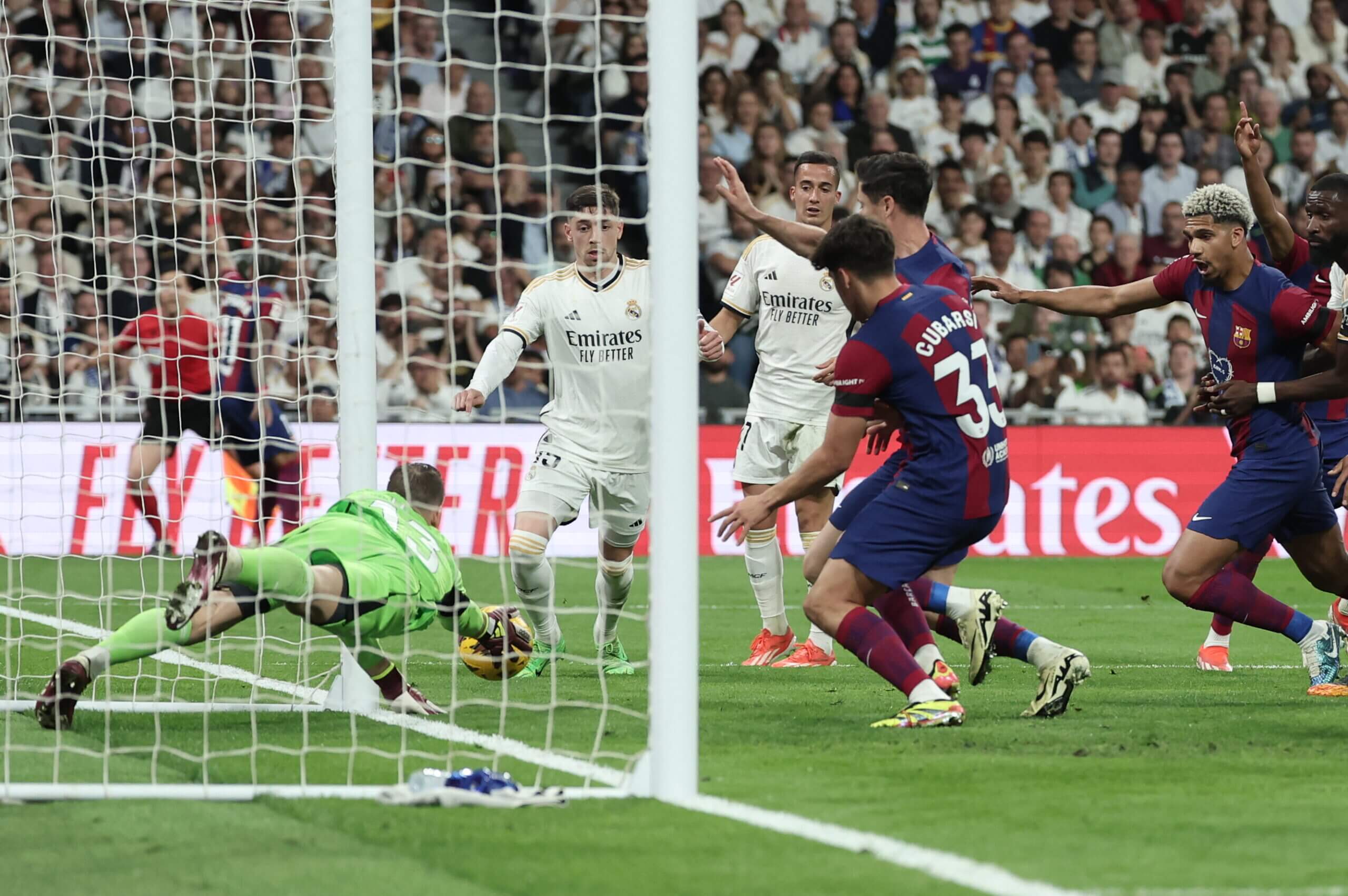
The turn of the millennium introduced a new kind of warfare: the battle of global brands and superstar egos.
Real Madrid president Florentino Pérez launched the “Galácticos” policy, signing a global superstar each summer. The most explosive acquisition was Luis Figo in 2000. The Portuguese winger was Barcelona’s captain and beloved icon. His world-record move to Madrid wasn’t a transfer; it was an act of geopolitical piracy.
His first return to Camp Nou in a white shirt is the stuff of legend. The stadium rained down bottles, lighters, and a pig’s head. Every touch he took was met with a deafening, hateful roar. The match had to be stopped multiple times. It was the purest expression of the rivalry’s emotional core, betrayal.
I was in a bar in Gelsenkirchen watching that Figo return. The Schalke fans around me, no strangers to derby hate, were stunned into silence. They understood rivalry, but this was a different sacrament of loathing. It wasn’t about winning a game anymore. It was about the dissolution of faith.
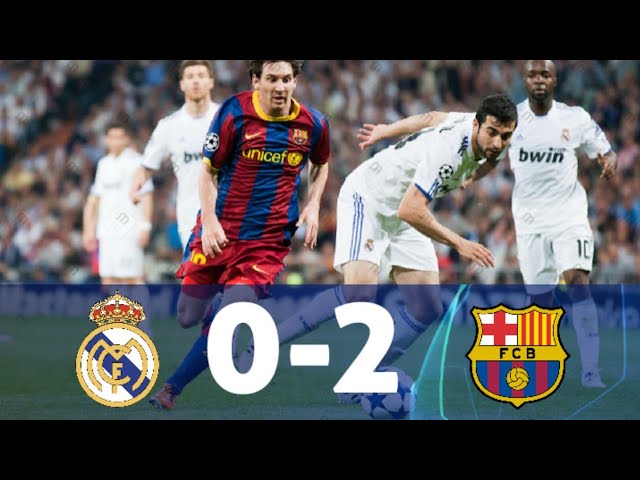
Barcelona’s response was not to buy a Galáctico, but to build a machine. The appointment of Pep Guardiola in 2008, a product of the club’s La Masia academy, catalyzed a football revolution. His Barcelona team, built around Lionel Messi, Xavi, and Andrés Iniesta, played a suffocating, possession-based style that dominated world football.
This era gave us the defining personal duel: Lionel Messi vs. Cristiano Ronaldo. From 2009 to 2018, their individual battle for the Ballon d’Or was played out on the Clásico stage. The statistics during this period are telling. Barcelona won 10 of the 18 league titles contested between 2004 and 2019. Their style, often called tiki-taka, wasn’t just effective; it was a philosophical statement against Madrid’s superstar-centric model.
Yet, for all the individual brilliance, their direct clashes rarely decided the title. The league was often sewn up by spring. The Clásico became a standalone global event, a spectacle that transcended the league table. It was a validation of philosophy.
El Clásico vs. The Madrid Derby: Two Different Kinds of Hate
To fully understand the landscape, you must see Real Madrid’s other great rivalry. The Madrid derby against Atlético Madrid is a fundamentally different beast.
El Clásico is a clash of symbols, cultures, and histories played on a global stage. The Madrid derby is a street fight. It’s rooted in class and geography. Atlético traditionally represented the working-class neighborhoods, while Real Madrid was associated with the city’s establishment and royalty. This local derby is fueled by proximity and a deep-seated inferiority complex.
The dynamics on the pitch reflect this. While the Clásico can be a technical chess match, the derby is often a physical, tactical war of attrition. Diego Simeone’s Atlético, especially after 2011, perfected a style designed to frustrate and break Madrid’s superior talent. Their two UEFA Champions League final meetings in 2014 and 2016, both won by Real Madrid in extra time, are masterclasses in psychological torment and resilience.
| Aspect | El Clásico (vs. Barcelona) | El Derbi (vs. Atlético Madrid) |
|---|---|---|
| Primary Fuel | Politics, regional identity, history | Local geography, class, direct competition for city supremacy |
| Global Scale | Massive, a worldwide television event | Significant, but more regionally intense |
| Playing Style | Often open, technical, focused on philosophy | Typically tense, physical, tactical, and defensive |
| Fan Perception | The “eternal rival,” a symbolic enemy | The “noisy neighbor,” a visceral, immediate hate |
Atlético’s victories, like their 4-2 win in the 2018 UEFA Super Cup, are celebrated with a unique fervor. It’s not just about points; it’s about proving they belong at the same table. For a Real Madrid fan, losing to Barcelona is a historical setback. Losing to Atlético is a personal embarrassment.
Understanding this distinction is crucial. It shows that Real Madrid exists at the center of two distinct gravitational pulls: one from a distant, ideological foe, and another from a hostile, close-quarters neighbor.
The Modern Commercial Era and Global Spectacle
The 21st century has corporatized the clash. El Clásico is now a pre-packaged global media event.
Broadcast rights for a single Clásico are sold for astronomical sums worldwide. Social media turns every tackle and goal into a viral moment debated from Jakarta to Jacksonville. The players are global icons with follower counts that dwarf the populations of their home cities. The match routinely pauses for a minute’s silence for events unrelated to Spain, acknowledging its worldwide audience.
This commercial engine has, in some ways, softened the raw political edge. While Catalan independence flags still fly at Camp Nou, the narrative for a global audience is more about Messi’s successor versus Vinícius Júnior’s dribbles. The historical pain is a backdrop, not always the main stage.
But the underlying tension remains. It simmers just below the slick television graphics. A controversial refereeing decision, a provocative celebration, these acts can instantly reactivate the century-old grievances. The rivalry has learned to wear a suit for its global tour, but the old scars are still there, visible to anyone who knows where to look.
The financial might of both clubs, underpinned by the La Liga revenue model and their own massive commercial operations, ensures they will continue to dominate Spanish football and compete for global stars. The cycle is self-perpetuating. Their rivalry isn’t just a football match; it’s the engine of an industry.
TL;DR: Today’s Clásico is a global commercial product worth billions, but a controversial moment can instantly strip away the polish and reveal the enduring political and cultural tensions that created it.
Frequently Asked Questions
When was the first ever Barcelona vs Real Madrid match?
The first recorded match was on May 13, 1902, in the Copa de la Coronación. Barcelona won 3-1. This was before the clubs had their modern names and structures, but it is recognized as the origin point of the fixture.
What does “El Clásico” mean?
The term El Clásico simply means “The Classic.” It denotes the classic, premier matchup in Spanish football. The name gained widespread use in the 2000s as the rivalry’s global media profile exploded, though Spanish media had used it for decades prior.
Why is the rivalry so politically charged?
The intensity stems from the Spanish Civil War and the subsequent dictatorship of Francisco Franco (1939-1975). Franco’s regime suppressed Catalan culture and identity. FC Barcelona’s stadium became a sanctuary for Catalan expression, making matches against the club from the capital city a symbolic battle for regional pride and resistance.
Who has the better head-to-head record?
It is incredibly even. As of early 2026, in 264 competitive matches, Real Madrid has 106 wins, Barcelona has 106 wins, and there have been 52 draws. Madrid holds a one-win advantage, but the balance has swung back and forth by a single victory for years.
What was the most infamous transfer between the clubs?
Luis Figo’s move from Barcelona to Real Madrid in 2000 for a then-world record fee. As Barcelona’s captain and fan favorite, his defection was seen as the ultimate betrayal. His hostile return to Camp Nou, where a pig’s head was thrown onto the pitch, remains the most visceral image of the rivalry’s hatred.
How does it compare to other major soccer derbies?
It is unique. Most great historic derbies like Liverpool vs. Manchester United or AC Milan vs. Inter Milan are based on domestic competition, city divides, or industrial history. El Clásico incorporates all that plus a layer of national political conflict, setting it apart as a rivalry that represents a deeper societal fracture.
The Bottom Line
The history of Barcelona vs Real Madrid is not a straight line of football results. It’s a messy, often ugly, story of politics, identity, and money grafted onto a game. The 11-1 scoreline in 1943 whispers of fear. The pig’s head thrown at Luis Figo screams of betrayal. The silent dominance of Guardiola’s Barcelona was a cultural manifesto.
You can memorize the 106-106 win record. You can list the 15 European Cups. But until you understand that for millions, this match was, and sometimes still is, a 90-minute battle for the soul of a region, you’re just watching a game. The next chapter is always being written, but the first 120 years have already proven this is the rivalry that defines what football can mean.

I come from the “soccer heart” of Germany, the Ruhrpott. I have played, trained and followed soccer all my life and am a big fan of FC Schalke 04. I also enjoy following international soccer extensively.