What Is El Clásico in Soccer? The Rivalry’s Real Story
El Clásico in soccer is any match contested between Spanish giants FC Barcelona and Real Madrid. The term, translating to “The Classic,” covers all competitions, from La Liga to the UEFA Champions League, and represents a century-old rivalry fueled by sporting excellence, deep political history, and cultural identity.
Most people think the hatred is just about goals and trophies. They miss the deeper story. The real tension is a century of history played out on grass, where a pass can feel like a political statement and a transfer can trigger a pig’s head on the pitch.
This guide breaks down what El Clásico truly is. We’ll trace its origins from a friendly in 1902 to a global media empire, unpack the politics that made it explosive, and explain why it remains the most-watched club match on the planet.
Key Takeaways
- The term “El Clásico” is a modern label, popularized globally in the mid-2000s, though the rivalry itself dates back to 1902.
- The conflict is rooted in the Spanish Civil War, with Barcelona representing Catalan identity and Real Madrid seen as the establishment club of central Spain.
- Lionel Messi is the all-time top scorer in the fixture with 26 goals, while Sergio Busquets holds the appearance record with 48 matches.
- The rivalry generates staggering global attention, regularly drawing over 650 million viewers from nearly 200 countries.
- While the Messi-Ronaldo era defined its modern glamour, the fixture’s intensity ensures it evolves with new stars and narratives.
The Basic Facts and Figures
El Clásico is a specific fixture, not a tournament. It refers exclusively to matches between FC Barcelona and Real Madrid. The first official meeting was on May 13, 1902, in the Copa de la Coronación, a predecessor to the Copa del Rey. Barcelona won 3-1. The rivalry truly became institutionalized in 1928 with the founding of La Liga, providing a regular, high-stakes league framework for their clashes.
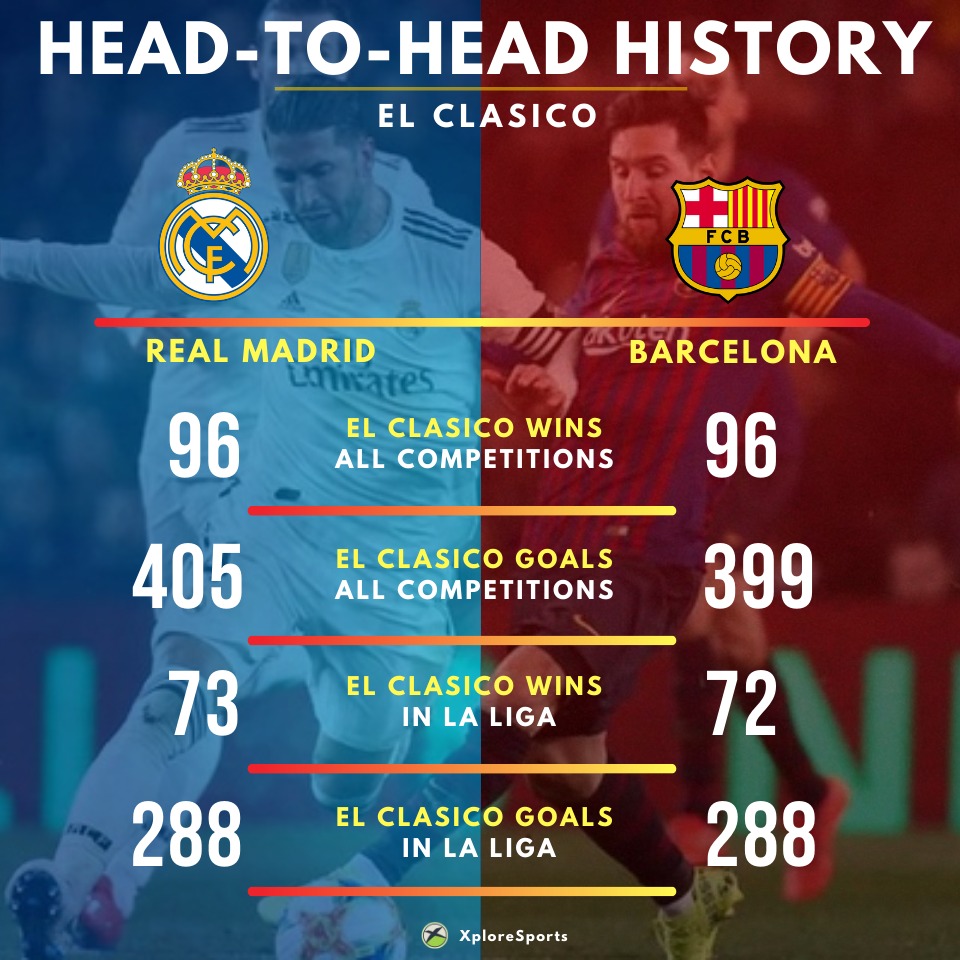
The head-to-head record in official matches is remarkably even, a testament to the rivalry’s competitive balance. Real Madrid holds a narrow lead. As of the latest tallies, Los Blancos have 106 wins to Barcelona’s 104, with 52 draws. The goal difference is similarly tight, with Madrid scoring 442 and Barcelona 436. This near parity is why every new match feels like a potential tipping point in a century-long argument.
The term “El Clásico” is a relatively recent mainstream label for the Barcelona-Real Madrid fixture, gaining global traction in the mid-2000s. Prior to this, matches were commonly called “El Derbi” or simply “Madrid-Barça.” The adoption was influenced by the naming conventions of major South American rivalries, such as the Superclásico in Argentina.
The fixture has produced some extreme results that live in infamy. Real Madrid’s 11-1 victory in the 1943 Copa del Rey semifinal second leg stands as the largest margin of victory. Barcelona has answered with multiple 5-0 thrashings, known as “La Manita” (the little hand), in 1974, 1994, 2010, and 2018. These aren’t just scores; they are generational bragging rights etched into history.
TL;DR: Any Barcelona vs. Real Madrid match is El Clásico. The record is almost perfectly even, and the fixture’s history is marked by both nail-biters and historic thrashings.
Why Is It Called El Clásico?
You might be surprised to learn the name isn’t as old as the games. For decades, this wasn’t the “Clásico.” The widespread, global use of “El Clásico” as the definitive label is a 21st-century phenomenon. Before the mid-2000s, Spanish media and fans more commonly referred to the match as “El Derbi” or just “Madrid-Barça.”
The shift in terminology was partly marketing and partly cultural import. As the rivalry’s global audience exploded, broadcasters and journalists sought a succinct, dramatic brand. They found inspiration in Latin America, where legendary rivalries like Boca Juniors vs. River Plate are famously called the Superclásico. Lifting this naming convention helped frame the Spanish clash for an international audience unfamiliar with local Spanish terms. It packaged the chaos into a recognizable product.
This naming history reveals a key point. The intensity was always there. The global branding came later. For a deeper look at this linguistic evolution, our article on the origin of the name El Clásico breaks down the timeline.
It also helps to distinguish it from other “classic” matches. In Spain, the “Viejo Clásico” (Old Classic) originally referred to Real Madrid vs. Athletic Bilbao, a major early-20th century rivalry. Understanding this context shows how Barcelona’s rise reshaped the football landscape. Their clash with Madrid didn’t just become a big game; it redefined what a classic could be.
The Political Heart of the Rivalry
To view El Clásico as merely a sporting contest is to miss at least half of the story. The rivalry’s modern ferocity was forged in the fires of 20th-century Spanish politics, particularly the Spanish Civil War (1936-1939) and the subsequent dictatorship of General Francisco Franco.
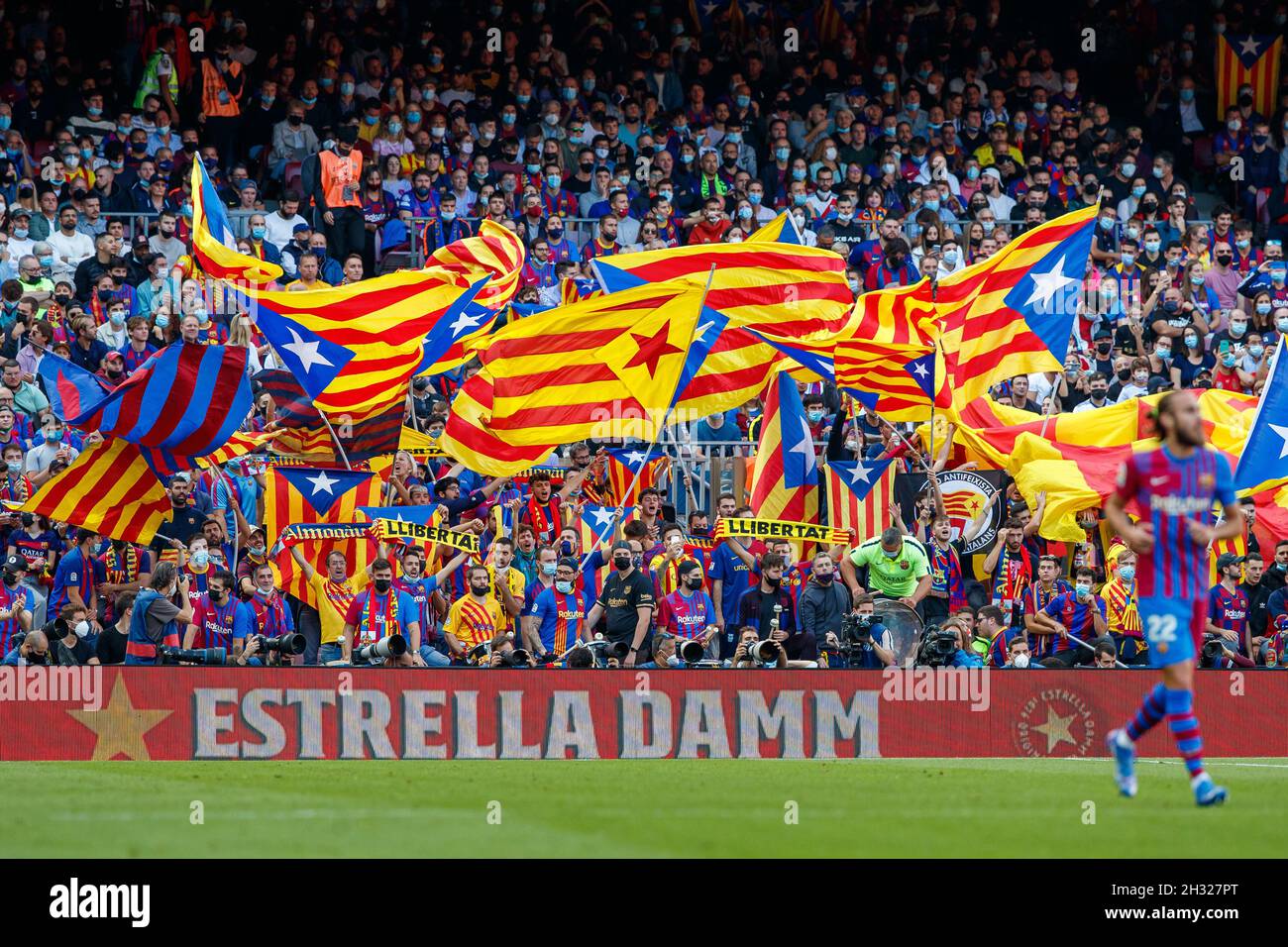
Catalonia, the region whose identity is embodied by FC Barcelona, was a Republican stronghold during the war. Madrid, the capital and home of Real Madrid, was the seat of the Nationalist forces. After the war, Franco’s centralist regime suppressed regional identities, languages, and flags. In this environment, Barcelona’s Camp Nou became one of the few places where Catalan culture could be openly expressed. Supporting Barça became, for many, an act of quiet resistance.
Real Madrid, based in the capital, was often perceived as the regime’s team. This wasn’t necessarily because the club leadership were ardent Francoists, but because the regime actively used Madrid’s success as a propaganda tool for a unified Spain. The most infamous example came in 1943 when Franco’s government allegedly pressured Barcelona before that 11-1 Copa del Rey defeat, though the full extent of interference is still debated by historians.
Common mistake: Thinking Franco was a dedicated Real Madrid fan — he was largely indifferent to football but understood its utility as a political tool to promote Spanish nationalism.
The political dimension explains reactions that seem insane in a purely sporting context. It’s why a player transfer can feel like treason. This backdrop is essential for understanding the full history of the rivalry. The tension on the pitch is a proxy for a much older, deeper cultural and political dialogue. Even today, with Spain a democracy, this historical weight charges every tackle and every goal with meaning that transcends the league table.
Iconic Eras and Defining Moments
The rivalry’s narrative is built on eras defined by iconic figures and unforgettable incidents. These moments crystallize the hatred, the drama, and the sheer quality that defines El Clásico.
The first true megastar clash was the battle for Alfredo Di Stéfano in the 1950s. Both clubs claimed to have signed the Argentine genius, and the dispute went to the Spanish football federation. They brokered a bizarre compromise: Di Stéfano would play alternate seasons for each club. It was unworkable. In the end, he signed for Real Madrid and became the cornerstone of their five consecutive European Cup wins. Barcelona fans have viewed that episode as a stolen destiny ever since.
The modern era of hyper-intensity arguably began with Luis Figo’s transfer in 2000. The Portuguese winger was Barcelona’s captain and idol. His world-record move to Real Madrid was seen as the ultimate betrayal. When he returned to Camp Nou in a white shirt, the reception was apocalyptic. Bottles, lighters, and a full pig’s head were hurled onto the pitch near him. That wasn’t fan anger; it was ritualistic excommunication. The match was suspended for 20 minutes. Figo’s transfer ripped away any pretense of sporting respect and laid bare the raw, tribal hatred beneath.
Then came the era that globalized the rivalry beyond measure: Lionel Messi vs. Cristiano Ronaldo. For nearly a decade, El Clásico was the personal battleground for the two best players on the planet. Messi, Barcelona’s homegrown wizard, scored a record 26 El Clásico goals. Ronaldo, Madrid’s relentless scoring machine, netted 18. Their duel pushed both teams to unprecedented heights—tiki-taka perfection under Pep Guardiola versus devastating counter-attacks under José Mourinho. The world watched, and the fixture became a must-see global event every time the calendar marked the date.
| Era | Defining Figure(s) | Key Moment / Legacy |
|---|---|---|
| 1950s | Alfredo Di Stéfano | Contested signing that cemented Madrid’s early European dominance. |
| 2000 | Luis Figo | Record transfer that symbolized betrayal and raised hostility to new levels. |
| 2009-2018 | Messi vs. Ronaldo | Personal duel that drove tactical innovation and globalized viewership. |
| Managerial | Guardiola vs. Mourinho | Ideological clash between Barcelona’s possession and Madrid’s pragmatism. |
These chapters show the rivalry’s evolution. It’s never static. The departure of Messi and Ronaldo didn’t diminish El Clásico; it simply opened the book for a new chapter, with new characters like Jude Bellingham and Lamine Yamal writing the next lines. The stage is always set.
The Modern Global Spectacle
Today, El Clásico is a media and economic juggernaut that operates on a scale unmatched in club football. The numbers are difficult to comprehend. A typical league edition attracts over 650 million viewers across 185 countries. That’s nearly 10% of the world’s population choosing to watch the same 90-minute football match.
The digital footprint is equally massive. A single match can generate over 250,000 tweets per minute, turning global social media into a real-time, multilingual fan zone. Over 650 accredited journalists and technicians from every major network descend on the stadium, a media scrum larger than many international political summits. The broadcast rights for these matches are the most valuable single fixtures in the La Liga structure, commanding a premium that funds the entire league.
This transformation means El Clásico is no longer just for hardcore fans. It’s a cultural tentpole. People who don’t know the offside rule tune in for the drama, the celebrity sightings, and the sense of occasion. It has become, like the World Cup final or the Super Bowl, an event that transcends its sport. The financial stakes are astronomical, but the cultural capital is priceless. For the clubs, it’s their biggest annual opportunity to showcase their brand, attract new sponsors, and sell merchandise on a global scale.
This level of spectacle invites comparison to other global events. The meticulous, high-stakes planning for matchday security and fan management shares DNA with the procedures for major stadium security screenings worldwide. The difference is the emotional fuel in the stands. That energy is what broadcasters are selling.
El Clásico vs. Other Great Rivalries
Is El Clásico the greatest rivalry in football? It’s certainly the biggest in terms of global reach and consistent quality. But it exists within a pantheon of fiercely passionate contests, each with its own unique flavor.
In South America, the Superclásico rivalry between Boca Juniors and River Plate in Buenos Aires matches or exceeds El Clásico for raw, unbridled passion and proximity. The clubs are separated by a river, not a political border, and the hostility is visceral and constant. In Germany, Der Klassiker rivalry between Bayern Munich and Borussia Dortmund is a modern, highly competitive sporting clash, but it lacks the deep historical and political undercurrents of its Spanish counterpart.
The Old Firm derby in Glasgow between Celtic and Rangers is perhaps the closest parallel in terms of combining sport with identity politics, in this case along Catholic/Protestant sectarian lines. Its intensity is legendary, but its global audience is smaller. These comparisons are useful for understanding the unique recipe of El Clásico: top-tier sporting quality + deep historical-political context + global marketing machine = a truly singular phenomenon.
What defines a great rivalry? It’s more than just frequency. It’s about what the match represents. As explored in our piece on the meaning of a derby, the best clashes are about identity. El Clásico is the ultimate expression of that, where club identity is intertwined with regional and national history. This is also why the term “derby” itself has such a rich origin of the term derby rooted in local competition.
Frequently Asked Questions
When is the next El Clásico?
The schedule varies each season. The Spanish football federation (RFEF) announces the full La Liga calendar in the summer, typically setting the two league El Clásicos months in advance. They can also meet in the Copa del Rey and the Spanish Super Cup. Your best bet is to check the official La Liga or club websites in late summer for the exact dates.
Has El Clásico ever been played outside of Spain?
Yes, but only in official competition. They have met in the UEFA Champions League and in Supercup finals held at neutral venues. A proposed regular-season La Liga match in Miami, USA, in 2019 was met with fierce opposition from players, fans, and the Spanish football federation and was ultimately canceled. It is highly unlikely a competitive league match will be played outside Spain in the foreseeable future.
What is the biggest win in El Clásico history?
Real Madrid’s 11-1 victory in the second leg of the 1943 Copa del Rey semifinal remains the largest margin of victory. The historical context of that match, played during the Franco dictatorship, adds a heavy political layer to the result that is still discussed today.
Who has scored the most El Clásico goals?
Lionel Messi holds the record with 26 goals for Barcelona across all competitions. Cristiano Ronaldo is second among modern players with 18 goals for Real Madrid. The all-time list includes legends like Alfredo Di Stéfano (18) and Raúl González (15).
Do the teams ever cooperate or have friendly relations?
Almost never on an institutional level. The rivalry is too deeply entrenched. There is a formal protocol and a degree of professional respect, but genuine warmth is absent. The tension is a constant. This is starkly different from some other major European rivalries where clubs might collaborate on league issues.
The Bottom Line
El Clásico is the story of modern football. It began as a local contest, got twisted into a political symbol, and was finally packaged as a global television blockbuster. The 22 men on the pitch are carrying a century of history in their boots.
You don’t need to pick a side to appreciate it. Watch it as a sporting contest of the highest quality. Watch it as a historical drama playing out in real time. Or just watch it because everyone else is. The goals will be celebrated, the referees will be cursed, and the debate will rage until the next one. That’s the guarantee. That’s the classic.
I come from the “soccer heart” of Germany, the Ruhrpott. I have played, trained and followed soccer all my life and am a big fan of FC Schalke 04. I also enjoy following international soccer extensively.