A Complete History of BC Place, Vancouver’s Iconic Stadium
BC Place is Vancouver’s iconic multi-purpose stadium, originally built as the world’s largest air-supported dome for Expo ’86. It was later transformed with a landmark retractable roof after the 2010 Olympics, becoming a premier venue for sports, concerts, and major global events for over 35 million visitors.
BC Place history begins with its opening on June 19, 1983, as the world’s largest air-supported domed stadium, built for Expo ’86 and transformed after the 2010 Olympics with a landmark retractable roof. Owned by the people of British Columbia, it has hosted over 35 million visitors for sports, concerts, and global events, becoming a premier venue for the BC Lions, Vancouver Whitecaps FC, and international spectacles.
Most people think of it as just a football stadium. They miss the architectural gamble, the engineering pivot, and the sheer volume of history that has passed through its turnstiles. This isn’t a static monument. It’s a living facility that has continuously adapted to remain at the center of Vancouver’s civic life.
Let’s walk through its construction, its most pivotal moments, and the multi-million dollar bet that kept it relevant for the 21st century.
Key Takeaways
- BC Place opened in 1983 with an air-supported Teflon-coated fiberglass roof, a design choice that defined its skyline for nearly three decades before a major post-Olympic renovation.
- The stadium’s original purpose was to serve as a centerpiece for Expo ’86, but it quickly became the permanent home for the BC Lions (CFL) and later Vancouver Whitecaps FC (MLS).
- A $514 million revitalization project from 2010-2011 replaced the iconic air dome with a cable-supported retractable roof, the largest of its kind in the world.
- Beyond sports, BC Place has hosted papal visits, Olympic ceremonies, a FIFA Women’s World Cup final, and major concerts, generating over $148 million in economic activity for the province in 2019 alone.
- The stadium operates under B.C. Pavilion Corporation (PavCo), a Crown corporation, and is situated on the unceded traditional territories of the Musqueam, Squamish, and Tsleil-Waututh Nations.
Why was BC Place built in the first place?
Vancouver in the late 1970s lacked a large, covered venue. The city had won the bid to host Expo ’86, the World’s Fair, and needed a flagship facility. The provincial government, under Premier Bill Bennett, saw an opportunity. They commissioned a stadium that could serve the fair and become a lasting civic asset.
The design by Studio Phillips Barratt, Ltd. was audacious. An air-supported dome. It was cheaper and faster to build than a fixed-roof structure. Dillingham Construction got the build done in time for a 1983 opening, giving the city three years to test operations before the world arrived. The first event was a Vancouver Whitecaps soccer match. The first BC Lions game came days later.
The original roof was a single layer of Teflon-coated fiberglass, held aloft by 34 industrial fans maintaining a slight positive air pressure. A failure of the air system would cause the roof to deflate in about 20 minutes.
The bet paid off. Expo ’86 put Vancouver on the map, and BC Place was its beating heart. The stadium’s flexibility, switching between soccer pitches, football fields, and concert stages, proved its long-term value. It was never just a sports arena. It was, and is, a multi-purpose economic engine.
TL;DR: Built as the centerpiece for Expo ’86, BC Place solved Vancouver’s need for a large, versatile venue and established itself as a permanent home for professional football and soccer.
How did BC Place transform from an air dome to a retractable roof stadium?
The air-supported roof was a signature for 28 years. It also became a liability. Maintenance costs climbed. The fabric degraded. More importantly, the closed environment felt dated compared to modern open-air stadiums. The 2010 Winter Olympics, whose opening and closing ceremonies it hosted, were the last major event under the old dome.
The decision was stark: demolish and rebuild, or undertake a massive renovation. The province chose renovation. A 16-month, $514 million project began right after the Olympics. The goal was to replace the air dome with a retractable roof without demolishing the entire bowl.
The engineering was complex. Crews had to install a new compression ring and 36 radial cables to support the new roof panels. The result is the largest cable-supported retractable roof in the world. It opens to reveal over 7,500 square meters of sky, transforming the feel of the interior. The project also included new seating, a massive center-hung video board, and improved concessions.
The financial structure of this overhaul is detailed in the BC government statutes document, which outlines the legislative framework for the stadium’s funding and operation as a Crown asset. The roof alone cost about $200 million of the total budget.
| Aspect | Original (1983-2010) | Post-Renovation (2011-Present) |
|---|---|---|
| Roof Type | Air-supported Teflon-coated fiberglass dome | Cable-supported retractable panel roof |
| Construction Time | ~2 years | 16 months |
| Primary Driver | Expo ’86 preparation | Modernization post-2010 Olympics |
| Key Challenge | Creating a vast column-free space | Installing support structure without closing the stadium long-term |
| Legacy | World’s largest air dome | World’s largest cable-supported retractable roof |
Common mistake: Assuming the retractable roof was always part of the plan, the original 1983 design never envisioned it, and the switch was a direct response to the old roof’s operational and fan-experience limits.
What major events have defined BC Place’s legacy?

Photo: Image courtesy of the Earth Science and Remote Sensing Unit, NASA Johnson Space Center / Wikimedia Commons / Public domain
The timeline reads like a history of modern Vancouver. The Pope’s 1984 mass drew one of the largest crowds. Expo ’86 opened and closed here. For years, it was the only venue in town capable of hosting stadium-scale concerts.

The 2010 Winter Olympics transformed its global profile. It hosted the opening and closing ceremonies for both the Olympic and Paralympic Games. The world watched. Five years later, it was the stage for the Championship Final of the FIFA Women’s World Cup 2015, where the US defeated Japan 5-2. That match, viewed by millions, cemented its status as a world-class football venue.
For club football, it’s home. The BC Lions have played there since day one. Vancouver Whitecaps FC moved in as a founding MLS tenant in 2011. The annual HSBC Canada Sevens rugby tournament turns the place into a weekend-long party. These regular events provide the economic bedrock.
I watched the 2015 Women’s World Cup final from the upper bowl. The noise when Carli Lloyd scored her third goal from midfield wasn’t a sound. It was a physical wave. You felt it in your chest. That’s the moment I understood this wasn’t just a local stadium anymore.
Other landmark moments often fly under the radar. The 1994 Grey Cup, the 2002 NHL Heritage Classic, and massive concerts by The Rolling Stones, U2, and Beyoncé. Each event layers onto the venue’s story. It’s this mix of global spectacle and local routine that defines its physical nature of soccer and other sports held within its walls.
TL;DR: From a papal visit and a World’s Fair to Olympic ceremonies and a Women’s World Cup final, BC Place’s event history mirrors Vancouver’s growth into a global city.
How does BC Place function as an economic engine for British Columbia?
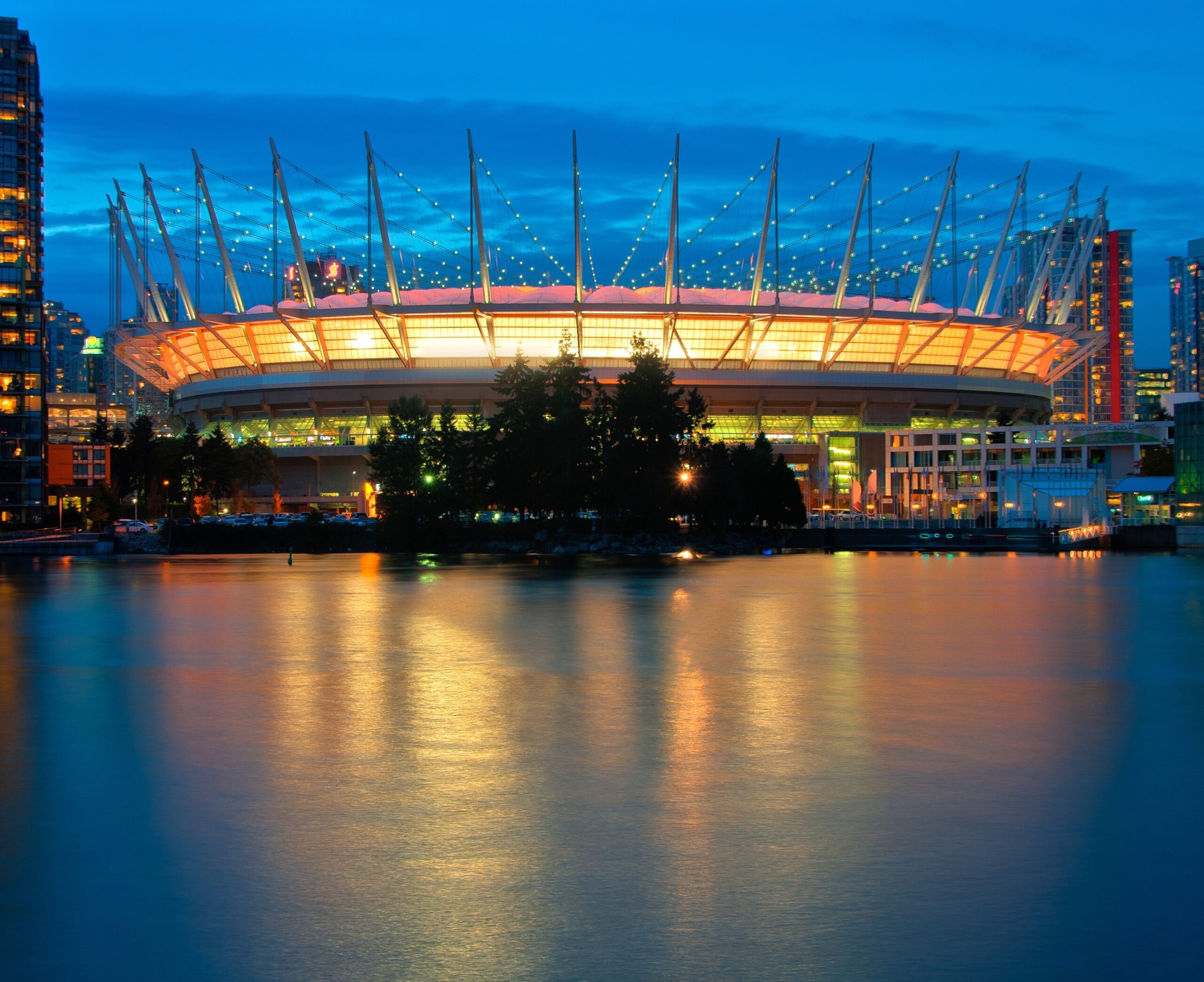
Photo: Yvrphoto / Wikimedia Commons / CC BY-SA 3.0
It’s easy to see the crowds and forget the money. BC Place is a division of B.C. Pavilion Corporation (PavCo), a Crown corporation with a mandate to generate economic and community benefits. This isn’t a side effect. It’s the mission.

The stadium hosts over 70 major events and 245+ occupancy days each year. Every event brings outside spending. A 2019 report quantified this: events at BC Place generated over $148 million in economic activity for the province that year. That money flows to hotels, restaurants, taxis, and retail. Non-resident guests are the key. They stay in hotels, eat in restaurants, and buy souvenirs.
The venue also supports thousands of jobs, both directly in operations and indirectly in the surrounding service economy. It’s a hub. When the Whitecaps have a match day, the streets of downtown Vancouver fill hours before kickoff. Restaurants pack out. This regular, predictable influx of visitors stabilizes the downtown economy in a way sporadic tourism cannot.
Its design supports this economic role. The convertible floor, switching between artificial turf for football and solid flooring for concerts or trade shows, maximizes usage. No other venue in the region can pivot so quickly between a soccer pitch markings setup for a derby match and a concert configuration for a major tour.
Common mistake: Viewing BC Place only as a sports venue, its economic impact is vastly greater, driven by a diverse event calendar that includes concerts, cultural festivals, and commercial exhibitions, directly supporting local businesses year-round.
Who owns and operates BC Place Stadium?
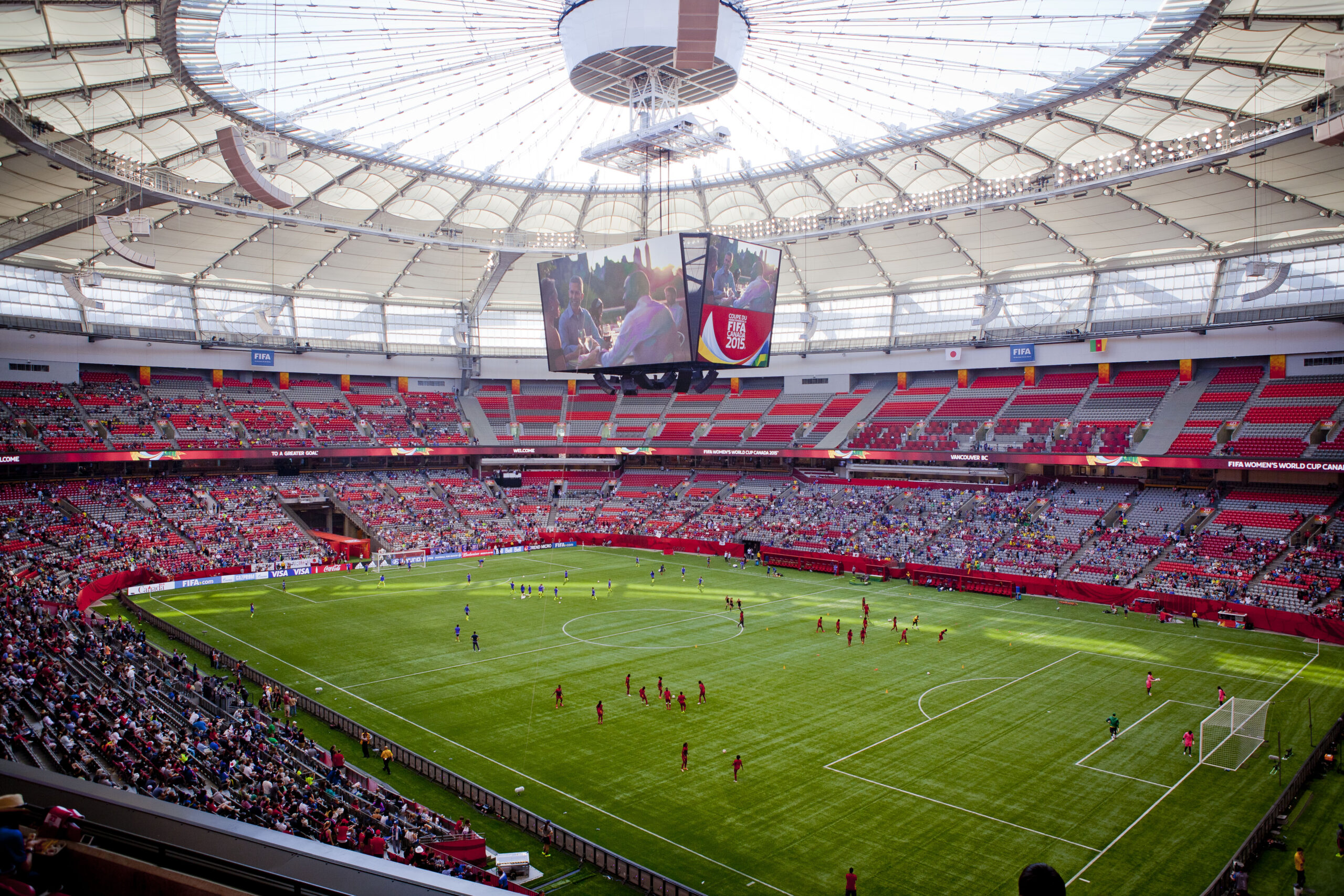
Photo: GoToVan / Wikimedia Commons / CC BY 2.0
The people of British Columbia own BC Place. The day-to-day operations and long-term strategy fall to B.C. Pavilion Corporation (PavCo). As a Crown corporation, PavCo reports to the provincial government. Its board is appointed by the government, and its financial results are public.

This structure matters. It means the stadium’s goals aren’t purely profit-driven like a privately-owned arena. The mandate balances financial sustainability with public benefit. PavCo also operates the nearby Vancouver Convention Centre, creating a synergistic events district. Profits from one facility can support the other, ensuring both remain world-class.
The land itself carries a deeper history. BC Place sits on the unceded traditional territories of the xʷməθkʷey̓əm (Musqueam Indian Band), Sḵwx̱wú7mesh (Squamish Nation), and səlilwətaɬ (Tsleil-Waututh Nations). This fact is acknowledged in official communications and is part of the stadium’s identity in modern Vancouver. It’s a reminder that the facility exists within a living, ongoing history.
This operational model influences everything from ticket pricing to community outreach programs. PavCo runs initiatives to make events accessible and engages with local groups. The stadium isn’t an isolated fortress. It’s designed to be woven into the city’s fabric, supporting the kind of community engagement initiatives that build long-term loyalty beyond the big game days.
What does the future hold for BC Place?
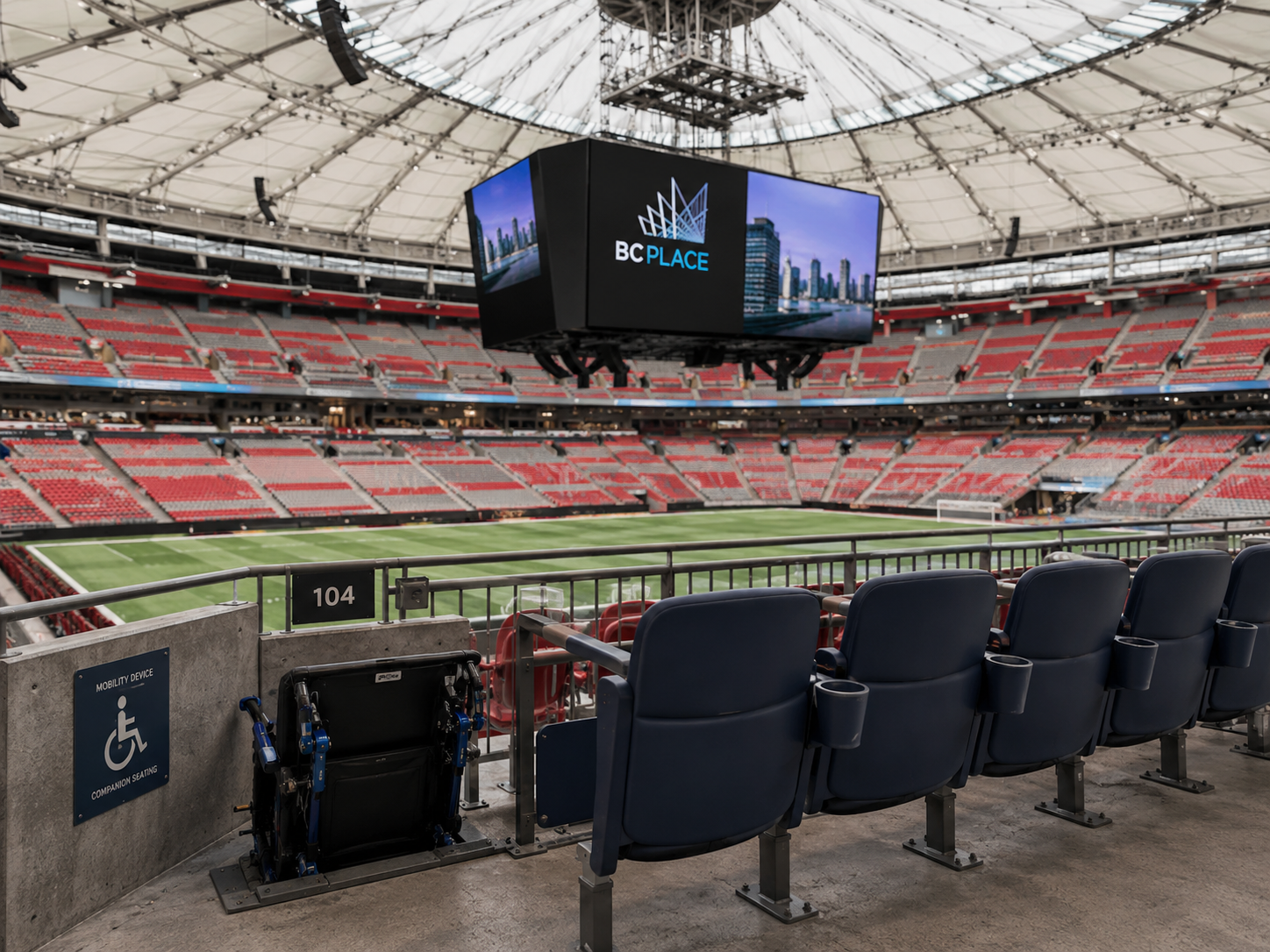
The roof renovation secured its place for decades. The focus now is on continual improvement, the fan experience, technology, and sustainability. The massive center-hung video board, installed in 2011, was once cutting-edge. Today, it’s standard. The next upgrades will likely involve connectivity, concessions, and accessibility features.
Environmental sustainability is a growing pressure for all large venues. Future plans may include solar panels, rainwater capture, or waste reduction programs to lower its carbon footprint. The building’s energy use is colossal. Addressing that is both an operational necessity and a public expectation.
Its role as a sports hub is locked in. The BC Lions and Vancouver Whitecaps FC have long-term leases. The Canada Sevens rugby tournament is an annual fixture. International soccer matches and concerts will continue to fill the calendar. The challenge is attracting new event types, e-sports tournaments, unique cultural exhibitions, to fill dates and reach new audiences.
The stadium’s legacy is its adaptability. It was built for a World’s Fair, reinvented for the Olympics, and remains vital today. That ability to evolve, much like the shift in modern football formations and tactics, will determine its next chapter. The foundation, both literal and figurative, is solid.
Frequently Asked Questions
When did BC Place open?
BC Place Stadium opened on June 19, 1983. Its first event was a Vancouver Whitecaps soccer game, followed shortly by a BC Lions football game.
What was the original roof made of?
The original roof was an air-supported dome made of Teflon-coated fiberglass. It was the largest of its kind in the world when built and was kept inflated by 34 industrial fans.
Why did they replace the roof?
The air-supported roof was replaced between 2010 and 2011 due to high maintenance costs, aging fabric, and a desire for a modern, open-air fan experience. The new cable-supported retractable roof is the largest of its type globally.
What teams play at BC Place?
BC Place is the home stadium for the BC Lions of the Canadian Football League (CFL) and Vancouver Whitecaps FC of Major League Soccer (MLS).
What was the most watched event at BC Place?
Globally, the most watched event was likely the opening ceremony of the 2010 Winter Olympics. In terms of pure football spectacle, the 2015 FIFA Women’s World Cup Final between the USA and Japan stands out as a defining moment for the stadium’s reputation.
The Bottom Line
BC Place is more than a stadium. It’s a chronicle of Vancouver’s ambition, from a risky air-supported dome built for a world’s fair to a technologically advanced arena hosting global finals. Its history is a series of bold bets, the initial construction, the roof replacement, that have paid off by keeping the venue at the heart of the city’s cultural and economic life for over four decades. Understanding its past, from the official BC Place Wikipedia article to its current operations, reveals a facility constantly evolving to meet the future, much like the soccer tactics and strategy played on its field. You don’t just visit BC Place for a game. You walk into a piece of living history.

I come from the “soccer heart” of Germany, the Ruhrpott. I have played, trained and followed soccer all my life and am a big fan of FC Schalke 04. I also enjoy following international soccer extensively.