11v11 Soccer Formations: The Best 4 Systems for Any Team
The best 11v11 soccer formations are the 4-4-2, 4-3-3, 4-2-3-1, and 3-5-2. Your optimal system depends on your players’ key attributes: speed, work rate, technical skill, and tactical intelligence. No formation is universally superior; the right one makes your best players dangerous while protecting your weaknesses.
The four best 11v11 soccer formations are the 4-4-2, the 4-3-3, the 4-2-3-1, and the 3-5-2. Your choice depends entirely on your players’ specific attributes, their speed, work rate, technical skill, and tactical intelligence. No single system is universally superior; the best formation is the one that makes your strongest players most dangerous and covers your weakest links.
Most coaches pick a formation based on what’s trendy or what a pro team uses. They force their squad into a 4-3-3 because Liverpool does it, then wonder why their slow winger gets stranded and their midfield gets overrun. The system isn’t magic. It’s a framework that either amplifies or muffles the talent you have.
This guide breaks down the four essential formations. We’ll look at the non-negotiable player profiles each one demands, the specific training drills that make them work, and the exact moments in a game to switch from one to another.
Key Takeaways
- The 4-4-2 is your bedrock. It provides defensive stability with two banks of four and is perfect for teams new to structured play or facing a stronger opponent. Its weakness is the potential gap between midfield and defense if the central midfielders don’t work.
- Choose the 4-3-3 if you have fast, skilled wingers and at least one central midfielder who can cover more ground than anyone else on the pitch. It creates width and pressing traps but leaves the full-backs exposed if the wingers don’t track back.
- The 4-2-3-1 is the modern standard for midfield control. The “double pivot” of two holding midfielders shields the defense and starts attacks, but the lone striker can become isolated if the three attacking midfielders don’t support quickly.
- Use the 3-5-2 to dominate the center of the park and overload the flanks with wing-backs. It requires incredibly fit, intelligent wing-backs and a sweeper-like central defender who can organize the back three. It fails if those wing-backs are merely converted full-backs.
What Are the Four Best 11v11 Formations?
These four systems form the tactical vocabulary of modern soccer. Each represents a different philosophical answer to the game’s core problem: balancing defensive security with attacking threat. Understanding formation basics is the first step to using them effectively.
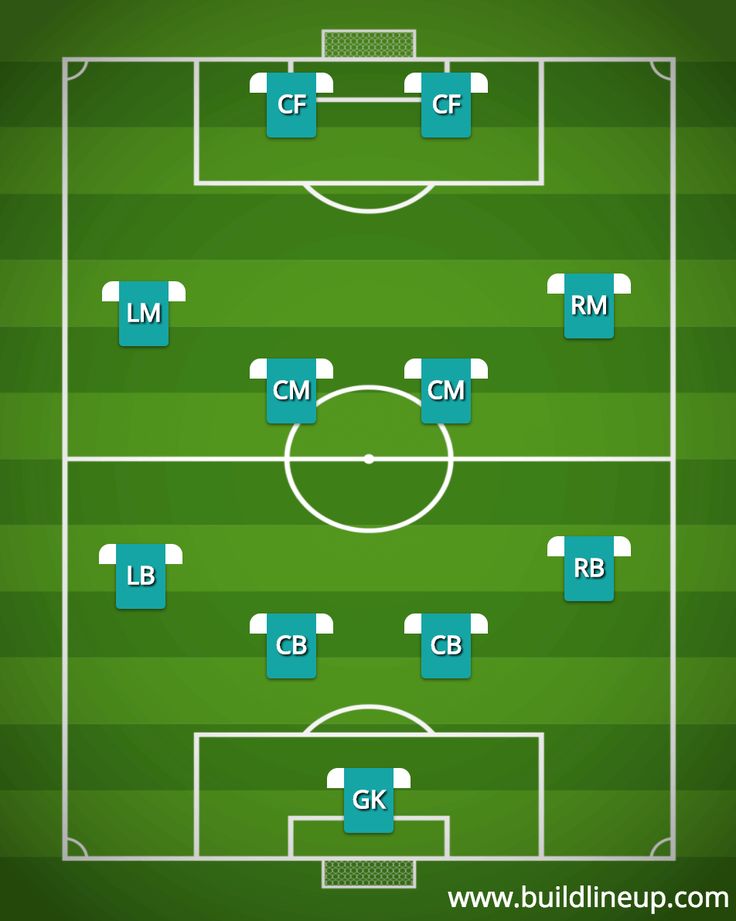
The 4-4-2 uses a flat back four, a flat midfield four, and two strikers. The 4-3-3 employs a back four, a midfield three (often one holder and two shuttlers), and a front three with a central striker flanked by wingers. The 4-2-3-1 features a back four, a double-pivot midfield two, an advanced midfield three, and a lone striker. The 3-5-2 utilizes three central defenders, a midfield five (including wing-backs), and two strikers.
Your first job is to audit your squad. List your players by their three most dominant attributes: pace, endurance, tackling, vision, finishing. The formation is the lens that focuses those attributes. Trying to play a high-pressing 4-3-3 with a slow back line is a recipe for conceding goals on the counter. Every time.
TL;DR: The best four are 4-4-2, 4-3-3, 4-2-3-1, and 3-5-2. Map your best players’ strengths onto the key roles in each system before you draw a single line on the whiteboard.
The 4-4-2: The Defensive Foundation
This is the classic. Two solid banks of four. It’s transparent, easy to communicate, and incredibly difficult to break down when disciplined. I’ve used it with youth teams and against superior professional academy sides, it’s the great equalizer. The classic 4-4-2 is not outdated; it’s a specific tool for specific jobs.
The central midfield partnership is everything. You need one distributor and one ball-winner. If both are similar, the system becomes flat and predictable. The two strikers must also have a complementary relationship: one to hold up play and one to run the channels.
| Position | Critical Attribute | What Happens If It’s Missing |
|---|---|---|
| Central Midfielder | Tireless work rate | A gap opens between defense and midfield. Opponents play through the center unchallenged. |
| Wide Midfielder | Willingness to track back | The full-back gets exposed 2-v-1. Crosses rain into your box from that flank all game. |
| Striker (Deep) | Link-up play and vision | The two strikers become isolated. The team loses its attacking connection and punts long balls. |
Common mistake: Playing with a flat, static midfield four, the two banks stay parallel and never compress the space. The opponent’s playmaker gets time between the lines, picks a pass, and your defense is facing runners before they can step up.
Training a 4-4-2 starts with defensive shape. Set up an 8v8 game in a confined space and shout “shape!” every time you lose possession. The players must immediately form those two banks of four. It’s boring. It’s repetitive. It wins you points on a rainy Tuesday night when nothing else is working. The principles of organizing players into a cohesive unit are mastered here.
The 4-3-3: The Modern Attacking Blueprint
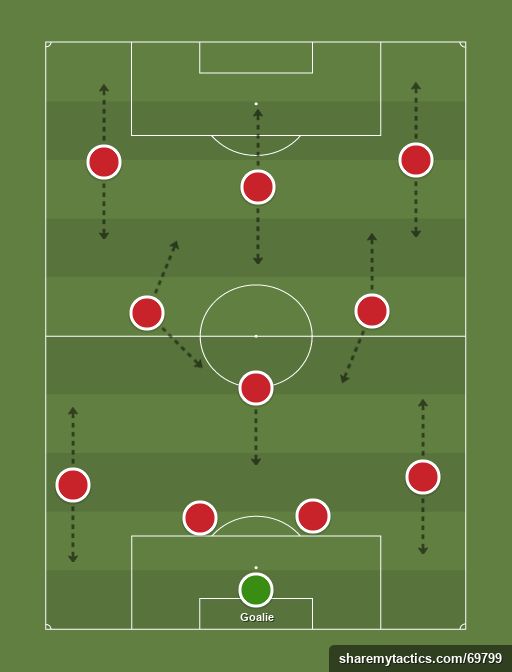
This is the system of gegenpressing and verticality. It’s for teams that want to suffocate opponents and strike quickly. The 4-3-3 isn’t just an attacking shape; it’s a pressing machine. The front three set the trap, and the midfield three spring it.
Your wingers must be threats in behind. If they constantly check to the ball, you lose all width and the system collapses into a congested 4-3-2-1. The single striker needs to be mobile, capable of dropping deep to link play and spinning to run onto through balls.
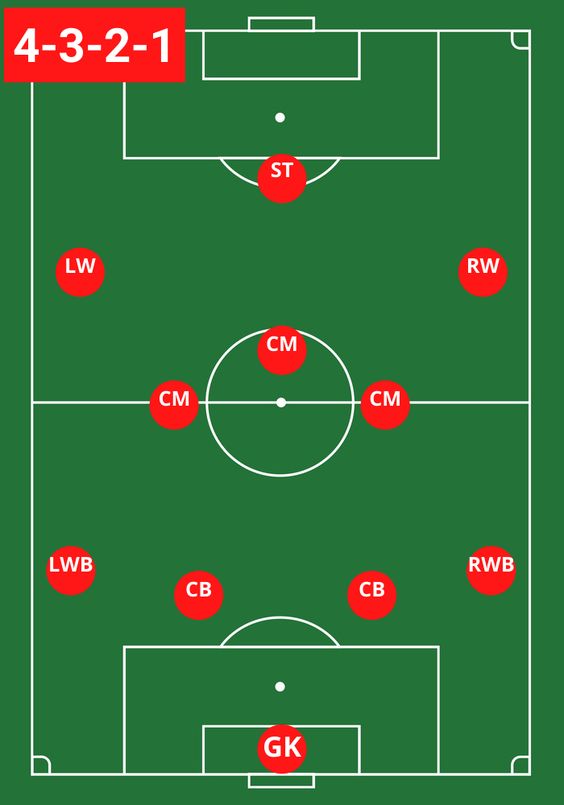
The most important player is the number 6, the holding midfielder. This player sees passing lanes before they open and breaks up counter-attacks with tactical fouls. They are the team’s metronome and fire extinguisher.
- Establish the press. The striker triggers the press by showing the opponent center-back onto his weaker foot. The wingers immediately cut off passing lanes to the full-backs.
- Midfield cover. The three midfielders shift as a unit to cover the central zones the press intentionally leaves open. The holding midfielder patrols the space in front of the center-backs.
- Full-back support. The full-backs provide width in attack but must recover explosively. If your winger doesn’t track back, your full-back will be alone against two players within three passes.
- Transition to attack. Upon winning the ball, the nearest midfielder looks for the vertical pass to a winger or striker immediately. The default is forward, not sideways.
I learned this the hard way coaching an under-19 side. We had a talented but lazy winger. For 70 minutes, his lack of defensive work was covered by an exceptional holding midfielder. Then the holding midfielder cramped up. Their left-back overlapped, our winger watched, and they scored two goals from that flank in ten minutes. We lost. The 4-3-3 weaknesses are not theoretical.
TL;DR: The 4-3-3 demands extreme fitness and discipline from the wingers and a world-class holding midfielder. It wins games through intensity but loses them if that intensity drops for a single phase of play.
The 4-2-3-1: The Midfield Controller
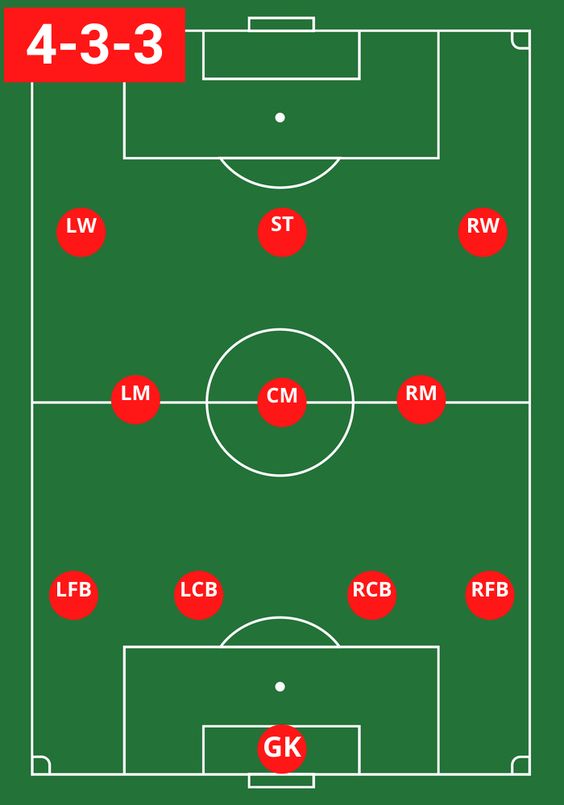
Look at the top leagues in Europe. This is the most common formation you’ll see. It offers perfect balance: a secure defensive base, control of the central midfield, and a fluid attacking quartet. The modern 4-2-3-1 is the default for a reason.
The “double pivot”, the two holding midfielders, is the engine room. One can be a destroyer, the other a deep-lying playmaker. They provide a platform for the number 10 and the wide attacking midfielders to create. The lone striker’s job is to occupy both center-backs, creating space for the number 10 to operate.
I prefer the 4-2-3-1 over the 4-3-3 for youth development. The two holding midfielders give young defenders more security, and the attacking midfield trio allows creative players to find pockets of space without the defensive burden of a pure winger. It teaches better positional play.
The system can become too conservative. If the double pivot is overly cautious and the full-backs don’t advance, the attacking four are starved of support. The striker becomes a lonely figure, chasing hopeful long balls.
| Game State | 4-2-3-1 Adjustment | Reason |
|---|---|---|
| Protecting a Lead | Drop a 10 into the pivot, become a 4-3-2-1 | Adds an extra body in midfield, solidifies the center, and limits risk. |
| Chasing a Game | Push a full-back high, become a 3-2-4-1 | Creates width and overloads in the final third. One pivot covers the counter. |
| Opponent has a strong 10 | One pivot man-marks, the other zones | Neutralizes the opponent’s playmaker while maintaining structural integrity. |
Understanding these strategic adjustments is what separates a good coach from a great one. The formation is a starting point, not a prison.
The 3-5-2: The Midfield Dominator
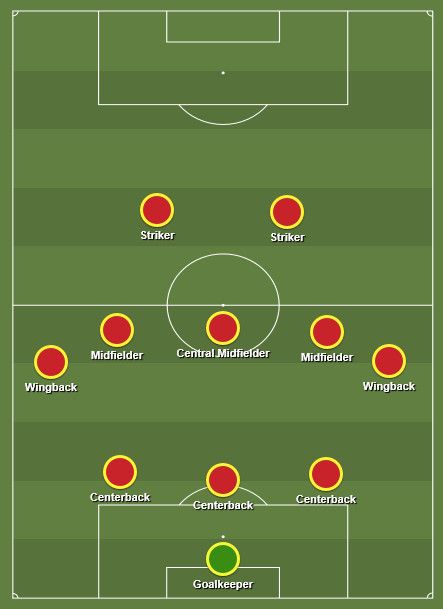
This formation is a statement. You are sacrificing a defender to overload the midfield and control the game. It’s spectacular when it works and a chaotic mess when it doesn’t. The modern 3-5-2 is a high-risk, high-reward system.
The wing-backs are the system. They must have the engine of a midfielder and the defensive awareness of a full-back. In attack, they provide the team’s entire width. In defense, they must drop to form a back five. If you have to sub one off for fatigue, you effectively need to change your formation.
The three center-backs are not equals. The central one must be a vocal organizer, a sweeper who reads the game and instructs the two outside center-backs when to step into midfield. The two strikers must work in tandem, often with one dropping deep to link with the advancing midfielders.
Common mistake: Using traditional full-backs as wing-backs. They’ll be positionally sound defensively but offer nothing going forward, or they’ll be adventurous attackers who leave gaping holes behind them. A true wing-back is a hybrid, and they are the rarest player on the pitch.
This formation is a powerful counter to teams that rely on a 4-3-3. Your five midfielders overwhelm their three, and your two strikers occupy their back four, preventing their full-backs from advancing. However, it can be vulnerable to teams with exceptional wide players who can pin your wing-backs and exploit the space behind them. For a more secure defensive variant, some coaches look at the defensive 5-3-2, which starts from a deeper block.
TL;DR: The 3-5-2 wins the midfield battle and creates numerical overloads out wide. It demands two elite wing-backs and a smart central defender. If you don’t have those three players, choose a different system.
How to Choose Your Formation: A Coach’s Checklist
Forget the pros. Look at your own team sheet. This decision is not about philosophy; it’s about personnel. Print this list and run through it with your squad in mind.
- Do you have fast, skilled players who can play wide? Yes → Lean towards 4-3-3 or 4-2-3-1. No → Avoid systems dependent on wingers.
- Is your best player a creative number 10? Yes → Build around them in a 4-2-3-1. No → Consider a 4-4-2 or 3-5-2 with a midfield-focused creator.
- Do you have two intelligent, fit players who can play wing-back? Yes → The 3-5-2 is a viable option. No → Eliminate the 3-5-2 immediately.
- Is your team new or tactically inexperienced? Yes → Start with the simple, structured 4-4-2. No → You can implement more complex systems like the 4-2-3-1.
- Are you consistently facing stronger opponents? Yes → The defensive solidarity of a 4-4-2 or a 5-3-2 is prudent. No → You can afford more attacking systems like the attacking 3-4-3.
Your answers will point you to one or two formations. Now you must test them. Run 30-minute training matches using each candidate formation. Watch where the breakdowns happen. Does your defense look scrambled? Does your attack look disconnected? The formation that looks the most organized with your specific players is the right one. This practical testing is the core of any effective soccer tactics guide.
Frequently Asked Questions
What is the most defensive 11v11 soccer formation?
The 5-3-2 is arguably the most defensive. With five defenders and three central midfielders, it forms two deep, compact banks of players that are extremely difficult to break down. It’s often used to protect a lead against a superior opponent. The trade-off is limited attacking width and reliance on counter-attacks.
What is the best formation for a team with no true wingers?
The 3-5-2 or the 4-4-2 diamond (with a back four, one holding mid, two central mids, and a number 10) are your best bets. Both systems generate width from wing-backs or overlapping full-backs instead of traditional wingers, allowing you to pack the central areas with your best midfielders and strikers.
How do I teach young players a new formation?
Start with the defensive shape only. Use small-sided games to drill the distances between the lines. For a 4-3-3, practice the front three’s pressing triggers without even adding defenders. Introduce the formation in phases, defense, then build-up, then attacking patterns, over several training sessions. Never explain the entire system at once.
Can you change formations during a game?
Absolutely, and you should. The best teams fluidly shift between shapes. A common switch is moving from a 4-2-3-1 in possession to a 4-4-2 out of possession to create a more compact midfield block. The key is to practice these transitions in training so they are automatic, not chaotic, during a match. Understanding these tactical differences is crucial for in-game flexibility.
Is the 4-4-2 formation still effective today?
Yes, but rarely in its pure, flat form. Modern iterations involve midfielders rotating, full-backs pushing high, and strikers dropping deep. It remains highly effective for teams that prioritize defensive organization, direct attacking play, and set pieces. Its simplicity makes it a powerful tool against more complex systems that can be disrupted by disciplined, hard-running teams.
Before You Go
Your formation is a skeleton. The players are the muscle and nerve. The 4-4-2 gives you stability, the 4-3-3 gives you intensity, the 4-2-3-1 gives you control, and the 3-5-2 gives you midfield dominance. Your training week must breathe life into that skeleton with drills that replicate the specific movements and decisions the formation demands.
Watch your next match not as a fan, but as an analyst. Can you identify the opponent’s formation? Where are its weak points, the spaces between the lines, the isolated full-back, the overworked holding midfielder? Your ability to read the game and adapt your tactical setup is your ultimate weapon. Pick the system that fits your tools, train it until it’s instinct, and have the courage to change it when the game asks you to.

I come from the “soccer heart” of Germany, the Ruhrpott. I have played, trained and followed soccer all my life and am a big fan of FC Schalke 04. I also enjoy following international soccer extensively.