Biggest Stadiums World Cup : Capacity, Matches & Key Facts
The biggest stadiums for the 2026 World Cup are AT&T Stadium in Arlington, Texas (92,967 tournament net capacity), Estadio Azteca in Mexico City (87,500), and MetLife Stadium in East Rutherford, New Jersey (82,500). These venues will host the most critical matches, including the Opening Match, Semi-Finals, and the Final on July 19.
Most articles just list capacities. They miss the crucial detail that the number you see for your favorite NFL team’s home is not the number FIFA will use. The governing body mandates a “tournament net capacity” that accounts for media tribunes, expanded safety zones, and accessible seating. This reconfiguration can shrink a stadium’s usable seats by several thousand. Getting this wrong means overestimating your chances for a ticket or misunderstanding the actual scale of the event.
This guide cuts through the noise. We’ll rank the true giants, explain why their size matters for the matches they host, and detail the multi-million dollar upgrades turning them into World Cup-ready coliseums.
Key Takeaways
- The official tournament net capacity is the only number that matters for ticket availability and is often lower than a stadium’s regular listed capacity.
- AT&T Stadium is the undisputed king of capacity and will host nine matches, more than any other venue, including a Semi-Final.
- Historic Estadio Azteca gets the Opening Match and becomes the first stadium to host three men’s World Cups.
- MetLife Stadium lands the ultimate prize: the 2026 World Cup Final on July 19.
- Stadium size directly influences match allocation; the largest venues get the most games and the highest-stakes knockout fixtures.
The Top 5 Largest Stadiums by Tournament Net Capacity
Forget the generic online lists. The official FIFA tournament net capacity is the definitive metric. It’s the number of seats actually available for fans after setting aside space for broadcasters, security, and tournament operations. This is the figure that determines your ticket odds.
AT&T Stadium leads with a tournament net capacity of 92,967. It will host nine matches, the most of any venue, including a Semi-Final. Its retractable roof and massive video board are designed for spectacle.
Here is how the true heavyweights stack up for the 2026 tournament.
| Stadium | Location | Tournament Net Capacity | Key Matches Hosted |
|---|---|---|---|
| AT&T Stadium | Arlington, Texas, USA | 92,967 | 9 matches, including a Semi-Final |
| Estadio Azteca | Mexico City, Mexico | 87,500 | Opening Match, group stage, knockout rounds |
| MetLife Stadium | East Rutherford, New Jersey, USA | 82,500 | The Final (July 19), group stage |
| Arrowhead Stadium | Kansas City, Missouri, USA | 76,640 | Group stage, Round of 32 |
| NRG Stadium | Houston, Texas, USA | 72,220 | Group stage, Quarter-Final |
The gap between first and fifth is over 20,000 seats. That’s an entire medium-sized Premier League ground. This tiered allocation isn’t random. FIFA’s match schedule is a deliberate piece of logistical and commercial engineering. The biggest boxes get the biggest gifts.
TL;DR: AT&T Stadium is the capacity king (92,967), but MetLife Stadium gets the Final. Always check the tournament net capacity, not the regular stadium figure.
What Makes a Stadium ‘Big’ for the World Cup?
Raw seat count is only part of the story. For FIFA, a ‘big’ stadium is a blend of capacity, infrastructure, legacy, and fan experience potential. A 70,000-seat bowl with poor transport links is less useful than a 65,000-seat arena in a city center with a direct metro line.
The governing body evaluates everything from the width of concourses to the power supply for global broadcast compounds. A stadium must also deliver an atmosphere worthy of a World Cup broadcast. The steep, towering stands of Estadio Azteca create a cauldron of noise that flat, shallow bowls simply cannot match. This acoustic pressure is a tangible home-field advantage and a key part of the spectacle.
Common mistake: Comparing regular-season NFL capacity to World Cup capacity — the tournament net figure is always lower due to mandatory media and operational zones, cutting available tickets by 3,000–8,000 depending on the venue.
Modern amenities are non-negotiable. Venues like SoFi Stadium and Mercedes-Benz Stadium set a new standard with their canopy designs that protect fans from sun and rain without fully enclosing the air. This matters in a summer tournament across North American climates. The alternative, like the open-air Arrowhead Stadium, offers a classic, sun-baked American football experience that will test the stamina of players and fans alike in the Midwest heat.
A Deep Dive on the Three Crown Jewels
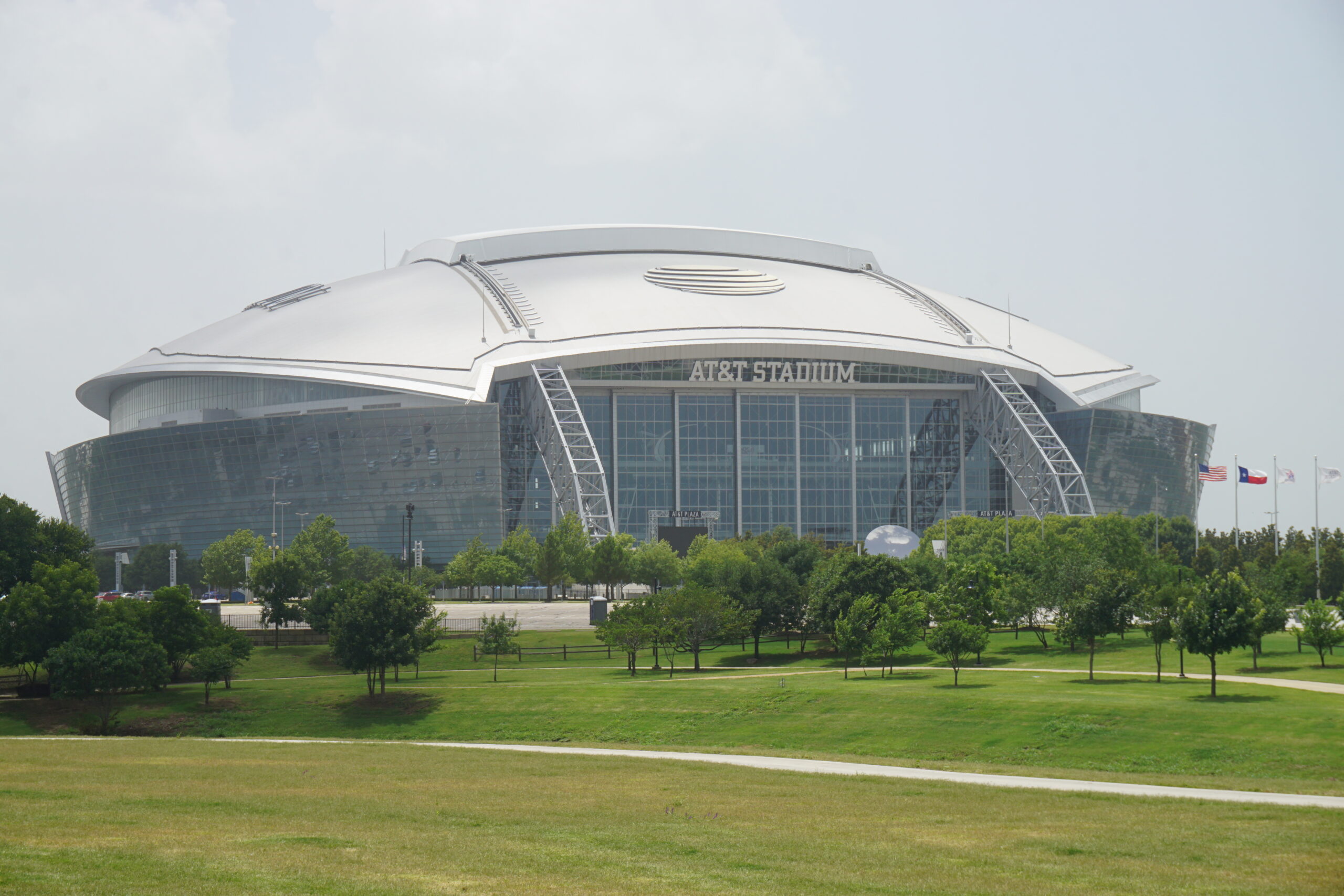
Photo: Michael Barera / Wikimedia Commons / CC BY-SA 4.0
These three venues aren’t just big. They are the narrative anchors of the entire tournament.
.jpg)
AT&T Stadium: The Volume Leader
The home of the Dallas Cowboys is a monument to American scale. Its 92,967-seat configuration for the World Cup is the largest ever for the tournament. It gets nine matches because it can reliably move massive crowds in and out. The retractable roof is the strategic masterstroke. It guarantees match conditions regardless of the fierce Texas summer, ensuring the quality of the natural grass pitch FIFA is having installed. The stadium’s vast interior also allows for enormous fan zones and sponsor pavilions within the building itself.
I’ve been there for an international friendly. The scale is disorienting. The noise doesn’t reverberate—it gets absorbed by the sheer volume of space. It feels less like a football ground and more like a sporting cathedral. For a World Cup Semi-Final, that atmosphere will be uniquely overwhelming, not intimate.
Estadio Azteca: The Sacred Ground
Estadio Azteca is hallowed turf. Hosting its third World Cup in 2026, it is the only stadium to ever do so. Its 87,500 seats are packed into famously steep tiers, placing fans almost on top of the action. The altitude—2,200 meters above sea level—is the invisible twelfth player. Unacclimatized teams will struggle with the thin air after the 70th minute, a factor that has decided World Cup matches here before.
The stadium is undergoing its most significant renovation in decades. The upgrades aren’t about adding seats but modernizing the guts: new VIP suites, expanded media centers, and a complete overhaul of the aging concrete concourses. They’re polishing a legend, not building a new one.
The assignment of the Opening Match here is a tribute to its status. It connects the 2026 edition directly to the legends of 1970 and 1986. The energy when Mexico walks out for that first game will be seismic.
MetLife Stadium: The Final Destination
MetLife Stadium wins the ultimate prize: the World Cup Final. Its 82,500-seat capacity is more than sufficient, and its location in the New York/New Jersey metro area provides the global media and financial infrastructure the final demands. The stadium itself is a functional, efficient, and somewhat characterless twin of the nearby Giants Stadium it replaced. But for one day, none of that will matter.
The entire world will focus on its pitch. The stadium is open-air, so the Final will be subject to the elements. A July evening in New Jersey could be perfect, or it could be humid and stormy. That unpredictability adds a layer of classic football drama that a roofed stadium eliminates.
Stadium Upgrades: More Than Just New Grass

Every host venue is undergoing significant, mandatory changes. The most visible is the installation of natural grass pitches over the artificial turf or hybrid systems used by NFL teams. This is a complex, multi-million dollar process for indoor or retractable-roof stadiums like AT&T Stadium and Mercedes-Benz Stadium, involving specialized grow-lighting and ventilation systems.
The less visible upgrades are where the real money flows. Broadcast technology is being overhauled to support 4K HDR feeds and the massive data demands of VAR and semi-automated offside technology. Fiber optic cable is being laid by the mile. Hospitality and catering facilities are being expanded to FIFA’s exacting standards, which are several tiers above typical NFL suite offerings.
| Stadium | Key Upgrade Focus | Fan Impact |
|---|---|---|
| Estadio Azteca | Concourse modernization, VIP suite expansion | Shorter concession lines, improved amenities |
| SoFi Stadium | Natural grass pitch system integration | Perfect playing surface regardless of weather |
| BC Place (Vancouver) | Broadcast technology & lighting | Enhanced in-stadium video and lighting displays |
| Levi’s Stadium | Sustainability & solar power integration | Reduced environmental footprint for the event |
These investments are a core part of the hosting agreement. They leave a lasting legacy for the clubs and communities that use these stadiums long after the World Cup leaves town.
Fan Experience: Size vs. Atmosphere
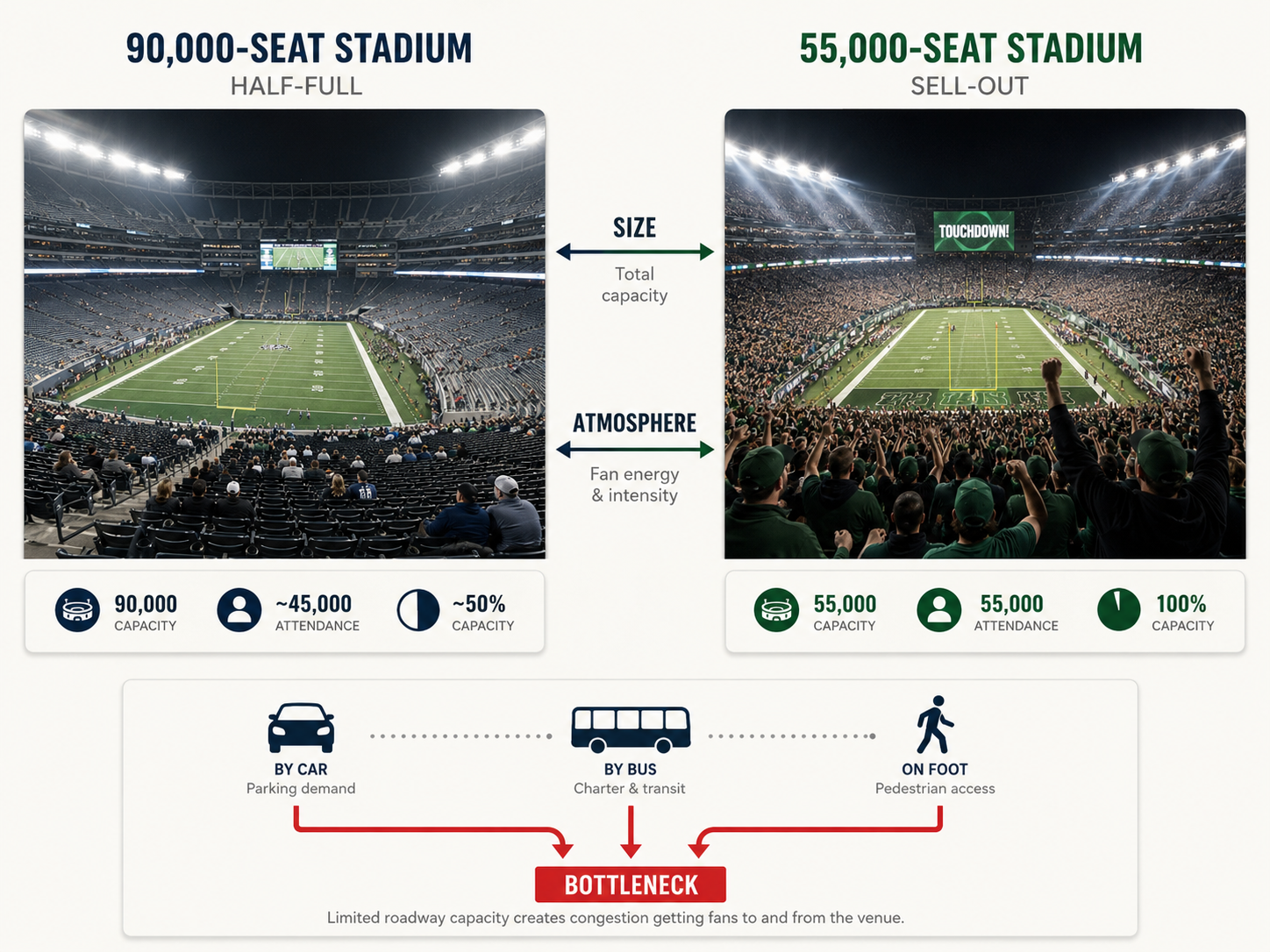
Bigger isn’t always better for the matchday experience. A 90,000-seat stadium can feel cavernous if it’s half-full for a group stage match between smaller nations. The atmosphere might be thinner, more dispersed. Conversely, a 55,000-seat sell-out at BC Place in Vancouver can generate a more concentrated, deafening roar.
Transportation is the hidden bottleneck. A stadium like AT&T Stadium, built in the suburban expanse of Arlington, relies heavily on car parks and shuttle buses. Getting out after a match can be a two-hour ordeal. A downtown stadium like GEHA Field at Arrowhead Stadium or one with a direct rail link like MetLife Stadium offers a smoother, if not faster, exit.
Common mistake: Prioritizing ticket price for the largest stadium without factoring in hundreds of dollars in additional costs for parking, extended hotel stays due to distance, and travel time that can eat into your trip.
Consider the climate. An afternoon match in the open-air NRG Stadium in Houston will be hot and humid. SoFi Stadium’s canopy provides shade but not air conditioning. Mercedes-Benz Stadium’s full roof closure can create a controlled, but potentially less ‘authentic,’ environment. Your personal tolerance for heat should influence your venue choice as much as the teams playing.
How Stadium Size Influences Tactics and Play

The dimensions of the playing surface are standardized, but the environment a large stadium creates can subtly influence a coach’s tactical formations. The vast, echoey space of AT&T Stadium might encourage a more patient, possession-based style, as players feel less immediate pressure from the stands. The intense, close vertical pressure of Estadio Azteca can fuel a high-pressing, aggressive game.
Wide players in a 3-4-3 formation have more room to operate in expansive bowls, but delivering a cross from the touchline to a crowd in the penalty area becomes harder in stadiums where the stands are set further back. The visual cues for players change. These are marginal gains, but at the World Cup level, margins decide everything.
Coaches planning for the Final at MetLife will have to consider the potential for wind affecting long passes and goal kicks, a factor absent in domed venues. It’s a return to a more fundamental variable in the game.
Frequently Asked Questions
What is the single biggest stadium for the 2026 World Cup?
AT&T Stadium in Arlington, Texas, is the largest by tournament net capacity at 92,967 seats. It will host nine matches, including a Semi-Final.
Which stadium is hosting the 2026 World Cup Final?
MetLife Stadium in East Rutherford, New Jersey, will host the Final on July 19, 2026. Its tournament net capacity is 82,500.
Why is Estadio Azteca so famous for this World Cup?
Estadio Azteca is the first stadium ever to host three men’s FIFA World Cups (1970, 1986, 2026). It will also host the Opening Match of the 2026 tournament and is famous for its intense atmosphere and high-altitude location.
Does a bigger stadium mean easier-to-get tickets?
Not necessarily. While bigger stadiums have more seats, the most popular matches (Final, Opening Match, games featuring top nations) will have demand that far outstrips supply regardless of venue size. Your odds are better for less high-profile group matches in large stadiums.
Are all these stadiums using natural grass?
Yes. FIFA mandates a natural grass playing surface for all World Cup matches. Stadiums that normally use artificial turf (like several NFL venues) are undergoing complex and expensive installations of temporary or permanent natural grass systems.
How does altitude affect play in Mexico City?
Estadio Azteca sits at 2,200 meters (7,200 feet) above sea level. The thinner air reduces oxygen availability, causing fatigue more quickly for players not acclimatized. It can also cause the ball to travel further and faster. Teams will need to adjust their training and strategic adjustments accordingly.
The Bottom Line
The 2026 World Cup is a tournament of scale, and its stadiums are the physical manifestation of that ambition. Look beyond the raw capacity numbers. The true story is in the tournament net capacity, the specific multi-million dollar upgrades, and the unique character each giant brings to the event.
Choose your target matches wisely. A ticket to a group game in the colossal AT&T Stadium offers one experience. A seat at the historic Azteca for the opener offers another. And a spot in MetLife for the Final is the pinnacle. Understand the trade-offs between size, atmosphere, location, and climate. Then go find your seat in football history.
I come from the “soccer heart” of Germany, the Ruhrpott. I have played, trained and followed soccer all my life and am a big fan of FC Schalke 04. I also enjoy following international soccer extensively.