3-4-3 Formation Soccer: A Complete Tactical Guide
To implement the 3-4-3 formation soccer, you need three specific player types: a vocal sweeper in the middle of a back three, a complementary double pivot in central midfield, and wing-backs with the engine of a marathon runner. The system creates five attacking players and five defensive players, switching between a 3-4-3 in attack and a 5-2-3 in defense to overload both flanks and control central channels.
Most coaches see the three defenders and assume it’s a reckless, all-out attacking gamble. They push the wing-backs up and leave the center-backs exposed, then wonder why they get shredded on the counter through the wide channels every weekend. The formation isn’t the problem. The transition timing is.
This guide breaks down the real mechanics. You’ll get the exact player profiles, the non-negotiable defensive shifts, and the tactical counters that can break your 3-4-3 if you’re not prepared.
Key Takeaways
- The double pivot is your system’s keystone. If those two midfielders get overrun by a three-man midfield, your entire structure collapses inward. You lose possession and defensive cover simultaneously.
- Wing-back stamina is non-negotiable. A tired wing-back who can’t track back turns your 3-4-3 into a 3-2-5, leaving a massive highway for opposing wingers. This happens around the 70-minute mark if you don’t manage substitutions.
- The front three’s configuration decides your press. A flat three with wingers presses wide, while two No. 10s behind a striker triggers a central squeeze. Picking the wrong press for your players’ instincts is the most common tactical misfire.
- Defensively, you must shift to a back five. Any hesitation from the wing-backs in dropping creates a 20-yard gap between them and the wide center-back. That’s where goals come from.
- The 4-2-3-1 formation is your kryptonite. It matches your double pivot in midfield and uses its three attacking midfielders to occupy your three center-backs, nullifying your numerical advantage everywhere.
The 3-4-3 Formation Structure: More Than Just Numbers
Forget the 3-4-3 as just three lines of players. It’s a dynamic shell that demands specific physical and technical traits from each position. Getting the personnel wrong here makes the entire system unstable.
The back three is not a flat line. The central defender acts as a sweeper, reading the game and directing the two wider center-backs. Those wide center-backs are hybrid players. They need a center-back’s defensive instinct and a full-back’s pace and passing ability to cover the flank and start attacks. If they’re slow or poor on the ball, your build-up stutters and the channel behind them is always vulnerable.
The 3-4-3 formation utilizes three central defenders, a double pivot of two central midfielders, two wing-backs positioned in the midfield line, and a front three. This structure provides a base of five defensive players and five attacking players, creating balance and multiple passing triangles through all thirds of the pitch.
The four midfielders are split into two distinct pairs. The double pivot sits centrally, shielding the defense. The wing-backs provide the width, stationed higher up the flanks. This is the first major difference from a 4-3-3 or a 4-2-3-1. Your width comes from midfield, not from your forwards.
The front three is where the most variation occurs. You can play a traditional striker with two wingers, a false nine with two inverted forwards, or a 3-4-2-1 with two attacking midfielders tucked behind a central forward. Your choice here dictates your primary method of chance creation and your defensive pressing scheme. A proper understanding of soccer formations is essential before locking in your front-three style.
TL;DR: Your back three needs a leader in the middle and athletes on the sides; your width comes from marathon-running wing-backs; your front-three setup chooses your pressing style for you.
The Double Pivot: The Engine Room
This two-man central midfield is everything. Their coordination determines whether you control a game or get played through like a turnstile. One midfielder is typically a deep-lying playmaker—the regista. The other is a ball-winning shuttler—the carrilero or mezzala.
Their primary function is to connect the back three to the attacking players. They receive from the center-backs, turn, and play forward to the wing-backs or the front three. When they do this well, the game flows. When they are marked out or outnumbered, your team gets stuck passing sideways across the back line.
Common mistake: Using two similar midfielders in the double pivot — two destroyers or two playmakers. This lacks balance. The opponent marks your single creator, and you have no progressive passing. Or you have two creators with no defensive bite, and your center-backs are exposed within three opposition transitions.
The pivot must also provide defensive cover for the advanced wing-backs. If your left wing-back is high up the pitch and you lose possession, the left-sided central midfielder must immediately shuffle wide to temporarily protect that space until the wing-back can recover. Fail this, and the opposition winger is in behind against your isolated wide center-back. This coverage drill is a core part of any comprehensive soccer tactics guide.
| Pivot Role | Primary Duty | Risk If Missing |
|---|---|---|
| Deep Playmaker | Dictate tempo, switch play, break lines with passing. | Build-up becomes predictable and easy to press; possession is sterile. |
| Ball-Winner / Shuttler | Cover space, win duels, provide vertical runs. | Center-backs face direct pressure; no midfield runs beyond the front three. |
| Coordinated Unit | Maintain compact distance (10-15 yards), cover for each other. | Gaps open between lines; opponents play through the center uncontested. |
Their required understanding is telepathic. If one steps to press, the other must hold. If one joins the attack, the other anchors. I learned this coaching a youth side. We had two talented, attack-minded kids in the pivot. We’d score three, then concede four because neither would sit. We brought in a disciplined holder, and the system immediately solidified. The scorelines flipped.
The Wing-Back: The System’s Most Demanding Role
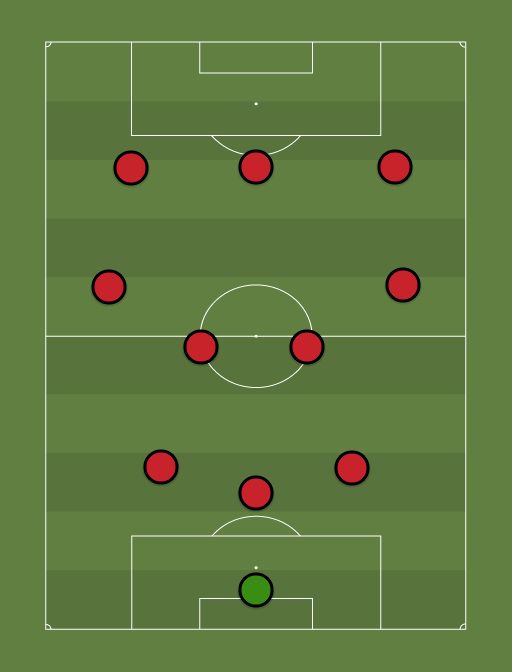
Calling them midfielders is a technicality. In practice, they are auxiliary wingers in attack and emergency full-backs in defense. The physical output is brutal. They are responsible for the entire flank, requiring a blend of a winger’s dribbling and crossing and a defender’s tackling and positional sense.
In the attacking phase, they provide the only true width. This pins the opposing full-back, creating a dilemma. If the full-back follows the wing-back, space opens inside for your attacking midfielder or forward. If the full-back stays narrow, your wing-back has time to deliver a cross. Their ability to beat a player one-on-one in these wide areas is critical.
The defensive transition is where games are won and lost. Upon losing the ball, the wing-back’s first thought must be to recover towards his own goal, forming a back five with the three center-backs. This shift changes the 3-4-3 formation tactics into a 5-2-3 block. Hesitation is fatal.
The difference between a wing-back and a traditional full-back is one of emphasis. A full-back’s primary duty is defense. A wing-back’s primary duty is to provide width in attack, with defense a mandatory secondary function. This is why the wing-back role requires a unique athlete. You cannot convert a slow, defensively-sound full-back into an effective wing-back. You can, however, train a fit winger to learn the defensive positioning.
TL;DR: Your wing-back needs a winger’s skills and a defender’s brain. If they can’t sprint for 90 minutes and make smart recovery runs, don’t play a 3-4-3.
The 3-4-3 in Attack: Creating the Box Midfield

This is where the formation gets clever. In possession, it morphs. The two wide center-backs split to the edges of the penalty area. The two wing-backs push high up the touchlines. The two central attacking midfielders (or the wingers, depending on setup) tuck inside.
What does that create? A box midfield. You now have four central midfielders: your two holding players and your two advanced players, forming a rectangle in the center of the pitch. This structure creates numerical overloads against most common midfields (like a 4-3-3’s three-man midfield or a 4-2-3-1’s double pivot).
I watched a lower-league German side try this against a 4-3-3. Their two tens kept drifting wide, leaving the box empty. Their pivot was isolated, the play went sideways, and they couldn’t progress the ball. At halftime, the coach screamed one instruction: “Tuck in.” The second half was a domination. The central overload worked.
This box gives you multiple passing options to bypass pressure. It’s the core mechanism that makes the 3-4-3 an “antidote to possession football.” It allows you to dominate the central zones, which is where you control the game. The 3-4-3 tactical principles of width and central overload converge here.
The front three’s movement complements this. The central striker often drops or moves laterally to drag a center-back, creating space for the advancing attacking midfielders from the box to run into. The wing-backs stretch the play, ensuring the opposition defense can’t collapse too narrowly.
| Attacking Phase | Player Movement | Resulting Shape | Key Advantage |
|---|---|---|---|
| Initial Build-up | Wide CBs split; Wing-backs hold width. | 3-2 base at the back. | Creates passing lanes to beat the first line of press. |
| Progression | Attacking midfielders tuck inside. | Box Midfield forms (4 central players). | Overloads the opposition central midfield. |
| Final Third Entry | Wing-backs reach touchline; Striker manipulates CBs. | 3-2-5 or 2-3-5 attacking shape. | Stretches defense horizontally and vertically. |
Defending in a 3-4-3: The 5-2-3 Transition

Out of possession, the 3-4-3 is not a 3-4-3. It is a 5-2-3. Any coach who tells their wing-backs to stay high while defending is asking for a thrashing. The transition is non-negotiable and must be drilled until it’s automatic.
The moment possession is lost, the two wing-backs drop to form a line of five with the three center-backs. The double pivot condenses in front of them, protecting the central space just outside the penalty area. The front three becomes the first line of defense, setting the press and funneling play into areas where your team is strong.
The defensive vulnerability is in the channel between the wing-back and the wide center-back. If the wing-back is slow to drop or gets caught upfield, this channel becomes a runway. The opposition plays a quick ball into that space for a winger to attack. Your wide center-back is now in a one-on-one duel, isolated, with no cover.
Common mistake: Pressing with the wing-back in the opponent’s half. If the press is beaten, the wing-back is 60 yards from his defensive position. The recovery run is impossible, and your back three is instantly outnumbered in a wide transition. Only press with the wing-back if your team is set in a high block with the defensive line near the halfway line.
The back five is incredibly difficult to break down when organized. It crowds the penalty box and blocks crosses effectively. This defensive solidity is a key reason the formation is balanced. It provides a secure base from which to launch the attacking rotations. This secure base is similar to the logic behind a 5-3-2 defensive formation, though the attacking intent is greater in the 3-4-3.
Player Profiles: Who Fits Where?

You cannot force square pegs into round holes with this formation. Each role has a specific profile. Ignoring these profiles is the fastest way to see the system fail.
Center-Backs (3):
- Central CB: The commander. Needs leadership, aerial dominance, and exceptional reading of the game. Pace is less critical.
- Wide CBs: Hybrid athletes. Must be comfortable defending in space one-on-one, have decent recovery pace, and be confident carrying or passing the ball forward. Think of a faster, more technical center-back.
Double Pivot (2):
- Deep Playmaker: High football IQ, composure under pressure, range of passing. Not a pure defender.
- Ball-Winner/Shuttler: Engine, tactical discipline, tackling ability, capacity to make late runs into the box.
Wing-Backs (2):
- Elite stamina (top of the squad in distance covered).
- Pace and acceleration.
- Competent 1v1 dribbling and crossing ability.
- Defensive awareness and tackling technique.
Front Three (3): Choose one configuration
* Option A (Winger-Striker-Winger): Two traditional wingers who stay wide and a target striker. Direct.
* Option B (3-4-2-1): Two creative No. 10s and a mobile striker. Allows for intricate central play.
* Option C (False Nine): A forward who drops deep, with two inverted wingers cutting inside. Fluid and unpredictable.
Choosing between these setups is a fundamental tactical interpretation of your squad’s strengths. Do you have fast wingers? Use Option A. Creative playmakers? Option B.
Strengths, Weaknesses, and How to Counter the 3-4-3
Every formation is a trade-off. The 3-4-3’s strengths are pronounced, but so are its weaknesses.
Key Strengths:
- Numerical Overloads: Creates overloads in central midfield (via the box) and out wide (via wing-backs vs. full-backs).
- Defensive Security: Transitions to a back five, providing a solid, compact defensive block.
- Attacking Versatility: The front three can be configured in multiple ways to exploit different defensive weaknesses.
- Pressing Platform: The front three and advanced wing-backs are perfectly positioned to execute a coordinated high press.
Key Weaknesses:
- Wide Channel Vulnerability: The space behind the wing-backs is a prime target for counter-attacks.
- Midfield Overload Risk: A two-man pivot can be outnumbered and overwhelmed by a three-man central midfield (like in a 4-3-3).
- Physical Demand: The system is exhausting, especially for the wing-backs. Squad depth is crucial.
- Susceptibility to the 4-2-3-1: This formation directly counters the 3-4-3 by matching the double pivot and using three attacking midfielders to occupy the three center-backs.
The most effective counter is the 4-2-3-1. Its double pivot neutralizes yours, its wingers occupy your wing-backs, and its central attacking midfielder finds space between your lines. To beat it, you often need to change shape, perhaps dropping a forward into midfield to create a 3-5-2, which is a close relative with its own 3-5-2 advantages. Understanding the 3-5-2 vs 4-3-3 dynamic also helps, as the 4-3-3 is another common opponent that tests your pivot.
Comparing the 3-4-3 to Other Formations
How does it stack up against the tactical field?
3-4-3 vs. 4-3-3: The 4-3-3 often dominates the central midfield battle with three players against your two. Your advantage is width—your wing-backs against their full-backs. The game becomes a battle of the flanks. Can your wing-backs exploit their full-backs before their three midfielders overrun your pivot?
3-4-3 vs. 3-5-2: They share a back three. The 3-5-2 formation uses wing-backs too, but adds a third central midfielder for more control and uses two strikers. It’s generally more defensively stable and less reliant on individual wing-back brilliance, but less explosive in wide areas. The 3-4-3 is its more offensive cousin.
3-4-3 vs. 5-3-2: The 5-3-2 formation is fundamentally defensive. It uses a back five and a midfield three, often prioritizing defensive solidity and hitting on the counter. The 3-4-3 uses its back five only in defensive transition and commits more players to attack proactively.
TL;DR: You pick the 3-4-3 over a 4-3-3 for width and overloads, over a 3-5-2 for more attacking firepower, and over a 5-3-2 when you want to control the game, not just counter.
Frequently Asked Questions
Is the 3-4-3 a good formation for youth soccer?
It can be excellent for teaching positional play, width, and defensive transitions. However, the extreme physical demands on the wing-backs and the tactical discipline required for the double pivot make it better for older, more developed youth teams (U16+). For younger ages, stick to simpler formation numbering like 4-4-2 or 4-3-3.
Which professional teams have used the 3-4-3 successfully?
Antonio Conte’s Chelsea won the 2016/17 Premier League title with a devastating 3-4-3. His wing-backs, Victor Moses and Marcos Alonso, were revelations. More recently, managers like Thomas Tuchel and Roberto De Zerbi have used variants of the system to great effect, emphasizing the box midfield in possession.
Can you switch to a 3-4-3 mid-game from a 4-3-3?
Yes, it’s a common in-game adjustment. You typically ask one full-back to push up into the wing-back role and one central midfielder to drop between the two center-backs to form the back three. This is a proactive move to add more attacking width and numbers against a deep-lying opponent.
What’s the biggest risk when playing a 3-4-3?
Player fatigue, specifically of the wing-backs. If they cannot maintain their defensive responsibilities in the final 20 minutes, your team becomes massively exposed. You must have capable substitutes for these positions or be prepared to change the formation as legs tire.
How do you beat a team that plays a 3-4-3?
Exploit the wide channels in transition. When you win the ball, immediately look for a pass into the space behind their advanced wing-backs. Also, use a three-man central midfield (like in a 4-3-3) to overload their double pivot and cut off their supply line to the front three.
The Bottom Line
The 3-4-3 formation soccer is not a gimmick. It’s a sophisticated, demanding system that rewards intelligent players and rigorous coaching. Its power lies in its duality—the seamless shift from a 3-4-3 in attack to a 5-2-3 in defense. Master that transition, and you control the geometry of the pitch.
Forget just copying Conte or Tuchel. Look at your squad. Do you have the tireless wing-backs and the complementary double pivot? If not, trying to force the system will highlight its weaknesses, not its strengths. But if you have the right pieces and drill the movements until they’re instinct, the 3-4-3 offers a balanced, dynamic, and potent way to play the modern game. It turns defense into attack with five players already in advanced positions. That’s a weapon.

I come from the “soccer heart” of Germany, the Ruhrpott. I have played, trained and followed soccer all my life and am a big fan of FC Schalke 04. I also enjoy following international soccer extensively.