Estadio Akron History: From Vision to World Cup Venue
Estadio Akron history began with a 2004 vision for a world-class venue in Guadalajara. Its 16-year journey to a 2026 World Cup stadium involved financial delays, a controversial location, and a complete turf replacement before its 2010 opening with a Zinedine Zidane farewell match.
Estadio Akron’s history is a 16-year story of ambition, delay, controversy, and ultimate validation as a World Cup host. It began as a personal dream in 2004, weathered financial storms, opened with a legendary player’s farewell, and will welcome the world in 2026 under a different name.
Most articles get the timeline wrong. They list the 2010 opening and the 2026 World Cup selection but skip the three-year gap between announcement and groundbreaking. They miss the turf war that forced a complete surface replacement less than two years in. And they rarely connect the stadium’s unique, eco-friendly design to the natural landscape it disrupts.
This guide tracks every pivot, from Jorge Vergara’s initial sketch to his son Amaury Vergara Zatarain’s multi-million-dollar renovation for FIFA. You’ll see why its artificial grass failed, how its name changed three times, and what it takes to prepare a privately-owned Mexican stadium for the planet’s biggest sporting event.
Key Takeaways
- The stadium was announced in 2004 but construction didn’t start until 2007, stalled by financial and logistical hurdles.
- It opened as Estadio Omnilife in 2010, was briefly Estadio Chivas in 2016, and became Estadio Akron in December 2017 after a 10-year sponsorship deal.
- The initial artificial playing surface was universally criticized and replaced with natural grass by July 2012.
- For the 2026 FIFA World Cup, it will host four matches, including Mexico vs. South Korea, and be temporarily renamed “Estadio Guadalajara” due to FIFA’s non-commercial naming policy.
- Owner Amaury Vergara is personally funding all World Cup renovations, including a $3 million LED lighting system, without public money.
A Stadium Built on a Dream (and Three Years of Delays)
Jorge Vergara didn’t just want a new home for Club Deportivo Guadalajara. He wanted an architectural statement. When he announced the project in February 2004, the vision was a “vanguardista” stadium that would become a benchmark for Mexico. The club was playing at the aging, shared Estadio Jalisco, and Vergara saw a custom-built venue as essential to Chivas’s identity and future.
The dream hit reality fast. Ground wasn’t broken until May 2007.
Financial planning, land acquisition in Zapopan, and complex design approvals ate three years. The Reference.org Estadio Akron facts page notes the official construction period as 2007 to 2010, but the ambition was born half a decade earlier. That gap between announcement and shovel is the first clue this wasn’t a standard project.
The stadium’s design, led by Jean-Marie Massaud and Daniel Pouzet with sports architecture firm Populous, deliberately evokes a volcano emerging from the earth. Its five levels, two of which are underground, and its perimeter berm planted with native grass are not just aesthetic choices but part of an integrated environmental strategy for the Bosque La Primavera reserve.
The berm isn’t landscaping. It’s a thermal mass that helps regulate the stadium’s internal temperature. A rainwater harvesting system captures runoff for pitch irrigation and toilet flushing. These weren’t afterthoughts for a green badge; they were core to Vergara’s vision of a stadium in harmony with its environment. The result feels less like a building dropped on a site and more like a landform that grew there.
TL;DR: The stadium’s three-year delay between announcement and construction signaled its complexity, while its volcanic, eco-integrated design set it apart from traditional concrete bowls from day one.
The Inauguration: More Than a Game
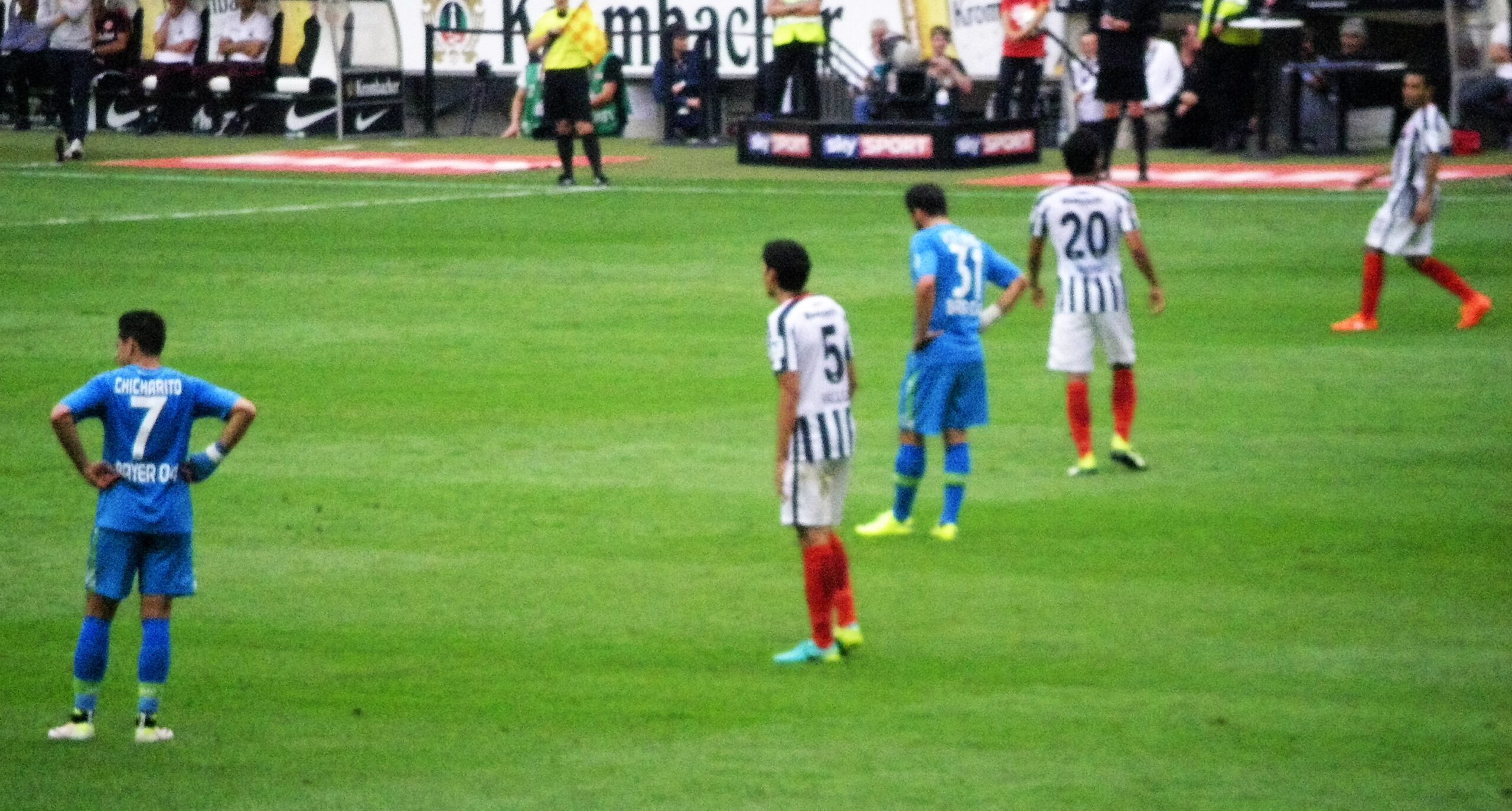
Photo: Chivista / Wikimedia Commons / CC BY-SA 4.0

The doors opened on July 30, 2010. The opponent was Manchester United. The score was 3-2 to Chivas. But the story was Javier “Chicharito” Hernández.
He scored the stadium’s historic first goal in the 12th minute, playing for Chivas. At halftime, he swapped jerseys and played the second half for Manchester United. His transfer had been signed that March, and this friendly was orchestrated as a symbolic farewell. The first goal in Estadio Omnilife, as it was then called, was scored by a player literally halfway out the door. You can’t script that.
I watched that match live on a grainy stream from Germany. The narrative was perfect, almost too neat. A homegrown hero scores the inaugural goal for his boyhood club before joining one of the world’s giants. It felt like a fairy tale for a stadium that had fought so hard to exist.
The spectacle worked. Over 46,000 fans saw a modern, intimate venue, a stark contrast to the vast, running-track-ringed Estadio Jalisco. The sightlines were steep, the seats close. It was built for football, not athletics. For Chivas fans, it was a declaration of independence.
TL;DR: The 2010 inauguration match was a staged transfer ceremony for Chicharito, who scored the first goal for Chivas before playing the second half for Manchester United in a 3-2 win.
From Omnilife to Akron to Guadalajara
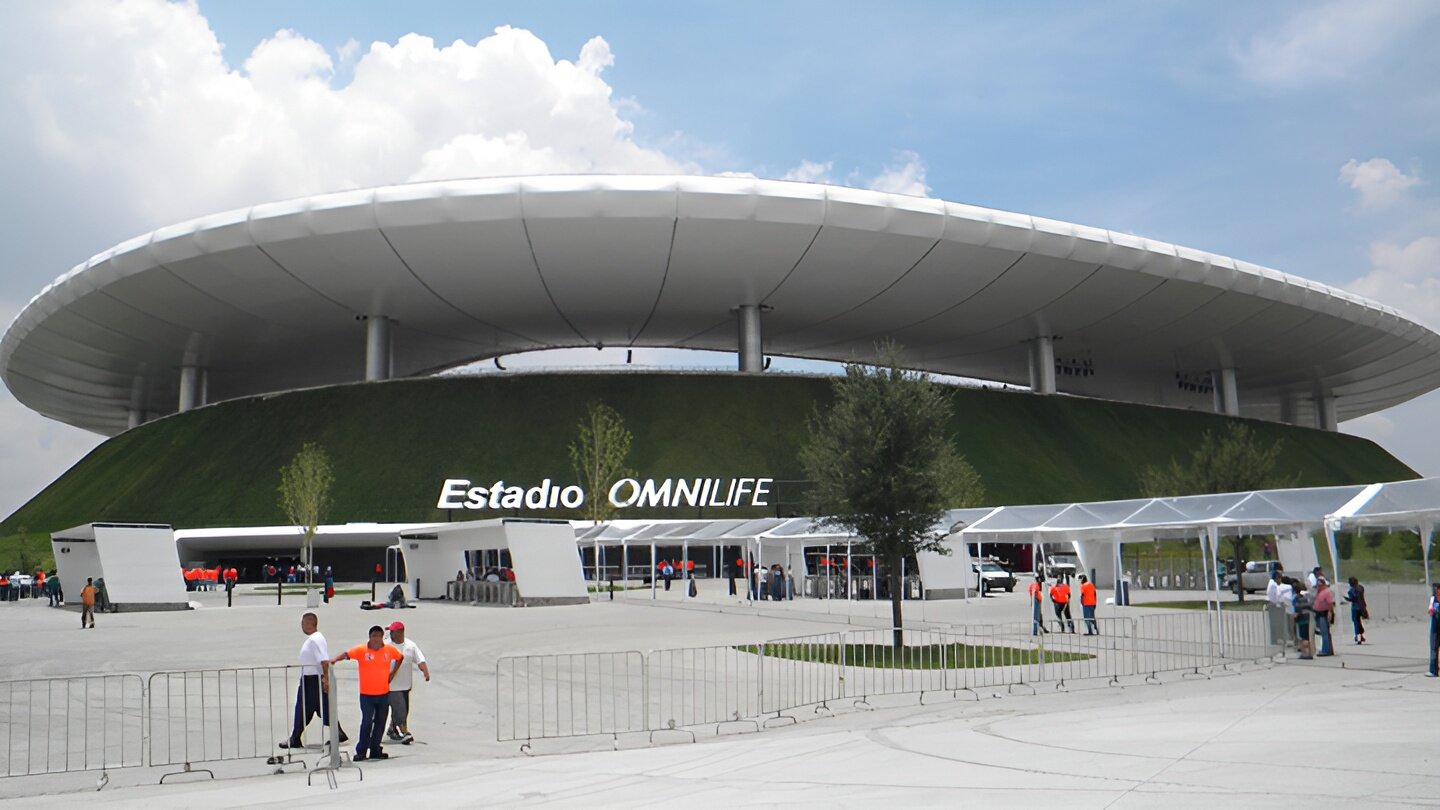
Photo: Juan Olivas / Wikimedia Commons / CC BY 2.0

The naming rights journey tells its own commercial story. It opened as Estadio Omnilife, named for Vergara’s nutrition and wellness corporation. That lasted six years.
In 2016, it was briefly rebranded Estadio Chivas, a straightforward club identity play. That lasted about a year.
In December 2017, a 10-year sponsorship deal was signed with Akron, a Mexican automotive lubricants company. The stadium became Estadio Akron, the name it carries today. The deal was a significant financial injection for the club, a common move in modern soccer pitch dimensions management where stadium naming rights are a major revenue stream.
Then came FIFA.
For the 2026 World Cup, the stadium will be temporarily renamed “Estadio Guadalajara.” FIFA’s strict policy bans commercial names for World Cup venues. It’s the same rule that turned “Allianz Arena” into “Munich Football Arena” in 2006. The Akron branding will be covered, a contractual hiccup smoothed over with the sponsor. It’s a small price for the global exposure.
| Name | Period | Reason / Sponsor |
|---|---|---|
| Estadio Omnilife | 2010 – 2016 | Named for owner Jorge Vergara’s corporation |
| Estadio Chivas | 2016 – 2017 | Brief rebrand to the club’s identity |
| Estadio Akron | Dec 2017 – Present | 10-year sponsorship deal with Akron lubricants |
| Estadio Guadalajara | 2026 FIFA World Cup | FIFA’s non-commercial naming policy for the tournament |
The Turf War: When Artificial Grass Failed
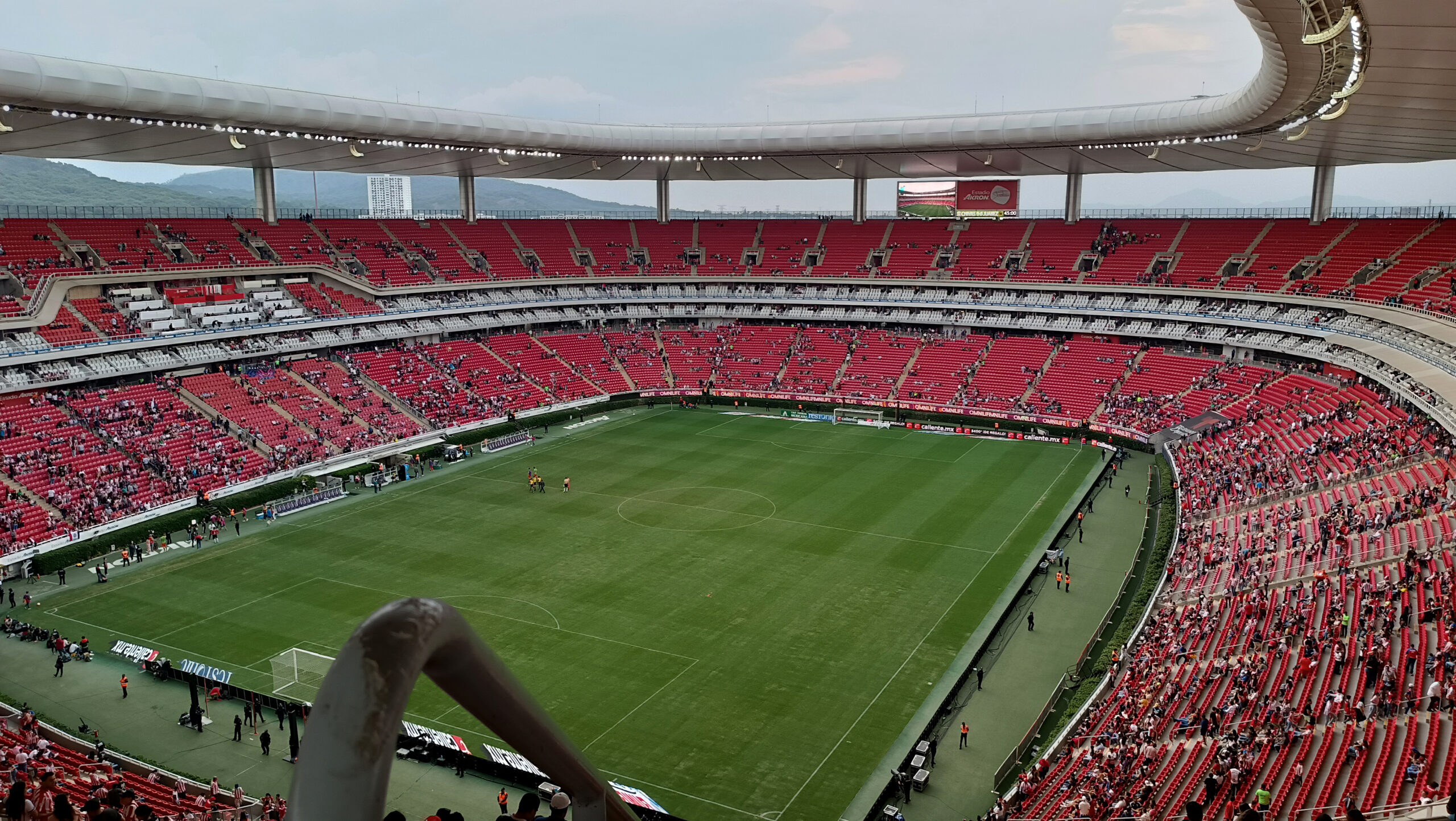
Photo: Alejan98 / Wikimedia Commons / CC0
.jpg)
Here’s a fact most stadium histories gloss over: Estadio Akron opened with an artificial pitch. And the players hated it.
The synthetic surface was installed for durability and lower maintenance. Within months, complaints rolled in from Chivas players and opponents alike. The ball bounced differently. Slide tackles burned. It just didn’t feel like real football.
Common mistake: Assuming a modern stadium’s playing surface is optimal from day one, the initial artificial turf at Estadio Akron was a performance and PR misstep that required a full, costly replacement within two years.
By May 2012, the club announced a U-turn. They would rip it up and lay natural grass. By July 2012, the job was done. The new pitch uses a shade-tolerant grass species selected for Guadalajara’s climate, a necessity because the stadium’s deep bowl and towering roof limit direct sunlight. This isn’t just a field; it’s a horticultural project.
The switch mattered. It signaled that player feedback and match quality trumped upfront cost savings. When the stadium hosts its World Cup matches, the grass will be one of its most scrutinized features. That $3 million renovation wasn’t just for lights.
Cementing a Legacy: Major Events and World Cup Preparation
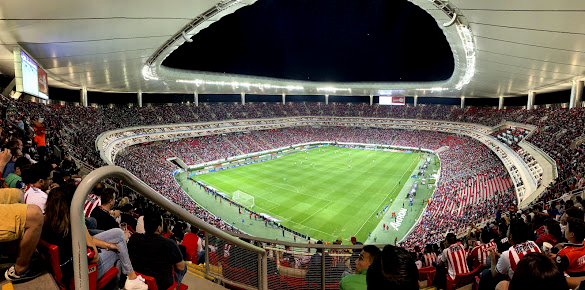
Photo: Alejan98 / Wikimedia Commons / CC0

The stadium quickly proved its versatility beyond Liga MX. It was a key venue for the 2011 Pan American Games, hosting the opening and closing ceremonies and all football matches. Later that year, it staged eight matches for the FIFA U-17 World Cup, including a semi-final.
It also became a concert destination. Paul McCartney, Aerosmith, and Elton John have played there. A Wikipedia entry for Estadio Akron lists these alongside sporting events, highlighting its dual identity as a cultural center.
But the crown jewel is 2026. Estadio Akron was selected as a host venue for the FIFA World Cup, a testament to its design and facilities. It will stage four group matches, one of which is Mexico’s second group game against South Korea, a guaranteed electric atmosphere.
The upgrades for FIFA are being bankrolled entirely by Amaury Vergara, Jorge’s son and the current owner. No public money. He committed $3 million for a state-of-the-art LED lighting system and 100 million pesos (roughly $5.5 million) for pitch and infrastructure maintenance. Populous, the original architects, are overseeing the renovations to ensure they meet FIFA’s exacting broadcast and safety standards.
This isn’t just a stadium getting a facelift. It’s a private investment securing a legacy. When the world tunes in, they’ll see a venue that reflects a very specific, persistent dream.
| Event Type | Specific Events | Significance |
|---|---|---|
| Sporting Ceremonies | 2011 Pan American Games Opening/Closing | Showcased capability for large-scale, multi-sport event production |
| International Football | 2011 FIFA U-17 World Cup (8 matches) | Proved fitness for FIFA tournament logistics and fan experience |
| Concerts | Paul McCartney, Aerosmith, Elton John | Established as a premier live music venue in Western Mexico |
| Boxing | Canelo Álvarez fight (2023) | Demonstrated adaptability for major non-football sporting events |
| FIFA World Cup | 2026 Group Stage (4 matches, incl. Mexico vs South Korea) | Apex of its status, requiring and receiving significant private investment for upgrades |
The Vergara Legacy: From Father to Son

The stadium’s story is inextricably linked to the Vergara family. Jorge Vergara conceived it, fought for it, and opened it. His death in 2019 transferred the responsibility, and the debt, to his son, Amaury Vergara Zatarain.
Amaury’s approach has been pragmatic. He consolidated ownership through Grupo Omnilife-Chivas and made the stadium financially viable. The Akron naming deal was his. The World Cup renovation funding is coming from his pocket. He’s operating less on visionary passion and more on sustainable stewardship. It’s a different kind of ambition.
The stadium is now a commercial engine. Beyond naming rights and ticket sales, it houses a museum, a cinema, and retail spaces. It’s a destination. This multifunctionality is a modern necessity for a stadium multi-use design, ensuring the venue earns its keep 365 days a year, not just on match days.
Frequently Asked Questions
When did Estadio Akron open?
The stadium officially opened on July 30, 2010, with a friendly match between Club Deportivo Guadalajara (Chivas) and Manchester United.
Why is it called Estadio Akron?
The name comes from a 10-year sponsorship deal signed in December 2017 with Akron, a Mexican automotive lubricants company. It was previously called Estadio Omnilife (2010-2016) and briefly Estadio Chivas (2016-2017).
What is the capacity of Estadio Akron?
Its total capacity is 49,813. For certain events, it’s listed at 46,355. For the 2026 FIFA World Cup, it will be configured to hold approximately 48,000 spectators.
Why will it be called Estadio Guadalajara for the 2026 World Cup?
FIFA regulations prohibit commercial names for World Cup venues. The “Akron” branding will be temporarily covered, and the stadium will be referred to as “Estadio Guadalajara” for the duration of the tournament.
Did Estadio Akron always have natural grass?
No. It opened with an artificial turf surface in 2010. Due to widespread criticism from players, the synthetic pitch was replaced with natural, shade-tolerant grass by July 2012.
The Bottom Line
Estadio Akron’s history is a masterclass in modern stadium development. It survived a three-year delay, a failed playing surface, and the passing of its visionary founder. It transformed from a club’s dream into a multi-purpose venue capable of hosting World Cup matches. The 2026 tournament is its ultimate validation, but the real story is in the gritty 16-year journey, from Jorge Vergara’s sketch to Amaury Vergara’s checkbook, from artificial turf to World Cup grass, from Omnilife to Akron to Guadalajara. It’s a stadium that earned its place.

I come from the “soccer heart” of Germany, the Ruhrpott. I have played, trained and followed soccer all my life and am a big fan of FC Schalke 04. I also enjoy following international soccer extensively.