Colombia’s World Cup History: Analyzing Their Best Results
Colombia’s World Cup history spans seven tournaments, with their best result a quarter-final finish in 2014. They have qualified for six of the last nine World Cups, cementing their status as a consistent CONMEBOL contender, and have directly qualified for the 2026 edition.
Most summaries stop at James Rodríguez’s 2014 magic. They miss the thirty-two-year gap between appearances, the tactical shift that defined their modern identity, and the specific, brutal moments that stalled earlier campaigns. You get the highlight reel, not the full match.
This guide walks through every tournament, the players who defined them, and the tactical philosophy that took them from World Cup outsiders to a team nobody wants to draw.
Key Takeaways
- Colombia’s best World Cup finish is 5th place, achieved after reaching the quarter-finals in 2014.
- James Rodríguez is their all-time top World Cup scorer with 6 goals, all coming in the 2014 tournament.
- Their first World Cup match in 1962 featured the only “Olympic goal” (direct corner) in tournament history, scored by Marcos Coll.
- After missing ten consecutive tournaments, Colombia has now qualified for six of the last nine World Cups, including 2026.
- The 2014 team won all three group games and beat Uruguay 2-0 before a tight 2-1 loss to hosts Brazil ended their run.
The Debut and the Long Wait (1962–1990)
Colombia first qualified for the World Cup in 1962. The tournament in Chile was a brutal introduction. They lost their opener 2-1 to Uruguay, then fell 5-0 to Yugoslavia. The campaign seemed destined for a quiet, winless end.
Then came the Soviet Union. Colombia trailed 3-0 early, then 4-1 with just over twenty minutes left. What followed was one of the most bizarre comebacks in World Cup history. Germán Aceros pulled one back. Then, in the 68th minute, Marcos Coll lined up a corner kick.
Marcos Coll’s corner kick sailed directly into the Soviet net without another player touching the ball, registering the first and only “Olympic goal” ever scored in a FIFA World Cup finals match. The 4-4 draw remains Colombia’s only point from their first World Cup adventure.
The goal is a permanent trivia answer. The result, however, didn’t change their group stage exit. More importantly, it didn’t spark a golden generation. Colombia would not return to the World Cup for 28 years.
The drought wasn’t for lack of talent. Domestic violence and the rise of the narcotrafficking-linked “Cartel de la Droga” teams in the 1980s created a chaotic, dangerous environment that stifled consistent national team development. Qualification through the brutal CONMEBOL region requires stability. Colombia had none.
That changed by 1990. A new generation, led by the iconic Carlos Valderrama, emerged. His passing range and vision provided the creative spine. They secured qualification for Italy ’90, ending the long exile.
Their group pitted them against eventual champions West Germany, Yugoslavia, and the UAE. A 2-0 loss to Yugoslavia started poorly. Then, against the mighty Germans, Colombia delivered a signature performance. Freddy Rincón’s late, scrambling equalizer secured a 1-1 draw, a massive result. A 1-0 win over the UAE sent them through to the knockout stages for the first time.
The Round of 16 brought Cameroon. After 90 minutes of tense, goalless football, the match went to extra time. Roger Milla, the 38-year-old sensation, scored twice to send Colombia home. The 2-1 loss was heartbreaking, but it announced Colombia as a team capable of competing on the biggest stage. The long wait was over. The modern era had begun.
TL;DR: Colombia’s World Cup story started with a historic 4-4 draw in 1962, then went dark for 28 years until Carlos Valderrama’s team announced their arrival with a Round of 16 run in 1990.
Tragedy, Transition, and the Modern Emergence (1994–2014)
The optimism from 1990 carried into USA 1994. Colombia arrived as dark horses, ranked 4th in the world. Then the pressure mounted. Pablo Escobar, a notorious drug lord with ties to football, allegedly placed a large bet on Colombia to win their opener against Romania. The players knew.
They lost 3-1. The atmosphere turned toxic. In their second match, against the hosts United States, defender Andrés Escobar scored an own goal in the 35th minute. The U.S. held on for a 2-1 win, eliminating Colombia. Ten days later, Andrés Escobar was murdered in Medellín. The tragedy cast a long, dark shadow over Colombian football and the nation itself.
The 1998 tournament in France was a step towards normalcy. They qualified again. They fought hard in a group with Romania, England, and Tunisia, earning a 1-0 win over the Tunisians. But a 2-0 loss to England and a 1-0 loss to Romania sent them home. It was a quiet, respectful campaign, a team still healing.
The new millennium brought a crisis. Colombia failed to qualify for the 2002, 2006, and 2010 World Cups. The “golden generation” of Valderrama and Rincón had aged out. A new identity was needed.
It arrived with coach José Pékerman. The Argentine instilled a structured, possession-based system that leveraged Colombia’s technical flair within a disciplined framework. The catalyst was a new star: James Rodríguez. By 2014, Colombia was ready. They sailed through CONMEBOL qualification, finishing second behind Argentina.
| Tournament | Result | Key Moment | Notable Player |
|---|---|---|---|
| 1994 USA | Group Stage (4th) | Andrés Escobar’s tragic own goal vs USA | Carlos Valderrama |
| 1998 France | Group Stage (3rd) | 1-0 win over Tunisia for first win since 1990 | Faustino Asprilla |
| 2014 Brazil | Quarter-finals (5th) | James Rodríguez’s volley vs Uruguay; 4 wins | James Rodríguez |
Pékerman’s system wasn’t just about individual brilliance. It was about collective pressing and rapid transitions, a soccer tactics shift that maximized players like Juan Cuadrado and Jackson Martínez. This tactical foundation, more than any single talent, rebuilt Colombia into a World Cup force.
The 2014 Masterclass: Colombia’s Peak
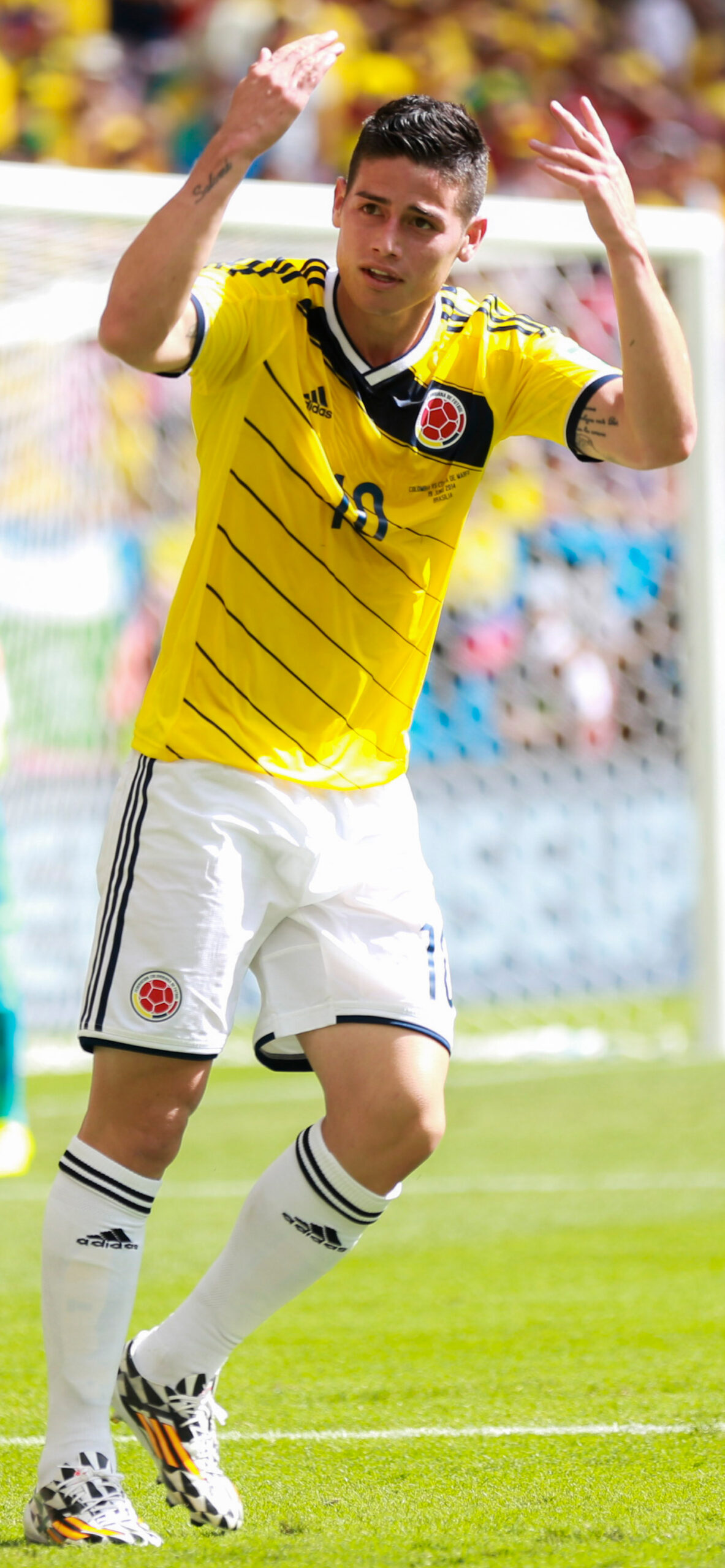
Photo: Copa2014.gov.br / Wikimedia Commons / CC BY 3.0 br
Brazil 2014 was a national catharsis. Drawn with Greece, Côte d’Ivoire, and Japan, Colombia was favored but not guaranteed. They dismantled Greece 3-0 in their opener. They ground out a 2-1 win over a physical Ivorian side. They thrashed Japan 4-1 to top the group with a perfect record. The confidence was palpable.
.jpg)
The Round of 16 paired them with Uruguay, who were without the suspended Luis Suárez. In the 28th minute, the tournament found its iconic moment. James Rodríguez controlled a looping ball with his chest, 25 yards from goal. In one fluid motion, he turned and volleyed it into the top corner. It was a goal of pure, audacious genius. He added a second later, sealing a 2-0 win.
That goal won him the FIFA Puskás Award. His six goals won him the Golden Boot. More importantly, it propelled Colombia into their first-ever World Cup quarter-final. The nation was euphoric.
The dream ended in Fortaleza against the hosts, Brazil. It was a tight, brutal contest. Thiago Silva gave Brazil the lead from a corner. David Luiz added a spectacular long-range free-kick in the 69th minute. Colombia’s reply, a late penalty from James, was only a consolation. They lost 2-1.
The final whistle brought tears, but not shame. They finished 5th overall. The Wikipedia page on Colombia’s World Cup history marks this as their undisputed pinnacle. The team played with a joyful, attacking verve that captured global admiration. James Rodríguez became a global star overnight. More than the result, 2014 redefined Colombia’s footballing identity on the world stage, technical, fearless, and relentlessly positive.
Colombia’s World Cup Record at a Glance
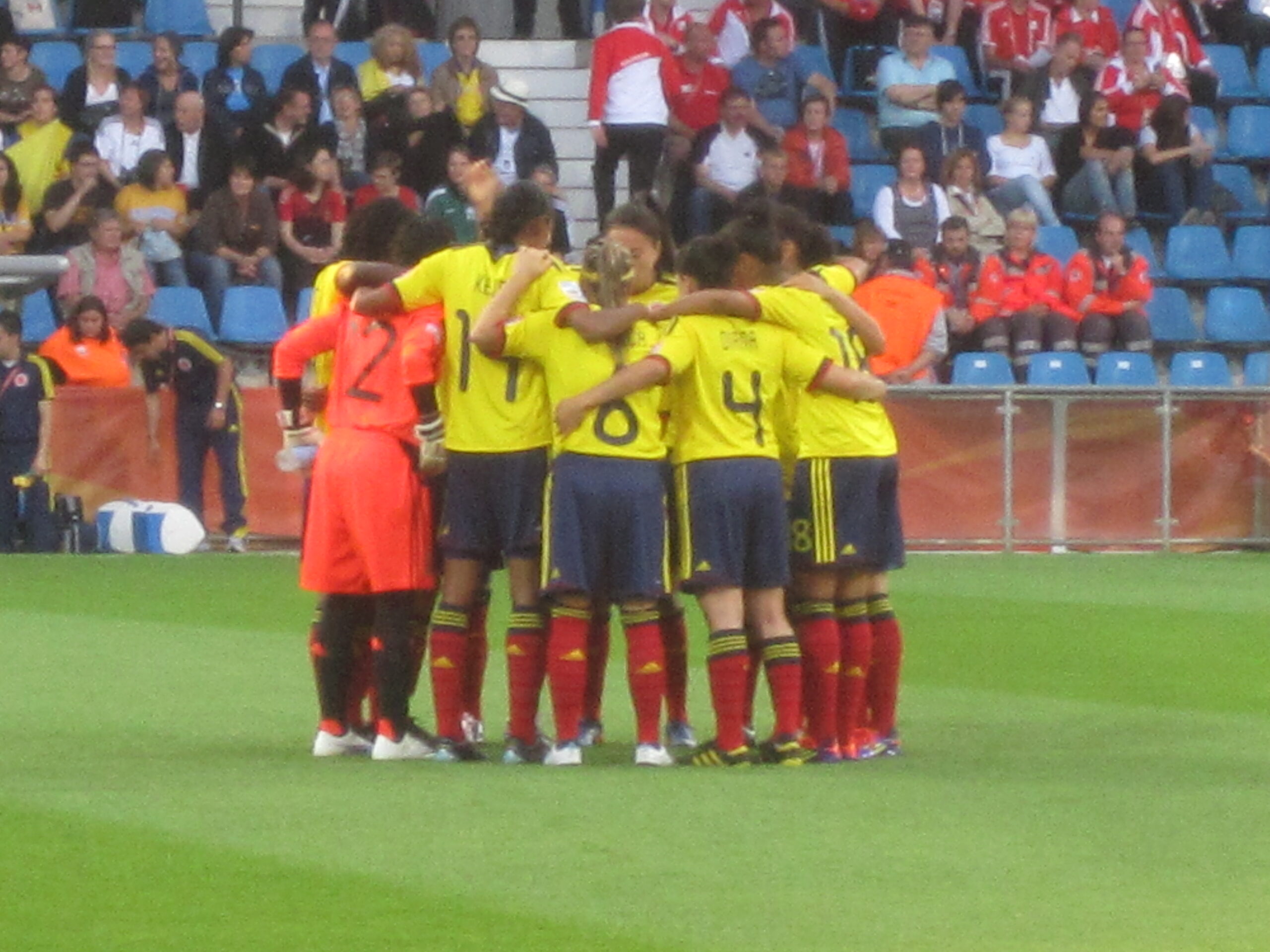
Photo: Like_the_Grand_Canyon / Wikimedia Commons / CC BY 2.0
A look at the raw numbers shows a team of growing consistency. They have played 22 World Cup matches, winning 9, drawing 3, and losing 10. They’ve scored 32 goals and conceded 30. Their biggest wins are by three goals (3-0 vs Greece 2014, 4-1 vs Japan 2014, 3-0 vs Poland 2018). Their heaviest defeat was that 5-0 loss to Yugoslavia in 1962.

Common mistake: Assuming Colombia’s history is defined only by the 2014 run, the 1990 team that drew with eventual champions West Germany and the tragic narrative of 1994 are equally critical to understanding the team’s emotional arc.
Their all-time top scorer is, unsurprisingly, James Rodríguez with 6 goals. Carlos Valderrama and Freddy Rincón share the record for most appearances with 10 each. In terms of historical ranking, Colombia sits 25th on the all-time World Cup table, a respectable position for a nation with seven appearances.
The RSSSF archive of Colombia World Cup matches provides the complete, match-by-match data that confirms their evolution from occasional participants to regular knockout-stage threats.
Key Players Past and Present
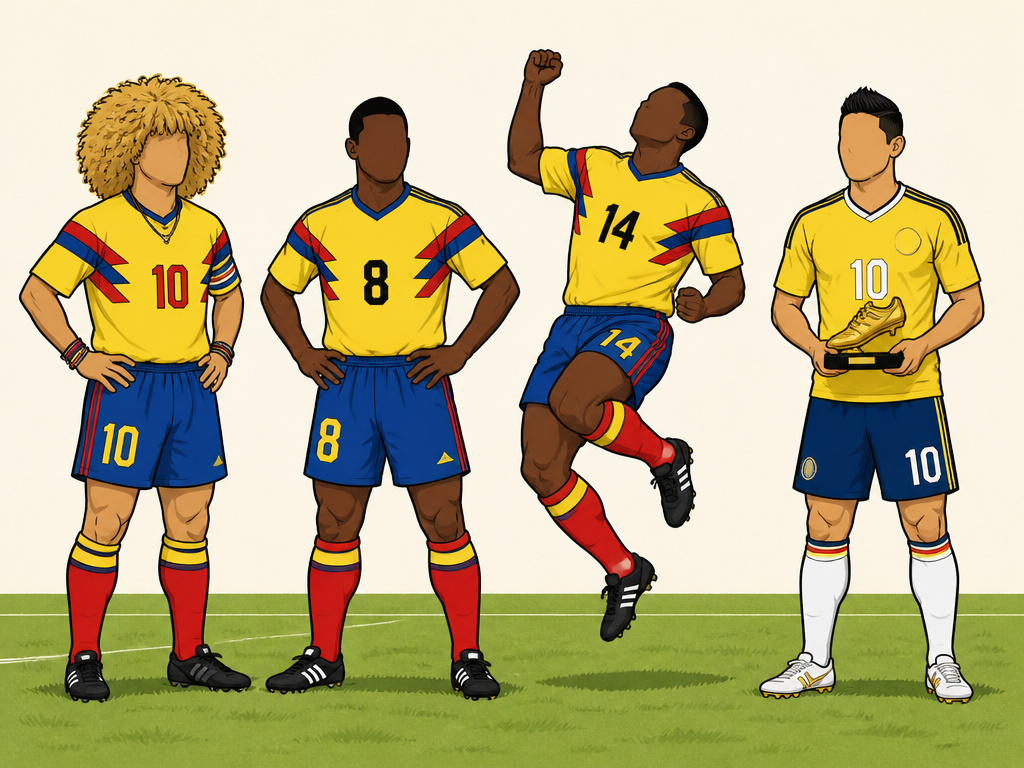
Every era has its icon. For Colombia, that list starts with Carlos Valderrama. “El Pibe” was the creative hub for the 1990 and 1994 teams. His vision and passing, symbolized by his iconic blonde afro, made the team tick. He wasn’t fast, but he didn’t need to be. The ball moved for him.
Freddy Rincón was the engine beside him, a powerful, box-to-box midfielder who scored crucial goals, including the equalizer against West Germany in 1990. Faustino Asprilla brought unpredictable flair and finishing in the late 90s.
Then came James Rodríguez. His 2014 tournament is the greatest individual performance by a Colombian at a World Cup. The volley against Uruguay is immortal. His six goals in five games carried the team. While his club career has been uneven since, his status as a national hero is secure.
The current generation is led by Luis Díaz. His direct dribbling and relentless work rate make him the team’s most dangerous attacker. Defender Davinson Sánchez provides top-level experience at the back. In goal, David Ospina remains a leader, holding the national team cap record.
The architect of this new phase is coach Néstor Lorenzo. He was an assistant to José Pékerman during the 2014 campaign. Now as head coach, he has instilled a similar balance of defensive solidity and attacking fluidity. His understanding of the tactical formations that suit his squad was key to their seamless qualification for 2026.
The Road to 2026 and Beyond
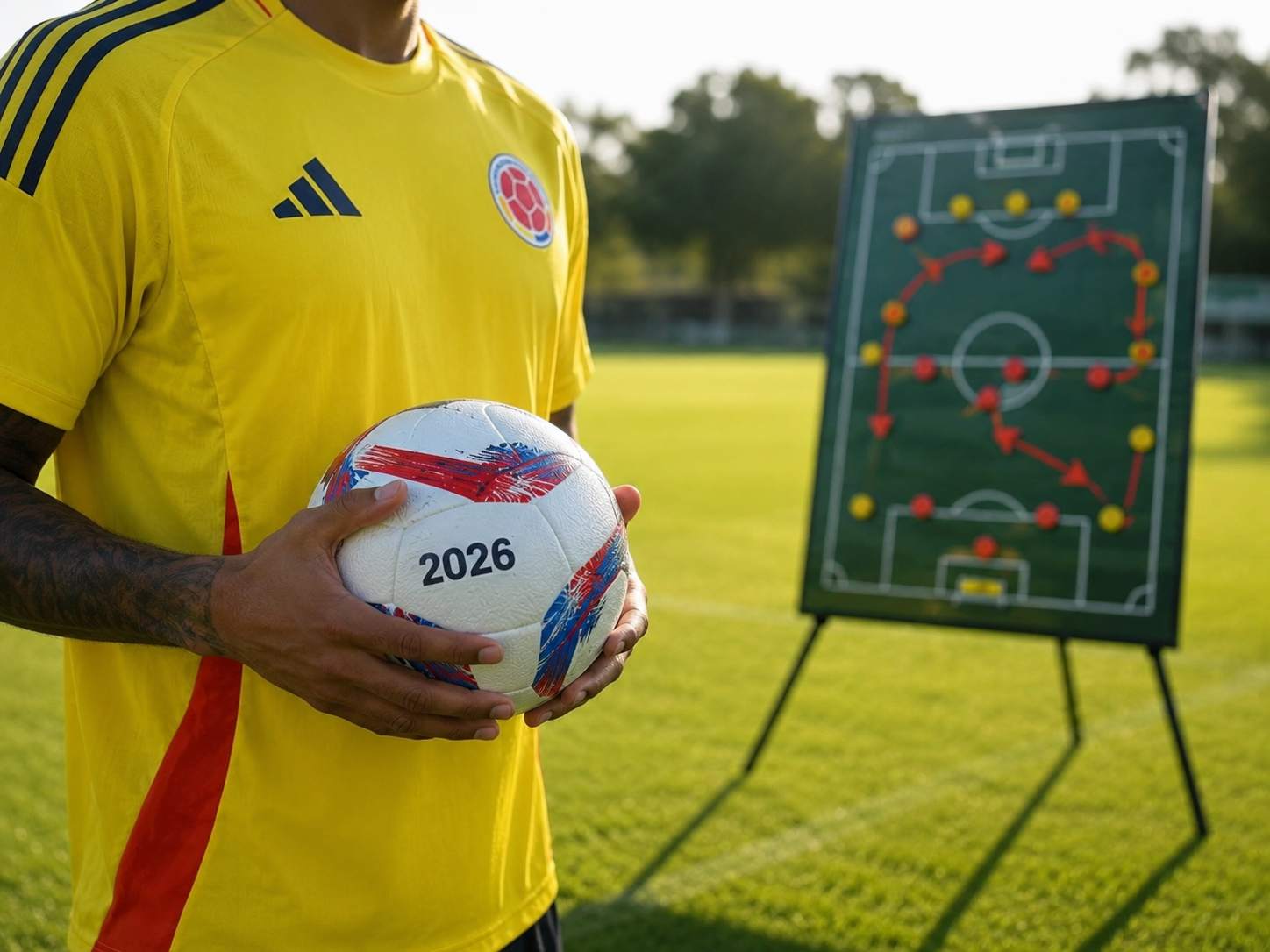
Colombia missed the 2022 World Cup in Qatar. It was a shock, a failure that stung after a decade of progress. The response was immediate and decisive. Under Lorenzo, the team embarked on the 2026 CONMEBOL qualifiers with a clear, possession-dominant formation strategy.
They lost just one of their first six matches. The core of the team. Díaz, Sánchez, Jhon Arias, and veteran James Rodríguez, blended with new talent. They secured direct qualification by finishing third in the standings, behind Argentina and Uruguay.
The 2026 World Cup, expanded to 48 teams, presents a new opportunity. The group stage will be different, but the knockout rounds will demand the same resilience they showed in 2014 and 2018. Colombia’s squad depth is better now than it was a decade ago. The question is whether they can find another gear when it matters most.
Their group will be crucial. A favorable draw could see them top a group and secure a potentially easier knockout path. A tough draw, with European heavyweights, will test Lorenzo’s tactical acumen from the first whistle. The memory of 2014 provides the blueprint: organized defense, swift transitions, and moments of individual magic from players like Luis Díaz.
Frequently Asked Questions
Has Colombia ever won a World Cup?
No, Colombia has never won the FIFA World Cup. Their best finish is the quarter-finals, which they achieved in 2014. That run earned them a 5th-place ranking for that tournament.
What was Colombia’s best World Cup result?
Colombia’s best World Cup result is reaching the quarter-finals in 2014. They finished 5th overall after winning their group and beating Uruguay in the Round of 16 before losing 2-1 to Brazil.
How many times has Colombia qualified for the World Cup?
Colombia has qualified for the World Cup seven times: 1962, 1990, 1994, 1998, 2014, 2018, and 2026. They have qualified for six of the last nine tournaments, establishing themselves as a consistent force in South American football.
Who is Colombia’s all-time top scorer in the World Cup?
James Rodríguez is Colombia’s all-time top scorer in the World Cup with 6 goals. He scored all six during the 2014 tournament in Brazil, winning the Golden Boot.
Who scored the famous Olympic goal for Colombia?
Marcos Coll scored the famous “Olympic goal” for Colombia in the 1962 World Cup, directly from a corner kick against the Soviet Union. It remains the only direct corner kick goal in World Cup finals history.
Who is Colombia’s current coach?
Colombia’s current head coach is Néstor Lorenzo, appointed in 2022. He was previously an assistant coach for the team during their successful 2014 World Cup campaign under José Pékerman.
The Bottom Line
Colombia’s World Cup story is one of delayed arrival, tragic interruption, and eventual, glorious fulfillment. For decades, they were the talented enigma, capable of a historic draw one minute and missing the tournament for thirty years the next. The 2014 quarter-final run wasn’t a fluke; it was the logical peak of a footballing philosophy rebuilt after the dark years.
Today, under a coach who lived that 2014 campaign, they are again a seeded team. The Wikipedia entry for the Colombia national team will soon need updating for 2026. The core is strong, the tactics are clear, and the expectation is no longer just to participate, but to advance. The next chapter is about turning consistency into a deeper legacy.
I come from the “soccer heart” of Germany, the Ruhrpott. I have played, trained and followed soccer all my life and am a big fan of FC Schalke 04. I also enjoy following international soccer extensively.