World Cup Official Ball Trionda Explained: The Sensor Ball
The World Cup Official Ball Trionda Explained is a sensor-integrated match ball designed for the 2026 FIFA World Cup. Its four-panel construction and embedded 500Hz motion sensor represent a direct aerodynamic evolution from previous balls, optimizing flight stability across the three host nations’ varied conditions.
The adidas Trionda is the official match ball for the 2026 FIFA World Cup, featuring a revolutionary four-panel construction, an embedded 500Hz motion sensor, and aerodynamic tuning for stable flight across three host nations. Its name combines “tri” (three) and “onda” (wave), symbolizing the unity of the USA, Mexico, and Canada.
Most explanations stop at the flashy tech specs. They miss the physics trade-off baked into its surface and the real reason its panel count dropped from 20 to four. This isn’t just a new ball. It’s a direct response to two decades of aerodynamic lessons, some of them painfully learned on the world’s biggest stage.
Here is what the Trionda’s design actually changes for players, why its science matters more than its colors, and how it aims to avoid becoming the next Jabulani.
Key Takeaways
- The Trionda uses a four-panel design based on a tetrahedron, the fewest panels ever for a World Cup ball, aiming for a more seamless surface and consistent flight.
- Its Connected Ball Technology includes a side-mounted 500Hz IMU sensor that transmits data 500 times per second to in-stadium receivers for precise tracking.
- Wind tunnel studies show the Trionda triggers its drag crisis at a lower speed than predecessors like the Al Rihla, meaning it behaves as if its surface is rougher.
- With only 12 rotational symmetries, some physicists warn it could promote a knuckleball effect on low-spin kicks, a potential concern for goalkeepers.
- It is the first ball extensively tested across seven host cities during development to ensure reliable performance in diverse North American climates.
What Does the Trionda’s 4-Panel Design Actually Do?
The shift from 20 panels on the 2022 Al Rihla to just four on the Trionda is not a styling whim. It is a structural and aerodynamic commitment. The shape originates from a tetrahedron, a Platonic solid with four triangular faces. Adidas then curved the panel edges to form a sphere.
The four-panel Trionda, derived from a tetrahedron base shape, represents the smallest panel count in FIFA World Cup history. This design reduces total seam length by approximately 60% compared to the 20-panel Al Rihla, creating a smoother overall surface topology that influences boundary-layer transition and drag characteristics.
Fewer seams mean fewer raised edges for air to trip over. In theory, this creates a more predictable interaction with the air throughout its speed range. The ball should maintain a consistent flight path whether it’s a lofted cross or a driven pass. For players, the primary feel is a cleaner, more uniform surface off the boot. That tactile feedback matters for first touch and passing accuracy.
TL;DR: Four panels mean fewer seams, aiming for a smoother surface and more consistent ball flight from any strike point.
The Sensor and Symmetry Trade-Off
The Trionda packs a computer. A side-mounted chip housing a 500Hz inertial measurement unit (IMU) is embedded within a dedicated layer of one panel. This Connected Ball Technology sends a signal 500 times per second to anchor points around the stadium, providing ultra-precise data on position, rotation, and acceleration.
To balance the weight of this chip, counter-weights are placed in the other three panels. This is critical. An off-balance ball wobbles. The counter-weights ensure the center of mass stays true, so the sensor doesn’t sabotage the ball’s flight stability.
This technological integration is detailed in the manufacturer’s ball technology explanation.
But the tech introduces a separate physics puzzle. The Trionda has only 12 rotational symmetries. For comparison, the iconic 1970 Telstar had 60. Symmetries matter for predictability. Sports physicist John Eric Goff highlighted this, noting that a ball with fewer symmetrical facets is more likely to exhibit a “knuckleball” effect when kicked with minimal spin.
The surface can present a slightly different geometry to the air with each rotation, potentially causing small, sudden deviations in flight. This is the core trade-off: advanced tracking built in, with a structural design that might make the ball slightly less predictable on specific types of kicks.
| Feature | Trionda (2026) | Al Rihla (2022) | Jabulani (2010) |
|---|---|---|---|
| Panel Count | 4 | 20 | 8 |
| Key Tech | 500Hz IMU Sensor | Connected Ball (lower rate) | Thermally bonded panels |
| Rotational Symmetries | 12 | Not publicly specified | 8 |
| Primary Aerodynamic Goal | Stable turbulent drag | Consistent flight | Reduced drag |
| Notorious Trait | Potential knuckle effect | Generally well-received | Unpredictable “knuckleball” |
The Trionda’s Aerodynamic Data Reveals a Trade-Off
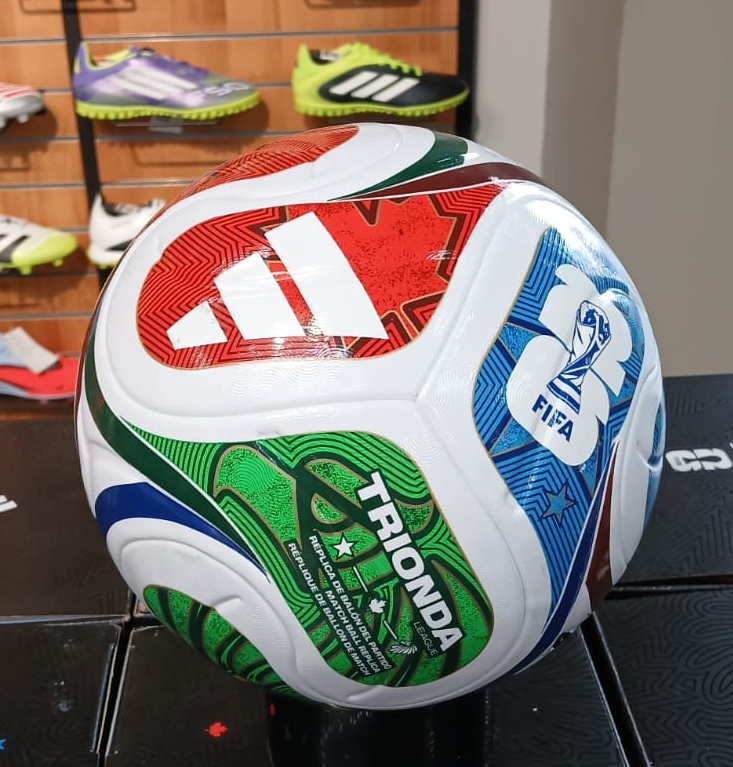
Photo: User34790 / Wikimedia Commons / CC BY-SA 4.0
Forget marketing claims. The peer-reviewed study in MDPI Applied Sciences gives us the numbers. Wind-tunnel testing compared the Trionda to the Al Rihla, Telstar 18, Brazuca, and the infamous Jabulani.
.jpg)
The key finding is about the “drag crisis.” This is the speed at which air flow around the ball transitions from smooth (laminar) to turbulent, causing a sudden drop in drag. The Trionda’s drag crisis occurs at a lower flow speed than its predecessors. This indicates its surface behaves as if it is rougher, even with fewer seams.
Why? The embossed wave pattern on its surface acts as micro-turbulators. Once in the turbulent regime, its drag coefficient is more stable than earlier balls, but it is also modestly larger. In practical terms, a long, high-speed kick with the Trionda—like a goal kick or a clearance—might lose a small amount of range compared to the Al Rihla, all else being equal. The benefit is that its flight should be less susceptible to sudden dips or swerves once it’s up to speed.
Common mistake: Assuming fewer panels automatically means less drag — the Trionda’s textured surface actually increases turbulent-regime drag slightly, which can shorten the absolute range of a purely driven kick by a few yards.
This is the non-negotiable physics. A player’s shooting accuracy drills now need to account for a ball that feels more stable in flight but may not travel quite as far on a pure power strike. Training adjusts.
Why the Jabulani Comparison Is (Mostly) Wrong
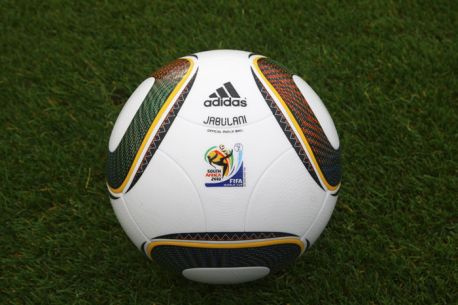
Photo: Shawn Smith from Astoria, NY, USA / Wikimedia Commons / CC BY 2.0
Every new ball gets compared to the 2010 Jabulani. It’s a lazy but understandable reflex. The Jabulani was notorious for its unpredictable, swerving flight, especially at lower speeds. Goalkeepers hated it. The fear is that any radical new design could repeat that failure.
.jpg)
The Trionda is not the Jabulani. The core difference is in the aerodynamic intent. The Jabulani’s eight thermally bonded panels were incredibly smooth, designed for low drag. That smoothness meant it stayed in the laminar flow regime longer, and its transition to turbulent flow was abrupt and erratic, causing sudden mid-flight drops.
The Trionda does the opposite. Its textured surface forces an early transition to turbulent flow. The drag is slightly higher but far more consistent. The goal is stable, predictable flight, not minimizing drag at all costs. As one YouTube reviewer put it after testing both, you can get some knuckle on the Trionda, but “the ball flight and general control is nothing like this ball.”
The real concern isn’t a Jabulani repeat. It’s whether the Trionda’s 12 symmetries introduce a different kind of unpredictability on low-spin shots. That’s a narrower, more technical problem than the Jabulani’s all-encompassing chaos.
Designed for 16 Cities: The Climate Factor
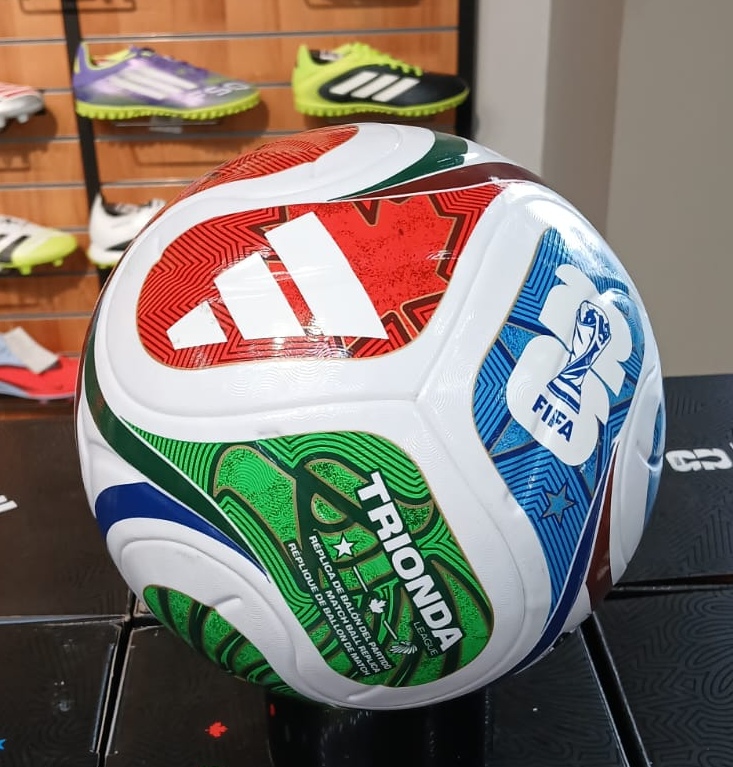
Photo: User34790 / Wikimedia Commons / CC BY-SA 4.0
The 2026 World Cup is a logistical monster across three countries. The Trionda is the first match ball designed with that specific challenge as a core parameter. Adidas didn’t just test it in a lab in Germany.
They conducted controlled lab and on-field tests in seven of the 16 host cities. They brought in MLS and Liga MX players to kick it in the varying humidity of Houston, the altitude of Mexico City, and the cooler temperatures of Vancouver. This level of environmental validation is unprecedented.
The aim is consistency. A ball that performs the same in the dry heat of Dallas as it does in the evening chill of Seattle. This matters for player fitness and energy expenditure, as a ball that reacts differently in various climates forces subconscious adjustments. It also matters for the integrity of the tournament. Teams crafting their modern soccer tactics around a high-pressing game or long-ball strategy need to trust the equipment.
TL;DR: Extensive real-world testing across North American climates aims to eliminate environmental variables, ensuring the Trionda behaves identically whether the match is in Toronto or Guadalajara.
Trionda vs. Recent World Cup Balls: A Performance Timeline
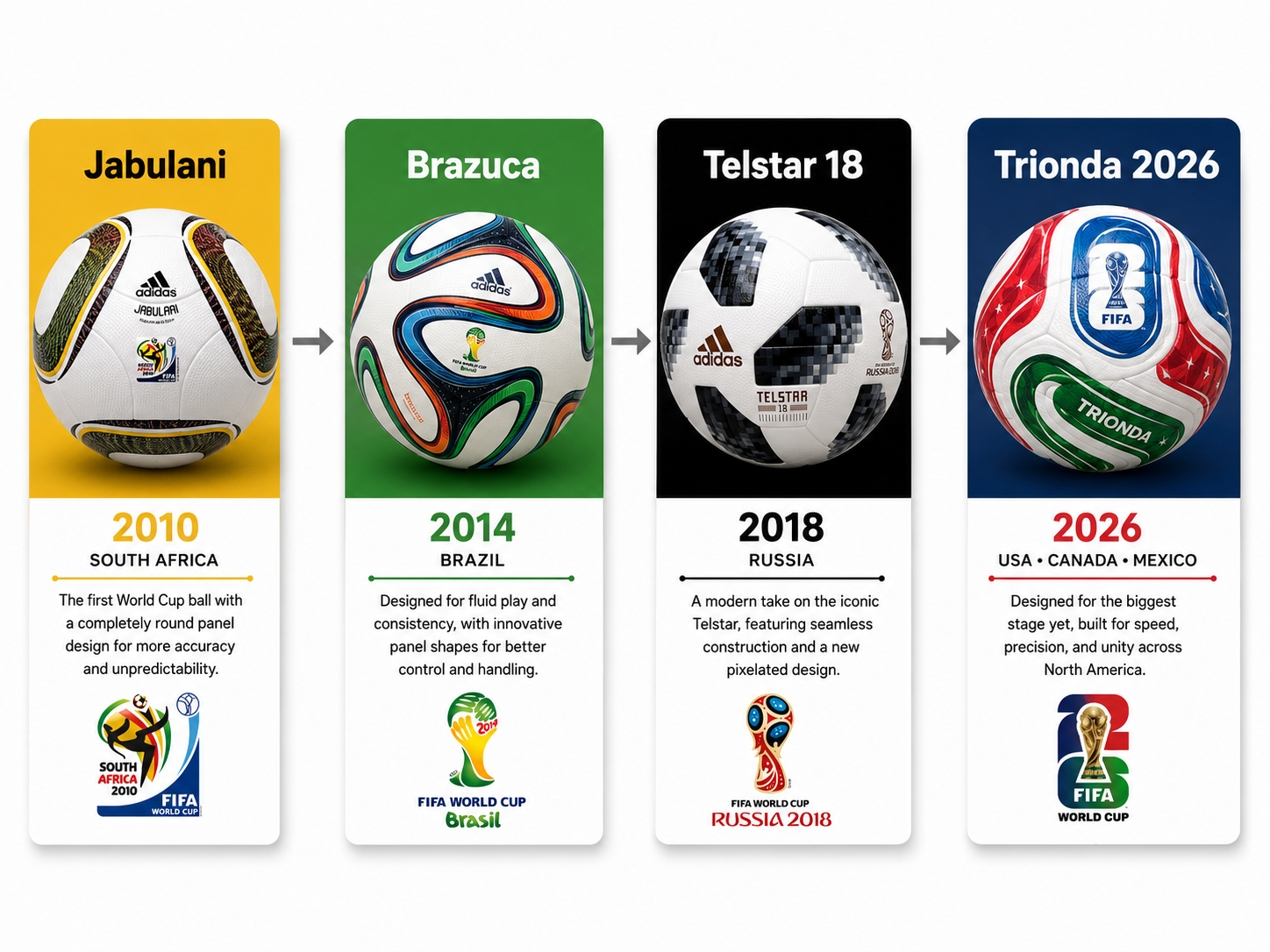
To see the Trionda’s place, you have to look at the evolution it continues. Each modern ball addressed a problem from its predecessor.
The process of refining equipment for peak tournament performance is not unlike the evolution seen in tournament match extensions and rules—each change aims to enhance fairness and spectacle. The following table tracks this progression in ball design.
| World Cup | Ball Name | Key Innovation | Player Reception | Legacy |
|---|---|---|---|---|
| 2010 | Jabulani | 8 thermal panels, ultra-smooth | Widely panned, unpredictable | Cautionary tale for over-prioritizing low drag |
| 2014 | Brazuca | 6 propeller-shaped panels, deep seams | Well-received, stable | Brought back predictable flight |
| 2018 | Telstar 18 | Textured surface, 6 panels | Good, reliable | Refined the Brazuca concept |
| 2022 | Al Rihla | 20 panels, Connected Ball tech | Positive, consistent | Introduced reliable sensor tracking |
| 2026 | Trionda | 4 panels, 500Hz sensor, textured waves | To be determined | Aims to merge max tech with stable aerodynamics |
The trajectory is clear. After the Jabulani disaster, the focus shifted to stability (Brazuca, Telstar 18). Then came data (Al Rihla). The Trionda is the synthesis: maximum data capture embedded within a structure pushing the boundaries of seamless, stable design. It’s a high-risk, high-reward formula. You can read a broader analysis of its reveal in this sports network ball analysis.
Frequently Asked Questions
How much does the adidas Trionda ball cost?
The official match ball replica has a retail price of €160. This is for the consumer version; the exact match balls used in the tournament are not commercially sold.
Can you buy the Trionda with the sensor inside?
No. The 500Hz IMU sensor and Connected Ball Technology are only included in the official match balls supplied to FIFA for the tournament. The consumer versions you can buy are sensor-free replicas.
Is the Trionda more like the Brazuca or the Jabulani?
Aerodynamically, it is closer to the Brazuca in its goal of stable, predictable flight. Its textured surface aims for consistent drag, unlike the Jabulani’s erratic behavior. However, its low symmetry count is a unique variable that separates it from both.
Will the Trionda affect free-kick and long-shot tactics?
Potentially, yes. The slightly higher turbulent drag may mean driven shots from distance lose a tiny amount of pace. Players specializing in long-range strikes may need to adjust their power calculation. Conversely, the stable flight could benefit players aiming for precise placement over pure power.
What happens if the sensor breaks during a match?
FIFA protocol requires multiple certified match balls for each game. If a ball is damaged or its sensor fails, the referee will immediately replace it with another from the stock. Match data is aggregated from all balls used.
Before You Go
The adidas Trionda is a ball of contradictions. It has a computer inside but is shaped by ancient geometry. It feels rougher to the air yet aims for smoother flight. It carries the ghost of the Jabulani but is engineered to be its opposite.
For players, the transition will be about feel. The four-panel surface offers a pure strike zone. The stable drag promises trustworthy movement. The climate testing should build confidence. The unanswered question is how those 12 symmetries will play out over 64 matches under the highest pressure.
It represents the current pinnacle of a design philosophy that balances player nutrition for peak performance with equipment engineered to the edge of physics. One thing is certain: by the final in New Jersey on July 19, 2026, the Trionda will have written its own story, for better or worse.
I come from the “soccer heart” of Germany, the Ruhrpott. I have played, trained and followed soccer all my life and am a big fan of FC Schalke 04. I also enjoy following international soccer extensively.