Did Palestine Make the World Cup? The Qualification Result
Palestine did not qualify for the 2026 FIFA World Cup. Their campaign ended in the third round of AFC qualifying, eliminated by a last-minute controversial penalty against Oman that secured a 1-1 draw and left them one point short of advancing from Group B.
The universal mistake is thinking their inspiring story ended with a ticket to North America. It didn’t. The reality is a specific, brutal sequence of football mechanics and external pressure that crushed a historic bid at the final second.
This guide breaks down the exact match, the standings math, the war’s shadow over their preparation, and why this near-miss still rewrote Palestinian football history.
Key Takeaways
- Palestine was eliminated in the third round of AFC qualifying, finishing fifth in Group B, one point behind Oman.
- A 97th-minute penalty for Oman, awarded after minimal contact and upheld by VAR, turned a 1-0 Palestine win into a 1-1 draw, directly causing their elimination.
- The team played all their “home” matches in Amman, Jordan, due to the Israel-Hamas war, which also suspended domestic football and disrupted training.
- Despite the heartbreak, this was Palestine’s furthest-ever run in World Cup qualifying, and they have already qualified for the 2027 Asian Cup.
- The Palestine Football Association’s formal complaint to FIFA was rejected, confirming the result.
The 2026 Qualification Result: What Happened?
Headlines about inspiration and hope often blur the final table. The numbers are cold. In the AFC’s third round, Group B contained South Korea, Jordan, Iraq, Oman, and Palestine. The top two earned automatic World Cup berths. The third and fourth-placed teams moved to a further playoff round.
Palestine’s fate was sealed on June 10, 2025. They needed a win against Oman to claim fourth place. For 96 minutes, they had it.
The decisive moment occurred in the 97th minute of stoppage time. Oman’s Muhsen Al-Ghassani advanced into the Palestine penalty area and went down after slight contact from defender Ahmed Taha. Saudi referee Mohammed Al-Hoaish pointed to the spot. The Video Assistant Referee (VAR) checked the incident but did not recommend an overturn, judging the contact sufficient for a foul. Oman’s Issam Al-Sabhi converted the penalty.
The 1-1 draw gave Oman the point they needed to stay one point ahead of Palestine in the final standings. South Korea and Jordan took the automatic spots. Iraq finished third, Oman fourth. Palestine finished fifth.
TL;DR: A controversial penalty in the 97th minute against Oman turned a winning position into a 1-1 draw, leaving Palestine one point short of fourth place and eliminating them from 2026 World Cup contention.
The Group B Standings That Told the Story
The final table makes the margin of error painfully clear. Every point mattered.
| Team | Points | Goal Difference | Qualification Status |
|---|---|---|---|
| South Korea | 16 | +12 | Qualified for World Cup 2026 |
| Jordan | 13 | +5 | Qualified for World Cup 2026 |
| Iraq | 11 | +1 | Advanced to AFC 4th Round |
| Oman | 8 | -3 | Advanced to AFC 4th Round |
| Palestine | 7 | -2 | ELIMINATED |
Palestine’s seven points included a historic home win over Oman in Amman and a draw against Iraq. The loss away to Jordan and a draw with South Korea showed their competitive level. That single point against Oman was the difference between continuing the dream and boarding the flight home.
How the War Affected Everything

Photo: Kelme; PFA / Wikimedia Commons / Public domain

You cannot analyze this campaign on a normal football timeline. The Israel-Hamas war, ongoing since October 2023, fundamentally altered every operational parameter for the Palestine Football Association. This wasn’t about poor training facilities. It was about having no home.
Domestic football in the West Bank and Gaza has been suspended indefinitely. Several footballers have been killed. The team’s stadiums were unavailable for security reasons. Their entire “home” qualifying campaign was displaced to the King Abdullah II Stadium in Amman, Jordan.
Their preparation was a diaspora. Training camps were held in Algeria, Qatar, and Saudi Arabia, wherever federation connections could secure pitches and hotels. The squad, many of whom play for clubs across the Middle East and Europe, assembled in these third countries, often with limited time to gel. The emotional weight of representing a nation under siege was a constant companion, a source of unity but also an immense psychological burden.
Common mistake: Assuming Palestine had a normal home-field advantage, they played every “home” match over 100 km from their border, in front of supportive but exiled crowds, without any true home turf to defend.
This context makes their on-field achievements more remarkable. It also highlights a brutal asymmetry in the World Cup qualification process, where stability is a hidden asset. While other nations fine-tuned tactics in familiar stadiums, Palestine was building a team in hotel conference rooms and borrowed training grounds.
The Controversial Penalty: A Breakdown
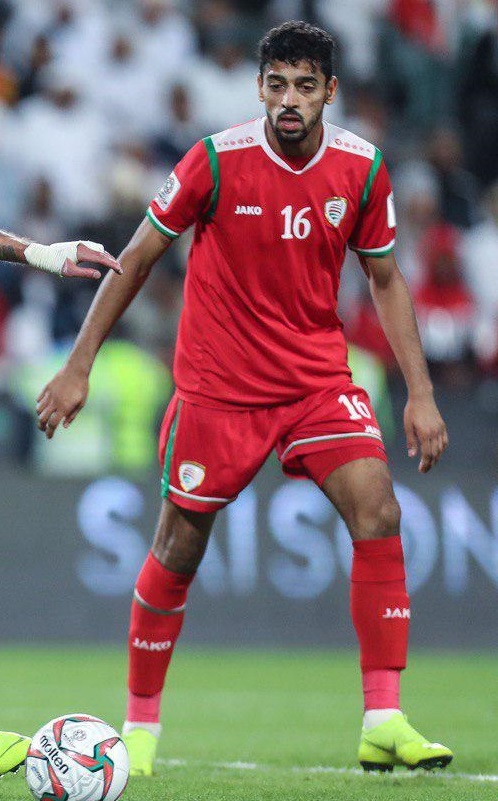
Photo: Mehdi Zare / Wikimedia Commons / CC BY 4.0

Let’s get specific. Football turns on millimeter decisions. In the 97th minute at the Sultan Qaboos Sports Complex, Oman pushed forward desperately. A ball was played into the channel for striker Muhsen Al-Ghassani.
Palestine defender Ahmed Taha, tracking across, attempted to shield the ball. His right foot made contact with Al-Ghassani’s left foot as the Omani player tried to cut inside. The contact was not a clear, sweeping tackle. It was a tangle of legs at speed. Al-Ghassani went down. Referee Mohammed Al-Hoaish, positioned a few yards away, immediately awarded a penalty.
The VAR protocol was initiated. The video official reviewed the sequence for a clear and obvious error, the high threshold required to overturn an on-field decision. Replays showed contact, but many analysts and the Palestine World Cup qualification attempt described it as “minimal” and “soft.” The VAR did not intervene. The penalty stood.
Issam Al-Sabhi sent the goalkeeper the wrong way. The stadium erupted. On the Palestine bench, players and staff sank to their knees. The whistle blew shortly after. The sequence took about three minutes from foul to final whistle. Three minutes that ended four years of work.
The PFA’s subsequent complaint to FIFA argued the decision was a “grave error” that denied sporting justice. FIFA’s rejection is the standard procedure; governing bodies almost never order replays for refereeing judgments outside of proven corruption or identity errors.
Palestine’s Historic World Cup Journey
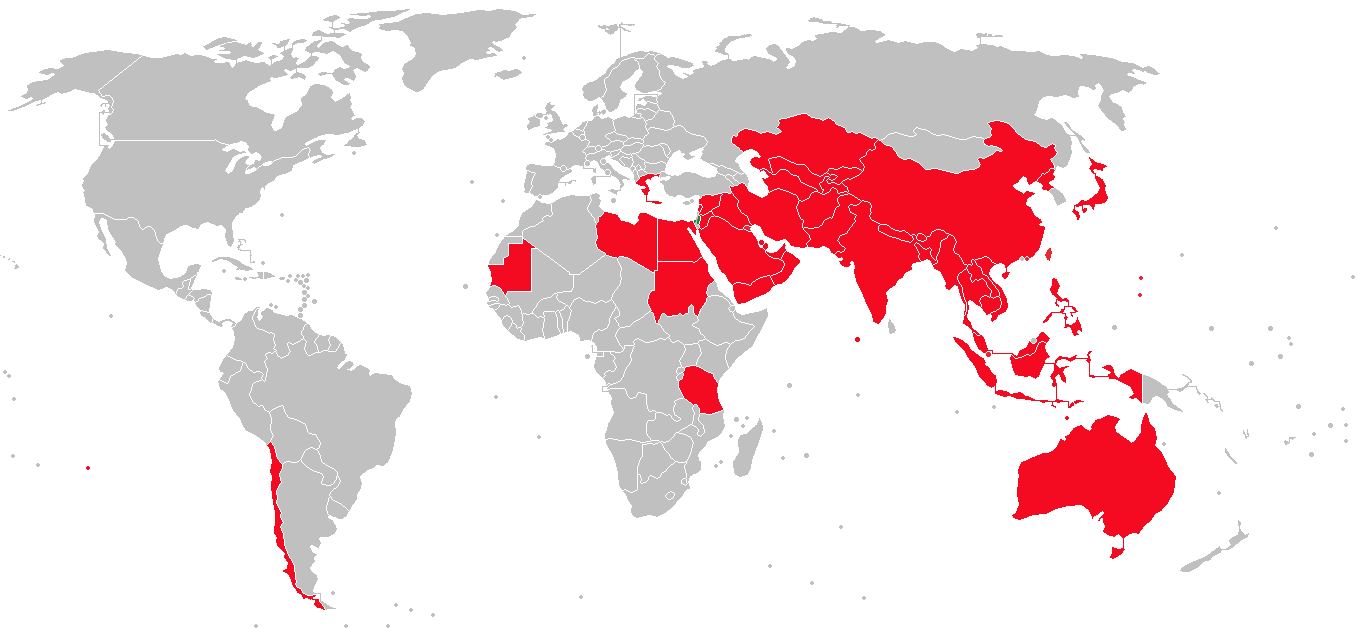
Photo: Sakiv / Wikimedia Commons / CC BY-SA 4.0

To feel the weight of the Oman result, you need to know the starting point. Palestine has never qualified for a FIFA World Cup. They gained FIFA membership only in 1998. For decades, they were perennial early-round exits, often struggling to advance past the first preliminary stage.
This cycle was different. It built on their landmark qualification for the 2023 AFC Asian Cup, where they won their first-ever Asian Cup match and advanced to the knockout stage. That momentum carried into World Cup qualifying.
They navigated the first two rounds with a newfound resilience, setting up the third-round appearance that was itself a national record. This was uncharted territory. Beating Oman in Amman was their first-ever victory in a third-round qualifier. Taking a point from South Korea was another milestone.
Their campaign captured global attention not just for football, but for what it represented. The team became ambassadors, playing for something far larger than sport. This emotional context is why the nature of the exit, a last-gasp penalty after holding a lead, felt especially cruel. It wasn’t a 4-0 thrashing. It was a dream snatched in the final second.
This historic run, however, has a tangible legacy. Their performance has already secured their spot in the 2027 Asian Cup in Saudi Arabia, giving the program a clear next target. It also raised the profile of Palestinian football globally, potentially easing the path for future debutant nations from challenging regions.
What’s Next for Palestinian Football?
The immediate future is the 2027 Asian Cup. Qualification is secured, and it provides a concrete, major-tournament goal around which to structure the next two years. The core of this historic World Cup squad, players like Oday Dabbagh, Mahmoud Wadi, and captain Musab Al-Battat, will likely still be in their prime.
The longer-term challenge is systemic. The war’s suspension of domestic football is a critical issue. A national team’s pipeline is its local leagues. Without them, talent development atrophies. The PFA’s mission now is twofold: sustain the senior team’s momentum internationally while relentlessly advocating for the resumption of football at home, a task entangled with politics far beyond the pitch.
The expanded 48-team format for the 2026 World Cup offered a slightly wider door. For the 2030 cycle, the expanded 48-team format will be the permanent reality, potentially offering more slots for AFC teams. Palestine has now proven they can compete at the penultimate stage. The lesson from 2026 is that they are close. The gap is a single point, a single decision.
Their experience underscores the intense pressure of the qualification tournament format, where years of work hinge on 90 minutes in a foreign stadium. It’s a brutal, beautiful system. Palestine felt both extremes.
Frequently Asked Questions
Did Palestine ever come close to qualifying for a World Cup before 2026?
No. The 2026 campaign was the closest they have ever come. Advancing to the third round of AFC qualifying was itself a historic first. Their previous best was reaching the second round on a few occasions, but they had never been in contention for a finals spot in the final group stage before.
What was the reaction of the players and coach to the Oman penalty?
The reaction was one of utter devastation. Television footage showed players collapsing to the pitch in tears at the final whistle. Coach Makram Daboub spoke of a “dream stolen” and praised his players’ monumental effort under unimaginable circumstances. The overwhelming emotion was pride mixed with profound heartbreak, a sentiment echoed across global football media.
Could FIFA have ordered the match to be replayed?
Technically, yes, but in practice, it was never going to happen. FIFA’s statutes allow for replays in cases of proven match-fixing, corruption, or a critical error in applying the laws (like allowing a goal from a clear handball). A disputed judgment call on a foul, even a controversial one reviewed by VAR, is considered part of the game. The PFA’s complaint was a symbolic act of protest, not a procedural expectation.
Has any Palestinian player ever played in a World Cup?
No Palestinian national team player has ever appeared in a FIFA World Cup finals tournament. Some players of Palestinian heritage have played for other national teams, but the Palestine national team itself has never qualified.
Where will the 2026 World Cup be held?
The 2026 FIFA World Cup will be hosted jointly by the United States, Canada, and Mexico. It will be the first World Cup with 48 teams and will be played across 16 2026 host cities in North America. You can see the full list of qualified nations for 2026 on our site.
The Bottom Line
Palestine’s 2026 World Cup journey ended in the most painful way possible: a disputed penalty in the 97th minute. They did not qualify. The official record will show a fifth-place finish in Group B, one point shy.
But the real story is in the margins. It’s in a team that had no home stadium, a domestic league silenced by war, and a spirit that carried them further than any Palestinian side before. They played for a nation and came within three minutes of a footballing miracle. That legacy, and their secured place at the 2027 Asian Cup, is the foundation they build on now. The dream is delayed, not dead. The next campaign for 2030 starts tomorrow.

I come from the “soccer heart” of Germany, the Ruhrpott. I have played, trained and followed soccer all my life and am a big fan of FC Schalke 04. I also enjoy following international soccer extensively.