The Complete History of Spain’s World Cup Record & Wins
Spain’s World Cup history includes one championship victory in 2010, 16 total tournament appearances, and a current status as the world’s top-ranked national team. Their record before the 2010 triumph was defined by near-misses and quarter-final exits, while their era of dominance from 2008 to 2012 remains one of football’s greatest peaks.
Most summaries of Spain’s World Cup journey focus only on the 2010 win and the tiki-taka era. That misses the deeper narrative of political disruption, decades of underachievement, and the specific, hard-nosed tournament football they played to finally lift the trophy.
This guide breaks down their complete record, tournament by tournament. We’ll cover the early exits, the 1950 miracle run, the long wait, and the details of their 2010 campaign that most articles gloss over. You’ll also see where they stand now and what the future holds.
Key Takeaways
- Spain’s sole World Cup win came in 2010, but their best pre-2010 finish was fourth place in 1950, a tournament often forgotten in modern discussions.
- The Spanish Civil War and World War II kept the national team out of competitive football for 16 years, fundamentally altering their early World Cup trajectory.
- Their iconic 2010 victory was built on a 1-0 scoreline in every knockout match, a display of defensive control that contradicted their flowing attacking reputation.
- Since 2010, Spain has failed to reach the quarter-finals in three subsequent World Cups, highlighting how rare sustained dominance truly is.
- With qualification for 2026 secured and co-hosting duties for 2030, Spain’s historical record is poised for another major chapter.
Spain’s World Cup Record at a Glance
Before diving into the narratives, the numbers tell a clear story of a team with one glorious peak and a lot of respectable, but unfulfilled, campaigns. A glance at the official Spain’s FIFA World Cup history page confirms this pattern.
Their qualification rate is strong, but their conversion of appearances into deep runs was historically low until 2010. The table below summarizes the core data that defines their journey.
| Metric | Spain’s Record | Context & Note |
|---|---|---|
| Tournaments Played | 16 | First appearance: 1934. Missed 1930, 1938, 1954, 1958, 1970, 1974. |
| Best Finish | Winners (2010) | Also finished 4th (1950). |
| Total Matches | 67 | 34 Wins, 17 Draws, 16 Losses (as of 2022). |
| Top Scorer | David Villa (9 goals) | Scored across the 2006, 2010, and 2014 tournaments. |
| Biggest Win | 7–0 vs. Costa Rica (2022) | A record victory achieved in their most recent World Cup campaign. |
| Penalty Shootouts | 1 win, 2 losses | Won vs Ireland (2002). Lost vs Belgium (1986) and Russia (2018). |
Spain’s overall World Cup win percentage sits just above 50%, a figure heavily boosted by their perfect 2010 knockout stage and strong group-stage performances in modern eras. This statistic, drawn from the Wikipedia record of Spain matches, underscores a team often capable of advancing but historically struggling at the very highest pressure points.
The fourth-place finish in 1950 is a crucial data point. It was a 13-team final tournament with a final group stage, not a single knockout final. Spain finished behind Uruguay and Brazil, but ahead of Sweden. That generation came closer than any other for 60 years.
TL;DR: Spain has played 67 World Cup matches, winning over half. Their history is a 50-year quest to turn consistent qualification into a championship, finally solved in 2010.
The Early Years & The 1950 Miracle
Spain’s World Cup story begins with disruption. They chose not to travel to the inaugural 1930 tournament in Uruguay. Their 1934 debut was promising, a quarter-final exit after a replay loss to Italy, but the Spanish Civil War (1936-1939) and the ensuing global conflict froze their progress.
They did not enter another World Cup until 1950. That 16-year gap is the unspoken fault line in their history. A whole generation of players never competed on the world stage.
When they finally returned in 1950 in Brazil, they delivered their best performance for six decades. The format was unusual: a final group of four teams after the initial knockout rounds. Spain drew with Uruguay and beat Sweden, but a heavy loss to Brazil (6-1) consigned them to fourth place.
Common mistake: Overlooking the 1950 tournament due to its strange format, that Spanish squad, led by legendary striker Telmo Zarra, achieved the nation’s best finish for 60 years and deserves its place in the historical record.
That result created a “nearly-men” narrative that would cling to the team. For decades, discussions of historical soccer rivals like Brazil, Germany, and Italy would highlight their multiple titles, while Spain’s conversation was about potential. The 1950 run was the proof of that potential, but it remained an outlier.
The following decades saw frustrating inconsistency. They failed to qualify for three tournaments in the 1950s and 70s. When they did qualify, group-stage exits (1962, 1966, 1978) or round-of-16 losses (1986, 1994) were the typical outcome. The physical demands of soccer in these eras, combined with tactical rigidity, often saw Spain out-muscled or out-thought in critical moments.
The Pinnacle: 2010 World Cup Victory
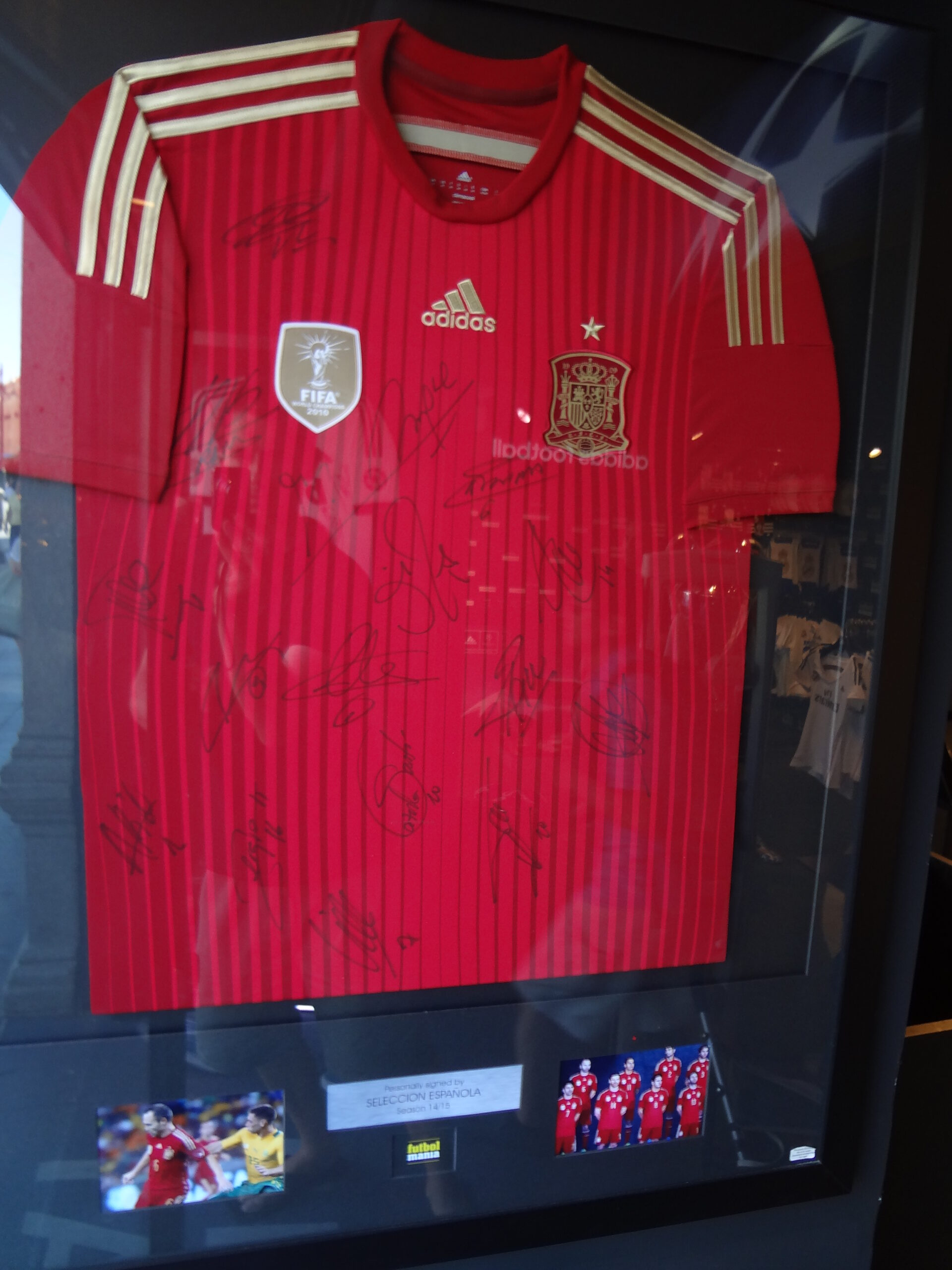
Photo: David Adam Kess / Wikimedia Commons / CC BY-SA 4.0

The 2010 victory in South Africa was not just a win; it was the culmination of a footballing philosophy. The core of the team. Iker Casillas, Xavi, Andrés Iniesta, Carles Puyol, had already won EURO 2008. They arrived as favorites, but their campaign was a masterclass in tournament resilience, not just tiki-taka flair.
They lost their opening match 1-0 to Switzerland. The panic was palpable. The response was a run of five consecutive wins, all by a single goal. The knockout stage was a 1-0 trilogy: Portugal in the round of 16, Paraguay in the quarter-final, and Germany in the semi-final.
The final against the Netherlands was a brutal, physical battle. It featured 14 yellow cards and a red card for Dutch defender John Heitinga. Spain’s famed passing was stifled, but their discipline held. The breakthrough came in the 116th minute: Iniesta’s volley, assisted by Cesc Fàbregas. The World Cup overtime rules had been stretched to their limit, and Spain found the decisive moment.
I remember watching that final in a packed bar in Gelsenkirchen. For 115 minutes, it felt like the beautiful game had been replaced by a war of attrition. When Iniesta scored, the release wasn’t just joy, it was relief. A nation’s complex football history was rewritten in one swing of a boot.
Critically, while the match was foul-ridden, Spain won the FIFA Fair Play Trophy for the tournament. They had received only eight yellow cards total before the final, a testament to their controlled, technical style. This victory cemented their 2008-2012 era as arguably the greatest international team run in history, a period of dominance that rivals the achievements of any famous Argentine players or Brazilian dynasties.
TL;DR: The 2010 win was built on defensive solidity and mental fortitude. They won four consecutive knockout matches 1-0, proving they could win ugly when their signature style was challenged.
The Tiki-Taka Era and Its Aftermath
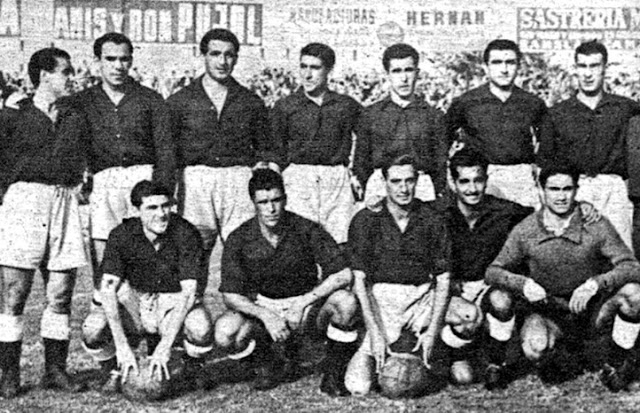
Photo: Unknown authorUnknown author / Wikimedia Commons / Public domain

The 2010 triumph was the centerpiece of the “tiki-taka” era, but that style was already in place. It was a soccer tactics revolution built on short passing, constant movement, and relentless possession. Coached by Vicente del Bosque, the team aimed to dominate the ball and suffocate the opponent’s will to play.
This philosophy required specific players: intelligent midfielders like Xavi and Sergio Busquets, and technically gifted forwards like David Villa, who could finish the few clear chances created. It also demanded supreme player fitness to maintain pressing and positional structure for 90 minutes.
The aftermath, however, reveals how fragile football dominance is. In 2014, as defending champions, they were humiliated 5-1 by the Netherlands in their opener and crashed out in the group stage. In 2018, they lost on penalties to host nation Russia in the round of 16. In 2022, they were eliminated by Morocco in the same stage.
The drop-off was stark. The core players aged, and the world adapted. Opponents learned to sit deep, cede possession, and strike on the counter. Spain’s failure to develop a truly world-class striker after Villa’s prime years left them without a reliable cutting edge. The system that brought total success became predictable.
Spain in the World Cup Today
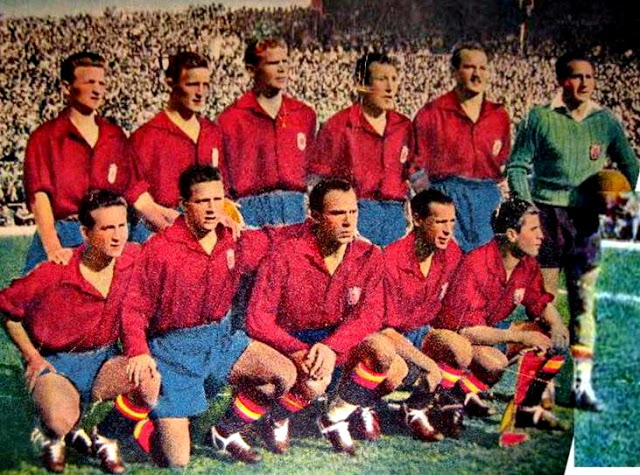
Photo: Unknown authorUnknown author / Wikimedia Commons / Public domain

The current chapter is one of renewed promise. Under coach Luis de la Fuente, Spain has pivoted. The style is more direct, more vertical, while retaining technical quality. The proof is in the results: they won the 2023 UEFA Nations League and followed it with the EURO 2024 title.
They enter the 2026 World Cup cycle as the world’s number-one-ranked team. The anchor of the side is Rodri, the Manchester City midfielder who has arguably become the world’s best in his position. His role is less about pure tiki-taka and more about control, tempo, and defensive screening, a modern evolution of the Busquets role.
Their soccer player physique and approach to player nutrition are now scientifically optimized in a way the 2010 squad could only imagine. Young talents like Lamine Yamal and Nico Williams bring explosive pace, adding a dimension of speed that the classic tiki-taka teams sometimes lacked.
Furthermore, their future is locked in. They have already qualified for the 2026 World Cup in North America and will co-host the 2030 tournament alongside Portugal and Morocco. This guarantees them a spotlight for the next decade and a chance to add a second star to their crest. The historical arc, detailed on sites like FootballHistory.org Spain team profile, is moving into a new, potentially golden, phase.
Key Players and Individual Records
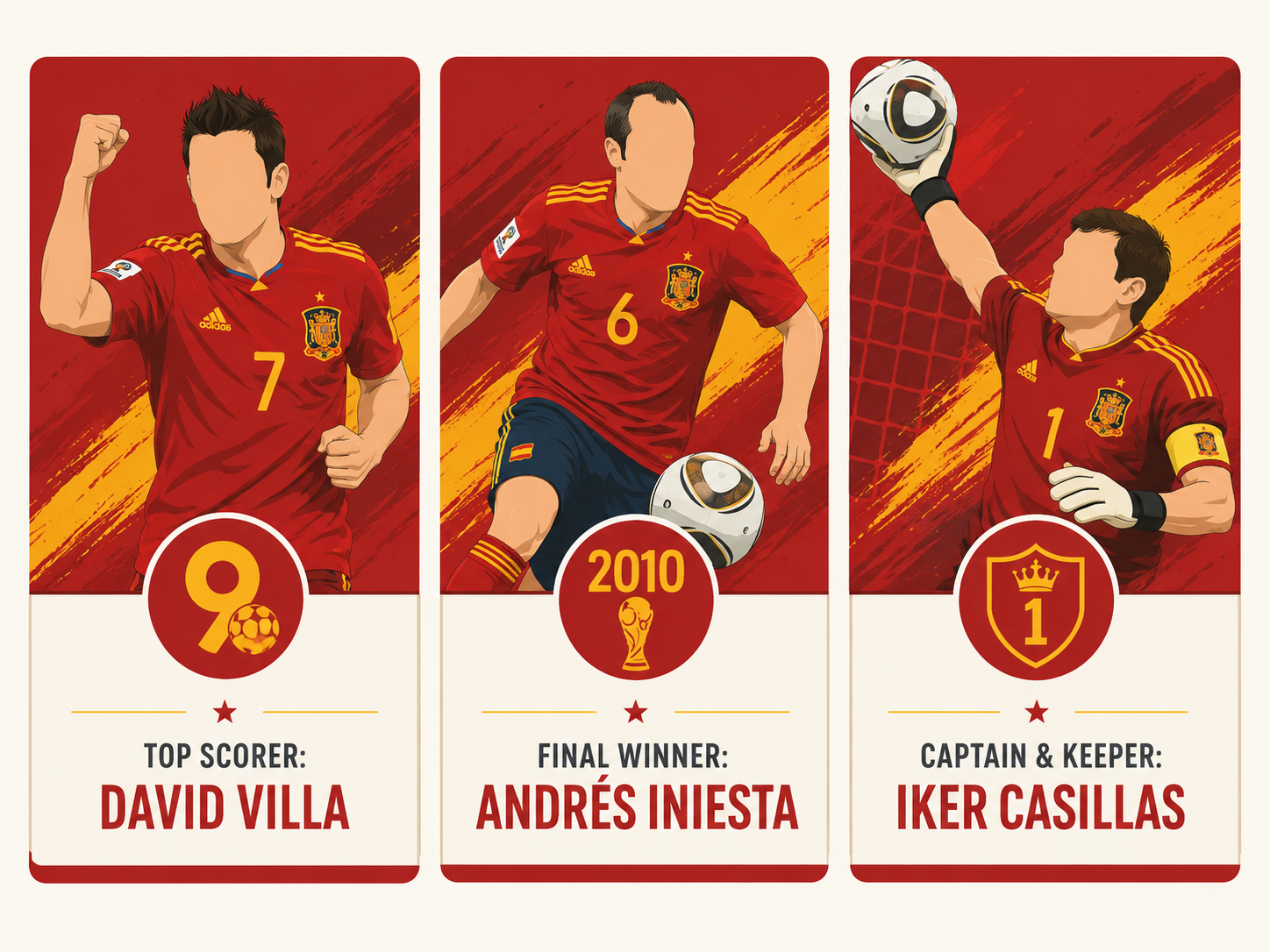
While team success defines history, individual brilliance writes the headlines. Spain’s record books are filled with iconic names.
- David Villa is the undisputed top scorer with 9 World Cup goals. His movement and finishing in 2010 were clinical, especially his spectacular strike against Chile in the group stage.
- Andrés Iniesta scored the most important goal, the 2010 final winner. His ability to dictate play in tight spaces defined an era.
- Iker Casillas captained the 2010 side and made crucial saves throughout the tournament, including a point-blank stop from Arjen Robben in the final.
- Xavi Hernández was the metronome. He completed more passes than any other player in the 2010 tournament and was the engine of the tiki-taka machine.
- Current Star: Rodri. The reigning Ballon d’Or contender is the present-day heartbeat. His ability to break lines with passing and shield the defense makes him the most important player for the 2026 campaign.
These players operated at a level that places them among global soccer legends. Their legacy is intertwined with the team’s greatest achievement. When you look at modern fastest soccer players or youngest players breaking through, the Spanish system continues to produce talent designed for technical mastery, even as the tactical approach evolves.
Frequently Asked Questions
How many times has Spain won the World Cup?
Spain has won the FIFA World Cup once, in 2010. They defeated the Netherlands 1-0 after extra time in the final in Johannesburg, South Africa.
What was Spain’s best World Cup finish before 2010?
Before their 2010 victory, Spain’s best World Cup finish was fourth place in the 1950 tournament held in Brazil. They finished behind Uruguay, Brazil, and ahead of Sweden in a final group stage.
Who is Spain’s all-time top scorer in the World Cup?
David Villa is Spain’s all-time top scorer in the World Cup with 9 goals, scored across the 2006, 2010, and 2014 tournaments. He was the focal point of their attack during the championship run.
Has Spain ever hosted the World Cup?
Yes, Spain hosted the 1982 FIFA World Cup. The tournament was won by Italy. Spain’s own performance was disappointing, as they were eliminated in the second group stage.
Is Spain qualified for the 2026 World Cup?
Yes. As one of the top-ranked European nations and a EURO 2024 winner, Spain has secured an automatic qualification spot for the 2026 World Cup in the United States, Canada, and Mexico.
The Bottom Line
Spain’s World Cup history is a tale of delayed glory. Decades of underachievement, shaped by political turmoil and tournament misfortune, were erased in one transcendent month in South Africa. The 2010 victory was a perfect alignment of philosophy, personnel, and mentality.
That win defines them, but the full record shows a more complex picture: the near-miss of 1950, the hosting duty of 1982, and the post-2010 struggles to reclaim that height. Today, with a new generation and a new coach, they are again at the summit of world football. The historical rivalry with nations like Brazil and the legacy of icons like Lionel Messi provide the context, but Spain’s story is uniquely their own, a story of patience, style, and, ultimately, validation. The next chapters, in 2026 and 2030, are already being written.
I come from the “soccer heart” of Germany, the Ruhrpott. I have played, trained and followed soccer all my life and am a big fan of FC Schalke 04. I also enjoy following international soccer extensively.