The Luka Modric Career and World Cup Story of an Underdog
Luka Modric’s career and World Cup story is the ultimate underdog tale. He overcame a war-torn childhood and being labeled “too weak” to become a Ballon d’Or winner and captain Croatia to a World Cup final, proving football greatness transcends physical stature.
Luka Modrić’s career and World Cup story is the journey of a technically sublime midfielder who overcame early physical doubts to become a Real Madrid legend, a Ballon d’Or winner, and the captain who carried Croatia to a World Cup final and a third-place finish. His path from a war-affected childhood to the pinnacle of global football defines modern sporting resilience.
Most profiles get the timeline right but miss the weight of the doubt. Coaches in England literally called him “too weak”. Pundits wrote him off before he’d touched a ball in Spain. His entire career is a 20-year rebuttal to the idea that football is a sport for giants alone.
This guide traces that rebuttal. We’ll cover his formative years in Croatia, his pivotal club moves, and the tactical intelligence that made him indispensable. The heart of the story, of course, is the 2018 World Cup run, a sporting fairy tale that cemented his status as a national icon. We’ll also look at his enduring legacy as he plays into his late 30s, defying yet another expectation.
Key Takeaways
- Modrić’s early career was defined by proving critics wrong about his slight physique, using loan spells in Bosnia and Croatia to build the resilience that became his trademark.
- His £30m move to Real Madrid in 2012 was initially questioned, but he became the midfield engine for a team that won five Champions League titles in nine years, redefining the central midfield role.
- Captaining Croatia, he was granted a free, expressive role that contrasted with his structured duties at Madrid, unleashing his creativity and leadership on the world’s biggest stage.
- The 2018 World Cup run, ending with a Golden Ball award and a runners-up medal, was more than a tournament; it was the culmination of Croatia’s post-independence sporting identity, with Modrić as its figurehead.
- By winning the 2018 Ballon d’Or, he broke a decade-long stranglehold by Messi and Ronaldo, a symbolic victory for midfield artists and underdog narratives everywhere.
From Zadar to Zagreb: Forging a Midfield Genius in Adversity
The first thing scouts noted wasn’t his touch or vision. It was his frame. Growing up during the Croatian War of Independence, Modrić’s childhood in Zadar was shaped by displacement and hardship. This context is not a sentimental footnote, it forged a specific kind of toughness. The football pitch became an escape, but his pathway was never straightforward.
He joined Dinamo Zagreb’s academy but was immediately loaned out to Zrinjski Mostar in the Bosnian Premier League. The football there was brutally physical. The pitches were rough. This wasn’t a grooming assignment; it was a test. He passed it by relying on a skill that would define him: keeping the ball moving faster than the challenges could arrive. A subsequent loan to Inter Zaprešić back in Croatia confirmed his readiness. By the time he returned to Dinamo, he was no longer a prospect. He was the league’s best player.
His time in the Bosnian league subjected him to a brand of physical football that would have broken a softer talent. The experience didn’t just build resilience; it taught him to pre-empt contact with a pass, a trait that later made him untouchable in midfield battles.
Common mistake: Underestimating the value of these loan spells, they weren’t exiles, they were accelerants. The technical player learned survival football, a combination that made him uniquely equipped for the Premier League’s intensity.
The London Crucible: Proving His Worth at Tottenham
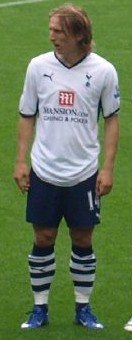
Photo: John Dobson / Wikimedia Commons / CC BY-SA 2.0

Tottenham Hotspur paid Dinamo Zagreb £16.5 million for Modrić in 2008, a club-record fee. His first six months in North London were difficult. The Premier League’s pace and power seemed to overwhelm him. The narrative wrote itself: another technically gifted continental midfielder unable to adapt. Manager Harry Redknapp initially played him out of position on the left wing, a move that highlighted his defensive frailties without leveraging his creativity.
The turnaround came with a shift to a central role. From deep midfield, Modrić could dictate tempo. His passing range, both short and long, became Tottenham’s ignition switch. He wasn’t a classic defensive midfielder, but his anticipation and positioning allowed him to break up play and transition instantly. He was the catalyst that drove Spurs to a top-four finish in 2010, their first Champions League qualification in the modern era. His development in England was a masterclass in tactical intelligence, learning to thrive in a system that initially seemed designed to expose him.
TL;DR: Modrić’s tough start at Tottenham was a tactical mismatch, not a talent deficit. A move to central midfield unlocked his ability to control games, making him the essential architect of Spurs’ rise.
The Real Madrid Metronome: Architect of a Dynasty
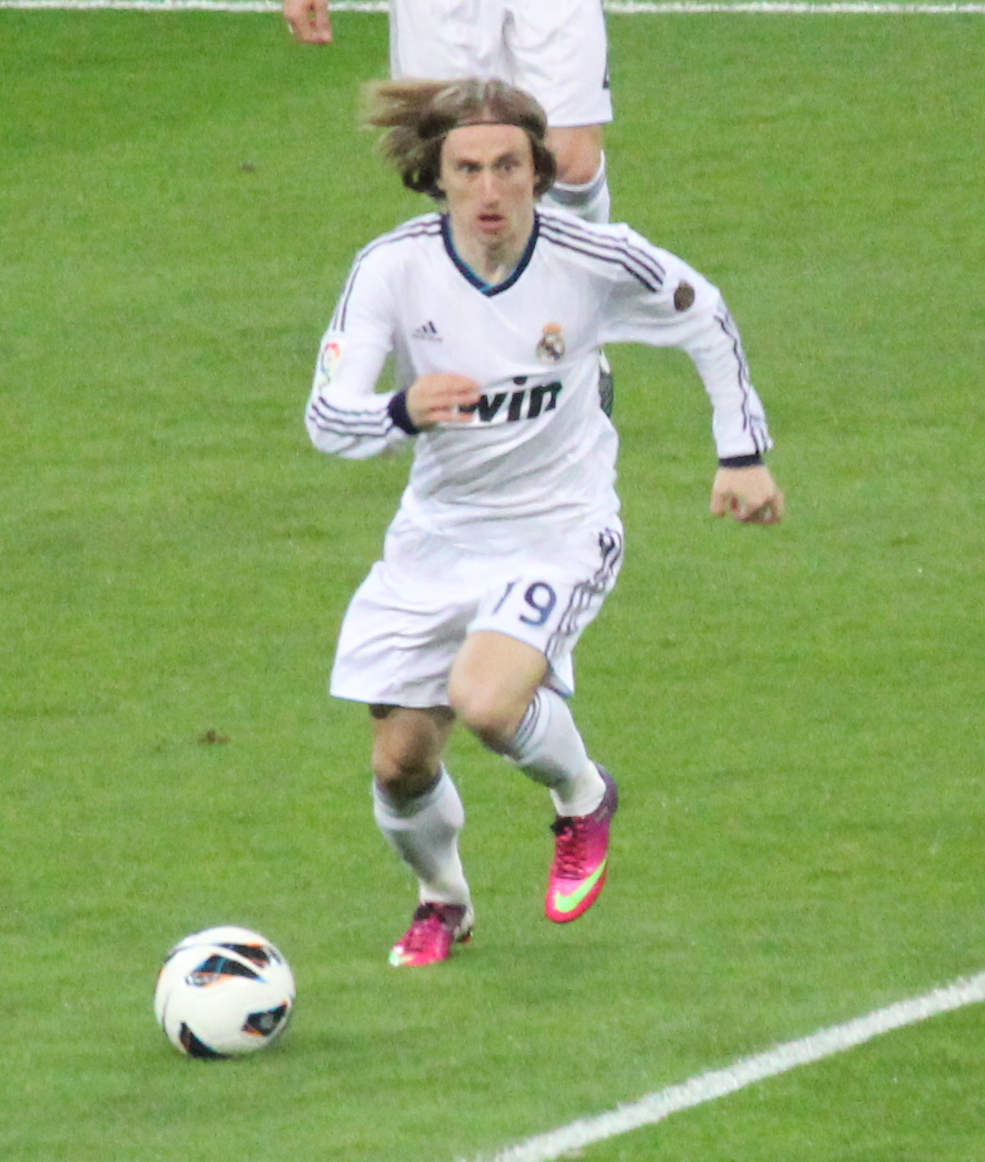
Photo: LauraHale / Wikimedia Commons / CC BY-SA 3.0

Real Madrid signed Modrić for £30 million in the summer of 2012. The Spanish press dubbed him the worst signing of the season. He struggled for consistency in his first year, seeming lost in a midfield of stars. This is where his mentality, hardened in Bosnia and England, showed itself. He didn’t hide. He worked.
Under Carlo Ancelotti, everything clicked. Modrić became the team’s metronome, the player who connected defense to attack with unerring accuracy. His partnership with Toni Kroos formed the most controlled midfield duo of the modern era. His role was less about flashy assists, though he provided plenty, and more about controlling the game’s rhythm. He decided when to speed up, when to slow down, and where the ball needed to go before the opponent knew it was there. This strategic midfield role was fundamental to Madrid winning four Champions League titles in five years between 2014 and 2018.
His longevity is its own chapter. As he entered his mid-30s, his playing time was managed, but his impact per minute remained staggering. He adapted from an every-minute engine to a high-impact specialist, a transition few legends manage gracefully. His professional training regimen and disciplined approach are the unsexy foundation of this late-career peak.
| Real Madrid Trophy | Quantity | Modrić’s Defining Role |
|---|---|---|
| UEFA Champions League | 5 Titles (2014, 2016, 2017, 2018, 2022) | Midfield controller, transition master |
| La Liga | 3 Titles (2017, 2020, 2022) | Tempo-setter, chance creator |
| FIFA Club World Cup | 5 Titles | Experienced leader, big-game performer |
I thought his first season at Madrid was a write-off. The game looked too fast for him. What I missed was that he was learning the speed of thought required, not just the speed of play. Once he had that map in his head, he became the one making it fast for everyone else.
The Croatian Captain: A Nation’s Heartbeat
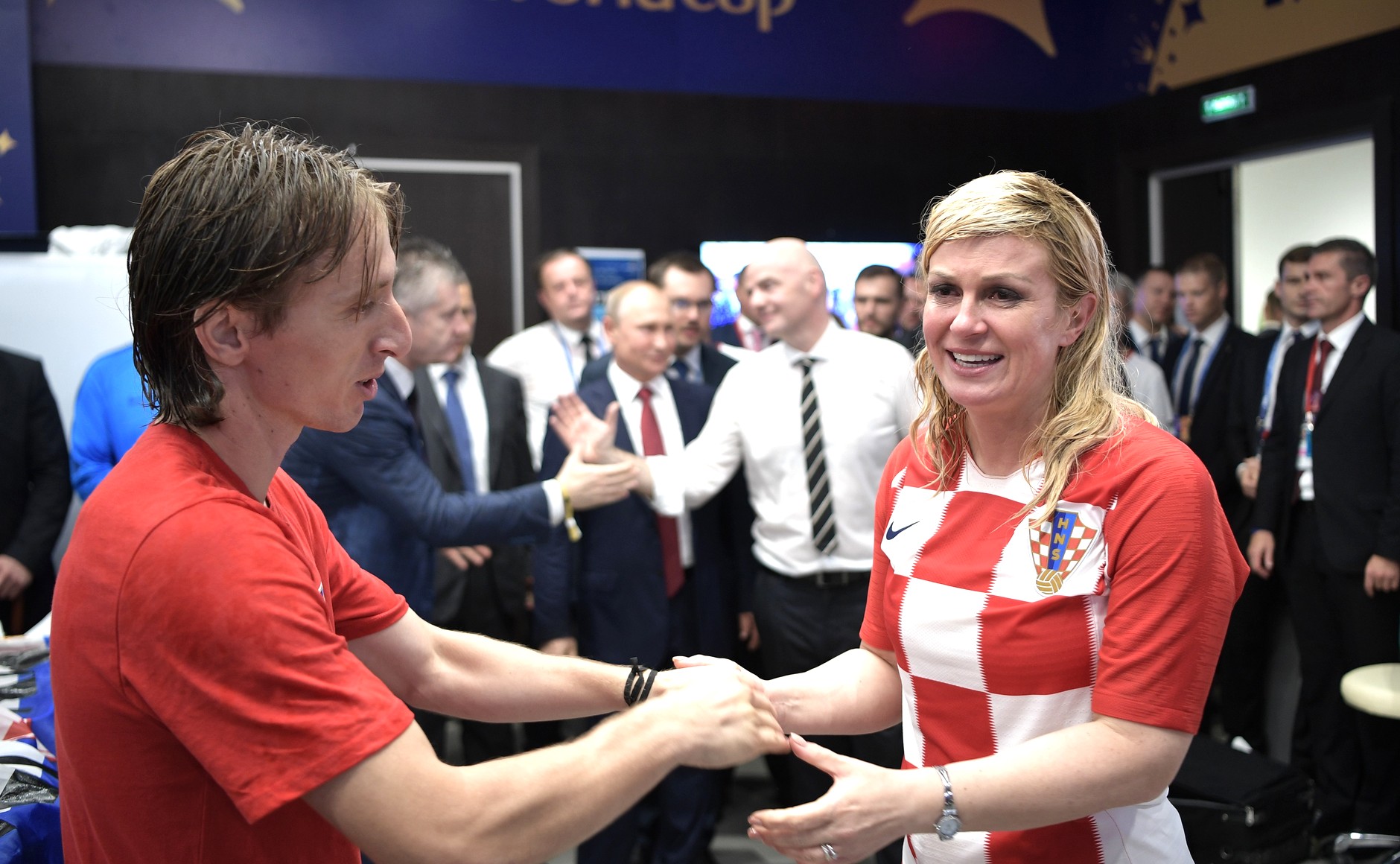
Photo: Russian Presidential Press and Information Office / Wikimedia Commons / CC BY 4.0
.jpg)
For Croatia, Modrić has always played a different role. At Madrid, his game is structured, positional, disciplined. For the national team, especially as captain from 2016 onward, he was given the keys to the Ferrari. Managers placed him higher up the pitch, gave him fewer defensive chores, and told him to express himself. This freedom produced some of his most iconic moments.
He made his debut in 2006 and, like many of his generation, carried the weight of Croatia’s short but proud football history. After the golden generation of 1998 retired, a new identity was needed. Modrić, with his quiet leadership and outrageous skill, became its cornerstone. He didn’t just lead the team; he represented a modern, technically brilliant Croatia on the world stage. This identity often clashed with more physical international rivals, making their successes even sweeter.
His commitment never wavered. While teammates retired after the emotional peak of 2018, Modrić stayed. He led them again in 2022 and, against all odds, to another semifinal in 2023. This defiance of a typical retirement age for soccer players speaks to his unique relationship with the jersey.
The 2018 World Cup: A Nation’s Dream Realized
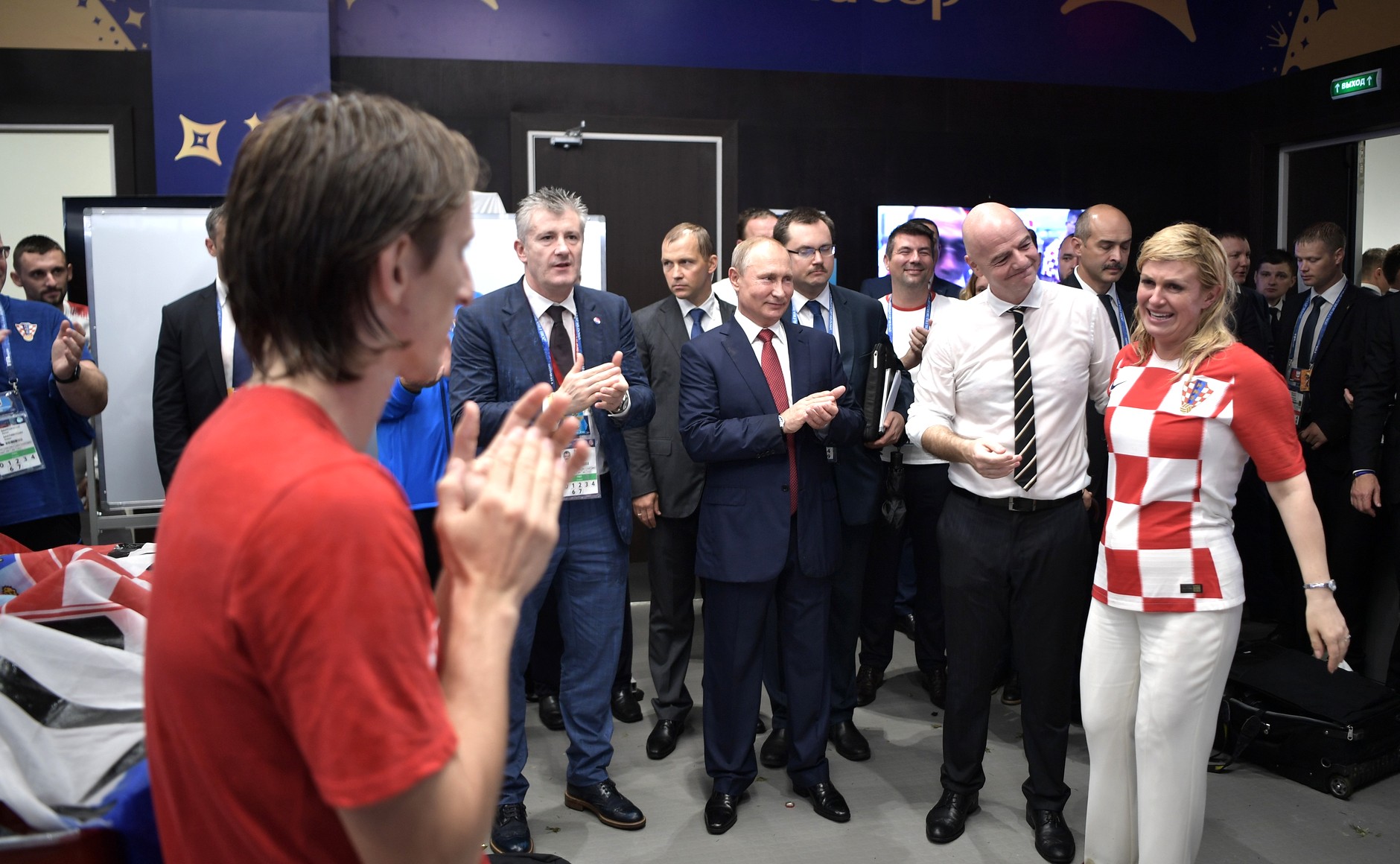
Photo: Russian Presidential Press and Information Office / Wikimedia Commons / CC BY 4.0
.jpg)
The numbers tell a story: a country of 4 million people, a squad of 23, and a run to the final that required three consecutive extra-time victories. But the feeling was something else. Modrić was the undeniable leader. He scored twice, including a stunning winner against Argentina, but his influence was everywhere. He covered more ground than any player, dictated play against every opponent, and held his nerve in three consecutive penalty shootouts.
The image of him, exhausted, receiving the Golden Ball as the tournament’s best player after losing the final, captured the duality of his journey, personal triumph, collective heartbreak. That tournament did more than win him a Ballon d’Or. It etched his and Croatia’s name into football folklore. The BBC Sport analysis of Modrić’s career rightly frames this as the moment he “defied the odds” for an entire nation.
Common mistake: Remembering 2018 only for the final loss. The real story is the three-warrior path to get there: beating Denmark on penalties, outlasting hosts Russia, and the epic semifinal victory over England. Modrić was the constant in all three, a player operating at a superhuman level of physical and mental endurance.
Breaking the Duopoly: The 2018 Ballon d’Or
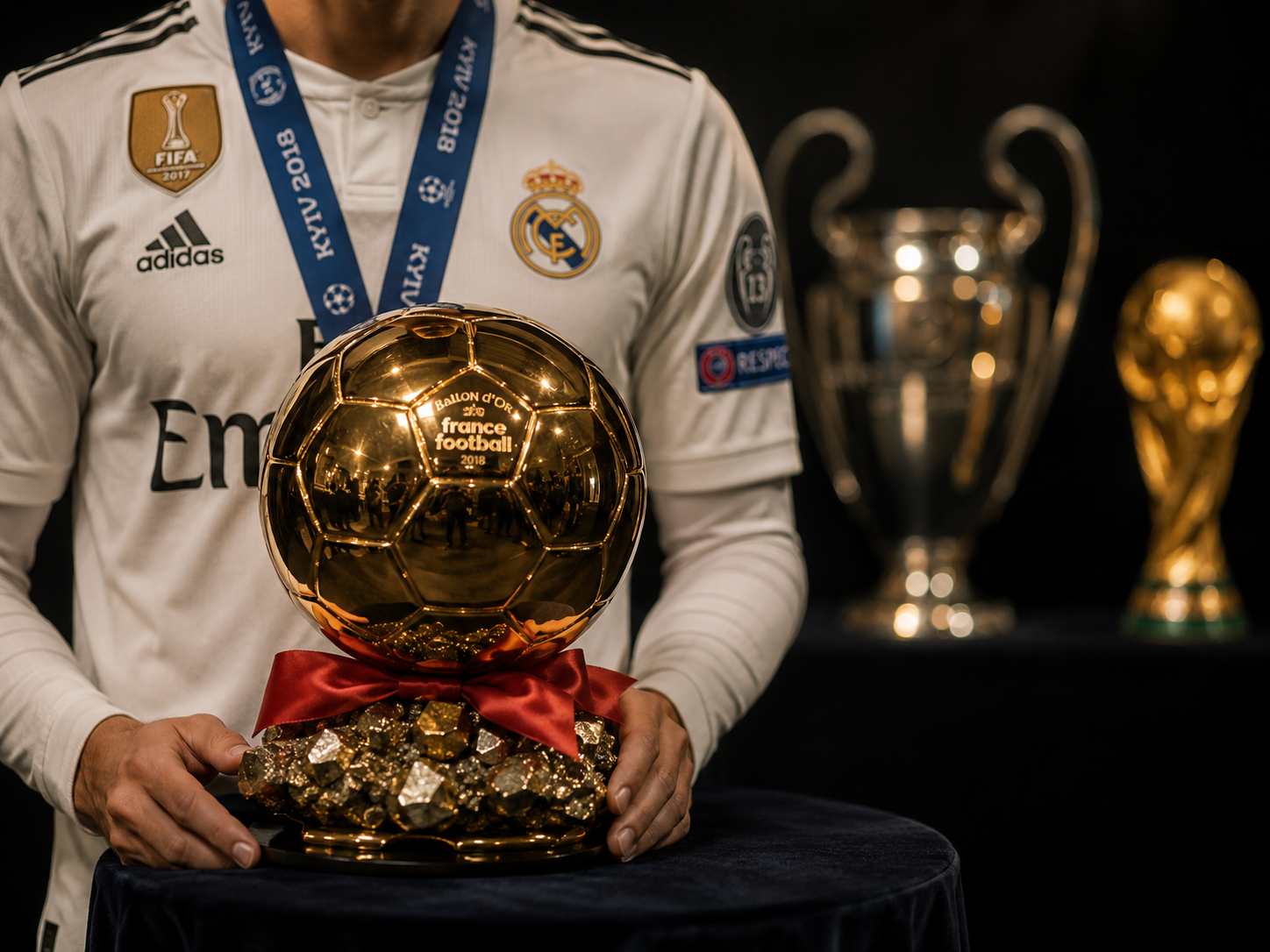
For over a decade, the Ballon d’Or was a private conversation between two aliens: Lionel Messi and Cristiano Ronaldo. In 2018, the script changed. Modrić’s World Cup heroics, combined with his central role in Real Madrid’s third consecutive Champions League win, made him the undeniable choice. This wasn’t just an award for him; it was a victory for a different footballing ideal.
It validated the midfielder, the organizer, the silent conductor over the prolific scorer. It proved that a player could reach the absolute summit without being a team’s primary goal threat. His win was a nod to football’s foundational truth, games are won and lost in midfield. It also placed him above his generational talent rival for that year, a symbolic passing of the torch in the eyes of many.
The Veteran’s Final Acts: 2022, 2026, and Beyond
Logic said the 2018 final was the last act. Modrić, then 33, was supposed to gracefully decline. Instead, he led Croatia to another World Cup semifinal in 2022, winning the Bronze Ball. He played with the energy of a man ten years younger, his game now fueled by experience and guile as much as athleticism. His selection for the 2026 World Cup roster signals that this story is not yet over.
At Real Madrid, he transitioned into a mentor and a luxury weapon. Coaches use him to break low blocks with his passing or to steady games with his possession. He has embraced this role, understanding that his longevity in the sport is a bonus chapter few get to write. His daily routine, from his specific performance nutrition to his recovery, is a blueprint for extending a career at the highest level.
| World Cup | Croatia’s Finish | Modrić’s Personal Award | Key Contribution |
|---|---|---|---|
| 2006 | Group Stage | N/A | Young squad member, gaining experience |
| 2014 | Group Stage | N/A | Team struggled despite his individual quality |
| 2018 | Runners-Up | Golden Ball | Captain, leader, scorer, midfield dominator |
| 2022 | 3rd Place | Bronze Ball | Veteran leader, controlled tempo, penalty scorer |
| 2026 (Projected) | TBD | TBD | Veteran presence, set-piece specialist, locker-room leader |
The Modrić Legacy: More Than Trophies
Luka Modrić’s legacy is layered. At club level, he is one of the most decorated midfielders in history, a definitive Real Madrid icon. Statistically, he sits among the all-time top assist providers for the club, a testament to his creative output over a decade.
For Croatia, his legacy is existential. He is the player who gave a young nation its greatest sporting moment. He connected the gritty, resilient football of the 1990s with the elegant, technical style of today. He proved that a player can carry a nation’s hopes without a superstar’s ego, leading with quiet determination and sublime skill.
Finally, for the sport itself, he reasserted the value of the complete midfielder. In an era of specialists, he was a master of all trades: defending, passing, shooting, and leading. He broke the biggest individual award duopoly in sports history. His comprehensive career overview will list the trophies and caps, but the real entry is written in the respect he earned from peers, rivals, and fans who value the art of midfield play.
TL;DR: Modrić’s legacy is a triple crown: a club legend, a national hero, and the man who restored the midfielder to the pinnacle of individual recognition.
Frequently Asked Questions
How many Champions League titles has Luka Modrić won?
Luka Modrić has won the UEFA Champions League five times with Real Madrid. His victories came in 2014, 2016, 2017, 2018, and 2022. He was a starter and key contributor in each of those triumphs, forming the core of one of the competition’s most dominant dynasties.
Why did Luka Modrić win the Ballon d’Or in 2018?
Modrić won the 2018 Ballon d’Or primarily for two monumental achievements: captaining Croatia to a historic World Cup final, where he won the Golden Ball as the tournament’s best player, and being the central midfielder for Real Madrid as they won their third consecutive Champions League title. This combination broke the decade-long award dominance of Messi and Ronaldo.
What is Luka Modrić’s playing style?
Modrić is a complete central midfielder. His style is built on impeccable ball control, visionary passing, and an ability to dictate the tempo of a game. He is not a classic defensive destroyer, but his intelligence and positioning make him an effective ball-winner. His low center of gravity and quick feet allow him to turn away from pressure, making him incredibly press-resistant.
Is Luka Modrić still playing for Croatia?
Yes, as of 2024, Luka Modrić is still an active player for the Croatian national team. He captained them at the 2022 World Cup and Euro 2024, and has been named in the squad for 2026 World Cup qualifying. He has stated his desire to play for his country as long as he feels he can contribute at the required level.
What was Luka Modrić’s childhood like?
Modrić’s childhood was marked by the Croatian War of Independence in the early 1990s. His family was displaced from their home in Zadar, and his grandfather was killed during the conflict. He spent part of his childhood as a refugee, often practicing football in hotel parking lots. These difficult experiences are widely credited with forging his remarkable mental toughness and determination.
The Bottom Line
Luka Modrić’s career is the ultimate counter-argument. It argues against judging a player by his physique, against writing off a slow start, and against believing that legends must fade after 30. From the asphalt of Zadar to the marble of the Bernabéu, his journey was never the obvious one.
His World Cup story is the soul of his career. It’s where the technical maestro met the national leader, where individual genius fueled a collective dream for four million people. The medals and awards are proof of excellence, but the respect he commands is proof of something deeper, an unwavering authenticity in how he plays the game.
He didn’t just have a great career. He redefined what was possible for a player of his profile, and in doing so, he inspired a nation and enriched the sport itself. That’s a story that lasts long after the final whistle.

I come from the “soccer heart” of Germany, the Ruhrpott. I have played, trained and followed soccer all my life and am a big fan of FC Schalke 04. I also enjoy following international soccer extensively.