Soccer Penalty Kick Rules: Distance, Laws, and Procedures
A penalty kick is awarded for a direct free-kick offense inside the defending team’s penalty area. The ball is placed on the penalty mark, which is 11 meters (12 yards) from the goal line. All players except the kicker and goalkeeper must be outside the penalty area and at least 9.15 meters (10 yards) from the penalty mark until the ball is kicked.
Most people think the drama is about the shot. It isn’t. The real tension happens in the 10 seconds before the whistle, where three separate rule violations can force a retake, wipe a goal off the board, or hand the advantage to the other team. Miss those details and you miss the entire psychological game.
This guide walks through the exact measurements, the 2019 rule change that rewrote goalkeeper strategy, and the common encroachment mistakes that referees watch for. You will learn why the penalty arc exists, what “forward” actually means for the kick, and when a saved ball can be followed up.
Key Takeaways
- The penalty spot is exactly 11 meters (12 yards) from the goal line, centered between the posts. The penalty arc exists solely to mark the 9.15-meter (10-yard) exclusion zone for other players.
- Since 2019, the goalkeeper must have at least part of one foot touching, in line with, or behind the goal line when the ball is kicked. Lateral movement is allowed, but stepping forward early forces a retake if the kick is missed.
- If a defender encroaches (enters the penalty area or arc early) and the penalty is missed or saved, the kick is retaken. If an attacker encroaches and the penalty is scored, the goal is disallowed and the kick is retaken; if missed, an indirect free kick is awarded to the defending team.
- The kicker must kick the ball forward, but the ball does not have to reach the goal. Backheel kicks are legal if the ball moves forward. The kicker cannot touch the ball a second time until it has been touched by another player.
- The referee’s whistle is the absolute signal to proceed. Any significant stop or feint in the run-up after the whistle is considered unsporting behavior and results in a yellow card and an indirect free kick for the defending team.
The 11-Meter Spot and the Penalty Area
The geometry is non-negotiable. The penalty mark is a solid circle 11 meters from the midpoint of the goal line. This distance has been fixed since 1891, when the penalty kick was invented. The entire penalty area, the 18-yard box, is the offense zone. A foul by a defender anywhere inside these lines triggers the penalty.
The penalty arc, or “the D,” drawn at the edge of the penalty area, has one job: to help referees enforce the 9.15-meter distance. Its radius is 9.15 meters from the penalty mark, creating a visual line that players must stay behind. It was added to the Laws of the Game in 1937 specifically to stop encroachment disputes.
You will see players line up along the edge of this arc. Their heels cannot break the plane. This rule creates the classic penalty-kick tableau: a crowded arc, a lone kicker, and an isolated goalkeeper. The design forces space and clarity.
TL;DR: The penalty mark is 11 meters out; the arc enforces a 9.15-meter exclusion zone for all non-kickers.
Goalkeeper Rules: The Foot-on-the-Line Mandate
Forget the old idea of the goalkeeper standing like a statue. The current Law 14 is specific about movement but brutal about position. The goalkeeper must be on the goal line, between the posts, facing the kicker when the whistle blows. They can dance, shuffle, or wave their arms along that line.
The critical change came in 2019. Before that, the rule said the goalkeeper had to be “on the goal line.” Now, it mandates that at the moment the kicker plays the ball, the goalkeeper must have at least part of one foot touching, in line with, or behind the goal line. The other foot can be in the air. This subtle rewrite killed the “stutter-step” technique where keepers would start on the line but have both feet in the air as the ball was struck.
Common mistake: Goalkeeper stepping forward before the ball is kicked, if the penalty is missed or saved, the referee must order a retake. If the penalty scores, the goal stands and the infringement is ignored. This asymmetry is deliberate.
The goalkeeper cannot touch the goalposts, crossbar, or net to shake them. They also cannot act in a way that unfairly distracts the kicker, like shouting during the run-up. That is unsporting behavior and earns a yellow card, with the penalty retaken if missed.
The Goalkeeper’s Legal Advantage
Lateral movement is the key. By shifting weight side-to-side, a keeper can cover more of the goal and plant to dive just as the kicker’s plant foot lands. The best keepers time this so their forward launch begins a fraction of a second after ball contact, staying legal while cutting down the shooter’s angles. It is a game of milliseconds.
Positioning for Everyone Else: The 9.15-Meter Rule

All players other than the kicker and goalkeeper have strict coordinates. They must be:
* Outside the penalty area.
* Behind the penalty mark.
* At least 9.15 meters from the penalty mark.
* Inside the field of play.
The penalty arc visually enforces the last two points. This rule exists to prevent interference and to give the kicker a clear path to goal. Encroachment, breaking any of these conditions before the ball is kicked, is the most common cause of retakes.
| Player Type | Where They Must Be | If They Encroach & Penalty is… |
|---|---|---|
| Defender | Outside penalty area, behind penalty mark, ≥9.15m away. | Missed/Saved: Kick is retaken. Scored: Goal stands. |
| Attacker (except kicker) | Outside penalty area, behind penalty mark, ≥9.15m away. | Scored: Goal disallowed, kick retaken. Missed/Saved: Indirect free kick to defending team. |
| Both Teams | Same as above. | Scored: Goal disallowed, kick retaken. Missed/Saved: Kick is retaken. |
The assistant referee typically watches the goalkeeper and the edge of the penalty area. The center referee watches the penalty mark and the arc. With modern VAR, encroachment is often reviewed, especially on marginal calls in high-stakes matches.
The Kicker’s Procedure: From Whistle to Follow-Up
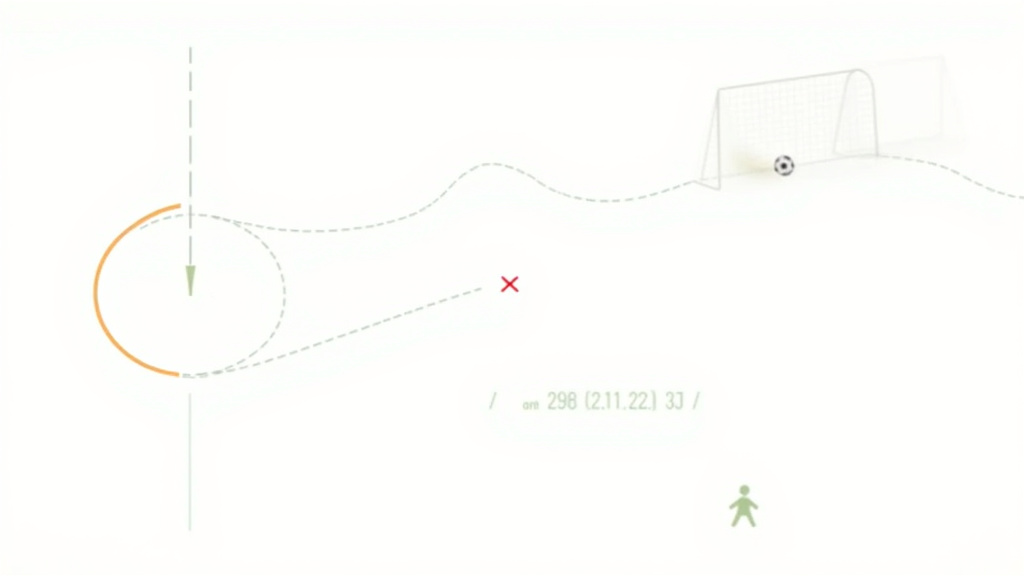
The kicker’s job seems simple. The reality is a minefield of technical violations. First, the ball must be stationary on the penalty mark. The kicker must be identified to the referee. Then, they must wait for the referee’s whistle. This wait is psychological torture, but moving early results in a retake and a possible yellow card for delaying the restart.
The run-up has rules. You cannot stop completely or perform a “feint” at the end of the run-up to trick the goalkeeper after the whistle has been given. This is considered unsporting behavior. A slight hesitation or a stutter is often tolerated, but a full stop is a yellow card and turns the penalty into an indirect free kick for the defense. You can, however, use a slow approach or a jump before kicking.
The kick must be forward. The ball does not have to reach the goal line; it just has to move forward from the mark. This makes a pass to a teammate who is outside the penalty area a legal, if risky, tactic. A backheel is legal if the ball moves forward. The moment the ball is kicked and moves, it is in play.
I have seen a clever training-ground move backfire in a cup match. The designated kicker tapped the ball forward a foot, and a teammate sprinting from outside the area blasted it home. The referee allowed it, the ball went forward and all attackers were outside the box at the moment of the kick. The defending coach was furious, but the official penalty kick procedure guide supported the call. It was a legal, if audacious, use of the “forward” rule.
Once the kick is taken, the kicker cannot touch the ball again until it has touched another player (goalkeeper, post, crossbar, or another field player). If the keeper saves it and the ball rebounds back to the kicker, they cannot score on the second touch. If they touch it, it is an indirect free kick to the other team, unless the touch is a handball, which is a direct free kick.
When a Penalty Kick is Retaken (The Encroachment Chaos)
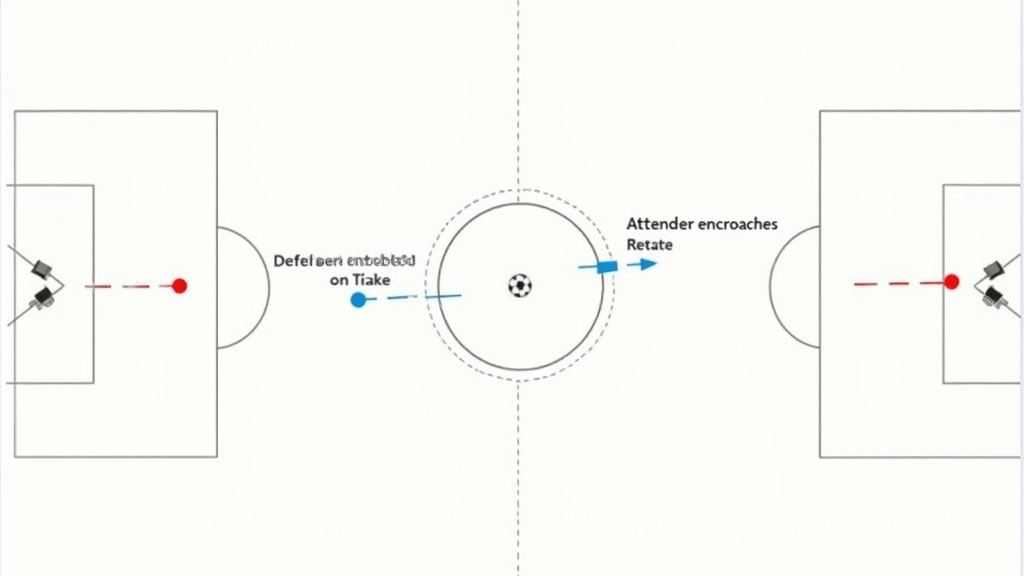
Retakes decide championships. The rules are specific but not always intuitive. The basic principle: infringements by the defending team that disadvantage the attacker are punished with a retake if the penalty fails. Infringements by the attacking team that disadvantage the defender negate a goal and punish a miss.
Here is the sequence referees follow:
1. Ball saved or misses goal. Referee checks for encroachment.
2. Defender encroached. Retake.
3. Attacker (except kicker) encroached. Indirect free kick to defending team.
4. Both teams encroached. Retake, regardless of outcome.
5. Goalkeeper off the line. Retake if the penalty was missed or saved.
What about the ball hitting the post or crossbar and rebounding into play? If a defender encroached, play continues unless the encroachment directly affected the play, a judgment call. If an attacker other than the kicker encroached and the ball rebounds to them, it is an indirect free kick. If the kicker follows up and scores from the rebound after encroaching by a teammate, the goal is disallowed for the attacker’s infringement.
TL;DR: Defender encroachment helps the attacker (retake). Attacker encroachment helps the defender (no goal, or they get the ball).
The Psychology and Statistics of the 11-Meter Challenge
The pressure is quantifiable. The average conversion rate for a penalty kick in professional football is about 75%. Only about 11% are saved by goalkeepers; the rest miss the target. This means the odds heavily favor the kicker, which is why the rules are structured to protect that advantage.
The walk from the center circle, the placement of the ball, the deep breath, these rituals are about managing autonomic stress. Goalkeepers use delay tactics within the rules, like adjusting gloves or asking the referee to check the ball placement. Kickers often develop a rigid, repeatable routine to trigger muscle memory over thought.
Choosing a side and committing matters more than power. A well-placed shot high into the corner is virtually unsaveable even if the goalkeeper guesses correctly, because the ball reaches the spot before the keeper can cover the distance. Panenka chips work only because they exploit the keeper’s expected early dive, a high-risk psychological duel.
Wearing the right gear can anchor that confidence. The solid strike of a ball with proper football cleats designed for firm ground feels different than a slip in worn-out trainers. Even specialized football socks with targeted cushioning can make that long walk back to the halfway line more comfortable after a miss.
Frequently Asked Questions
Can you fake a penalty kick?
You cannot “feint” to kick the ball once you have completed your run-up. A feint, a complete stop or a fake kick motion at the ball, after the referee’s whistle is unsporting behavior and results in a yellow card and an indirect free kick for the other team. A stutter-step or hesitation during the run-up is generally allowed.
What happens if the ball bursts on a penalty kick?
If the ball bursts or becomes defective as the kick is taken, the kick is retaken. The ball must be stationary and properly inflated on the penalty mark at the start of the procedure.
Can you score a rebound from a penalty kick?
Yes, but not if you are the original kicker. If the goalkeeper saves the shot or the ball rebounds from the goalposts or crossbar, any other player (including the kicker’s teammates) can play the ball and score. The original kicker cannot touch the rebound until another player has touched it.
How far is the penalty spot?
The penalty spot (penalty mark) is exactly 11 meters (12 yards) from the midpoint of the goal line. This distance is universal across all full-size soccer pitches.
What is the “D” for on the edge of the penalty box?
The “D” is the penalty arc. Its curved line is exactly 9.15 meters (10 yards) from the penalty mark. It is a visual aid to ensure all players except the kicker and goalkeeper maintain the required distance. Players must be outside this arc and the penalty area before the kick is taken.
Before You Go
The penalty kick is a controlled explosion of rules. The 11-meter distance is fixed, the 9.15-meter exclusion zone is visual, and the goalkeeper’s foot must kiss the line. Encroachment rules create a brutal fairness: defenders cheat, the kicker gets another chance; attackers cheat, they lose their advantage.
Remember, the referee’s whistle is your only start signal. Your run-up must not stop, your kick must go forward, and your teammates must stay outside the arc. The goalkeeper can dance but not advance. Master these constraints, and the 11-meter walk feels less like a lottery and more like a procedure you own. Now go practice placing that shot, and maybe break out the referee’s vanishing spray in training to mark your spot.
I come from the “soccer heart” of Germany, the Ruhrpott. I have played, trained and followed soccer all my life and am a big fan of FC Schalke 04. I also enjoy following international soccer extensively.