Understanding If a Substituted Player Can Return in Soccer
A substituted player in a standard soccer match cannot return to play. Once replaced, their participation in that match is permanently over. The only exceptions are in specific non-professional categories like youth, veterans, disability, and grassroots football, where “return substitutions” may be allowed under competition rules.
Most people get this wrong because they remember old rules or confuse soccer with sports like basketball or hockey that allow unlimited changes. The confusion is understandable, but the law is clear.
This guide breaks down the official IFAB Law 3, the rare exceptions, the concussion substitution protocol, and the specific competition rules from MLS to the Champions League that govern exactly when a player’s day is done.
Key Takeaways
- The core rule is absolute: a substituted player cannot re-enter a standard match.
- “Return substitutions” are only permitted in youth, veterans, disability, and grassroots football if the competition organizer allows it.
- Concussion substitutes are a separate, permanent replacement that does not count against a team’s normal substitution limit.
- A player who refuses to leave the field after being substituted can receive a yellow card for delaying the restart.
- New rules for 2026/27 will introduce a strict 10-second limit for a substituted player to exit the field.
The Iron-Clad Rule: No, a Substituted Player Cannot Return
Look at any professional match. A player walks off, taps hands with their replacement, and heads to the bench. That’s it. They are done.
The International Football Association Board (IFAB) writes the laws, and Law 3 – The Players is explicit. A substitution is final. The replaced player takes no further part. This isn’t a suggestion or a guideline. It’s the foundation of the game’s competitive structure for over a century.
The reason is competitive integrity. Allowing players to shuttle on and off would turn soccer into a series of situational specialists, destroying the endurance and tactical discipline that define the sport. It prevents coaches from exploiting endless fresh legs. The rule forces a real, permanent commitment to each tactical change.
A player who has been replaced may not take any further part in the match. This principle applies to all matches played under the Laws of the Game unless the competition rules permit return substitutions in youth, veterans, disability, or grassroots football.
Common mistake: Assuming a star player can come back on after a short rest, this is never allowed in professional, senior competitions. Attempting to re-enter is a cautionable offense for unsporting behavior.
TL;DR: In 99% of the soccer you watch, a sub is off for good. The rule is there to protect the sport’s fundamental balance.
The Official Substitution Process (And What Happens If You Break It)
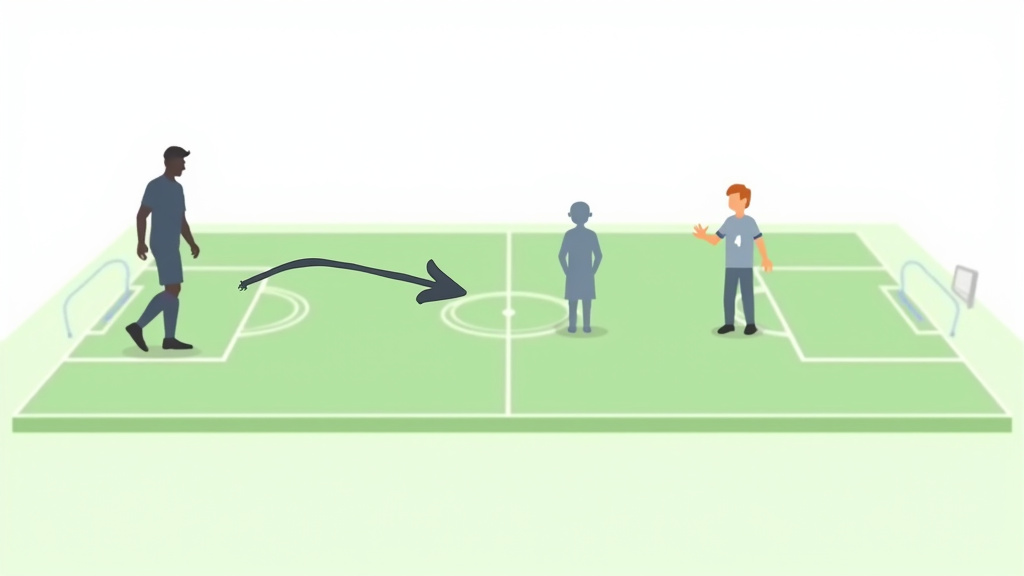
Knowing the rule is one thing. Understanding the official procedure shows you why mistakes happen. The substitution procedures are strict for a reason.
The substitute’s name must be on the official team sheet given to the referee before kickoff. You can’t just pull a fan from the stands. When the coach decides to make a change, the fourth official is notified during a stoppage. The player coming off must leave the field at the nearest boundary line, usually the touchline, unless the referee directs otherwise for safety.
Only after that player has completely left the field of play can the substitute enter, and only at the halfway line after receiving a signal from the referee. The substitution is complete the moment the new player steps onto the pitch.
| Step | Action | Consequence if Skipped |
|---|---|---|
| 1. Notification | Inform the referee of the intent to substitute. | The substitute cannot enter; play continues with the original player. |
| 2. Exit | The replaced player leaves at the nearest point. | If they delay, the referee can caution them (yellow card). The substitute is held back. |
| 3. Entry | Substitute enters at halfway line after referee’s signal. | Entering early is a cautionable offense for the substitute and can lead to the substitution being voided. |
What if a player refuses to leave? I saw this once in a lower-league match. A veteran was furious at being hooked. He stood his ground, arguing with the coach. Play continued with him still on the field for almost a minute before the referee stopped play, showed him the yellow card, and ordered him off. His team played down a man until the substitute finally entered. The delay and the card cost them the game.
The referee has the authority to caution a player who unnecessarily delays leaving the field. The new 2026/27 laws will tighten this further.
The Rare Exceptions: When Can a Player Return?
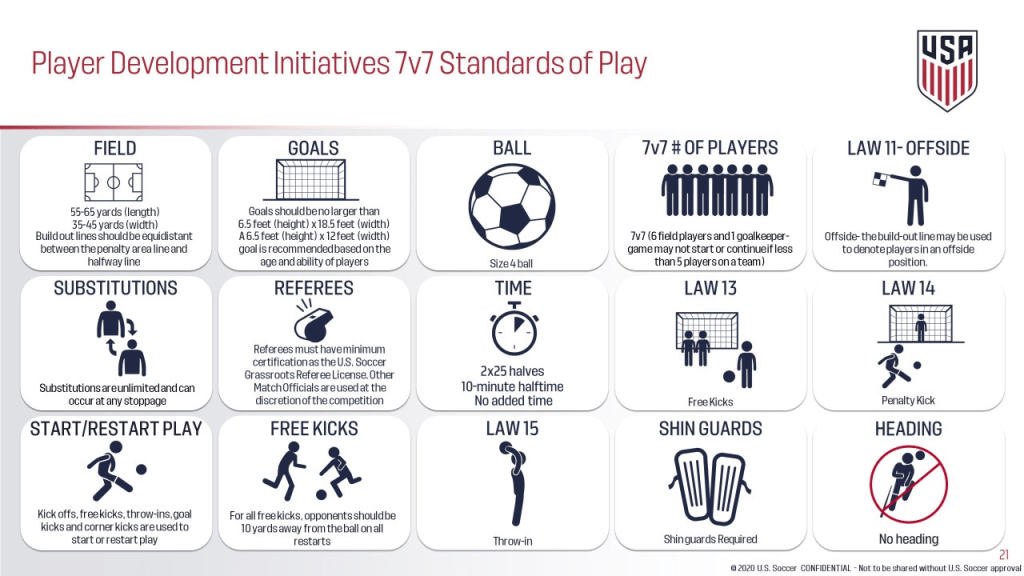
The blanket “no return” rule has deliberate, narrow cracks. These exist for the good of the game at non-elite levels.
The IFAB specifically allows national associations to permit “return substitutions” in four categories:
1. Youth football (all ages)
2. Veterans football (over-35s, typically)
3. Disability football
4. Grassroots/recreational football
In these matches, the competition rules must explicitly state that return substitutions are allowed. It’s not automatic. This format, often called a rolling substitution system, is common in amateur leagues and youth tournaments across the world. It promotes participation, manages fatigue for developing athletes, and acknowledges the recreational nature of the game.
The key difference? In a professional match, the substitution rules are about tactics and managing a finite resource. In a kids’ Saturday morning league, they’re about making sure everyone gets to play. The laws wisely reflect that.
Concussion Substitutes: A Critical Safety Exception
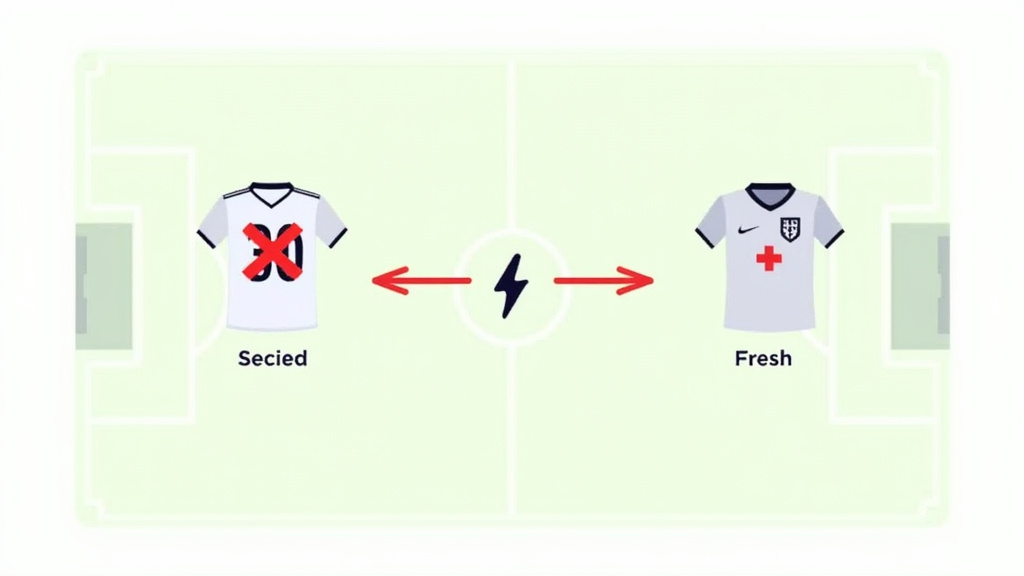
This is not a “return” rule, but a vital permanent replacement protocol. It changes the substitution calculus completely for head injuries.
The IFAB’s Additional Permanent Concussion Substitute (APCS) protocol allows a team to permanently replace a player with a suspected concussion. This substitute does not count against the team’s normal substitution limits. Furthermore, as a safety measure, the opposing team is granted the option to use one additional substitute for any reason.
Before you start: The concussion substitute protocol is a medical safety tool, not a tactical loophole. Match officials do not diagnose a concussion; that decision rests solely with the team’s medical staff. Misusing the protocol to gain a tactical advantage is considered serious misconduct.
The process is starkly different. There’s no waiting for a “magic sponge.” If the medical staff identifies a potential concussion, they inform the referee a concussion substitution is being made. The player is removed from the match permanently for their own safety. The replacement comes on, and the game continues with no reduction in the team’s available changes.
This protocol acknowledges that brain injury trumps all other considerations. It removes the perverse incentive for a player or coach to “tough it out” when a head injury occurs.
Competition-Specific Rules and Upcoming Changes
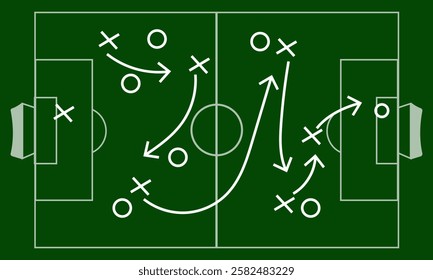
The IFAB sets the base laws, but each competition layers its own regulations on top. These dictate the number of substitutes allowed and how they can be used in extra time.
Most top leagues now allow five substitutes from a matchday squad size of twenty or twenty-three players, to be used across three opportunities (plus half-time). In extra time periods, competitions often grant one additional substitute and one additional opportunity. Substitutions can also occur between full-time and the start of extra time without using an in-game opportunity.
MLS has its own specific twist for postponed matches. If a game is halted and resumed later, teams can replace players who became injured or unavailable after the original date with other players from their active roster. These replacements usually don’t count against the normal substitution limits, which is a crucial detail for fantasy managers and bettors.
The big change coming for the 2026/27 season is the “10-second rule.” A substituted player will have ten seconds to leave the field. If they fail, their replacement cannot enter until the first stoppage after one full minute of play. This aims to eliminate the slow, celebratory walks off the pitch that waste time and disrupt flow.
The Medical Context: “Return to Play” vs. “Return to the Match”
A player can’t return to a match they’ve left. But when can they return to play at all? This is where medical protocols intersect with substitution rules.
A player substituted due to injury, especially a muscle injury, enters a separate “return-to-play” (RTP) protocol. Medical staff, not the coach, drive this timeline. A 2020 Italian consensus statement on lower limb muscle injuries outlines a phased approach: tissue healing, strength recovery, sport-specific training, and finally full training clearance.
A coach can’t just put a player back on the team roster rules for the next game because they feel like it. The player must be medically cleared for full training first. This process often takes weeks, not days. That recovered player then becomes eligible for selection again, either to start or to be named as a substitute. Their “return” is to the squad for a new match, not to the match they left.
Frequently Asked Questions
What happens if a substituted player re-enters the field without permission?
The referee must stop play, caution the player for entering the field of play without permission (a yellow card), and order them off again. Play restarts with an indirect free kick for the opposing team from where the ball was when play was stopped.
Can a goalkeeper be substituted and then return as an outfield player?
No. The substitution is permanent for that player, regardless of position. Once the goalkeeper is replaced, they are finished for the match. Another player on the field would need to take the goalkeeper’s jersey and position.
Do concussion substitute opportunities roll over into extra time?
Yes. If a team has not used its option for an additional concussion substitute during regular time, it remains available in extra time. The same applies to the opposing team’s option for an additional regular substitute.
What is the difference between a “substitution opportunity” and a “substitute”?
substitute” is a player. An “opportunity” is a stoppage in which you can make one or multiple changes at once. You might have five substitutes available but only three opportunities to use them (plus half-time). Making two changes at once uses one opportunity but two of your five substitutes.
Can a team make a substitution after a red card reduces them to 10 players?
Yes. The total players on the field is reduced, but the team’s right to use its allotted substitutes is not affected by a sending-off. They can still make all permitted changes.
The Bottom Line
The rule is simple on the surface: a substituted player is done for the day. This simplicity protects the sport’s essence. The complexity lies in the exceptions, carefully carved out for youth development, player safety, and specific competition needs like MLS postponements.
Remember the three layers: the unbreakable IFAB law, the safety-driven concussion protocol, and the competition-specific details on numbers and extra time. Ignore the old myths and the comparisons to other sports. In soccer, when you’re off, you’re off. That finality is what makes every substitution a meaningful, irreversible tactical gamble.

I come from the “soccer heart” of Germany, the Ruhrpott. I have played, trained and followed soccer all my life and am a big fan of FC Schalke 04. I also enjoy following international soccer extensively.