Away Goals Rule in Soccer Explained: UEFA’s Change
The away goals rule was a specific tie-breaking method used in two-legged soccer matches. If the total goals scored across both matches (the aggregate score) were equal, the team that scored more goals in the away leg advanced to the next round. UEFA, European soccer’s governing body, introduced this rule in 1965 but abolished it for all its club competitions starting with the 2021/22 season.
Most explanations stop at the basic definition. They miss the real story, why a rule that lasted over 55 years suddenly got scrapped, and how its ghost still influences tactics today. The common mistake is thinking it’s universally gone. It’s not. Major tournaments in Africa still use it, and its abolition has fundamentally changed how managers approach a two-legged tie.
This guide breaks down the rule’s mechanics, its controversial history, and the precise new order of tiebreakers that replaced it in Europe. You will learn why statistics killed it and how to spot which competitions still play by the old rules.
Key Takeaways
- The away goals rule only applied after 180 minutes if the aggregate score was perfectly level. A 2-1 home win followed by a 1-2 away loss sends the tie to extra time under the old rule, not straight to away goals.
- UEFA’s primary reason for scrapping it was a documented, decades-long decline in home advantage. Pitch quality, travel conditions, and referee bias are not the factors they were in the 1960s.
- In current UEFA competitions (Champions League, Europa League), a tied aggregate now triggers 30 minutes of extra time, followed by a penalty shootout if needed. Away goals do not count double in extra time.
- The rule remains active in competitions like the CAF Champions League and CAF Confederation Cup. Always check the specific tournament regulations.
- Tactically, the abolition has made home teams in the first leg less fearful. Conceding once at home is no longer a potential death sentence, changing how managers set up from the opening whistle.
How Did the Away Goals Rule Work?
The away goals rule functioned as the first tie-breaker after the completion of two legs in a knockout match. It compared the number of goals each team scored in the match they played at their opponent’s stadium. This rule superseded the need for a replay or extra time at a neutral venue under the original competition regulations.
You need a clean example. Take a Champions League quarterfinal. Bayern Munich wins the first leg at home 2-1. They then lose the second leg at Barcelona’s stadium 1-2. The aggregate score is 3-3.
Under the away goals rule, Bayern scored 1 goal in Barcelona (the away leg). Barcelona scored 1 goal in Munich (their away leg). The away goals are equal at 1-1. The tie would then proceed to extra time. If Barcelona had lost 1-0 at home instead of 2-1, Bayern’s two away goals would have won them the tie outright. The rule wasn’t a constant multiplier. It was a single, decisive filter applied only after 180 minutes.
TL;DR: The rule was a one-time check after both legs: if the total goals were equal, the team with more goals scored in the match they played away from home advanced.
Why UEFA Scrapped the Rule in 2021
UEFA President Aleksander Čeferin made the official announcement in June 2021. The decision wasn’t a sudden whim. It followed a deep statistical review by the UEFA Club Competitions Committee. The data showed home advantage had been eroding for decades.
In the mid-1970s, about 60% of matches in European competitions were won by the home team. By the 2018-2021 period, that figure had dropped to around 47%. The goal difference per match shrunk from +0.92 for home teams to just +0.28. Better pitches, standardized stadium facilities, neutral refereeing with VAR, and shorter travel times flattened the historical disadvantage. The original justification, that away teams needed an incentive to attack, had evaporated.
The rule had also created a perverse incentive. Home teams, especially in the first leg, became terrified of conceding a single goal. That one concession could force them to win by two clear goals in the return leg. It encouraged defensive, cautious football from the host. I saw this firsthand with my club, Schalke, in the 2011 Champions League round of 16 against Valencia. We drew 1-1 at home. That away goal for them felt like a loss in the dressing room. We played the second leg chasing the game from the start and went out. The psychological weight was immense.
Common mistake: Thinking the rule was abolished because it was “unfair” in a vacuum. The official reason was its obsolescence, the competitive imbalance it was designed to correct no longer existed at a statistically significant level.
| Factor Reducing Home Advantage | Impact on the Away Goals Rule |
|---|---|
| Uniform high-quality hybrid pitches | Removed the “boggy away pitch” disadvantage |
| Widespread use of Video Assistant Referee (VAR) | Reduced perceived home-team referee bias |
| Charter flights & shorter travel | Minimized fatigue from long journeys |
| Global TV coverage & neutral atmospheres | Diminished the effect of hostile crowds |
TL;DR: UEFA abolished the rule because home advantage statistics proved it was an outdated solution to a problem that no longer existed, and it was stifling attacking play.
The New UEFA Tie-Breaking Order
With the away goals rule gone, the path to deciding a tied knockout tie in Europe is now linear and extends the contest. The current tie-breaking procedures are absolute.
- Aggregate Score After 180 Minutes. This is the first and only check. If one team leads, they advance.
- Extra Time. If the aggregate is level, the match proceeds directly to two 15-minute periods of extra time rules, played in full. Crucially, all goals in extra time count as normal. There is no separate “away goals in extra time” rule.
- Penalty Shootout. If the score remains tied after the full 30 minutes of extra time, the winner is decided by a penalty shootout.
This change removed a specific unfairness. Under the old rule, if an away team scored in extra time during the second leg, the home team would need to score twice to win, as that extra-time goal counted as a decisive away goal. Now, both teams have an equal 30-minute period to score, with no asymmetric stakes.
Where the Away Goals Rule Still Exists
Do not assume the rule is dead everywhere. Its application is now a patchwork defined by each competition’s governing body. You must check the specific regulations.
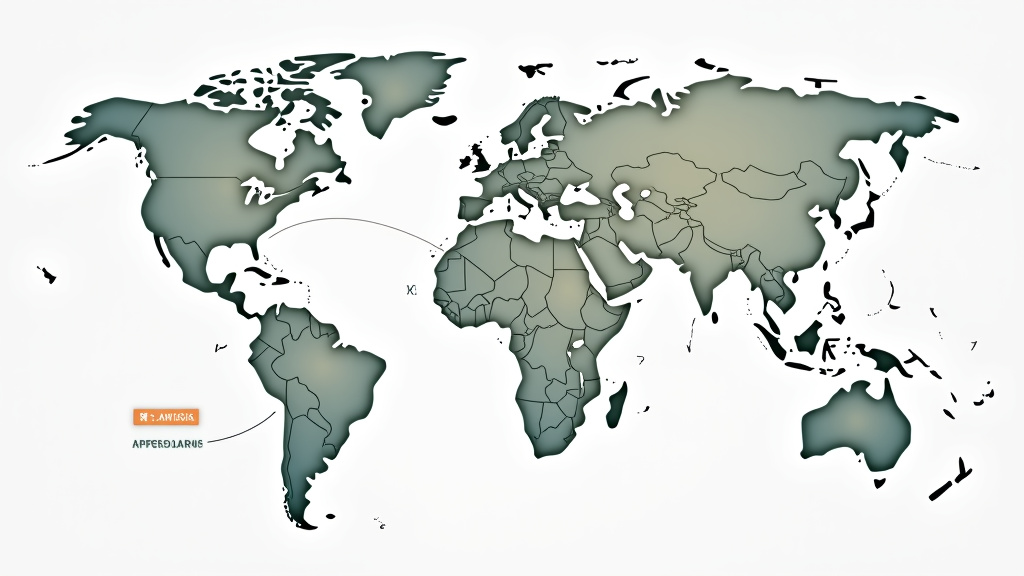
The most prominent holdouts are the continental tournaments run by the Confederation of African Football (CAF). The CAF Champions League and CAF Confederation Cup still use the away goals rule as a tiebreaker after the second leg. In South America, CONMEBOL abolished it for the Copa Libertadores in 2005. In Asia, the AFC removed it from the Champions League in 2021, following UEFA’s lead.
It also lingers in some FIFA World Cup qualification playoffs, particularly in earlier rounds where a two-legged format is used. The rule’s global footprint has shrunk, but it hasn’t vanished. Always verifying the aggregate score rules for any tournament you’re watching is the only sure method.
| Competition | Uses Away Goals Rule? | Notes |
|---|---|---|
| UEFA Champions League | No | Abolished for 2021/22 season onwards |
| CAF Champions League | Yes | Still the primary tie-breaker |
| AFC Champions League | No | Abolished in 2021 |
| Copa Libertadores | No | Abolished in 2005 |
| FIFA World Cup Qualifiers (UEFA) | No | Follows UEFA’s abolition |
| FIFA World Cup Qualifiers (Other Confederations) | Varies | Must check the specific playoff round rules |
Tactical Impact: Before and After Abolition
The removal of the rule has rewritten the tactical blueprint for two-legged ties. The shift is most visible in first-leg planning.
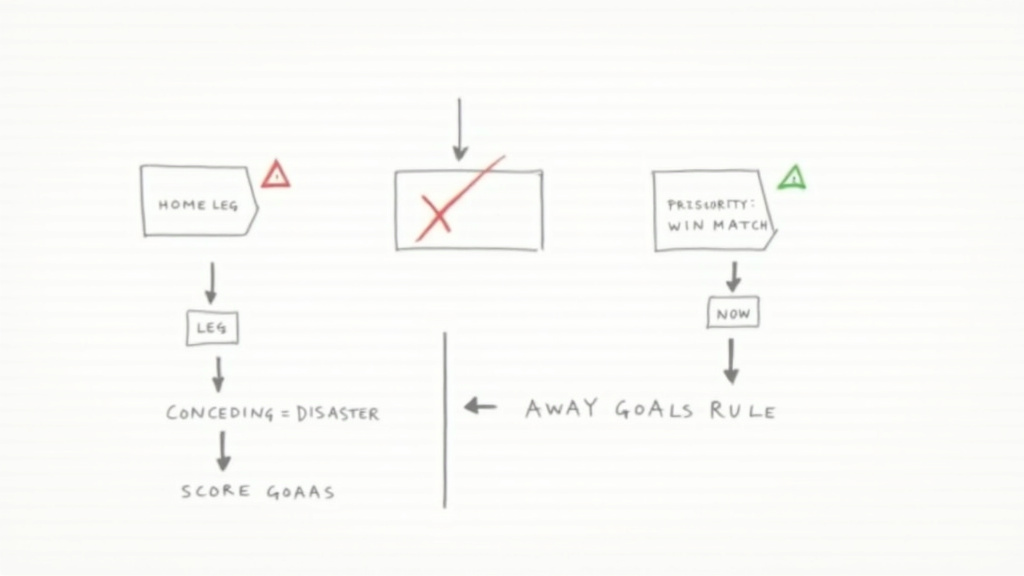
Before 2021, the paramount objective at home was a clean sheet. Conceding once was a minor disaster. This led to conservative setups, with teams often prioritizing control over aggression. The second leg became a complex calculation, not just a game. A 0-0 draw at home was seen as an excellent result. A 1-0 win was ideal. A 2-1 win, while positive, carried that nagging doubt because of the opponent’s away goal.
Now, a home win is a home win. A 2-1 victory is unequivocally good. It places the burden squarely on the away team in the second leg. Managers feel freer to attack at home, knowing a single concession isn’t magnified. The emphasis has shifted from “avoid conceding” to “win the match.” This has made the first legs of ties in the UEFA Champions League more open and entertaining spectacles.
The second leg dynamic has changed too. An away team trailing by a single goal no longer has the safety net of knowing one away goal forces extra time. They must outright win or force a high-scoring draw. This encourages more proactive play from the visiting side as well. The entire two-act drama is now played with higher stakes and less hidden arithmetic.
I prefer the post-abolition landscape. It rewards winning football over risk-averse calculus. The last few minutes of a 1-1 aggregate tie are now pure football, not a frantic math problem where protecting a precious away goal leads to time-wasting and defensive shells.
Historical Context and Famous Examples
UEFA first implemented the rule in the 1965-66 European Cup Winners’ Cup. The idea was pragmatic: to avoid the logistical nightmare and extra cost of organizing a third match on a neutral ground. It also aimed to make away teams less negative. For most of its life, it was simply part of the fabric of European football, creating some of the competition’s most iconic moments.
The 1999 Champions League semi-final between Manchester United and Juventus is a classic case. United lost the home first leg 1-1. In Turin, they went 2-0 down within 11 minutes, meaning they needed three goals to advance on away goals. They scored three, with Roy Keane’s header making it 2-1, the crucial away goal that changed the entire momentum. The rule manufactured that specific, high-pressure narrative.
Another famous example was Tottenham’s 2019 journey. They needed a last-minute goal by Fernando Llorente against Manchester City in the quarter-finals to win on away goals after a 4-4 aggregate thriller. The rule provided a clear, if brutal, cutoff point. These moments are now historical artifacts, their specific tension impossible to replicate under the new system.
For a deeper look at the arguments that led to its end, our article on the abolition of the away goals rule details the committee debates and fan reactions.
Frequently Asked Questions
Did away goals count double in extra time?
Under the old UEFA rule, yes. If the away team scored in extra time during the second leg, that goal counted as a decisive away goal, and the home team would need to score twice to overcome it. This was a major point of criticism and is no longer the case.
What happens if a Champions League knockout tie is tied now?
The tie goes straight to 30 minutes of extra time, split into two 15-minute halves. If the score remains level after that, a penalty shootout decides the winner. The duration of extra time is fixed and always played in full.
Is the away goals rule still used in the World Cup?
No. The FIFA World Cup knockout stage is a single-match format, so the rule does not apply. However, some two-legged World Cup qualification playoffs between confederations may have used it historically. The current formats typically use extra time and penalties.
Why do some people want the away goals rule back?
Some fans and pundits argue it added a unique strategic layer and created unforgettable dramatic moments. They feel the current system makes ties more likely to drift towards penalties, which can feel like a lottery. Nostalgia for those specific high-stakes scenarios fuels the debate.
Do away goals still matter in the group stage?
In UEFA competitions, yes, but differently. Away goals are not a tiebreaker between two teams in a knockout tie. However, they are still the fifth tie-breaking criterion for ranking teams level on points in the league phase (group stage). It’s a subtle but important distinction.
The Bottom Line
The away goals rule was a defining feature of European football for generations, built on a 1960s logic of travel hardship and pronounced home advantage. Its abolition in 2021 was a data-driven decision, acknowledging that modern sport had outgrown the rule’s original purpose. The new system, aggregate score, then extra time, then penalties, is simpler, fairer in UEFA’s view, and has shifted tactics toward more attacking first legs.
Yet the rule persists elsewhere, a reminder that global football is a collection of independent federations, not a monolith. Understanding this tiebreaker means knowing both its retired European history and its active life in other continental competition levels. The next time you watch a tense two-legged knockout tie, you’ll know exactly why the managers are making the choices they do, and whether that last-minute equalizer is a lifeline or just a goal.

I come from the “soccer heart” of Germany, the Ruhrpott. I have played, trained and followed soccer all my life and am a big fan of FC Schalke 04. I also enjoy following international soccer extensively.