Breaking Down World Cup Group G Scenarios And All Outcomes
World Cup 2026 Group G qualification scenarios hinge on three things: the new 48-team format, the direct battle between Egypt and Iran, and a simple points threshold for third place. The top two teams (Belgium and the Egypt/Iran winner) advance automatically. The third-placed team needs at least 3 points, and ideally 4, to be among the eight best third-placed teams that also reach the Round of 32.
Most fans still think like it’s 2022. They see four teams and assume only two go through. That outdated math misses the biggest change in World Cup history. The third-place team in Group G has a real shot.
This guide breaks down the new rules, the specific tie-breakers, the critical matches, and the exact points targets for Belgium, Egypt, Iran, and New Zealand to survive and advance.
Key Takeaways
- The 2026 World Cup’s 48-team format means 24 teams advance from the groups: the top two from each of the 12 groups, plus the eight best third-placed teams.
- In Group G, Belgium is the heavy favorite to finish first. The real drama is the head-to-head battle between Egypt and Iran for second place and automatic qualification.
- A third-placed team with 4 points is virtually guaranteed to advance. Three points is often enough, but it depends on other groups’ results and goal difference.
- The tie-breaker order prioritizes head-to-head results before overall goal difference. Every goal in the Egypt vs. Iran match could be decisive.
- New Zealand’s primary role is as a potential spoiler. Taking points off Egypt or Iran would massively complicate the qualification picture for those sides.
How the 2026 World Cup Group Stage Works (New 48-Team Format)
Forget the old 32-team tournament. The 2026 edition in the USA, Canada, and Mexico is bigger, and the path to the knockout stage is wider. The fundamental shift is that finishing third no longer means automatic elimination.
The tournament features 48 nations split into 12 groups of four. Each team plays three round-robin matches. The top two finishers in each group—24 teams total—progress to the Round of 32. Here’s the new part: the eight best third-placed teams from across all 12 groups also qualify. This creates a 32-team knockout bracket from the start. It fundamentally changes the risk calculus for teams in a tough group. A single win and a draw might be enough to keep your tournament alive, even if you finish behind two stronger sides.
The 2026 FIFA World Cup group stage consists of 12 groups (A-L) of four teams. Qualification requires a top-two finish or a ranking among the eight best third-placed teams based on points, then goal difference, then goals scored, then fair play points, then the FIFA World Ranking.
This system diminishes the traditional “Group of Death” concept. Even in a brutal group, a strong third-place team likely advances. For Group G, it means Egypt and Iran aren’t necessarily playing a zero-sum game. Both could theoretically progress, though the automatic top-two spot is always the primary target. The expanded format also explains New Zealand’s presence; they secured the Oceania Football Confederation’s (OFC) direct qualification spot created by the larger tournament.
TL;DR: 12 groups, top 2 from each go through, plus 8 best third-placed teams. Third place is now a viable route to the knockouts.
The Teams of Group G: Profiles and Predictions
You can’t map the scenarios without knowing the terrain. Group G is a fascinating mix of a European powerhouse, two historic Asian and African sides perpetually on the cusp, and a classic underdog.
Belgium (FIFA Ranking: #3)
The clear favorites. While their “Golden Generation” peak has passed, a squad built around Kevin De Bruyne, Jérémy Doku, and Romelu Lukaku remains formidable. Their tactical flexibility under a new manager will be key. Expect them to control possession and qualify comfortably. The only question is whether they win the group with maximum points.
Egypt (FIFA Ranking: #30)
The Pharaohs carry a painful World Cup history: three appearances, zero wins. Mohamed Salah’s quest for a World Cup goal is a national narrative. Their qualification was resilient, and in Salah, they have a player who can decide any match. Their defensive organization under manager Hossam Hassan will be tested immediately against Belgium. Their campaign hinges on that opener and the Iran clash.
Iran (FIFA Ranking: #21)
Asian giants with a point to prove. Iran has never advanced from a World Cup group. They are tactically disciplined, physically robust, and boast stars like Mehdi Taremi and Sardar Azmoun. Their match against Egypt is the group’s pivotal fixture. A draw might suit both if they handle other business, but a win for either side creates a huge advantage. Understanding modern 3-5-2 tactics is useful here, as Iran often employs a compact, counter-attacking system with wing-backs.
New Zealand (FIFA Ranking: #103)
The undeniable underdogs. The All Whites are the biggest beneficiaries of the expanded format, claiming OFC’s direct spot. Their role is that of spoiler. A draw against Egypt or Iran would be a monumental result and throw the group into chaos. Their physical, direct style is a known quantity, but breaching the defenses of the top three will be their Everest.
| Team | Key Strength | Primary Weakness | Realistic Goal |
|---|---|---|---|
| Belgium | Individual talent, midfield creativity | Defensive transition, post-Golden Gen adjustment | Win the group |
| Egypt | World-class forward (Salah), motivation | Historical tournament pressure, defensive consistency | 2nd place (automatic qualification) |
| Iran | Tactical discipline, set-piece threat | Breaking down defensive blocks, creativity in open play | 2nd place or a high-ranked 3rd place |
| New Zealand | Aerial threat, physicality | Technical quality gap, creating chances vs. elite defenses | Competitive performances, potential spoiler |
Decoding the Tie-Breakers: It’s More Than Just Goal Difference
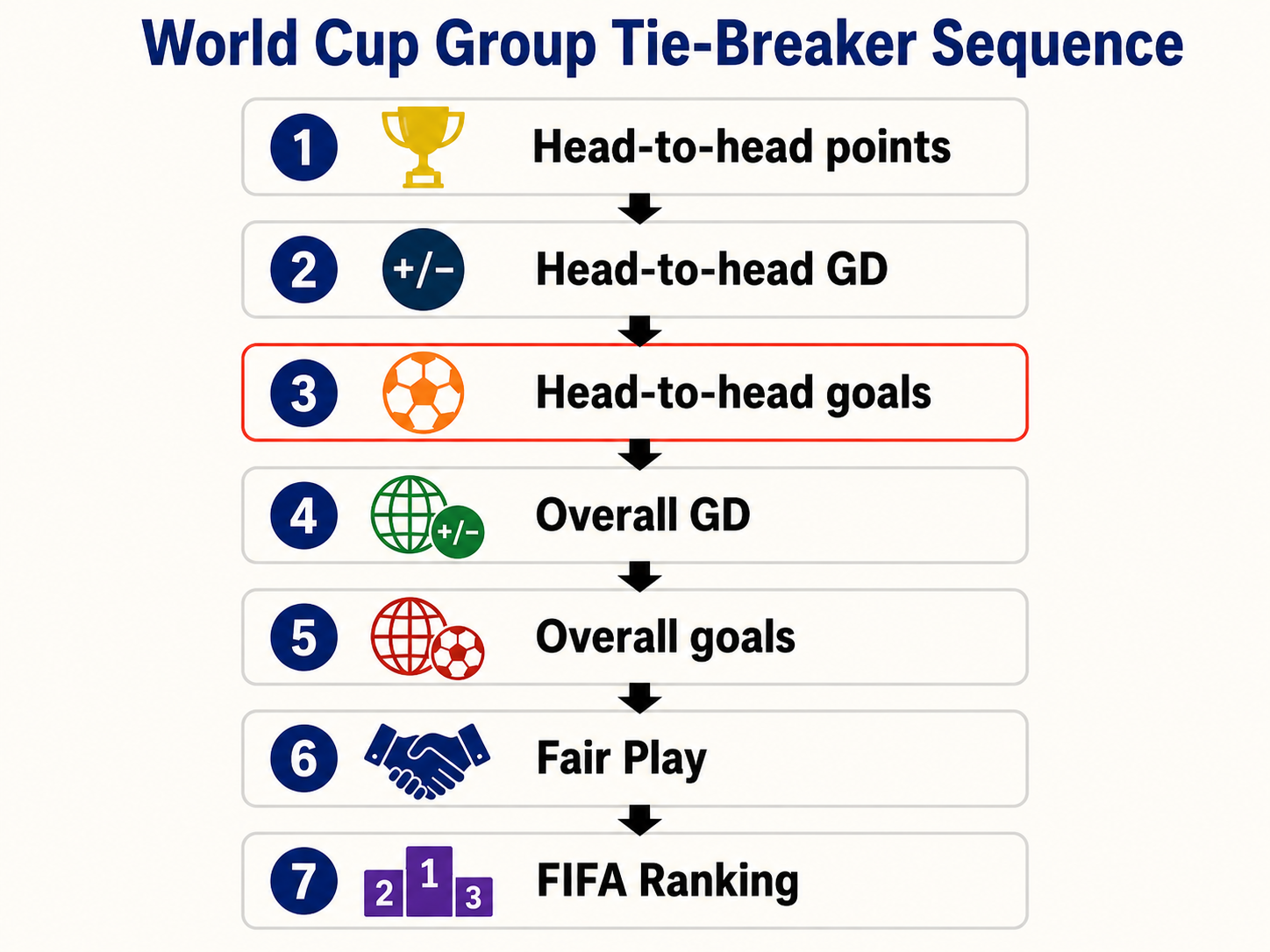
When teams finish level on points, the tie-breaking sequence is meticulous. It’s not just about racking up goals against New Zealand. The first three criteria focus solely on the matches between the tied teams.
- Points in head-to-head matches
- Goal difference in head-to-head matches
- Goals scored in head-to-head matches
- Goal difference in all group matches
- Goals scored in all group matches
- Fair Play points
- FIFA World Ranking
This order makes the Egypt vs. Iran match on June 20 arguably the most important 90 minutes of the group. A win there is worth more than just three points; it grants a decisive head-to-head advantage. A draw keeps things level, pushing the tie to overall goal difference. That’s where running up the score against New Zealand does matter, but only after the head-to-head is equal.
Common mistake: Assuming overall goal difference is the first tie-breaker. It’s not. Head-to-head results are always checked first. A team that loses the direct clash but pads stats against the minnow could still finish behind.
The Fair Play tie-breaker is a true last resort. Points are deducted as follows: one point for a yellow card, three points for a second yellow/indirect red card, four points for a direct red card, and five points for a yellow card followed by a direct red. The team with the fewest deduction points (higher score) wins the tie-break. It’s a small detail, but in a group predicted to be tight, discipline matters.
Key Fixtures and Scenario Breakdown
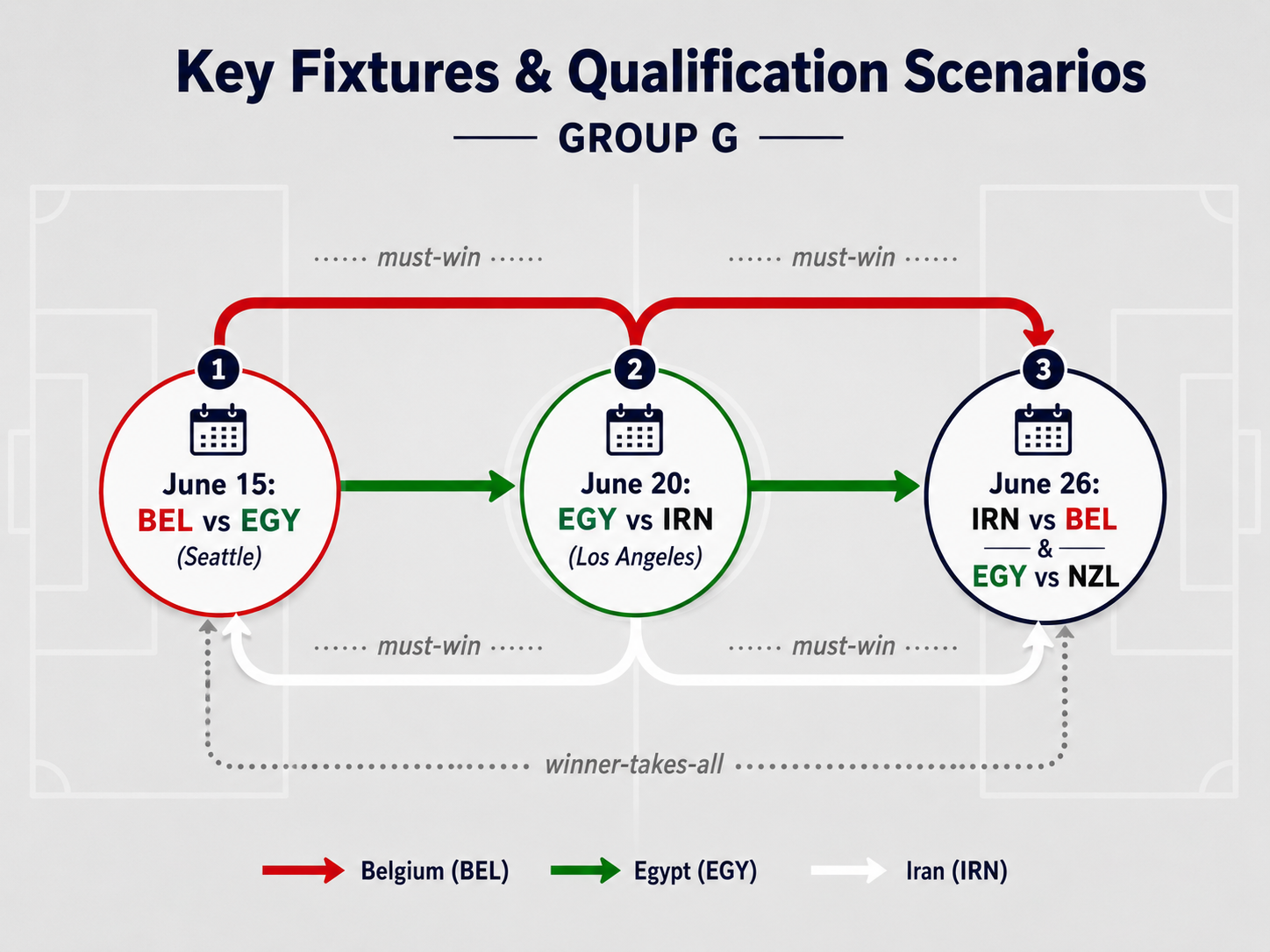
The schedule creates a natural narrative. The group opens with a heavyweight contest and builds toward a simultaneous finale.
- June 15: Belgium vs. Egypt (Seattle) – The group tone-setter. An Egypt upset changes everything. A Belgium win puts them in the driver’s seat and forces Egypt into a must-win scenario against Iran.
- June 20: Egypt vs. Iran (Los Angeles) – The likely decider for second place. A winner-takes-all dynamic if both win or lose their first matches. A draw leaves both dependent on other results and goal difference.
- June 26: Iran vs. Belgium & Egypt vs. New Zealand (Simultaneous Kick-offs) – Final day drama. If second place is still up for grabs, these matches will be tense. Simultaneous kick-offs prevent any team from knowing exactly what result they need, preserving fairness.
Let’s model a few plausible scenarios:
Scenario A: Favorites Hold Serve
Belgium beats Egypt and New Zealand, draws with Iran. Egypt beats Iran and New Zealand. Iran beats New Zealand.
* Standings: 1. Belgium (7 pts), 2. Egypt (6 pts), 3. Iran (4 pts), 4. New Zealand (0 pts).
* Outcome: Belgium and Egypt advance automatically. Iran’s 4 points as third place virtually guarantee advancement as a best third-placed team.
Scenario B: Egypt Stumbles, Iran Capitalizes
Belgium beats Egypt, draws with Iran. Iran beats Egypt and New Zealand. Egypt beats New Zealand.
* Standings: 1. Belgium (7 pts), 2. Iran (7 pts), 3. Egypt (3 pts), 4. New Zealand (0 pts).
* Outcome: Belgium and Iran advance automatically. Egypt’s 3 points as third place put them on the bubble, needing favorable goal difference across other groups.
Scenario C: New Zealand Spoils
Belgium wins all three. Egypt draws with Iran, beats New Zealand. Iran draws with Egypt, loses to Belgium. New Zealand draws with Egypt.
* Standings: 1. Belgium (9 pts), 2. Egypt (4 pts), 3. Iran (1 pt), 4. New Zealand (1 pt).
* Outcome: Belgium and Egypt advance. Egypt’s 4 points come with a crucial head-to-head win over Iran. New Zealand’s draw robs Iran of a point, eliminating them.
The path for a third-placed team is narrow but real. It requires taking points off the top sides or hoping for a three-way tie that inflates everyone’s point totals. A team’s strategy in the final match, especially if they are third with 3 points, will be a fascinating tactical adjustment puzzle: chase a win for 4 safe points, or protect goal difference?
The Path Beyond the Group: Round of 32 Matchups
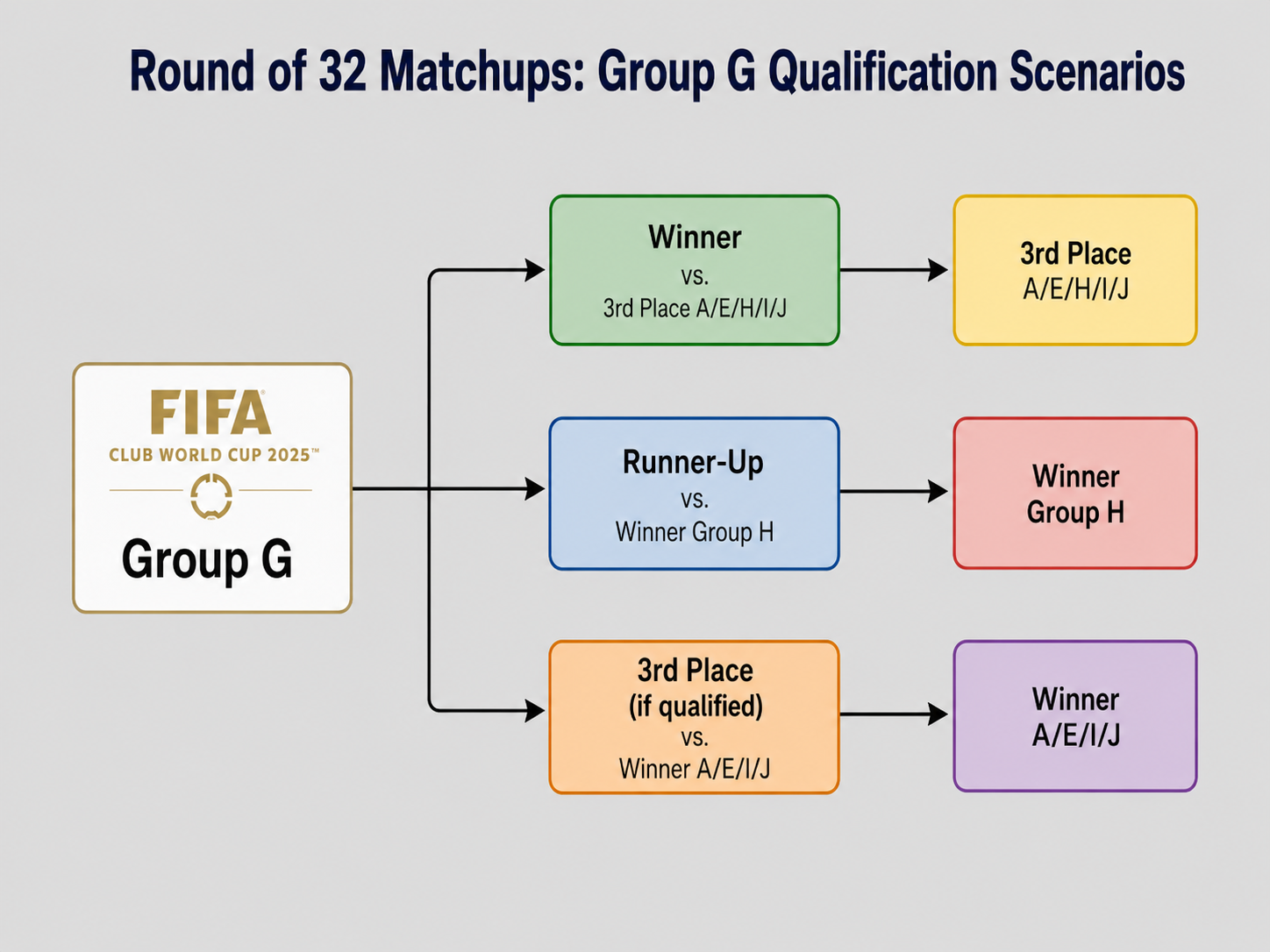
Qualifying is just step one. Who you play next depends on where you finish. The Round of 32 draw is predetermined.
- Group G Winner will play the 3rd-placed team from one of Groups A, E, H, I, or J. This is a perceived advantage, facing a team that likely scrambled to qualify.
- Group G Runner-Up will play the winner of Group H. This is a tougher draw, as Group H’s winner could be a tournament heavyweight.
- Group G 3rd-Placed Qualifier (if they advance) will play the winner of either Group A, E, I, or J. This is a mixed bag—potentially facing a group winner, but possibly avoiding the very top seeds.
This adds another strategic layer. Finishing first doesn’t just mean glory; it likely means an easier knockout opener. Finishing second could mean a immediate showdown with a top contender. For a team that grinds through as a third-place qualifier, the path is immediately brutal. The expanded format gives more teams a chance, but the reward for winning your group is a more manageable bracket, a principle that holds true across all 11v11 formations and tactical setups.
Frequently Asked Questions
What happens if three teams in Group G finish on the same number of points?
The tie-breaker rules create a mini-league among the three tied teams. Points from the matches between only those three teams are calculated first. If that doesn’t separate them, goal difference and goals scored in those specific matches are used. Only if still tied does it revert to overall group goal difference for all three teams.
Can New Zealand realistically qualify for the Round of 32?
It’s extremely unlikely, but not impossible under the new format. They would need to pull off at least one shock win (against Egypt or Iran) and a draw from their other two matches to reach 4 points. Even with 4 points, their goal difference would be critical compared to other third-placed teams. Their primary aim is to be competitive and influence the fight for second.
How does the simultaneous kick-off on the final matchday work?
The final two matches in every group kick off at the same local time. For Group G, Iran vs. Belgium and Egypt vs. New Zealand will start simultaneously on June 26. This prevents any team from knowing the exact result they need from the other game before their own match ends, eliminating the potential for collusion or playing for a specific scoreline.
What is the “4-point rule” for third place?
Historical analysis of tournaments with similar formats (like the Euros) shows that a third-placed team finishing with 4 points advances over 90% of the time. Three points gives you a chance, but you become dependent on other groups’ results and your goal difference. Two points is rarely enough, and one point is almost never sufficient.
The Bottom Line
Group G is Belgium’s to lose. The real tournament begins for Egypt and Iran the moment they face each other on June 20 in Los Angeles. That head-to-head result will likely decide who joins Belgium in the automatic qualification spots. The loser isn’t out, thanks to the 48-team format, but will spend the final matchday sweating on goal difference and other groups’ results. Aim for 4 points if you’re third. For New Zealand, the mission is to land a punch that reshapes the group narrative. Every goal in every match carries weight, not just for the win, but for the intricate tie-breaker math that will decide who survives and who books an early flight home from North America.

I come from the “soccer heart” of Germany, the Ruhrpott. I have played, trained and followed soccer all my life and am a big fan of FC Schalke 04. I also enjoy following international soccer extensively.