3-5-2 Formation: Pros, Cons & Tactical Guide
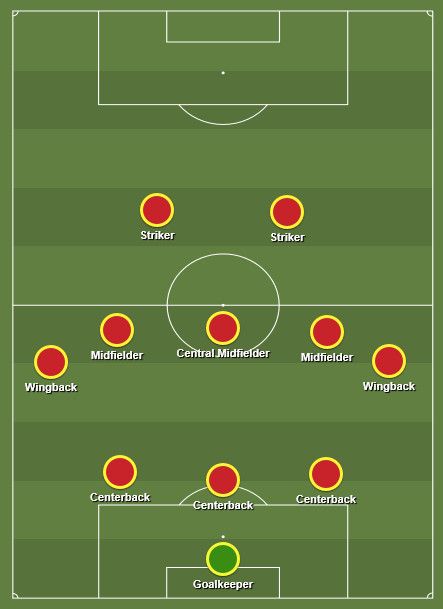
The 3-5-2 soccer formation uses three central defenders, five midfielders, and two strikers to create midfield dominance and defensive stability. Its modern strength is attacking flexibility through high-positioned wing-backs, but its core weakness is vulnerability to quick attacks down the flanks if those wing-backs are caught out of position.
Most guides treat the 3-5-2 as a balanced, all-purpose shape. They miss the real trade-off. This formation doesn’t just give you options, it demands specific, exhausting roles from at least two players. Get those roles wrong, and the system collapses faster than a poorly organized defense.
This guide breaks down the real pros and cons, the exact player profiles you need, and how elite managers are adapting the 3-5-2 for the modern game. We’ll look at why it’s more than just a formation; it’s a complete tactical identity with clear rules and punishing consequences when you break them.
Key Takeaways
- The modern 3-5-2 is an attacking system disguised by defensive numbers, reliant on ultra-fit wing-backs who must cover an entire flank alone.
- Its greatest strength is a midfield overload, creating a 5v4 or 5v3 numerical advantage that suffocates opponents and controls the game’s tempo.
- The formation’s fatal flaw is space behind the wing-backs; a quick switch of play can isolate a central defender against a winger, forcing a dangerous 1v1.
- It requires a specific type of central defender, comfortable on the ball and able to step into midfield, not just a traditional stopper.
- Successful implementation depends more on player suitability and drilled transitions than on the formation diagram itself.
The Modern 3-5-2: More Attack Than Defense
Forget the old Italian catenaccio stereotypes. Today’s 3-5-2, as used by coaches like Antonio Conte and Pep Guardiola, is a proactive, possession-oriented system. The shift happened when managers realized the three defenders provided a secure base to push more players forward, not to park the bus.
The back three isn’t just for defending. In possession, it creates a 3v2 overload against most two-striker systems, making it incredibly difficult for opponents to press effectively. The wing-backs start high, often level with the midfield, turning the nominal “5” in midfield into a potent attacking force. This shape naturally creates triangles and passing lanes through the center of the pitch, which is why teams using it often dominate possession statistics.
The 3-5-2 formation structurally creates a midfield overload, typically positioning five players (two wing-backs and three central midfielders) against an opponent’s three or four. This numerical superiority facilitates ball retention, controls the game’s rhythm, and allows for quick vertical transitions through the central channels.
TL;DR: The modern 3-5-2 uses a back three as a platform for attack, not a bunker, creating numerical advantages that let teams control the game.
What Are the Core Strengths of the 3-5-2?
The formation’s benefits are interconnected. They build on each other to create a cohesive, dominant style of play when executed with the right personnel.
Midfield Control and Overloads. This is the system’s engine. You have five bodies in the middle third. Against a standard 4-3-3, that’s a 5v3 advantage. Against a 4-4-2, it’s 5v4. This overload allows for shorter, safer passes, constant support, and the ability to dictate whether the game is played fast or slow. It stifles creative opposing midfielders by always surrounding them.
Defensive Solidity and Flexibility. Out of possession, the 3-5-2 can morph into a 5-3-2 in seconds. The wing-backs drop alongside the three center-backs, creating a deep, compact back five that is extremely hard to break down through the middle. The three central defenders also provide excellent cover for each other, reducing the danger of through balls.
Attacking Versatility and Width. The two strikers can form a partnership, with one dropping deep to link play and the other running in behind. The width comes from the wing-backs, whose advanced starting positions mean they receive the ball in space, already facing the opponent’s goal. This makes the attack less predictable than relying solely on overlapping full-backs from a deeper four-man defense.
Ideal for Quick Transitions. Winning the ball in a crowded midfield means you’re already in a position to counter-attack. With two strikers ready to run and wing-backs pushing forward, the transition from defense to attack can be devastatingly fast. This makes the 3-5-2 formation a potent weapon against teams that commit players forward.
| Strength | How It Works | Risk If Missing |
|---|---|---|
| Midfield Overload | Creates 5v3 or 5v4 numerical superiority for ball retention. | The team gets overrun centrally, losing control of the game. |
| Defensive Flexibility | Wing-backs drop to form a back five, blocking central passing lanes. | The defense gets stretched wide, leaving huge gaps between center-backs. |
| Attacking Width | Wing-backs provide natural width from high starting positions. | Attack becomes narrow and congested, easy for a back four to defend. |
| Transition Speed | Winning the ball in a packed midfield starts counters immediately. | The team becomes slow and predictable, allowing opponents to regroup. |
What Are the Major Weaknesses and Risks?
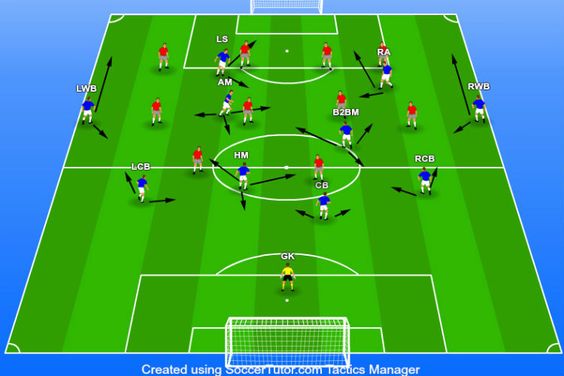
The formation’s strengths are also its vulnerabilities. The system is a high-wire act that punishes poor execution, fatigue, or facing the wrong opponent.
Vulnerability on the Flanks. This is the biggest and most obvious flaw. The space behind the wing-backs is a highway for opposition wingers. If your wing-back is caught high up the pitch during an attack, your wide central defender must step out to cover. This pulls the back three out of shape and creates dangerous 1v1 situations. A quick switch of play can exploit this chaos.

Extreme Physical Demands on Wing-Backs. The player in this role might run 12 kilometers per game, constantly sprinting up and down the touchline. They need the stamina of a midfielder, the defensive nous of a full-back, and the crossing ability of a winger. Burnout is common, and a tired wing-back is a defensive liability.
Common mistake: Using a traditional full-back as a wing-back, they lack the attacking instinct or final-third quality, making your offense one-dimensional and easy to defend. By the 60-minute mark, they’re also too exhausted to track back.
Potential for Midfield Congestion. Five midfielders in a confined space can sometimes get in each other’s way. Without clear role definitions, like a dedicated defensive midfield pivot, the central zone can become a mess of players occupying the same spaces. This stifles creativity rather than enhancing it.
Limited Forward Options. With only two out-and-out strikers, if the opposition marks them tightly and your wing-backs are neutralized, you can lack a direct goal threat. This can lead to sterile possession, lots of the ball but no cutting edge. It’s why one of the central midfielders must have a license to break into the box.
| Weakness | How It’s Exploited | Likely Consequence |
|---|---|---|
| Exposed Flanks | Quick switches of play to isolated wingers. | Central defender pulled out wide, leading to a goal-scoring chance within 2-3 passes. |
| Wing-Back Fatigue | Targeting the same flank repeatedly in the final 30 minutes. | Increased defensive errors, failed recoveries, and goals conceded from late crosses. |
| Midfield Crowding | Opponents sit in a compact mid-block, inviting pressure. | Lack of penetration, sideways passing, and loss of possession in dangerous areas. |
| Predictable Attack | Man-marking the two strikers and blocking wing-back crosses. | Possession without purpose, leading to frustration and losing the tactical battle. |
Player Roles: The Non-Negotiables

You cannot just plug any player into these positions. The 3-5-2 demands a specific profile for each role, especially the back three and the wing-backs.
The Three Center-Backs. The central one is the quarterback. He needs to be a leader, organized, and an excellent passer to start attacks. The two outside center-backs must be agile and comfortable defending in wide areas, almost like full-backs. They all must be competent on the ball; a mistake here invites pressure directly onto your goal.

The Wing-Backs. The system lives and dies with them. Look for endless stamina, defensive discipline in 1v1 situations, and the quality to deliver a final ball. They are not just attacking players. A failed defensive transition from a wing-back loses you the game. Their role is fundamentally different from a traditional full-back, which we explore in our guide to the wing-back role.
The Central Midfield Three. This unit requires balance. One sits deep as a shield, the single pivot. The other two are box-to-box engines: one might be a creator, the other a ball-winner. They must cover ground to support both the wing-backs and the strikers. Understanding the single pivot system is key to making this work.
The Strike Partnership. Chemistry is everything. The best pairings combine different attributes: a physical target man to hold the ball and a speedy, elusive runner to exploit space. They must work in tandem, sometimes interchanging positions to confuse markers.
How to Beat the 3-5-2: Opponent’s Game Plan

If you’re facing a 3-5-2, your tactical plan should be clear. You attack the spaces it willingly gives up.
Exploit the Wide Channels. This is rule number one. Instruct your wingers to stay wide and pin the opposing wing-backs. Look for quick switches of play from one flank to the other. The moment the ball travels across the pitch, the far-side wing-back has to scramble, and the defensive shape stretches.

Press the Central Defenders. While they are good on the ball, the back three can be pressed intelligently. Force them to play long to the strikers, who are likely outnumbered by your defenders. Cut off the passing lanes to the central midfield pivot. Without that outlet, the build-up stalls.
Match the Midfield Battle. You cannot afford to be outnumbered in the center. Use a midfield three of your own, or even a diamond, to contest the zone. The aim is to break even, neutralizing their primary advantage. A common and effective counter is the 3-5-2 vs 4-3-3 matchup, where the 4-3-3’s wingers directly test the wing-backs.
I once watched my local club try to implement a 3-5-2 against a savvy 4-3-3 side. Their right wing-back was a converted winger, great going forward, defensively naive. The opposition left-winger roasted him for 70 minutes, scoring once and forcing two penalties. They switched to a back four at halftime the following week. The lesson was immediate: the wrong personnel makes the formation a liability, not a weapon.
The 3-5-2 Through 2026: Evolving Tactics
The formation isn’t static. Its evolution points toward even more fluidity and hybrid roles.
Inverted Wing-Backs. We’re already seeing this with Pep Guardiola. The wing-back tucks inside into midfield during possession, overloading the center even further and allowing the wide center-back to push forward into the vacated space. This creates new passing angles and disrupts traditional marking schemes.
The Back Three as Playmakers. The demand for center-backs with the passing range of a midfielder will only increase. The first phase of attack will rely on them breaking lines with direct passes, bypassing the initial press altogether. This turns a defensive structure into the origin point of fast transitions.
Integration with High Pressing. The 3-5-2 is becoming a foundation for aggressive pressing tactics. The two strikers can press the opponent’s center-backs, while the five midfielders behind them cover all short passing options. This coordinated press, sprung from a solid defensive shape, is a nightmare to play against.
It will remain a toolkit formation for pragmatic managers who want balance. But its future belongs to the innovators who use its structure as a canvas for positional play, not just a reactive shell.
Who Should Use the 3-5-2 (And Who Shouldn’t)

This formation is a strategic choice, not a universal solution.
Use it if:
- You have two exceptional, tireless athletes for the wing-back roles.
- Your center-backs are technically secure and intelligent.
- You want to dominate possession and control games through midfield.
- You face many opponents who play with two strikers (it matches up perfectly).
- You have a squad capable of learning complex positional rotations.
Avoid it if:
- Your squad is built for a back four and lacks the specific profiles.
- You face a lot of opponents with pacy wingers in a 4-3-3.
- Your team lacks the fitness to maintain the intense demands for a full season.
- You need a simple, robust system quickly (opt for a defensive 5-3-2 setup instead).
For coaches learning the formation basics, the 3-5-2 is an advanced step. It requires a deep understanding of tactical roles and space management. Master the simpler common 11v11 formations first.
Frequently Asked Questions
Is the 3-5-2 a defensive formation?
Historically, yes. In its modern application, absolutely not. Today’s 3-5-2 is an attacking system that uses defensive numbers as a secure base to push more players into advanced positions. The wing-backs are key attackers, not just defenders.
What is the best formation to counter a 3-5-2?
4-3-3 is often the most effective. Its three forwards can pin back the three center-backs and two wing-backs, while the midfield three can compete numerically in the center. The key is using the wingers to exploit the space behind the opposing wing-backs.
What’s the difference between a 3-5-2 and a 5-3-2?
It’s often about semantics and defensive posture. A 3-5-2 typically implies the wing-backs start higher, emphasizing attack. A 5-3-2 implies the wing-backs start deeper, emphasizing defense. In practice, a single team often shifts between both shapes within a game depending on whether they have the ball.
Can you play a 3-5-2 without a defensive midfielder?
You can, but you shouldn’t. The single pivot midfielder is essential. He shields the back three, drops between center-backs to help build play, and provides defensive stability when the wing-backs are forward. Skipping this role leaves the defense dangerously exposed.
Which famous teams have used the 3-5-2 successfully?
Antonio Conte’s Chelsea and Inter Milan teams won league titles with it. Pep Guardiola has used variations at Manchester City. The German national team used it effectively for years. These teams all had the perfect player profiles to make it work.
The Bottom Line
The 3-5-2 formation is a powerful, nuanced system that offers control and balance. Its pros, midfield dominance, defensive solidity, and attacking width, are compelling. Its cons, vulnerable flanks and extreme physical demands, are non-negotiable costs.
Success doesn’t come from drawing the shape on a whiteboard. It comes from having the right athletes in the wing-back positions, intelligent defenders in the back three, and a squad drilled to transition as one unit. For the right team, it’s a blueprint for dominance. For the wrong one, it’s a map of its own weaknesses. Choose it not because it’s trendy, but because your roster forces the opponent to answer the questions it poses.

I come from the “soccer heart” of Germany, the Ruhrpott. I have played, trained and followed soccer all my life and am a big fan of FC Schalke 04. I also enjoy following international soccer extensively.